01 / Morfologi

Ciri dan struktur

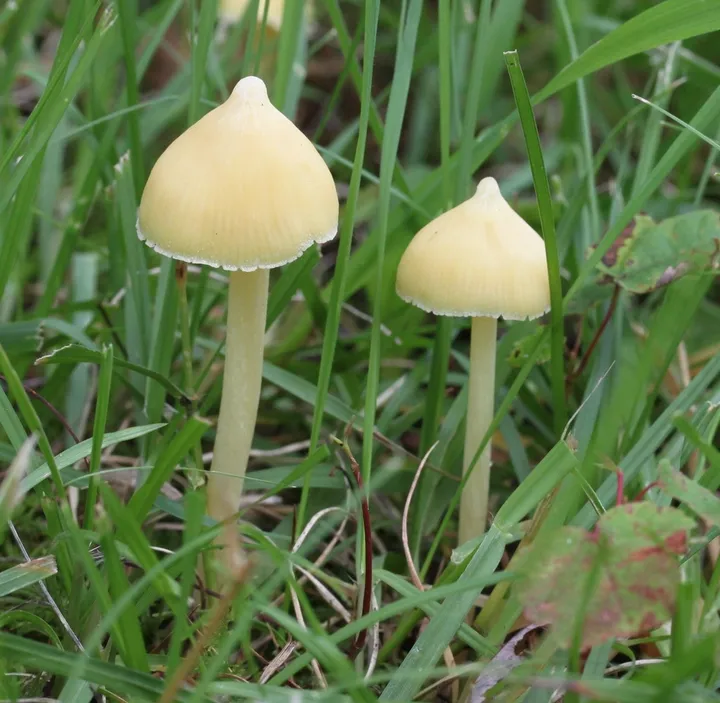
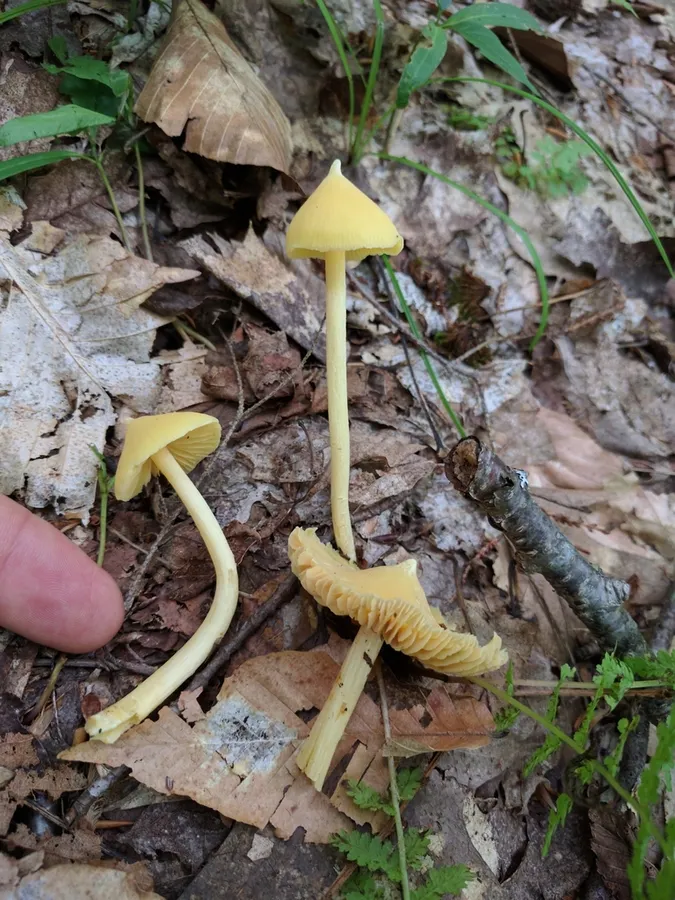
The cap of E. murrayi is bell-shaped to conical, and measures 1.3 – 3 cm in diameter. It features a sharp umbo in the center. The cap color is bright yellow to orange-yellow, but tends to fade in maturity. The gills have a narrowly adnate attachment to the stem, and are well-spaced. Initially yellow, they acquire a pinkish tone as the spores mature. The slender hollow stem is 4 – 7.5 cm long and roughly equal in width throughout its length. It is pale yellow, with a fibrous surface, and often twisted with longitudinal striations. Its surface is smooth, and there may be a whitish mycelium at the base. The flesh is thin and pale yellow. The taste and odor of the fruit bodies have been described as either "pleasant", or indistinct. The spore print is salmon-pink. Spores are smooth, angular (four-sided), hyaline (translucent), and measure 9–12 by 8–10 μm. The arrangement of the hyphae in the hymenophore tissue is parallel to interwoven and inamyloid. In the cap cuticle, the hyphae are interwoven radially, or alternatively in somewhat erect bundles. Hyphae of E. murrayi rarely have clamp connections. The cap and gill tissue contain "repository hyphae" (storage units containing byproducts of metabolism) that release a watery, yellow-colored liquid when injured. These distinctive hyphae can be seen with light microscopy of both fresh and dried specimens.

Sebagian uraian ditampilkan dalam bahasa sumber; terjemahannya belum tersedia atau belum lolos pemeriksaan.

Rujukan: [1]

Pengukuran mengikuti objek, spesimen atau kultur, dan metode yang disebutkan sumber. Baca uraian asli untuk konteks lengkap.

02 / Kehidupan

Habitat dan peran ekologis

A saprobic species, Entoloma murrayi derives nutrients by breaking down organic matter. Fruit bodies are found in wet coniferous and deciduous forests, where they grow singly or in small groups on the ground in litterfall or humus, or in moss. Fruiting occurs in the summer and autumn. In North America, the species is found eastern Canada (Atlantic Maritime Ecozone), the eastern United States (from Maine south to Alabama and west to the Great Lakes), and Mexico. The distribution includes Central and South America, and Southeast Asia. It has also been recorded from Jamaica and the Dominican Republic.

Sebagian uraian ditampilkan dalam bahasa sumber; terjemahannya belum tersedia atau belum lolos pemeriksaan.

Rujukan: [1]

Habitat atau konteks temuan
hutan
Substrat
tanah
Peran atau konteks
Pengurai
Temukan hubungan serupa
03 / Siklus hidup

Reproduksi

The cap of E. murrayi is bell-shaped to conical, and measures 1.3 – 3 cm in diameter. It features a sharp umbo in the center. The cap color is bright yellow to orange-yellow, but tends to fade in maturity. The gills have a narrowly adnate attachment to the stem, and are well-spaced. Initially yellow, they acquire a pinkish tone as the spores mature. The slender hollow stem is 4 – 7.5 cm long and roughly equal in width throughout its length. It is pale yellow, with a fibrous surface, and often twisted with longitudinal striations. Its surface is smooth, and there may be a whitish mycelium at the base. The flesh is thin and pale yellow. The taste and odor of the fruit bodies have been described as either "pleasant", or indistinct.

Sebagian uraian ditampilkan dalam bahasa sumber; terjemahannya belum tersedia atau belum lolos pemeriksaan.

Rujukan: [1]

Sinonim menurut acuan taksonomi rilis: Agaricus murrayi; Inocephalus murrayi; Nolanea murrayi; Rhodophyllus murrayi
04 / Batas informasi

Catatan identitas dan cakupan

  • Nama diterima mengikuti Catalogue of Life Base2026-09-11; uraian mempertahankan konsep dan nama sumber aslinya.
  • Original geographic, specimen and life-cycle scope retained; source import awaits individual editorial review.
  • Impor dan terjemahan otomatis belum diperiksa editorial per profil. Struktur reproduktif yang disebutkan tidak membuktikan seluruh siklus hidup diketahui.
  • Pengukuran pada uraian mengikuti spesimen, kultur, dan metode sumber; angka tidak diperluas ke semua populasi.

Catatan distribusi dalam narasi mengikuti sumbernya. Dokumentasi spesimen atau foto mengikuti catatan sumber. Bukti wilayah Indonesia dan penilaian konservasi tidak disimpulkan dari gambar.

05 / Dokumentasi

Melihat dengan konteks

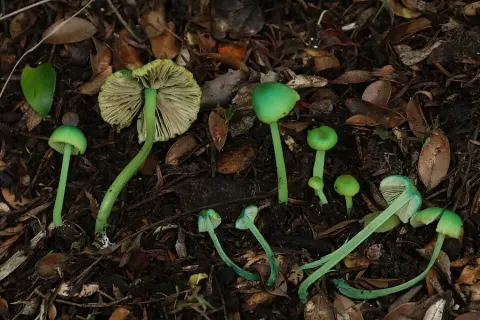
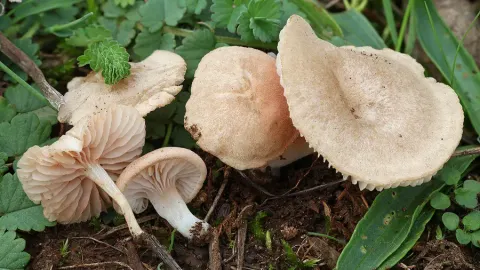
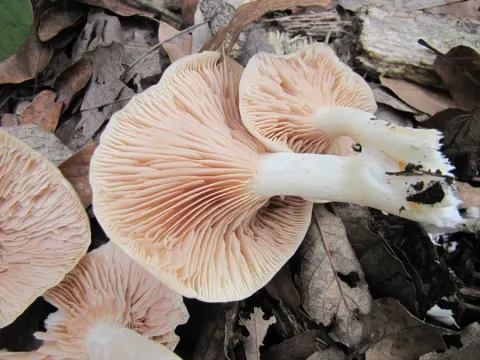
Dokumentasi Entoloma murrayi menurut asosiasi foto pada record takson iNaturalist. Kredit: Ken-ichi Ueda. Identitas mengikuti sumber; bukan penentuan spesimen independen.

Jenis
Fotografi
Kredit
(c) Ken-ichi Ueda, some rights reserved (CC BY), uploaded by Ken-ichi Ueda
Lisensi
CC BY 4.0
Sumber media
Buka entri sumber

Gambar menunjukkan objek menurut identifikasi sumber, bukan verifikasi independen spesimen oleh Fungi. Tidak ada skala baru yang ditambahkan.

Dokumentasi tambahan

06 / Rujukan

Sumber profil

  1. [1] Entoloma murrayi — Wikipedia (en)Bagian sumber: Frozen revision 1365145407
    Tanggal penghimpunan sumber: 2026-10-12
    Teks sumber: CC BY-SA4.0 · Wikipedia contributors
  2. [2] Catalogue of Life Base2026-09-11 — Entoloma murrayiBagian sumber: ColDP NameUsage.tsv ID 6FCZ6; accepted species; source 2073
    Tanggal penghimpunan sumber: 2026-10-12
  3. [3] Dokumentasi visual — Entoloma murrayiBagian sumber: Identitas mengikuti sumber dokumentasi; bukan penentuan spesimen independen.
    Tanggal penghimpunan sumber: 2026-10-17
    Media sumber: CC BY 4.0 · (c) Ken-ichi Ueda, some rights reserved (CC BY), uploaded by Ken-ichi Ueda
  4. [4] Dokumentasi visual — Entoloma murrayiBagian sumber: Identitas mengikuti sumber dokumentasi; bukan penentuan spesimen independen.
    Tanggal penghimpunan sumber: 2026-10-17
    Teks sumber: CC BY-SA 4.0 · (c) Fluff Berger, some rights reserved (CC BY-SA), uploaded by Fluff Berger

Adaptasi teks: CC BY-SA 4.0. Wikipedia contributors — Entoloma murrayi — Wikipedia (en)

Uraian asli dan riwayat sumber

Riwayat atau halaman sumber

Ringkasan sumber

Entoloma murrayi, commonly known as the yellow unicorn Entoloma or the unicorn pinkgill, is a species of fungus in the Entolomataceae family. It was first described from New England in 1859. The fungus produces yellow mushrooms that have a characteristic sharp umbo on the top of a conical cap. Other similar species can be distinguished from E. murrayi by differences in color, morphology, or microscopic characteristics. The species is found throughout the Americas and in southeast Asia, growing on the ground in wet coniferous and deciduous forests.

Revisi sumber

Morfologi sumber

The cap of E. murrayi is bell-shaped to conical, and measures 1.3 – 3 cm in diameter. It features a sharp umbo in the center. The cap color is bright yellow to orange-yellow, but tends to fade in maturity. The gills have a narrowly adnate attachment to the stem, and are well-spaced. Initially yellow, they acquire a pinkish tone as the spores mature. The slender hollow stem is 4 – 7.5 cm long and roughly equal in width throughout its length. It is pale yellow, with a fibrous surface, and often twisted with longitudinal striations. Its surface is smooth, and there may be a whitish mycelium at the base. The flesh is thin and pale yellow. The taste and odor of the fruit bodies have been described as either "pleasant", or indistinct. The spore print is salmon-pink. Spores are smooth, angular (four-sided), hyaline (translucent), and measure 9–12 by 8–10 μm. The arrangement of the hyphae in the hymenophore tissue is parallel to interwoven and inamyloid. In the cap cuticle, the hyphae are interwoven radially, or alternatively in somewhat erect bundles. Hyphae of E. murrayi rarely have clamp connections. The cap and gill tissue contain "repository hyphae" (storage units containing byproducts of metabolism) that release a watery, yellow-colored liquid when injured. These distinctive hyphae can be seen with light microscopy of both fresh and dried specimens.

Revisi sumber

Ekologi sumber

A saprobic species, Entoloma murrayi derives nutrients by breaking down organic matter. Fruit bodies are found in wet coniferous and deciduous forests, where they grow singly or in small groups on the ground in litterfall or humus, or in moss. Fruiting occurs in the summer and autumn. In North America, the species is found eastern Canada (Atlantic Maritime Ecozone), the eastern United States (from Maine south to Alabama and west to the Great Lakes), and Mexico. The distribution includes Central and South America, and Southeast Asia. It has also been recorded from Jamaica and the Dominican Republic.

Revisi sumber

Struktur reproduksi sumber

The cap of E. murrayi is bell-shaped to conical, and measures 1.3 – 3 cm in diameter. It features a sharp umbo in the center. The cap color is bright yellow to orange-yellow, but tends to fade in maturity. The gills have a narrowly adnate attachment to the stem, and are well-spaced. Initially yellow, they acquire a pinkish tone as the spores mature. The slender hollow stem is 4 – 7.5 cm long and roughly equal in width throughout its length. It is pale yellow, with a fibrous surface, and often twisted with longitudinal striations. Its surface is smooth, and there may be a whitish mycelium at the base. The flesh is thin and pale yellow. The taste and odor of the fruit bodies have been described as either "pleasant", or indistinct.

Revisi sumber

Rujukan halaman ini

Fungi. Entoloma murrayi. Rilis data fungi-2026-10-12-expansion-2. https://fungi-atlas.mgadib.chatgpt.site/jamur/entoloma-murrayi/.

Status: impor sumber; pemeriksaan editorial per profil belum selesai. Untuk klaim biologis, gunakan rujukan pada bagian terkait dan periksa konteks sumber aslinya.