Ciri dan struktur
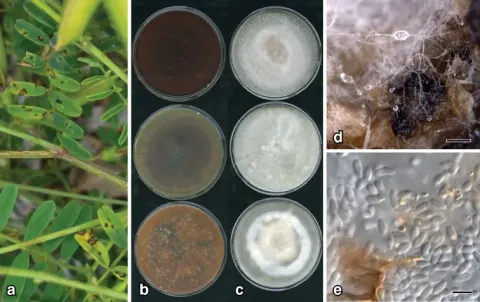
Epicoccum nigrum (1825) is a fungus with no known teleomorph form. It has been classified as a member of the Hyphomycetes, in the Deuteromycota, as well as the Fungi Imperfecti because it is only known to reproduce asexually. Despite that it is not yeast-like, it has been included in the broad, unrelated category of fungi known as black yeasts. The fungus grows felty colonies in bright shades of yellow, orange, and red, often with brown or black throughout. Colonies grow quickly, reaching about 6 cm in diameter in 2 days at room temperature. Mycelia contain both chitin and cellulose. Epicoccum nigrum forms blastoconidia that are darkly coloured, warted and spherical, reaching 15 to 25 μm in diameter. Conidia grow on a sporodochium, formed by warty and fibrous hyphae. Sporets have been found to contain up to 15 cells. The spores of E. nigrum are actively released depending on temperature, light, and relative humidity conditions. The mechanism of release involves the separation of the conidium from the sporodochium via a double septum. It capitalizes on the spherical shape of the conidia, allowing it to "bounce" off the sporodochium. Conidia then become airborne with movement or wind. Sporulation is induced under Wood's light, or sometimes upon exposure to cold temperatures with a subsequent return to room temperature. Pigment production is also sensitive to light and temperature changes. Ideal growth temperatures range between 23-28 C, and ideal growth pH ranges from 5.0 to 6.0. Although E. nigrum will grow in a range of water activity (aw of 0.99 to 0.97), growth is optimized at water vapour saturation.
Habitat dan peran ekologis
A highly robust and ubiquitous fungus, E. nigrum has an almost global spread, occurring in the Americas, Asia, and Europe. Spores of E. nigrum have been cultured from a variety of environments, predominantly soil (i.e. peat, forest floor, raw humus, compost, tundra, sewage) and sand (e.g., dunes, saline sands). It is a saprophytic fungus, forming pustules (composed of sporodochia and conidia) on dead and dying plants. This species is commonly found growing on cereals and seeds, as well as other crops including corn, beans, potatoes, peas and peaches. It has been found to grow colonies on leaves submersed in water as cold as 0 C, and is considered a facultative marine fungus. It is capable of colonizing algae and marsh grasses. In indoor environments, E. nigrum has been found on paintings and wallpaper, cotton and textiles, in dust, and in air. It is tolerant of changes in water availability, and hyphal growth has been found to resume within an hour of exposure to water.
- Habitat atau konteks temuan
- hutan; kultur yang didokumentasikan
- Substrat
- Informasi belum tersedia pada sumber rilis ini.
- Peran atau konteks
- Belum dikategorikan pada rilis ini.
Reproduksi
Epicoccum nigrum (1825) is a fungus with no known teleomorph form. It has been classified as a member of the Hyphomycetes, in the Deuteromycota, as well as the Fungi Imperfecti because it is only known to reproduce asexually. Despite that it is not yeast-like, it has been included in the broad, unrelated category of fungi known as black yeasts. The fungus grows felty colonies in bright shades of yellow, orange, and red, often with brown or black throughout. Colonies grow quickly, reaching about 6 cm in diameter in 2 days at room temperature. Mycelia contain both chitin and cellulose. Epicoccum nigrum forms blastoconidia that are darkly coloured, warted and spherical, reaching 15 to 25 μm in diameter.
Catatan identitas dan cakupan
- Nama diterima mengikuti Catalogue of Life Base2026-09-11; uraian mempertahankan konsep dan nama sumber aslinya.
- Original geographic, specimen and life-cycle scope retained; source import awaits individual editorial review.
- Impor dan terjemahan otomatis belum diperiksa editorial per profil. Struktur reproduktif yang disebutkan tidak membuktikan seluruh siklus hidup diketahui.
- Pengukuran pada uraian mengikuti spesimen, kultur, dan metode sumber; angka tidak diperluas ke semua populasi.
Catatan distribusi dalam narasi mengikuti sumbernya. Dokumentasi spesimen atau foto mengikuti catatan sumber. Bukti wilayah Indonesia dan penilaian konservasi tidak disimpulkan dari gambar.
Melihat dengan konteks
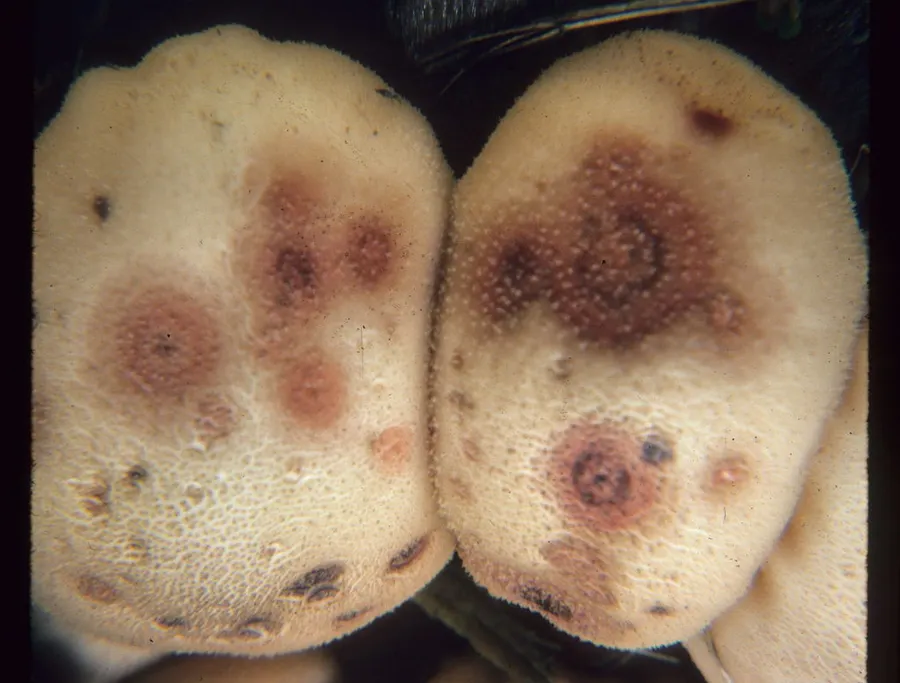
Dokumentasi Epicoccum nigrum menurut asosiasi foto pada record takson iNaturalist. Kredit: mycowalt. Identitas mengikuti sumber; bukan penentuan spesimen independen.
- Jenis
- Fotografi
- Kredit
- (c) mycowalt, some rights reserved (CC BY-SA), uploaded by mycowalt
- Lisensi
- CC BY-SA 4.0
- Sumber media
- Buka entri sumber
Sumber profil
- [1] Epicoccum nigrum — Wikipedia (en)
- [2] Catalogue of Life Base2026-09-11 — Epicoccum nigrum
- [3] Dokumentasi visual — Epicoccum nigrum
Rujukan halaman ini
Fungi. Epicoccum nigrum. Rilis data fungi-2026-10-12-expansion-2. https://fungi-atlas.mgadib.chatgpt.site/jamur/epicoccum-nigrum/.
Status: impor sumber; pemeriksaan editorial per profil belum selesai. Untuk klaim biologis, gunakan rujukan pada bagian terkait dan periksa konteks sumber aslinya.