Ciri dan struktur
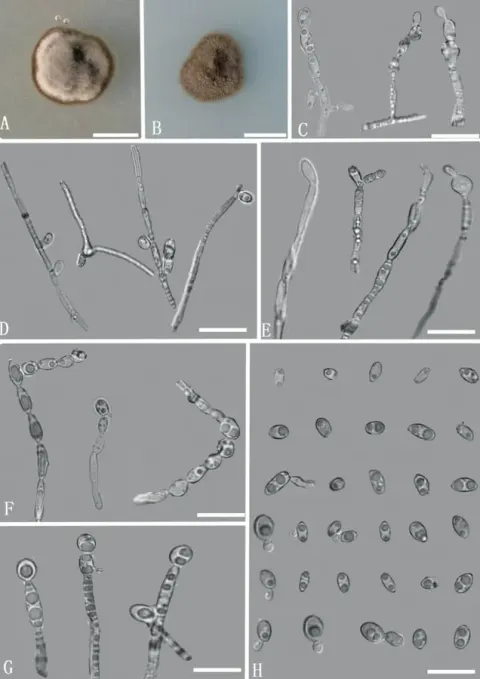
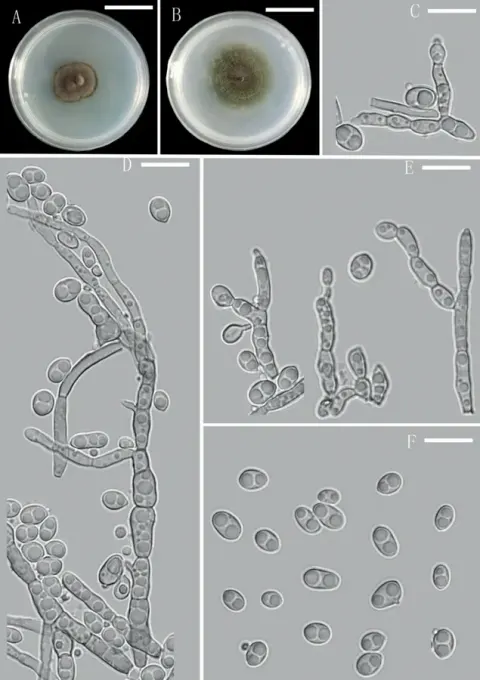
In culture, E. jeanselmei produces slow growing colonies that are green black in color. Cultures manifest a combination of mycelial and yeast-like growth forms, however the yeast-like typically predominates. Black aerial mycelium develops on the colony surface that consists of hyphae with swellings at regular intervals. Conidia are variable in size and are often formed in clusters at the tip of annellidic conidiogenous cells. The conidia are narrowly ellipsoidal in shape and 2.6–5.9 μm × 1.2–2.5 μm in size. Immature sexual fruiting bodies called ascomata have been reported but their rare occurrence are thought to be due to the lack of mating compatibility. Exophiala jeanselmei is affiliated with the ascomycete genus Capronia.
Habitat dan peran ekologis
Exophiala jeanselmei umumnya ditemukan di tanah, tumbuhan, air, dan juga dapat diisolasi dari kayu yang membusuk karena jamur ini adalah saprotroph di alam. Spesies ini ditemukan di seluruh dunia tetapi terutama dicatat di Asia and lebih umum di wilayah tropis dan subtropis. Genus Exophiala has telah diisolasi dari lingkungan yang kaya hidrokarbon serta dari lingkungan panas, lembab, dan oligotropik seperti mesin cuci piring, fasilitas kamar mandi uap dan kamar mandi yang hanya menyediakan kadar nutrisi yang rendah. Hal ini telah diusulkan bahwa kondisi yang biasanya ditemukan dalam mesin cuci piring seperti suhu tinggi, kelembaban dan pH alkali dapat menyediakan habitat alternatif untuk spesies patogen manusia. Jamur memiliki pertumbuhan optimal pada 30 °C tetapi pertumbuhan dihambat pada 40 °C. Most strains terisolasi dari tanah tidak dapat tumbuh pada suhu yang lebih tinggi dari 30 °C sementara strain terisolasi dari manusia dapat tumbuh pada suhu yang lebih tinggi seperti 37 °C dari tubuh manusia. Adaptasi ini dari E. jeanselmei telah berkembang secara evolusi untuk bertahan hidup pada tuan rumah manusia mereka. Ini adalah faktor yang membedakan yang membantu dalam menentukan patogenitas strain tertentu. Ciri yang membedakan E. jeanselmei dari Cladosporium which membentuk koloni yang sangat mirip adalah bahwa E. jeanselmei tidak proteolitik.
- Habitat atau konteks temuan
- Informasi belum tersedia pada sumber rilis ini.
- Substrat
- tanah
- Peran atau konteks
- Pengurai
Reproduksi
In culture, E. jeanselmei produces slow growing colonies that are green black in color. Cultures manifest a combination of mycelial and yeast-like growth forms, however the yeast-like typically predominates. Black aerial mycelium develops on the colony surface that consists of hyphae with swellings at regular intervals. Conidia are variable in size and are often formed in clusters at the tip of annellidic conidiogenous cells. The conidia are narrowly ellipsoidal in shape and 2.6–5.9 μm × 1.2–2.5 μm in size. Immature sexual fruiting bodies called ascomata have been reported but their rare occurrence are thought to be due to the lack of mating compatibility. Exophiala jeanselmei is affiliated with the ascomycete genus Capronia.
Catatan identitas dan cakupan
- Nama diterima mengikuti Catalogue of Life Base2026-09-11; uraian mempertahankan konsep dan nama sumber aslinya.
- Original geographic, specimen and life-cycle scope retained; source import awaits individual editorial review.
- Impor dan terjemahan otomatis belum diperiksa editorial per profil. Struktur reproduktif yang disebutkan tidak membuktikan seluruh siklus hidup diketahui.
- Pengukuran pada uraian mengikuti spesimen, kultur, dan metode sumber; angka tidak diperluas ke semua populasi.
Catatan distribusi dalam narasi mengikuti sumbernya. Dokumentasi spesimen atau foto mengikuti catatan sumber. Bukti wilayah Indonesia dan penilaian konservasi tidak disimpulkan dari gambar.
Melihat dengan konteks
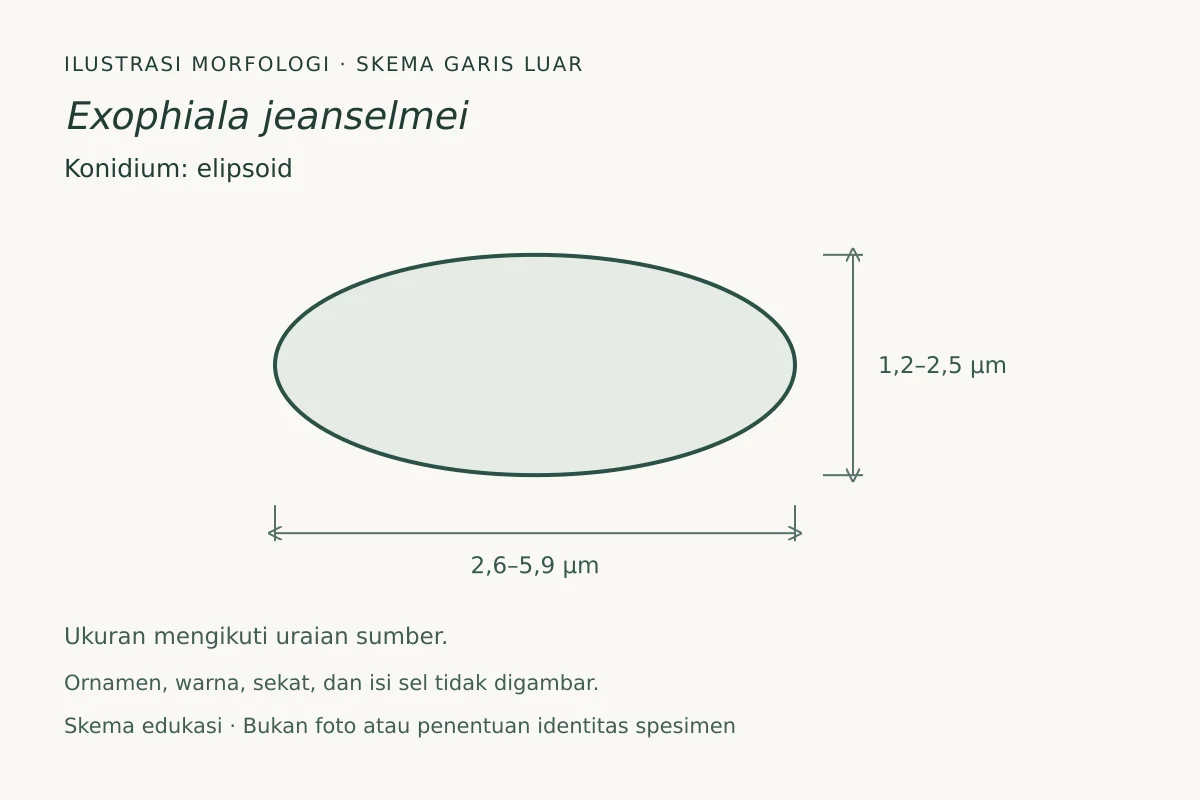
Ilustrasi skematis garis luar konidium Exophiala jeanselmei, berdasarkan uraian sumber; ukuran yang dilaporkan 2,6–5,9 × 1,2–2,5 µm. Proporsi disederhanakan, bukan salinan satu spesimen. Ornamen permukaan, warna, sekat, dan isi sel tidak direkonstruksi. Konidium elipsoid sempit, 2,6–5,9 × 1,2–2,5 µm. Kelompok konidia dan pembengkakan hifa tidak digambar. Ornamen, warna, sekat, dan isi sel tidak digambar. Skema edukasi, bukan alat identifikasi.
- Jenis
- Ilustrasi skematis
- Kredit
- Fungi, ilustrasi orisinal (2026); fakta morfologi berdasarkan Wikipedia contributors
- Lisensi
- CC BY-SA 4.0
- Sumber media
- Buka entri sumber
Sumber profil
- [1] Exophiala jeanselmei — Wikipedia (en)
- [2] Catalogue of Life Base2026-09-11 — Exophiala jeanselmei
Rujukan halaman ini
Fungi. Exophiala jeanselmei. Rilis data fungi-2026-10-12-expansion-2. https://fungi-atlas.mgadib.chatgpt.site/jamur/exophiala-jeanselmei/.
Status: impor sumber; pemeriksaan editorial per profil belum selesai. Untuk klaim biologis, gunakan rujukan pada bagian terkait dan periksa konteks sumber aslinya.