01 / Morfologi

Ciri dan struktur

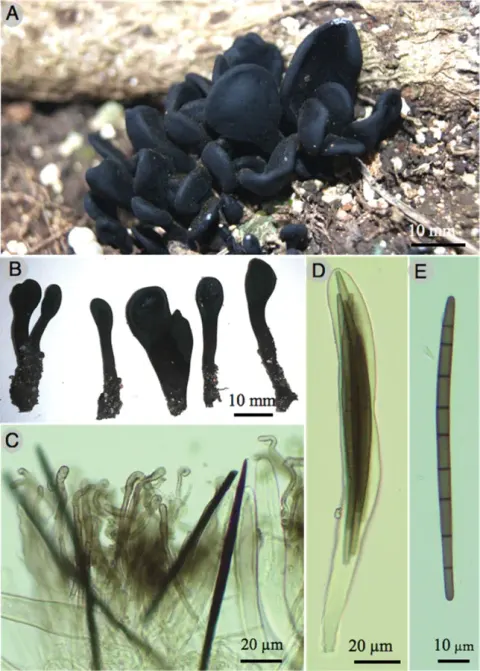
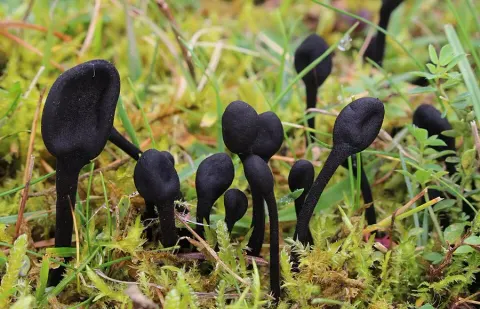
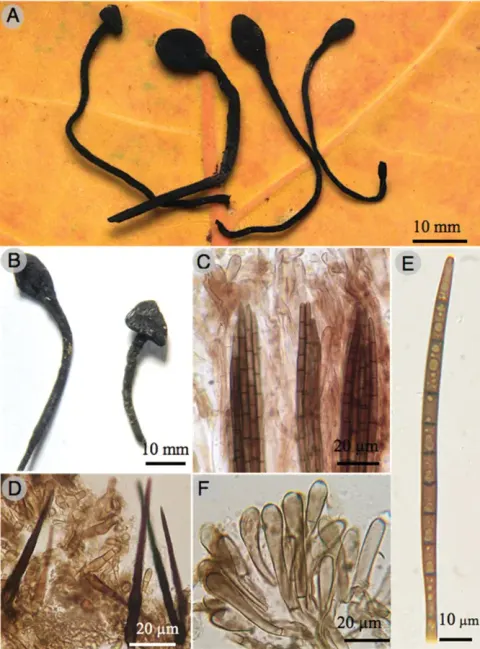
The club-shaped fruitbodies, which have a distinct blackish head and a more lightly colored stipe (dark brown), grow to heights ranging from 1.5 to 5 cm. The head is up to 0.7 cm tall, ranges in shape from fuse-shaped to narrowly ellipsoidal or nearly cylindrical, and is somewhat compressed on the sides. The nearly black, somewhat waxy head has a vertical groove down the middle. The stipe has a glutinous, dark grey-brown surface. The spores are smooth and cylindrical, sometimes with a slight swelling in the middle, and sometimes slightly curved; they measure 59–65 by 4–5 μm. G. glutinosum spores have between two and seven septa, although three is most typical in mature specimens. The thin-walled asci (spore-bearing cells) are cylindrical to narrowly club-shaped, eight-spored, and typically measure 200–265 μm long by 12–16 μm wide. Ascospores occupy about the upper two-thirds to three-quarters of the ascus, leaving a hyaline (transparent) base. The paraphyses, hyaline at the base and brown in the upper regions, are 4–11 μm wide, and longer than the asci. Cells at the end of the paraphyses are pear-shaped (piriform) or spherical, brownish, and measure 8–10 μm wide. The sticky material on the stipe is a gelatinous matrix made of a layer of paraphyses. Although black earth tongue species are generally not worth eating, Charles McIlvaine opined in his 1902 work One Thousand American Fungi that, if stewed, G. glutinosum is "delicious."

Sebagian uraian ditampilkan dalam bahasa sumber; terjemahannya belum tersedia atau belum lolos pemeriksaan.

Rujukan: [1]

Pengukuran mengikuti objek, spesimen atau kultur, dan metode yang disebutkan sumber. Baca uraian asli untuk konteks lengkap.

02 / Kehidupan

Habitat dan peran ekologis

Glutinoglossum glutinosum is a saprophytic species. Its fruitbodies grow scattered on soil in moss beds or in grassy areas. North American collections are typically associated with hardwoods, while European collections are often made in pasture and dune slacks. The fungus has been used as an indicator of medium-quality grassland in the UK. In India, it has been encountered on the soil of oak forests, and among mosses on stony slopes at an elevation of 2000 m. A widely distributed species, G. glutinosum has been recorded from northern Africa (Macaronesia), Asia (Bhutan, China, India, Japan, and the Philippines) and Europe. It is listed as vulnerable in Switzerland. In Bulgaria, where it is considered critically endangered, threats to G. glutinosum include "habitat changes as result of agriculture activities (crops, livestock), atmospheric and land pollution, drought, global warming". In a preliminary Regional Red List of Dutch macrofungi, G. glutinosum was considered threatened, and it was noted that before 1970, the fungus was "rather common", compared to "rather rare" after that year. The North American distribution includes Canada, the United States, and Mexico. Although G. glutinosum was previously thought to have occurred in Australia and New Zealand, later examination and genetic analysis of collections from these locations showed the material to belong to what have since been described as the new species G. australasicum or G. exiguum.

Sebagian uraian ditampilkan dalam bahasa sumber; terjemahannya belum tersedia atau belum lolos pemeriksaan.

Rujukan: [1]

Habitat atau konteks temuan
hutan; padang rumput
Substrat
tanah
Peran atau konteks
Belum dikategorikan pada rilis ini.
Temukan hubungan serupa
03 / Siklus hidup

Reproduksi

The spores are smooth and cylindrical, sometimes with a slight swelling in the middle, and sometimes slightly curved; they measure 59–65 by 4–5 μm. G. glutinosum spores have between two and seven septa, although three is most typical in mature specimens. The thin-walled asci (spore-bearing cells) are cylindrical to narrowly club-shaped, eight-spored, and typically measure 200–265 μm long by 12–16 μm wide. Ascospores occupy about the upper two-thirds to three-quarters of the ascus, leaving a hyaline (transparent) base. The paraphyses, hyaline at the base and brown in the upper regions, are 4–11 μm wide, and longer than the asci. Cells at the end of the paraphyses are pear-shaped (piriform) or spherical, brownish, and measure 8–10 μm wide.

Sebagian uraian ditampilkan dalam bahasa sumber; terjemahannya belum tersedia atau belum lolos pemeriksaan.

Rujukan: [1]

Sinonim menurut acuan taksonomi rilis: Cibalocoryne glutinosa; Geoglossum glutinosum; Geoglossum glutinosum var. lubricum; Gloeoglossum glutinosum
04 / Batas informasi

Catatan identitas dan cakupan

  • Nama diterima mengikuti Catalogue of Life Base2026-09-11; uraian mempertahankan konsep dan nama sumber aslinya.
  • Original geographic, specimen and life-cycle scope retained; source import awaits individual editorial review.
  • Impor dan terjemahan otomatis belum diperiksa editorial per profil. Struktur reproduktif yang disebutkan tidak membuktikan seluruh siklus hidup diketahui.
  • Pengukuran pada uraian mengikuti spesimen, kultur, dan metode sumber; angka tidak diperluas ke semua populasi.

Catatan distribusi dalam narasi mengikuti sumbernya. Dokumentasi spesimen atau foto mengikuti catatan sumber. Bukti wilayah Indonesia dan penilaian konservasi tidak disimpulkan dari gambar.

05 / Dokumentasi

Melihat dengan konteks

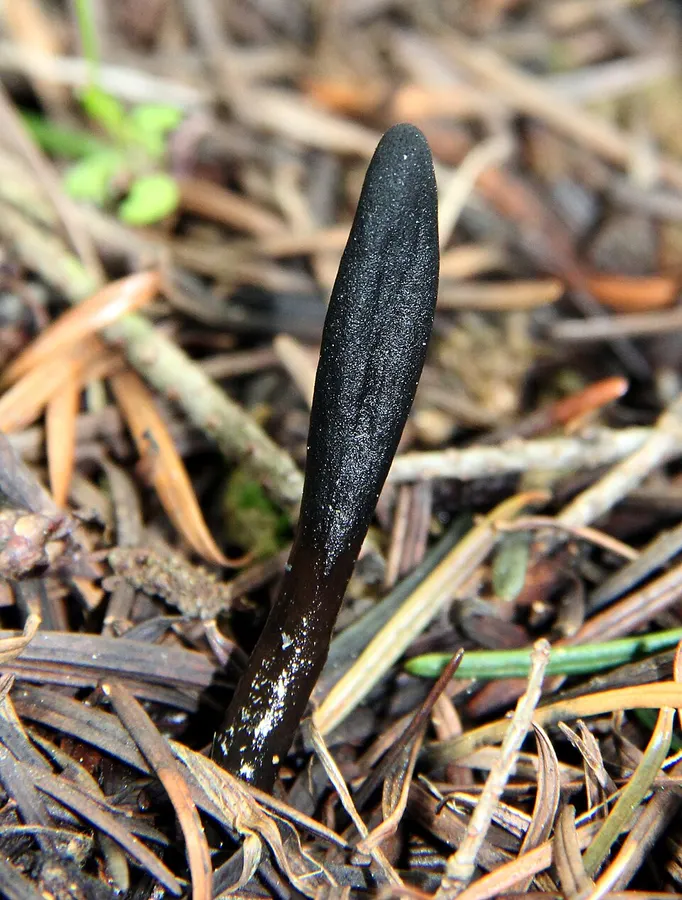
Dokumentasi Glutinoglossum glutinosum dari Wikimedia Commons. A fruit body of the ascomycete fungus Glutinoglossum glutinosum ( Pers. ) Hustad, A.N.Mill., Dentinger & P.F.Cannon (formerly Geoglossum glutinosum Pers.). Specimen photographed in Redwood Regional Park, Oakland, California, USA (37.809° -122.143°). Identifikasi mengikuti record berkas sumber.

Jenis
Fotografi
Kredit
Alan Rockefeller
Sumber media
Buka entri sumber

Gambar menunjukkan objek menurut identifikasi sumber, bukan verifikasi independen spesimen oleh Fungi. Tidak ada skala baru yang ditambahkan.

06 / Rujukan

Sumber profil

  1. [1] Glutinoglossum glutinosum — Wikipedia (en)Bagian sumber: Frozen revision 1364421610
    Tanggal penghimpunan sumber: 2026-10-12
    Teks sumber: CC BY-SA4.0 · Wikipedia contributors
  2. [2] Catalogue of Life Base2026-09-11 — Glutinoglossum glutinosumBagian sumber: ColDP NameUsage.tsv ID 6KKX9; accepted species; source 2073
    Tanggal penghimpunan sumber: 2026-10-12
  3. [3] Dokumentasi visual — Glutinoglossum glutinosumBagian sumber: Individual media record; identification follows the source, not independent determination
    Tanggal penghimpunan sumber: 2026-10-12
    Media sumber: CC BY-SA 3.0 · Alan Rockefeller

Adaptasi teks: CC BY-SA 4.0. Wikipedia contributors — Glutinoglossum glutinosum — Wikipedia (en)

Uraian asli dan riwayat sumber

Riwayat atau halaman sumber

Ringkasan sumber

Glutinoglossum glutinosum, commonly known as the viscid black earth tongue or the glutinous earthtongue, is a species of fungus in the family Geoglossaceae (the earth tongues). First described in 1796 as a species of Geoglossum, the fungus has gone through several changes of genera in its taxonomic history. It was placed in its current genus, Glutinoglossum, in 2013. The smooth, nearly black, club-shaped fruitbodies grow to heights ranging from 1.5 to 5 cm. The head is up to 0.7 cm long, and the stipes are sticky.

Revisi sumber

Morfologi sumber

The club-shaped fruitbodies, which have a distinct blackish head and a more lightly colored stipe (dark brown), grow to heights ranging from 1.5 to 5 cm. The head is up to 0.7 cm tall, ranges in shape from fuse-shaped to narrowly ellipsoidal or nearly cylindrical, and is somewhat compressed on the sides. The nearly black, somewhat waxy head has a vertical groove down the middle. The stipe has a glutinous, dark grey-brown surface. The spores are smooth and cylindrical, sometimes with a slight swelling in the middle, and sometimes slightly curved; they measure 59–65 by 4–5 μm. G. glutinosum spores have between two and seven septa, although three is most typical in mature specimens. The thin-walled asci (spore-bearing cells) are cylindrical to narrowly club-shaped, eight-spored, and typically measure 200–265 μm long by 12–16 μm wide. Ascospores occupy about the upper two-thirds to three-quarters of the ascus, leaving a hyaline (transparent) base. The paraphyses, hyaline at the base and brown in the upper regions, are 4–11 μm wide, and longer than the asci. Cells at the end of the paraphyses are pear-shaped (piriform) or spherical, brownish, and measure 8–10 μm wide. The sticky material on the stipe is a gelatinous matrix made of a layer of paraphyses. Although black earth tongue species are generally not worth eating, Charles McIlvaine opined in his 1902 work One Thousand American Fungi that, if stewed, G. glutinosum is "delicious."

Revisi sumber

Ekologi sumber

Glutinoglossum glutinosum is a saprophytic species. Its fruitbodies grow scattered on soil in moss beds or in grassy areas. North American collections are typically associated with hardwoods, while European collections are often made in pasture and dune slacks. The fungus has been used as an indicator of medium-quality grassland in the UK. In India, it has been encountered on the soil of oak forests, and among mosses on stony slopes at an elevation of 2000 m. A widely distributed species, G. glutinosum has been recorded from northern Africa (Macaronesia), Asia (Bhutan, China, India, Japan, and the Philippines) and Europe. It is listed as vulnerable in Switzerland. In Bulgaria, where it is considered critically endangered, threats to G. glutinosum include "habitat changes as result of agriculture activities (crops, livestock), atmospheric and land pollution, drought, global warming". In a preliminary Regional Red List of Dutch macrofungi, G. glutinosum was considered threatened, and it was noted that before 1970, the fungus was "rather common", compared to "rather rare" after that year. The North American distribution includes Canada, the United States, and Mexico. Although G. glutinosum was previously thought to have occurred in Australia and New Zealand, later examination and genetic analysis of collections from these locations showed the material to belong to what have since been described as the new species G. australasicum or G. exiguum.

Revisi sumber

Struktur reproduksi sumber

The spores are smooth and cylindrical, sometimes with a slight swelling in the middle, and sometimes slightly curved; they measure 59–65 by 4–5 μm. G. glutinosum spores have between two and seven septa, although three is most typical in mature specimens. The thin-walled asci (spore-bearing cells) are cylindrical to narrowly club-shaped, eight-spored, and typically measure 200–265 μm long by 12–16 μm wide. Ascospores occupy about the upper two-thirds to three-quarters of the ascus, leaving a hyaline (transparent) base. The paraphyses, hyaline at the base and brown in the upper regions, are 4–11 μm wide, and longer than the asci. Cells at the end of the paraphyses are pear-shaped (piriform) or spherical, brownish, and measure 8–10 μm wide.

Revisi sumber

Rujukan halaman ini

Fungi. Glutinoglossum glutinosum. Rilis data fungi-2026-10-12-expansion-2. https://fungi-atlas.mgadib.chatgpt.site/jamur/glutinoglossum-glutinosum/.

Status: impor sumber; pemeriksaan editorial per profil belum selesai. Untuk klaim biologis, gunakan rujukan pada bagian terkait dan periksa konteks sumber aslinya.