01 / Morfologi

Ciri dan struktur

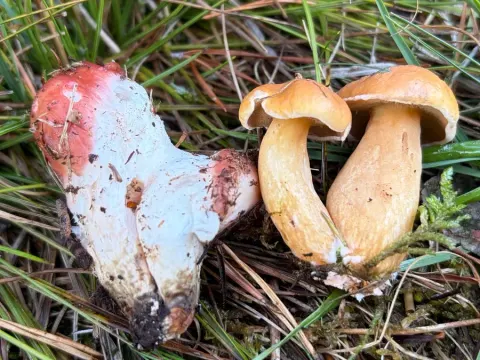
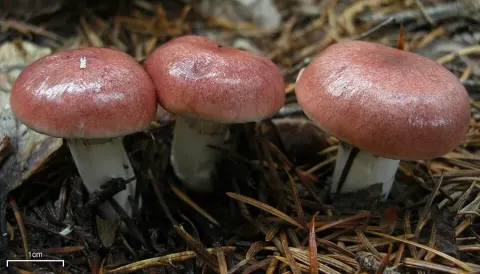
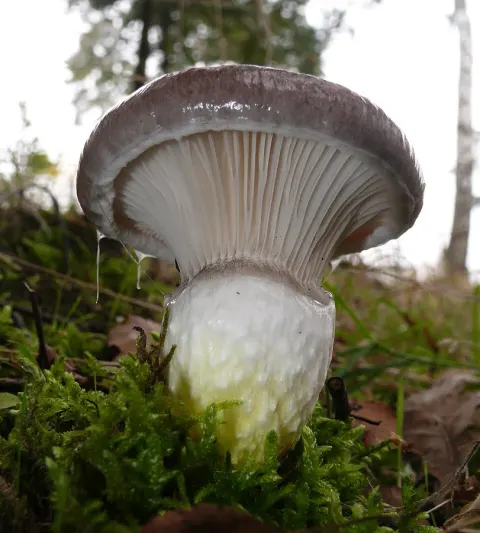
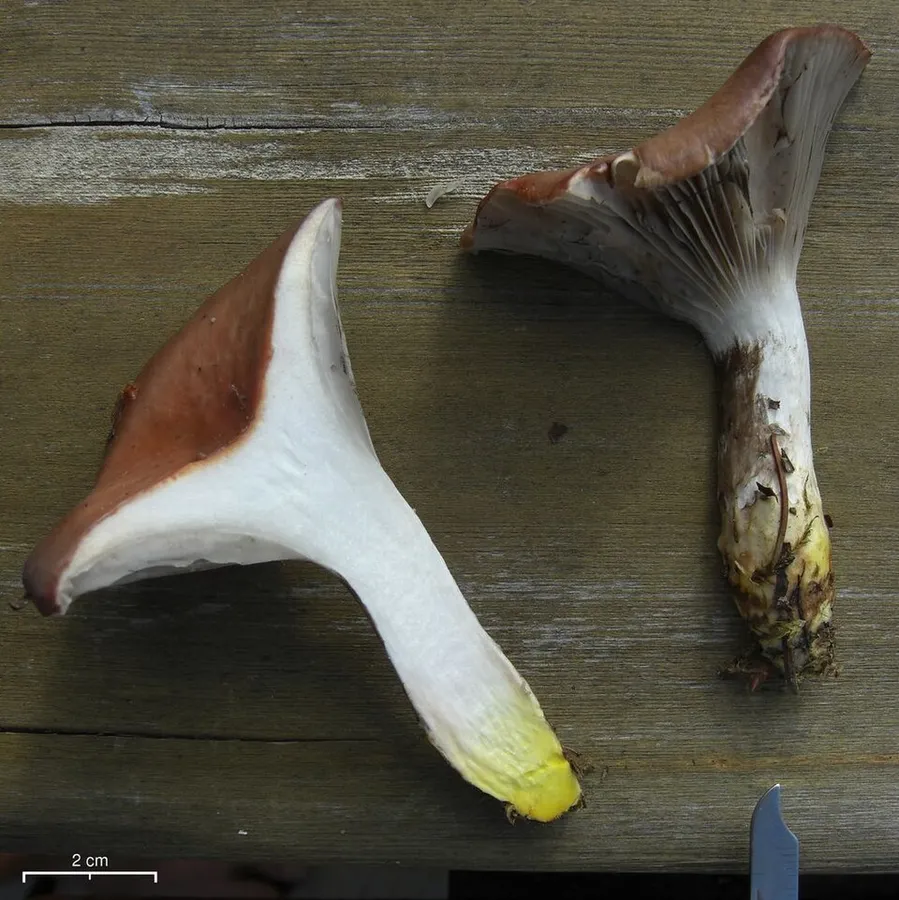
The cap is initially convex and almost peg-like, reaching 2–15 cm in width. The surface is smooth and slimy when damp. The color can vary from whitish to a dull pinkish or color of salmon flesh when young. With maturity, the cap flattens, possibly becoming depressed, and turns purplish to reddish-brown. The flesh is soft and white or grayish. The gills are decurrent, fairly even, closely spaced and are somewhat waxy in appearance. They are white to grayish in color, turning black as ripening occurs. The stalk is up to 15 cm long and 1–5 cm thick. The diameter may be equal from top to bottom or either tapered or swollen at the base. The color transitions from a whitish shade in the upper portion above the veil to a bright yellow below. The veil is whitish with a thread-like texture, hidden beneath a layer of slime. The veil seems to disappear as it approaches the stalk, where it forms a slimy, almost hairy ring. This ring often blackens as the mushrooms age and the spores begin to release. The spores are smooth, spindle-shaped and elliptical, with each spore measuring 10–14 μm long, the smallest in the genus Gomphidius. The spore print is dark gray to black.

Sebagian uraian ditampilkan dalam bahasa sumber; terjemahannya belum tersedia atau belum lolos pemeriksaan.

Rujukan: [1]

Pengukuran mengikuti objek, spesimen atau kultur, dan metode yang disebutkan sumber. Baca uraian asli untuk konteks lengkap.

02 / Kehidupan

Habitat dan peran ekologis

Gomphidius oregonensis dapat ditemukan di barat Utara America from October to Desember, Ini mungkin parasit untuk Suillus caerulescens dan berpotensi S. ponderosus juga.

Rujukan: [1]

Habitat atau konteks temuan
Informasi belum tersedia pada sumber rilis ini.
Substrat
Informasi belum tersedia pada sumber rilis ini.
Peran atau konteks
Belum dikategorikan pada rilis ini.
Temukan hubungan serupa
03 / Siklus hidup

Reproduksi

The veil is whitish with a thread-like texture, hidden beneath a layer of slime. The veil seems to disappear as it approaches the stalk, where it forms a slimy, almost hairy ring. This ring often blackens as the mushrooms age and the spores begin to release. The spores are smooth, spindle-shaped and elliptical, with each spore measuring 10–14 μm long, the smallest in the genus Gomphidius. The spore print is dark gray to black.

Sebagian uraian ditampilkan dalam bahasa sumber; terjemahannya belum tersedia atau belum lolos pemeriksaan.

Rujukan: [1]

Sinonim menurut acuan taksonomi rilis: Leucogomphidius oregonensis
04 / Batas informasi

Catatan identitas dan cakupan

  • Nama diterima mengikuti Catalogue of Life Base2026-09-11; uraian mempertahankan konsep dan nama sumber aslinya.
  • Original geographic, specimen and life-cycle scope retained; source import awaits individual editorial review.
  • Impor dan terjemahan otomatis belum diperiksa editorial per profil. Struktur reproduktif yang disebutkan tidak membuktikan seluruh siklus hidup diketahui.
  • Pengukuran pada uraian mengikuti spesimen, kultur, dan metode sumber; angka tidak diperluas ke semua populasi.

Catatan distribusi dalam narasi mengikuti sumbernya. Dokumentasi spesimen atau foto mengikuti catatan sumber. Bukti wilayah Indonesia dan penilaian konservasi tidak disimpulkan dari gambar.

05 / Dokumentasi

Melihat dengan konteks

Dokumentasi Gomphidius oregonensis dari Wikimedia Commons. Gomphidius oregonensis Peck 20090701.1 Edgewood Blue, Wells Gray Park, BC Identifikasi mengikuti record berkas sumber.

Jenis
Fotografi
Kredit
Jason Hollinger
Lisensi
CC BY 2.0
Sumber media
Buka entri sumber

Gambar menunjukkan objek menurut identifikasi sumber, bukan verifikasi independen spesimen oleh Fungi. Tidak ada skala baru yang ditambahkan.

06 / Rujukan

Sumber profil

  1. [1] Gomphidius oregonensis — Wikipedia (en)Bagian sumber: Frozen revision 1316161323
    Tanggal penghimpunan sumber: 2026-10-12
    Teks sumber: CC BY-SA4.0 · Wikipedia contributors
  2. [2] Catalogue of Life Base2026-09-11 — Gomphidius oregonensisBagian sumber: ColDP NameUsage.tsv ID 3GSNC; accepted species; source 2073
    Tanggal penghimpunan sumber: 2026-10-12
  3. [3] Dokumentasi visual — Gomphidius oregonensisBagian sumber: Individual media record; identification follows the source, not independent determination
    Tanggal penghimpunan sumber: 2026-10-12
    Media sumber: CC BY 2.0 · Jason Hollinger

Adaptasi teks: CC BY-SA 4.0. Wikipedia contributors — Gomphidius oregonensis — Wikipedia (en)

Uraian asli dan riwayat sumber

Riwayat atau halaman sumber

Ringkasan sumber

Gomphidius oregonensis, commonly known as insidious gomphidius or blackening slime spike, is a species of fungus. With age, the fruiting body becomes murky and "insidious" in appearance, hence its common name. G. oregonensis can be distinguished by its spores which are the shortest in its genus, typically less than 14 μm long. Earlier in its growth, it can be difficult to distinguish from other members of its genus, such as G. glutinosus', the most common and widespread species. G. oregonensis is found only in western North America, most commonly on the Pacific Coast.

Revisi sumber

Morfologi sumber

The cap is initially convex and almost peg-like, reaching 2–15 cm in width. The surface is smooth and slimy when damp. The color can vary from whitish to a dull pinkish or color of salmon flesh when young. With maturity, the cap flattens, possibly becoming depressed, and turns purplish to reddish-brown. The flesh is soft and white or grayish. The gills are decurrent, fairly even, closely spaced and are somewhat waxy in appearance. They are white to grayish in color, turning black as ripening occurs. The stalk is up to 15 cm long and 1–5 cm thick. The diameter may be equal from top to bottom or either tapered or swollen at the base. The color transitions from a whitish shade in the upper portion above the veil to a bright yellow below. The veil is whitish with a thread-like texture, hidden beneath a layer of slime. The veil seems to disappear as it approaches the stalk, where it forms a slimy, almost hairy ring. This ring often blackens as the mushrooms age and the spores begin to release. The spores are smooth, spindle-shaped and elliptical, with each spore measuring 10–14 μm long, the smallest in the genus Gomphidius. The spore print is dark gray to black.

Revisi sumber

Ekologi sumber

Gomphidius oregonensis can be found in western North America from October to December, It is likely parasitic to Suillus caerulescens and potentially S. ponderosus as well.

Revisi sumber

Struktur reproduksi sumber

The veil is whitish with a thread-like texture, hidden beneath a layer of slime. The veil seems to disappear as it approaches the stalk, where it forms a slimy, almost hairy ring. This ring often blackens as the mushrooms age and the spores begin to release. The spores are smooth, spindle-shaped and elliptical, with each spore measuring 10–14 μm long, the smallest in the genus Gomphidius. The spore print is dark gray to black.

Revisi sumber

Rujukan halaman ini

Fungi. Gomphidius oregonensis. Rilis data fungi-2026-10-12-expansion-2. https://fungi-atlas.mgadib.chatgpt.site/jamur/gomphidius-oregonensis/.

Status: impor sumber; pemeriksaan editorial per profil belum selesai. Untuk klaim biologis, gunakan rujukan pada bagian terkait dan periksa konteks sumber aslinya.