Ciri dan struktur
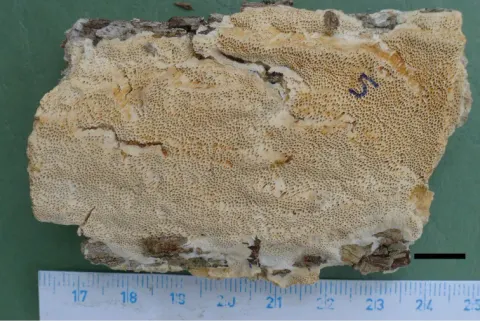
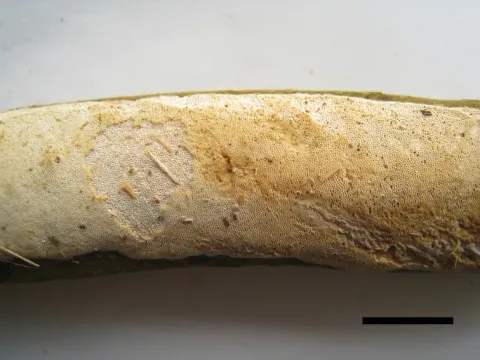
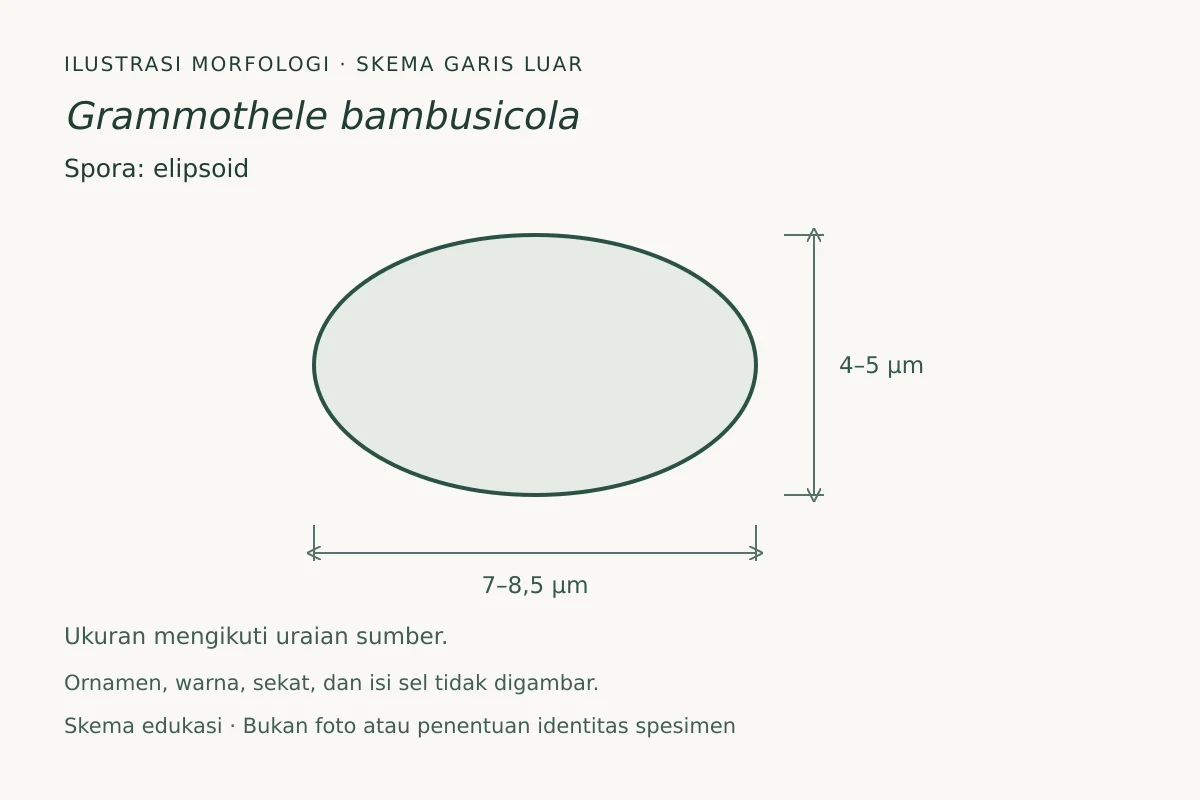
Fruit bodies of the fungus are crust-like, measuring up to 1 mm thick, with a pore surface colour ranging from cream to straw to pale yellowish brown. The shallow pores number 2–3 per millimetre. G. bambusicola has a dimitic hyphal system; its generative hyphae have clamp connections. Spores are more or less ellipsoid in shape, thin-walled, and measure 7–8.5 by 4–5 μm. The fungus is similar in morphology to Grammothele ochracea (found in Thailand), but differs from that species in having larger pores, more yellowish colour, and spores that are longer and more ellipsoid.
Habitat dan peran ekologis
The type collection was made an altitude of 2800 m in Ghorepani, in the Gandaki Zone of Nepal, in October 1979. It was found growing on Bambusa. The species was later reported from Takatsuki, Osaka.
- Habitat atau konteks temuan
- Informasi belum tersedia pada sumber rilis ini.
- Substrat
- Informasi belum tersedia pada sumber rilis ini.
- Peran atau konteks
- Belum dikategorikan pada rilis ini.
Reproduksi
G. bambusicola has a dimitic hyphal system; its generative hyphae have clamp connections. Spores are more or less ellipsoid in shape, thin-walled, and measure 7–8.5 by 4–5 μm. The fungus is similar in morphology to Grammothele ochracea (found in Thailand), but differs from that species in having larger pores, more yellowish colour, and spores that are longer and more ellipsoid.
Catatan identitas dan cakupan
- Nama diterima mengikuti Catalogue of Life Base2026-09-11; uraian mempertahankan konsep dan nama sumber aslinya.
- Original geographic, specimen and life-cycle scope retained; source import awaits individual editorial review.
- Impor dan terjemahan otomatis belum diperiksa editorial per profil. Struktur reproduktif yang disebutkan tidak membuktikan seluruh siklus hidup diketahui.
- Pengukuran pada uraian mengikuti spesimen, kultur, dan metode sumber; angka tidak diperluas ke semua populasi.
Catatan distribusi dalam narasi mengikuti sumbernya. Dokumentasi spesimen atau foto mengikuti catatan sumber. Bukti wilayah Indonesia dan penilaian konservasi tidak disimpulkan dari gambar.
Melihat dengan konteks
Ilustrasi skematis garis luar spora Grammothele bambusicola, berdasarkan uraian sumber; ukuran yang dilaporkan 7–8,5 × 4–5 µm. Proporsi disederhanakan, bukan salinan satu spesimen. Ornamen permukaan, warna, sekat, dan isi sel tidak direkonstruksi. Spora kurang lebih elipsoid, 7–8,5 × 4–5 µm. Ketebalan dinding dan ukuran spesies Grammothele ochracea tidak digunakan. Ornamen, warna, sekat, dan isi sel tidak digambar. Skema edukasi, bukan alat identifikasi.
- Jenis
- Ilustrasi skematis
- Kredit
- Fungi, ilustrasi orisinal (2026); fakta morfologi berdasarkan Wikipedia contributors
- Lisensi
- CC BY-SA 4.0
- Sumber media
- Buka entri sumber
Sumber profil
- [1] Grammothele bambusicola — Wikipedia (en)
- [2] Catalogue of Life Base2026-09-11 — Grammothele bambusicola
Rujukan halaman ini
Fungi. Grammothele bambusicola. Rilis data fungi-2026-10-12-expansion-2. https://fungi-atlas.mgadib.chatgpt.site/jamur/grammothele-bambusicola/.
Status: impor sumber; pemeriksaan editorial per profil belum selesai. Untuk klaim biologis, gunakan rujukan pada bagian terkait dan periksa konteks sumber aslinya.