01 / Morfologi

Ciri dan struktur

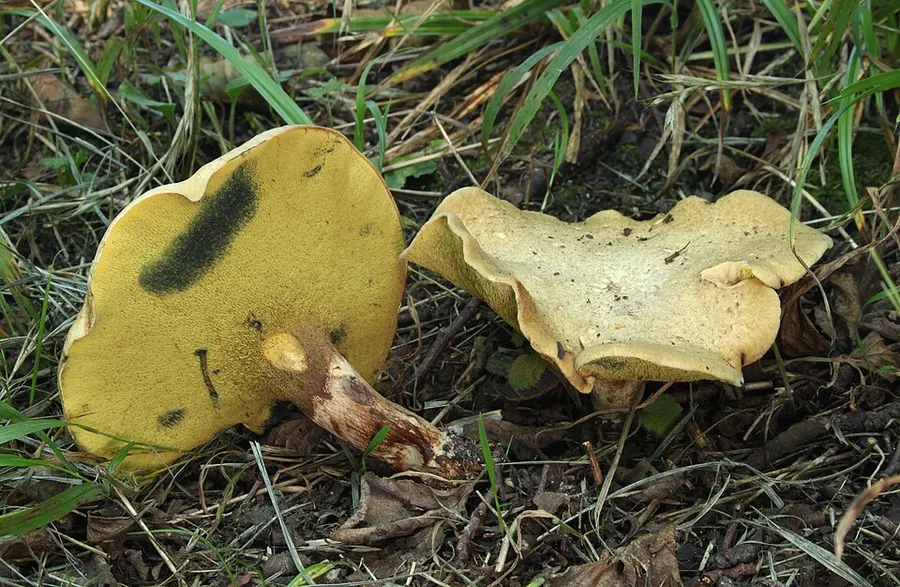
Gyrodon lividus has a pale brown, buff or ochre cap 4 – 10 cm in diameter which is convex and later flat in shape, and can be sticky when wet. Like other boletes, it has pores instead of gills that make up the hymenophore on the underside of the cap. These large pores are decurrent in their attachment to the stipe. Bright yellow, they turn blue-grey when cut or bruised. The thin flesh is pale yellow. The ringless stipe is initially the same colour as the cap but later darkens to a red-brown; it is 3 – 7 cm high by 1 – 2 cm wide. The spore print is olive-brown and the oval spores are 4.5–6 x 3–4 μm. The mushroom has a non-distinctive smell and taste. In the United States, Gyrodon lividus could be mistaken for Boletinellus merulioides, which is generally a larger mushroom overall with larger spores and grows under ash (Fraxinus), or B. proximus, a dark brown or purple-brown capped species that does not change colour when bruised and is found only in Florida.

Sebagian uraian ditampilkan dalam bahasa sumber; terjemahannya belum tersedia atau belum lolos pemeriksaan.

Rujukan: [1]

Pengukuran mengikuti objek, spesimen atau kultur, dan metode yang disebutkan sumber. Baca uraian asli untuk konteks lengkap.

02 / Kehidupan

Habitat dan peran ekologis

Gyrodon lividus ditemukan di seluruh Eropa, termasuk Ķemeri National Park in Latvia, Di Asia, telah tercatat di China and Jepang. Hal ini juga ditemukan di beberapa daerah di Turki, termasuk Trabzon, Maçka dan Sevinç. Di Amerika Utara, telah dilaporkan terjadi di California, di bawah alder (Alnus rhombifolia). Seperti namanya, Gyrodon lividus ditemukan di bawah alder (Alnus rhombifolia), dengan mana ia membentuk hubungan mikoriza. Fruit bodies dapat ditemukan sendirian atau dalam kelompok dan muncul pada musim gugur. Ektomikorriz jamur ditandai dengan warna kuningnya pada spesimen muda, rizomorf yang sangat diferensiasi, dan adanya sklerotia.

Rujukan: [1]

Habitat atau konteks temuan
Informasi belum tersedia pada sumber rilis ini.
Substrat
Informasi belum tersedia pada sumber rilis ini.
Peran atau konteks
Mitra tumbuhan
Temukan hubungan serupa
03 / Siklus hidup

Reproduksi

Gyrodon lividus has a pale brown, buff or ochre cap 4 – 10 cm in diameter which is convex and later flat in shape, and can be sticky when wet. Like other boletes, it has pores instead of gills that make up the hymenophore on the underside of the cap. These large pores are decurrent in their attachment to the stipe. Bright yellow, they turn blue-grey when cut or bruised. The thin flesh is pale yellow. The ringless stipe is initially the same colour as the cap but later darkens to a red-brown; it is 3 – 7 cm high by 1 – 2 cm wide. The spore print is olive-brown and the oval spores are 4.5–6 x 3–4 μm. The mushroom has a non-distinctive smell and taste. In the United States, Gyrodon lividus could be mistaken for Boletinellus merulioides, which is generally a larger mushroom overall with larger spores and grows under ash (Fraxinus), or B. proximus, a dark brown or purple-brown capped species that does not change colour when bruised and is found only in Florida.

Sebagian uraian ditampilkan dalam bahasa sumber; terjemahannya belum tersedia atau belum lolos pemeriksaan.

Rujukan: [1]

Sinonim menurut acuan taksonomi rilis: Boletus alneti; Boletus brachyporus; Boletus chrysenteron var. lividus; Boletus labyrinthicus; Boletus lividus; Boletus lividus var. alneti; Boletus lividus var. labyrinthricus; Boletus lividus var. rubescens; Boletus sistotrema; Boletus sistotrema var. brachyporus; Cladomeris sistotrema; Gyrodon lividus subsp. alneti; Gyrodon lividus subsp. labyrinthicus; Gyrodon sistotrema; Gyrodon sistotrema var. brachyporus; Gyrodon sistotremoides; Suillus chrysenteron var. lividus; Uloporus lividus; Uloporus sistotrema
04 / Batas informasi

Catatan identitas dan cakupan

  • Nama diterima mengikuti Catalogue of Life Base2026-09-11; uraian mempertahankan konsep dan nama sumber aslinya.
  • Original geographic, specimen and life-cycle scope retained; source import awaits individual editorial review.
  • Impor dan terjemahan otomatis belum diperiksa editorial per profil. Struktur reproduktif yang disebutkan tidak membuktikan seluruh siklus hidup diketahui.
  • Pengukuran pada uraian mengikuti spesimen, kultur, dan metode sumber; angka tidak diperluas ke semua populasi.

Catatan distribusi dalam narasi mengikuti sumbernya. Dokumentasi spesimen atau foto mengikuti catatan sumber. Bukti wilayah Indonesia dan penilaian konservasi tidak disimpulkan dari gambar.

05 / Dokumentasi

Melihat dengan konteks

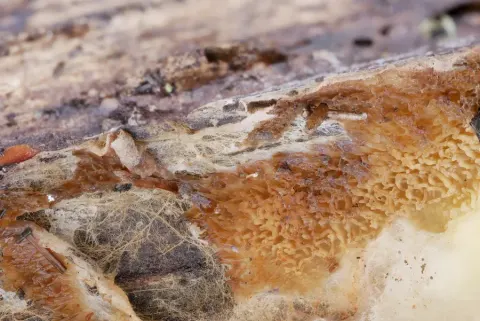
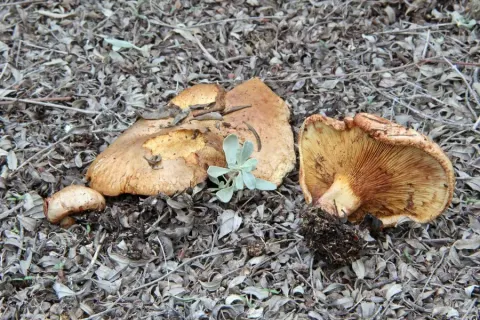
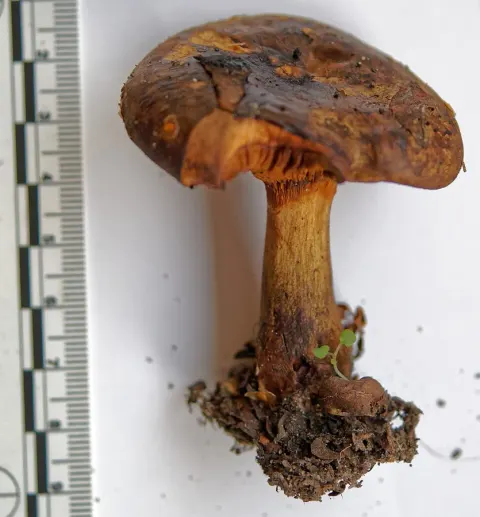
Dokumentasi Gyrodon lividus dari Wikimedia Commons. Gyrodon lividus , Family: Paxillaceae, Location: Germany, Biberach a.d. Riss. Area geotagging because very rare species. Identifikasi mengikuti record berkas sumber.

Jenis
Fotografi
Kredit
Holger Krisp
Lisensi
CC BY 3.0
Sumber media
Buka entri sumber

Gambar menunjukkan objek menurut identifikasi sumber, bukan verifikasi independen spesimen oleh Fungi. Tidak ada skala baru yang ditambahkan.

06 / Rujukan

Sumber profil

  1. [1] Gyrodon lividus — Wikipedia (en)Bagian sumber: Frozen revision 1292752759
    Tanggal penghimpunan sumber: 2026-10-12
    Teks sumber: CC BY-SA4.0 · Wikipedia contributors
  2. [2] Catalogue of Life Base2026-09-11 — Gyrodon lividusBagian sumber: ColDP NameUsage.tsv ID 3HZGN; accepted species; source 2073
    Tanggal penghimpunan sumber: 2026-10-12
  3. [3] Dokumentasi visual — Gyrodon lividusBagian sumber: Individual media record; identification follows the source, not independent determination
    Tanggal penghimpunan sumber: 2026-10-12
    Media sumber: CC BY 3.0 · Holger Krisp

Adaptasi teks: CC BY-SA 4.0. Wikipedia contributors — Gyrodon lividus — Wikipedia (en)

Uraian asli dan riwayat sumber

Riwayat atau halaman sumber

Ringkasan sumber

Gyrodon lividus, commonly known as the alder bolete, is a pored mushroom bearing close affinity to the genus Paxillus. Although found predominantly in Europe, where it grows in a mycorrhizal association with alder, it has also recorded from China, Japan and California. Fruit bodies are distinguished from other boletes by decurrent bright yellow pores that turn blue-grey on bruising. G. lividus mushrooms are edible.

Revisi sumber

Morfologi sumber

Gyrodon lividus has a pale brown, buff or ochre cap 4 – 10 cm in diameter which is convex and later flat in shape, and can be sticky when wet. Like other boletes, it has pores instead of gills that make up the hymenophore on the underside of the cap. These large pores are decurrent in their attachment to the stipe. Bright yellow, they turn blue-grey when cut or bruised. The thin flesh is pale yellow. The ringless stipe is initially the same colour as the cap but later darkens to a red-brown; it is 3 – 7 cm high by 1 – 2 cm wide. The spore print is olive-brown and the oval spores are 4.5–6 x 3–4 μm. The mushroom has a non-distinctive smell and taste. In the United States, Gyrodon lividus could be mistaken for Boletinellus merulioides, which is generally a larger mushroom overall with larger spores and grows under ash (Fraxinus), or B. proximus, a dark brown or purple-brown capped species that does not change colour when bruised and is found only in Florida.

Revisi sumber

Ekologi sumber

Gyrodon lividus is found across Europe, including Ķemeri National Park in Latvia, In Asia, it has been recorded in China and Japan. It is also found in several locales in Turkey, including Trabzon, Maçka and Sevinç. In North America, it has been reported to occur in California, under alder (Alnus rhombifolia). As its common name suggests, Gyrodon lividus is found under alder (Alnus rhombifolia), with which it forms a mycorrhizal relationship. Fruit bodies may be found alone or in clumps and appear in autumn. The ectomycorrhiza of the fungus is characterized by its yellow colour in young specimens, rhizomorphs that are highly differentiated, and the presence of sclerotia.

Revisi sumber

Struktur reproduksi sumber

Gyrodon lividus has a pale brown, buff or ochre cap 4 – 10 cm in diameter which is convex and later flat in shape, and can be sticky when wet. Like other boletes, it has pores instead of gills that make up the hymenophore on the underside of the cap. These large pores are decurrent in their attachment to the stipe. Bright yellow, they turn blue-grey when cut or bruised. The thin flesh is pale yellow. The ringless stipe is initially the same colour as the cap but later darkens to a red-brown; it is 3 – 7 cm high by 1 – 2 cm wide. The spore print is olive-brown and the oval spores are 4.5–6 x 3–4 μm. The mushroom has a non-distinctive smell and taste. In the United States, Gyrodon lividus could be mistaken for Boletinellus merulioides, which is generally a larger mushroom overall with larger spores and grows under ash (Fraxinus), or B. proximus, a dark brown or purple-brown capped species that does not change colour when bruised and is found only in Florida.

Revisi sumber

Rujukan halaman ini

Fungi. Gyrodon lividus. Rilis data fungi-2026-10-12-expansion-2. https://fungi-atlas.mgadib.chatgpt.site/jamur/gyrodon-lividus/.

Status: impor sumber; pemeriksaan editorial per profil belum selesai. Untuk klaim biologis, gunakan rujukan pada bagian terkait dan periksa konteks sumber aslinya.