Ciri dan struktur
Cap 0.7–6.5 cm in diameter, convex when young, usually becoming umbonate, sometimes papillate, margin sometimes involute when young, occasionally crenulate, often eroded, upturned or radially split when older, tacky when moist, not hygrophanous, usually bicolored, rarely unicolored, at center dark pinkish buff to dark olive buff to grayish brown to umber or brownish olive to sepia to clay-buff or cinnamon or yellowish brown to orange brown or dark brick, at margin cream to pinkish buff to grayish buff or clay-buff to dark olive buff to grayish brown or brownish olive to grayish pink, with remains of universal veil, partial veil present. Lamellae when young pale brown, when older ochre brown to fairly dark brown, adnate to emarginate, sometimes with decurrent tooth, rarely decurrent, maximum depth up to 6.5 mm, number of lamellae {L} 30–48, droplets absent, but occasionally visible with × 10 lens or rarely visible with naked eye, white fimbriate edge usually present, sometimes weak. Stem 1.4–8.0(–9.0) × (0.2–)0.3–0.6(–0.8) cm, whitish then pale sordid gray brown, already when young dark sordid brown at base, when young with brownish tomentose velar remnants downwards, cylindrical, rarely tapering or clavate, stem Q (4.3–)4.8–16.3(–18.8), fibrillose, usually pruinose to floccose at apex. Context firm, stem interior stuffed, later hollow, occasionally with superior wick, stem flesh discoloring from base, sometimes very strongly, rarely absent. Smell usually raphanoid, rarely absent. Taste mild to bitter, sometimes raphanoid. Spore deposit dark olive buff to brownish olive to umber.
Habitat dan peran ekologis
Hebeloma mesophaeum is widely distributed, but apparently uncommon in Greenland with only 11 records (2.9%). This is in contrast to the frequency in Europe, where it is very common and widely distributed (Beker et al. 2016). From alpine and arctic Europe, it is known from the Alps, Southern Carpathians, Svalbard and Iceland. Outside Europe and Greenland, there are a few records from the Rocky Mountains (Colorado, Cripps et al. 2019) and arctic Canada (Ohenoja and Ohenoja 2010). It is distributed from the Mediterranean area through the Temperate and Boreal zone to the Arctic and Alpine zones, being less common in the colder areas. Circumpolar, arctic-alpine, temperate, boreal and subarctic. Eleven collections, six of them with Salix glauca, one with Dryas octopetala and D. integrifolia, one with Bistorta, three not reported. One record from the Rocky Mountains was also with S. glauca. The soil conditions were variable. Hebeloma mesophaeum is widespread and very versatile when it comes to hosts, including many deciduous as well as coniferous hosts (Beker et al. 2016).
- Habitat atau konteks temuan
- Informasi belum tersedia pada sumber rilis ini.
- Substrat
- Informasi belum tersedia pada sumber rilis ini.
- Peran atau konteks
- Belum dikategorikan pada rilis ini.
Reproduksi
Cap 0.7–6.5 cm in diameter, convex when young, usually becoming umbonate, sometimes papillate, margin sometimes involute when young, occasionally crenulate, often eroded, upturned or radially split when older, tacky when moist, not hygrophanous, usually bicolored, rarely unicolored, at center dark pinkish buff to dark olive buff to grayish brown to umber or brownish olive to sepia to clay-buff or cinnamon or yellowish brown to orange brown or dark brick, at margin cream to pinkish buff to grayish buff or clay-buff to dark olive buff to grayish brown or brownish olive to grayish pink, with remains of universal veil, partial veil present. Lamellae when young pale brown, when older ochre brown to fairly dark brown, adnate to emarginate, sometimes with decurrent tooth, rarely decurrent, maximum depth up to 6.5 mm, number of lamellae {L} 30–48, droplets absent, but occasionally visible with × 10 lens or rarely visible with naked eye, white fimbriate edge usually present, sometimes weak.
Catatan identitas dan cakupan
- Nama diterima mengikuti Catalogue of Life Base2026-09-11; uraian mempertahankan konsep dan nama sumber aslinya.
- Preserve original treatment localities, hosts and substrate scope. Materials examined describe documented specimens, not the full global range.
- Impor dan terjemahan otomatis belum diperiksa editorial per profil. Struktur reproduktif yang disebutkan tidak membuktikan seluruh siklus hidup diketahui.
- Pengukuran pada uraian mengikuti spesimen, kultur, dan metode sumber; angka tidak diperluas ke semua populasi.
Catatan distribusi dalam narasi mengikuti sumbernya. Dokumentasi spesimen atau foto mengikuti catatan sumber. Bukti wilayah Indonesia dan penilaian konservasi tidak disimpulkan dari gambar.
Melihat dengan konteks
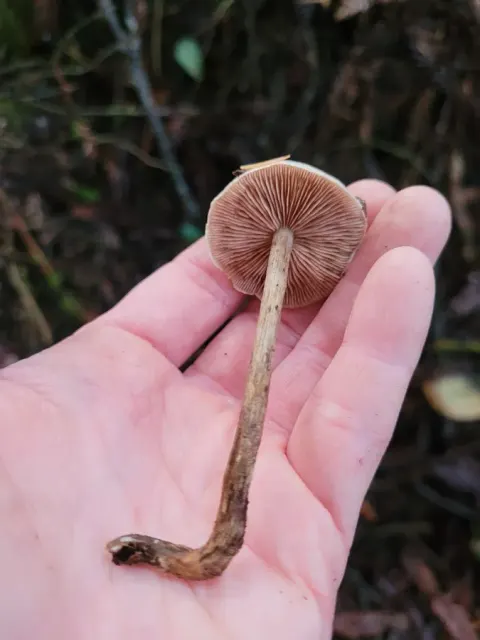
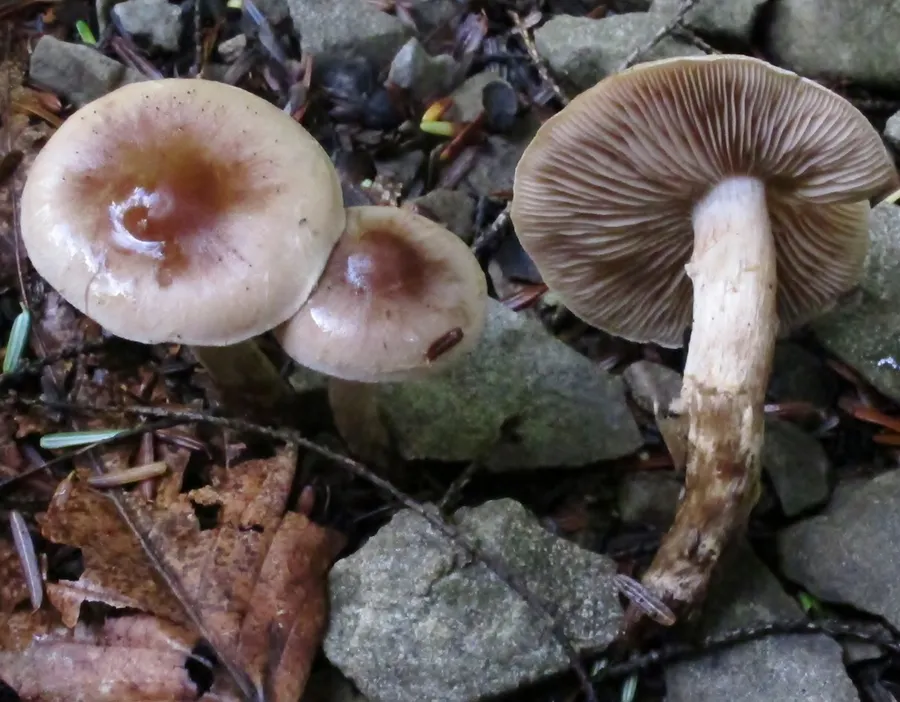
Dokumentasi Hebeloma mesophaeum menurut asosiasi foto pada record takson iNaturalist. Kredit: mycowalt. Identitas mengikuti sumber; bukan penentuan spesimen independen.
- Jenis
- Fotografi
- Kredit
- (c) mycowalt, some rights reserved (CC BY-SA), uploaded by mycowalt
- Lisensi
- CC BY-SA 4.0
- Sumber media
- Buka entri sumber
Dokumentasi tambahan
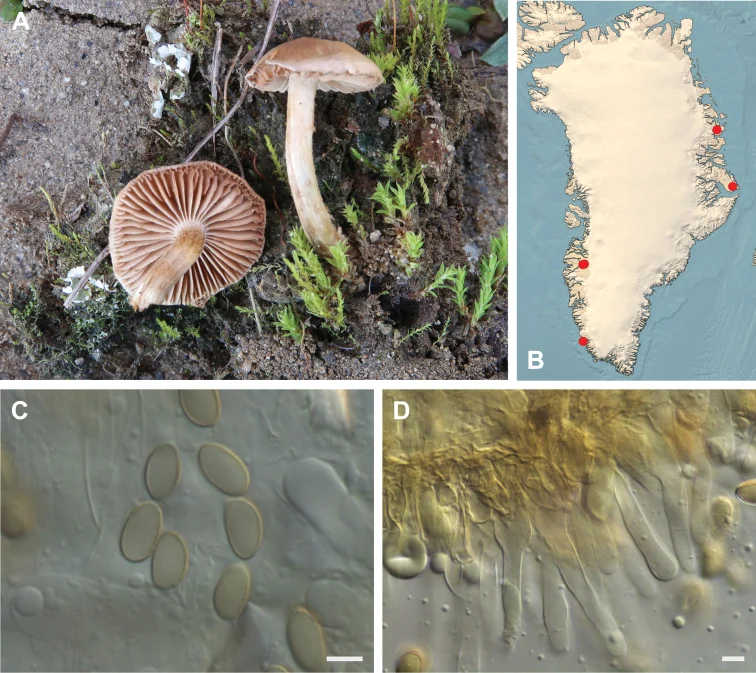
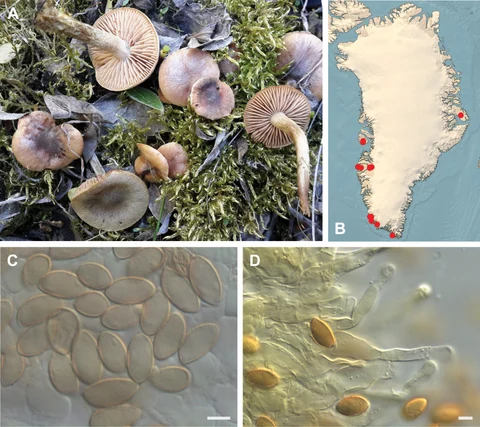
Pelat Hebeloma mesophaeum: tubuh buah pada panel A, peta koleksi pada B, serta spora dan keilosistidia pada C–D. Pembagian panel dan identitas mengikuti sumber.
Kredit dan penggunaan
Ursula Eberhardt, Henry J. Beker, Torbjørn Borgen, Henning Knudsen, Nicole Schütz, Steen A. Elborne
Ukuran dan format gambar disesuaikan tanpa pemotongan, retus, atau penambahan skala. Lisensi sumber dipertahankan.
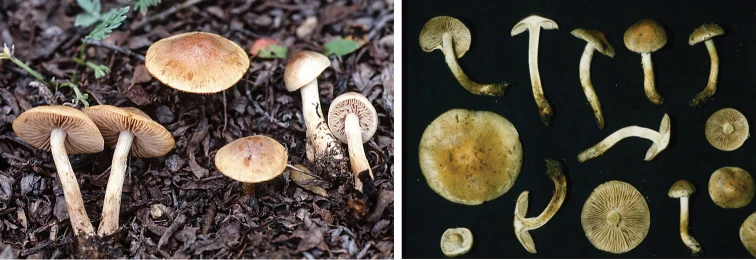
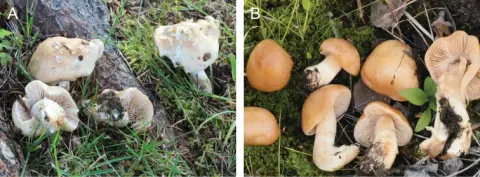
Hebeloma mesophaeum, CLC1245 and ZT8082.
Kredit dan penggunaan
Cathy L. Cripps, Ursula Eberhardt, Nicole Schütz, Henry J. Beker, Vera S. Evenson, Egon Horak
Ukuran dan format gambar disesuaikan tanpa pemotongan, retus, atau penambahan skala. Lisensi sumber dipertahankan.
Sumber profil
- [1] A survey of Hebeloma (Hymenogastraceae) in Greenland — Hebeloma mesophaeum
- [2] Catalogue of Life Base2026-09-11 — Hebeloma mesophaeum
- [3] Dokumentasi visual — Hebeloma mesophaeum
- [4] Dokumentasi visual — Hebeloma mesophaeum
- [5] Dokumentasi visual — Hebeloma mesophaeum
Rujukan halaman ini
Fungi. Hebeloma mesophaeum. Rilis data fungi-2026-10-12-expansion-2. https://fungi-atlas.mgadib.chatgpt.site/jamur/hebeloma-mesophaeum/.
Status: impor sumber; pemeriksaan editorial per profil belum selesai. Untuk klaim biologis, gunakan rujukan pada bagian terkait dan periksa konteks sumber aslinya.