01 / Morfologi

Ciri dan struktur

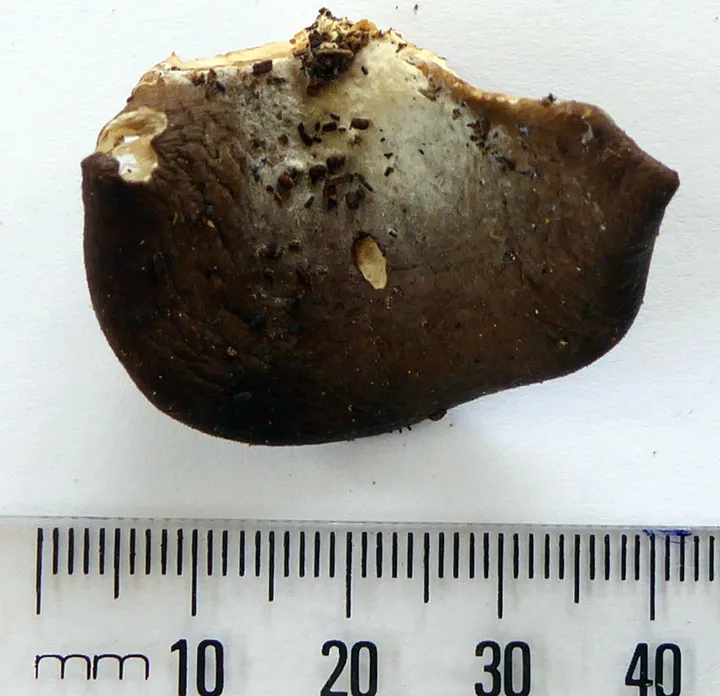
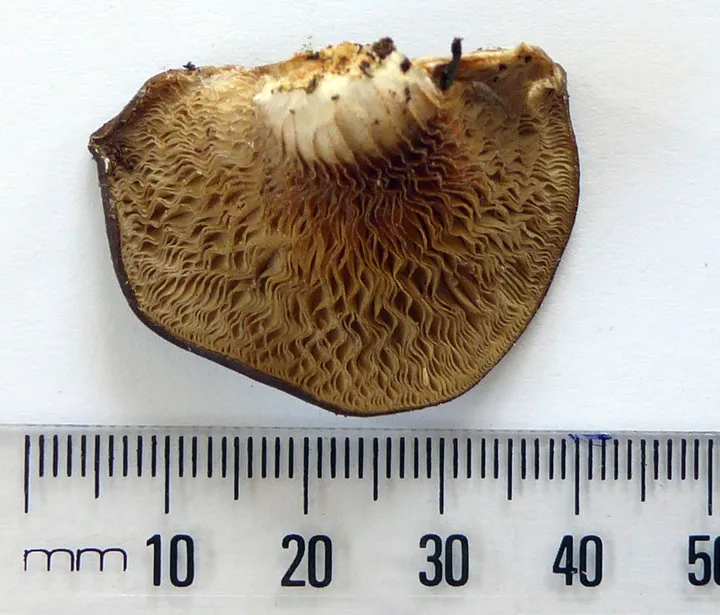
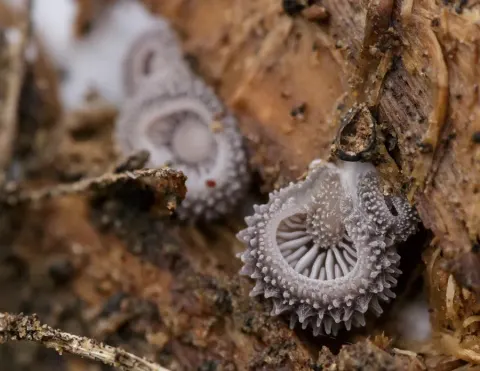
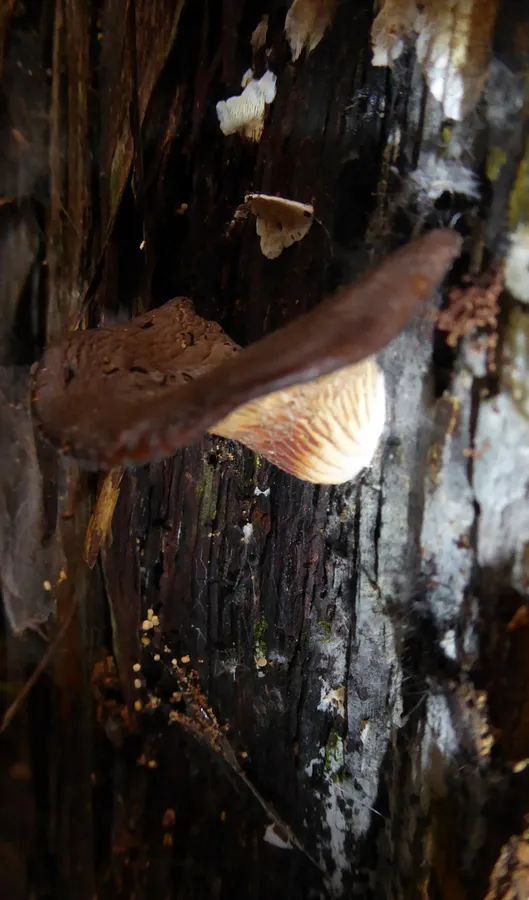
[GS] Pileus 3-6 X 2-4 cm., deep reddish brown, spathulate with down-rolled margin, somewhat striate at first, smooth; flesh concolorous. Gills deeply decurrent, fawn to ochraceous, deep, moderately crowded. Stipe 0-5 X 0-5 cm., lateral, concolorous, solid, fleshy, uniting in groups. Spores; 7 X 5um, non-amyloid, thin-walled. Metuloids 50 X 15um, pseudo-amyloid, very thick walled, encrusted with crystals, very abundant on gill faces (Fig. 1/49, p. 10). Cuticle subregular, with occasional thick-walled hyphae with sharp pointed hyphal endings. HABITAT: in humus soil or on fallen wood, Levin, 25.7.1948, G. Parsons in Stevenson (type); Otari, 7.6.1958, Stevenson. [EH] = Hohenbuehelia petaloides (Fries) Schulzer. This species may be introduced as it is frequently found on ruderal places or in lawns. [JAC] Macromorphology does suggest H. petalodes/metuloidea, e.g. pileus (material fragmented) is polished chestbut brown. With rhizoids. GS drawing has this clearly as spathulate. Spathulate/fan-shaped is not a good character according to sequences. Pileipellis section with single dark band. Pilocystidia subuate, thick-walled. Consistent with H. metuloidea and provides an earleir name. Gloesphex cystidia not observed. Spores from lamella squash length=6.4–7.5µm (µ=7.0, σ=0.35), width=4.0–5.4µm (µ=4.6, σ=0.33), Q=1.3–1.7µm (µ=1.53, σ=0.11), n=20. Spores on cap minutely roughened? Must be something else.

Sebagian uraian ditampilkan dalam bahasa sumber; terjemahannya belum tersedia atau belum lolos pemeriksaan.

Rujukan: [1]

Pengukuran mengikuti objek, spesimen atau kultur, dan metode yang disebutkan sumber. Baca uraian asli untuk konteks lengkap.

02 / Kehidupan

Habitat dan peran ekologis

[GS] Pileus 3-6 X 2-4 cm., deep reddish brown, spathulate with down-rolled margin, somewhat striate at first, smooth; flesh concolorous. Gills deeply decurrent, fawn to ochraceous, deep, moderately crowded. Stipe 0-5 X 0-5 cm., lateral, concolorous, solid, fleshy, uniting in groups. Spores; 7 X 5um, non-amyloid, thin-walled. Metuloids 50 X 15um, pseudo-amyloid, very thick walled, encrusted with crystals, very abundant on gill faces (Fig. 1/49, p. 10). Cuticle subregular, with occasional thick-walled hyphae with sharp pointed hyphal endings. HABITAT: in humus soil or on fallen wood, Levin, 25.7.1948, G. Parsons in Stevenson (type); Otari, 7.6.1958, Stevenson. [EH] = Hohenbuehelia petaloides (Fries) Schulzer. This species may be introduced as it is frequently found on ruderal places or in lawns. [JAC] Macromorphology does suggest H. petalodes/metuloidea, e.g. pileus (material fragmented) is polished chestbut brown. With rhizoids. GS drawing has this clearly as spathulate. Spathulate/fan-shaped is not a good character according to sequences. Pileipellis section with single dark band. Pilocystidia subuate, thick-walled. Consistent with H. metuloidea and provides an earleir name. Gloesphex cystidia not observed.

Sebagian uraian ditampilkan dalam bahasa sumber; terjemahannya belum tersedia atau belum lolos pemeriksaan.

Rujukan: [1]

Habitat atau konteks temuan
Informasi belum tersedia pada sumber rilis ini.
Substrat
kayu
Peran atau konteks
Belum dikategorikan pada rilis ini.
Temukan hubungan serupa
03 / Siklus hidup

Reproduksi

[GS] Pileus 3-6 X 2-4 cm., deep reddish brown, spathulate with down-rolled margin, somewhat striate at first, smooth; flesh concolorous. Gills deeply decurrent, fawn to ochraceous, deep, moderately crowded. Stipe 0-5 X 0-5 cm., lateral, concolorous, solid, fleshy, uniting in groups. Spores; 7 X 5um, non-amyloid, thin-walled. Metuloids 50 X 15um, pseudo-amyloid, very thick walled, encrusted with crystals, very abundant on gill faces (Fig. 1/49, p. 10). Cuticle subregular, with occasional thick-walled hyphae with sharp pointed hyphal endings. HABITAT: in humus soil or on fallen wood, Levin, 25.7.1948, G. Parsons in Stevenson (type); Otari, 7.6.1958, Stevenson. [EH] = Hohenbuehelia petaloides (Fries) Schulzer.

Sebagian uraian ditampilkan dalam bahasa sumber; terjemahannya belum tersedia atau belum lolos pemeriksaan.

Rujukan: [1]

Sinonim menurut acuan taksonomi rilis: Acanthocystis carbonaria; Acanthocystis geogenius; Acanthocystis petaloides; Agaricus geogenius; Agaricus petaloides; Geopetalum geogenium; Geopetalum geogenium var. queletii; Geopetalum petaloides; Hohenbuehelia carbonaria; Hohenbuehelia geogenia; Hohenbuehelia geogenia var. queletii; Hohenbuehelia parsonsiae; Hohenbuehelia petaloides var. amara; Hohenbuehelia petaloides var. incrustatocystidiata; Hohenbuehelia petaloides var. victoriensis; Panus carbonarius; Pleuropus geogenius; Pleurotus geogenius; Pleurotus petaloides; Pleurotus petaloides f. americana; Pleurotus petaloides f. carbonarius; Pleurotus petaloides var. eupetaloides; Pleurotus petaloides var. geogenius; Pleurotus petaloides var. glabratus; Pleurotus petaloides var. victoriensis; Resupinatus petaloides
04 / Batas informasi

Catatan identitas dan cakupan

  • Nama diterima mengikuti Catalogue of Life Base2026-09-11; uraian mempertahankan konsep dan nama sumber aslinya.
  • Historical description as cited by BiotaNZ. Preserve explicit New Zealand/locality, host and specimen qualifiers. Distribution is the cited source scope, not a current global range.
  • Impor dan terjemahan otomatis belum diperiksa editorial per profil. Struktur reproduktif yang disebutkan tidak membuktikan seluruh siklus hidup diketahui.
  • Pengukuran pada uraian mengikuti spesimen, kultur, dan metode sumber; angka tidak diperluas ke semua populasi.

Catatan distribusi dalam narasi mengikuti sumbernya. Dokumentasi spesimen atau foto mengikuti catatan sumber. Bukti wilayah Indonesia dan penilaian konservasi tidak disimpulkan dari gambar.

05 / Dokumentasi

Melihat dengan konteks

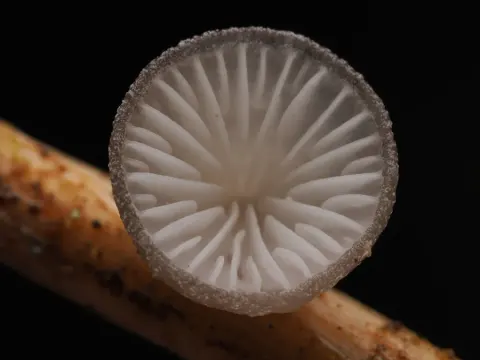
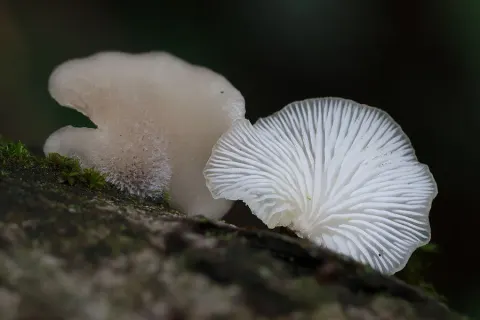
Dokumentasi Hohenbuehelia parsonsiae menurut asosiasi foto pada record takson iNaturalist. Kredit: Peter de Lange. Identitas mengikuti sumber; bukan penentuan spesimen independen.

Jenis
Fotografi
Kredit
no rights reserved, uploaded by Peter de Lange
Lisensi
CC0 1.0
Sumber media
Buka entri sumber

Gambar menunjukkan objek menurut identifikasi sumber, bukan verifikasi independen spesimen oleh Fungi. Tidak ada skala baru yang ditambahkan.

Dokumentasi tambahan

06 / Rujukan

Sumber profil

  1. [1] Cooper, J.A. 2014-: Studies of New Zealand agaric type collections not deposited in PDD (unpublished). — Hohenbuehelia parsonsiaeBagian sumber: biota:c1df7b41-0c90-4496-8066-750f4e46f610:1cb1b323-36b9-11d5-9548-00d0592d548c
    Tanggal penghimpunan sumber: 2026-10-12
    Teks sumber: CC BY 4.0 · Cooper, J.A. 2014-: Studies of New Zealand agaric type collections not deposited in PDD (unpublished).
  2. [2] Catalogue of Life Base2026-09-11 — Hohenbuehelia petaloidesBagian sumber: ColDP NameUsage.tsv ID 3M6W7; accepted species; source 2073
    Tanggal penghimpunan sumber: 2026-10-12
  3. [3] Dokumentasi visual — Hohenbuehelia petaloidesBagian sumber: Identitas mengikuti sumber dokumentasi; bukan penentuan spesimen independen.
    Tanggal penghimpunan sumber: 2026-10-17
    Media sumber: CC0 1.0 · no rights reserved, uploaded by Peter de Lange
  4. [4] Dokumentasi visual — Hohenbuehelia petaloidesBagian sumber: Identitas mengikuti sumber dokumentasi; bukan penentuan spesimen independen.
    Tanggal penghimpunan sumber: 2026-10-17
    Teks sumber: CC0 1.0 · no rights reserved, uploaded by Peter de Lange
  5. [5] Dokumentasi visual — Hohenbuehelia petaloidesBagian sumber: Identitas mengikuti sumber dokumentasi; bukan penentuan spesimen independen.
    Tanggal penghimpunan sumber: 2026-10-17
    Teks sumber: CC0 1.0 · no rights reserved, uploaded by Peter de Lange

Adaptasi teks: CC BY 4.0. Cooper, J.A. 2014-: Studies of New Zealand agaric type collections not deposited in PDD (unpublished). — Cooper, J.A. 2014-: Studies of New Zealand agaric type collections not deposited in PDD (unpublished). — Hohenbuehelia parsonsiae

Uraian asli dan riwayat sumber

Riwayat atau halaman sumber

Ringkasan sumber

[GS] Pileus 3-6 X 2-4 cm., deep reddish brown, spathulate with down-rolled margin, somewhat striate at first, smooth; flesh concolorous. Gills deeply decurrent, fawn to ochraceous, deep, moderately crowded. Stipe 0-5 X 0-5 cm., lateral, concolorous, solid, fleshy, uniting in groups. Spores; 7 X 5um, non-amyloid, thin-walled. Metuloids 50 X 15um, pseudo-amyloid, very thick walled, encrusted with crystals, very abundant on gill faces (Fig. 1/49, p. 10). Cuticle subregular, with occasional thick-walled hyphae with sharp pointed hyphal endings.

Revisi sumber

Morfologi sumber

[GS] Pileus 3-6 X 2-4 cm., deep reddish brown, spathulate with down-rolled margin, somewhat striate at first, smooth; flesh concolorous. Gills deeply decurrent, fawn to ochraceous, deep, moderately crowded. Stipe 0-5 X 0-5 cm., lateral, concolorous, solid, fleshy, uniting in groups. Spores; 7 X 5um, non-amyloid, thin-walled. Metuloids 50 X 15um, pseudo-amyloid, very thick walled, encrusted with crystals, very abundant on gill faces (Fig. 1/49, p. 10). Cuticle subregular, with occasional thick-walled hyphae with sharp pointed hyphal endings. HABITAT: in humus soil or on fallen wood, Levin, 25.7.1948, G. Parsons in Stevenson (type); Otari, 7.6.1958, Stevenson. [EH] = Hohenbuehelia petaloides (Fries) Schulzer. This species may be introduced as it is frequently found on ruderal places or in lawns. [JAC] Macromorphology does suggest H. petalodes/metuloidea, e.g. pileus (material fragmented) is polished chestbut brown. With rhizoids. GS drawing has this clearly as spathulate. Spathulate/fan-shaped is not a good character according to sequences. Pileipellis section with single dark band. Pilocystidia subuate, thick-walled. Consistent with H. metuloidea and provides an earleir name. Gloesphex cystidia not observed. Spores from lamella squash length=6.4–7.5µm (µ=7.0, σ=0.35), width=4.0–5.4µm (µ=4.6, σ=0.33), Q=1.3–1.7µm (µ=1.53, σ=0.11), n=20. Spores on cap minutely roughened? Must be something else.

Revisi sumber

Ekologi sumber

[GS] Pileus 3-6 X 2-4 cm., deep reddish brown, spathulate with down-rolled margin, somewhat striate at first, smooth; flesh concolorous. Gills deeply decurrent, fawn to ochraceous, deep, moderately crowded. Stipe 0-5 X 0-5 cm., lateral, concolorous, solid, fleshy, uniting in groups. Spores; 7 X 5um, non-amyloid, thin-walled. Metuloids 50 X 15um, pseudo-amyloid, very thick walled, encrusted with crystals, very abundant on gill faces (Fig. 1/49, p. 10). Cuticle subregular, with occasional thick-walled hyphae with sharp pointed hyphal endings. HABITAT: in humus soil or on fallen wood, Levin, 25.7.1948, G. Parsons in Stevenson (type); Otari, 7.6.1958, Stevenson. [EH] = Hohenbuehelia petaloides (Fries) Schulzer. This species may be introduced as it is frequently found on ruderal places or in lawns. [JAC] Macromorphology does suggest H. petalodes/metuloidea, e.g. pileus (material fragmented) is polished chestbut brown. With rhizoids. GS drawing has this clearly as spathulate. Spathulate/fan-shaped is not a good character according to sequences. Pileipellis section with single dark band. Pilocystidia subuate, thick-walled. Consistent with H. metuloidea and provides an earleir name. Gloesphex cystidia not observed.

Revisi sumber

Struktur reproduksi sumber

[GS] Pileus 3-6 X 2-4 cm., deep reddish brown, spathulate with down-rolled margin, somewhat striate at first, smooth; flesh concolorous. Gills deeply decurrent, fawn to ochraceous, deep, moderately crowded. Stipe 0-5 X 0-5 cm., lateral, concolorous, solid, fleshy, uniting in groups. Spores; 7 X 5um, non-amyloid, thin-walled. Metuloids 50 X 15um, pseudo-amyloid, very thick walled, encrusted with crystals, very abundant on gill faces (Fig. 1/49, p. 10). Cuticle subregular, with occasional thick-walled hyphae with sharp pointed hyphal endings. HABITAT: in humus soil or on fallen wood, Levin, 25.7.1948, G. Parsons in Stevenson (type); Otari, 7.6.1958, Stevenson. [EH] = Hohenbuehelia petaloides (Fries) Schulzer.

Revisi sumber

Rujukan halaman ini

Fungi. Hohenbuehelia petaloides. Rilis data fungi-2026-10-12-expansion-2. https://fungi-atlas.mgadib.chatgpt.site/jamur/hohenbuehelia-petaloides/.

Status: impor sumber; pemeriksaan editorial per profil belum selesai. Untuk klaim biologis, gunakan rujukan pada bagian terkait dan periksa konteks sumber aslinya.