01 / Morfologi

Ciri dan struktur

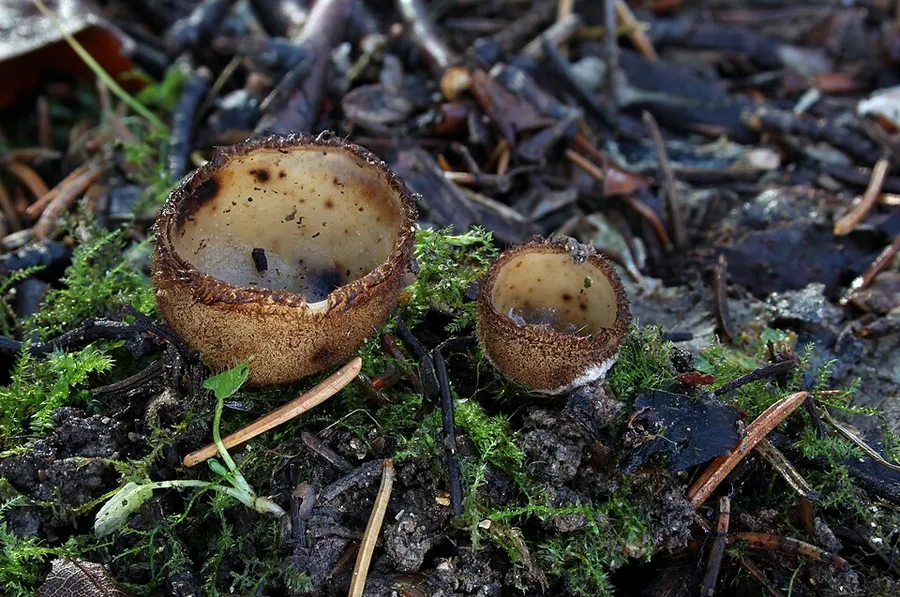
Humaria hemisphaerica has fruiting bodies (apothecia) that typically measure 5 to 30 mm in diameter by 1 to 1.5 cm deep. The fruiting bodies are initially spherical and expand to become cuplike at the fungus matures. This species typically does not have a stipe; when it does, it is present as a small abrupt base. The inner surface of the fruiting body (the hymenium) is white, while the outer hairy surface is brown and covered with brown hairs that taper to a sharp point. These hairs are 400–500 x 15–20 μm. The ascospores are elliptical, hyaline, 20–22 x 10–11 μm, and have 2–3 oil droplets.

Sebagian uraian ditampilkan dalam bahasa sumber; terjemahannya belum tersedia atau belum lolos pemeriksaan.

Rujukan: [1]

Pengukuran mengikuti objek, spesimen atau kultur, dan metode yang disebutkan sumber. Baca uraian asli untuk konteks lengkap.

02 / Kehidupan

Habitat dan peran ekologis

H. hemisphaerica tumbuh sepanjang tahun di pantai barat Amerika Utara lebih jauh ke timur, buahnya dari July to Oktober. Specimens usually tumbuh sendiri, tetapi juga muncul berkeliaran atau berkelompok di tanah, dan kadang-kadang di atas kayu yang membusuk.

Rujukan: [1]

Habitat atau konteks temuan
Informasi belum tersedia pada sumber rilis ini.
Substrat
kayu; tanah
Peran atau konteks
Belum dikategorikan pada rilis ini.
Temukan hubungan serupa
03 / Siklus hidup

Reproduksi

Humaria hemisphaerica has fruiting bodies (apothecia) that typically measure 5 to 30 mm in diameter by 1 to 1.5 cm deep. The fruiting bodies are initially spherical and expand to become cuplike at the fungus matures. This species typically does not have a stipe; when it does, it is present as a small abrupt base. The inner surface of the fruiting body (the hymenium) is white, while the outer hairy surface is brown and covered with brown hairs that taper to a sharp point. These hairs are 400–500 x 15–20 μm. The ascospores are elliptical, hyaline, 20–22 x 10–11 μm, and have 2–3 oil droplets.

Sebagian uraian ditampilkan dalam bahasa sumber; terjemahannya belum tersedia atau belum lolos pemeriksaan.

Rujukan: [1]

Sinonim menurut acuan taksonomi rilis: Lachnea hemisphaerica; Lachnea hemisphaerica f. infusoria; Lachnea hemisphaerica var. carbonaria; Lachnea hemisphaerica var. hungarica; Lachnea hemisphaerica var. infusoria; Lachnea hemisphaerica var. pusilla; Lachnea hemisphaerica var. replicata; Lachnea hemisphaerica var. subcalva; Mycolachnea hemisphaerica; Octospora subhirsuta; Peziza hemisphaerica; Peziza hemisphaerica var. minor; Peziza hemisphaerica var. proximella; Peziza hemisphaerica var. subcalva; Peziza replicata; Scutellinia hemisphaerica; Sepultaria hemisphaerica; Tricharia hemisphaerica
04 / Batas informasi

Catatan identitas dan cakupan

  • Nama diterima mengikuti Catalogue of Life Base2026-09-11; uraian mempertahankan konsep dan nama sumber aslinya.
  • Original geographic, specimen and life-cycle scope retained; source import awaits individual editorial review.
  • Impor dan terjemahan otomatis belum diperiksa editorial per profil. Struktur reproduktif yang disebutkan tidak membuktikan seluruh siklus hidup diketahui.
  • Pengukuran pada uraian mengikuti spesimen, kultur, dan metode sumber; angka tidak diperluas ke semua populasi.

Catatan distribusi dalam narasi mengikuti sumbernya. Dokumentasi spesimen atau foto mengikuti catatan sumber. Bukti wilayah Indonesia dan penilaian konservasi tidak disimpulkan dari gambar.

05 / Dokumentasi

Melihat dengan konteks

Dokumentasi Humaria hemisphaerica dari Wikimedia Commons. Hairy Fairy Cup or Brown-Haired Fairy Cup, Humaria hemisphaerica , Family: Pyronemataceae, Location: Germany, Erbach, Ringingen Identifikasi mengikuti record berkas sumber.

Jenis
Fotografi
Kredit
Holger Krisp
Lisensi
CC BY 3.0
Sumber media
Buka entri sumber

Gambar menunjukkan objek menurut identifikasi sumber, bukan verifikasi independen spesimen oleh Fungi. Tidak ada skala baru yang ditambahkan.

06 / Rujukan

Sumber profil

  1. [1] Humaria hemisphaerica — Wikipedia (en)Bagian sumber: Frozen revision 1371963938
    Tanggal penghimpunan sumber: 2026-10-12
    Teks sumber: CC BY-SA4.0 · Wikipedia contributors
  2. [2] Catalogue of Life Base2026-09-11 — Humaria hemisphaericaBagian sumber: ColDP NameUsage.tsv ID 3MTD8; accepted species; source 2073
    Tanggal penghimpunan sumber: 2026-10-12
  3. [3] Dokumentasi visual — Humaria hemisphaericaBagian sumber: Individual media record; identification follows the source, not independent determination
    Tanggal penghimpunan sumber: 2026-10-12
    Media sumber: CC BY 3.0 · Holger Krisp

Adaptasi teks: CC BY-SA 4.0. Wikipedia contributors — Humaria hemisphaerica — Wikipedia (en)

Uraian asli dan riwayat sumber

Riwayat atau halaman sumber

Ringkasan sumber

Humaria hemisphaerica has fruiting bodies (apothecia) that typically measure 5 to 30 mm in diameter by 1 to 1.5 cm deep. The fruiting bodies are initially spherical and expand to become cuplike at the fungus matures. This species typically does not have a stipe; when it does, it is present as a small abrupt base. The inner surface of the fruiting body (the hymenium) is white, while the outer hairy surface is brown and covered with brown hairs that taper to a sharp point. These hairs are 400–500 x 15–20 μm.

Revisi sumber

Morfologi sumber

Humaria hemisphaerica has fruiting bodies (apothecia) that typically measure 5 to 30 mm in diameter by 1 to 1.5 cm deep. The fruiting bodies are initially spherical and expand to become cuplike at the fungus matures. This species typically does not have a stipe; when it does, it is present as a small abrupt base. The inner surface of the fruiting body (the hymenium) is white, while the outer hairy surface is brown and covered with brown hairs that taper to a sharp point. These hairs are 400–500 x 15–20 μm. The ascospores are elliptical, hyaline, 20–22 x 10–11 μm, and have 2–3 oil droplets.

Revisi sumber

Ekologi sumber

H. hemisphaerica grows year-round on North America's west coast further east, it fruits from July to October. Specimens usually grow alone, but also appear scattered or grouped on the ground, and sometimes on decaying wood.

Revisi sumber

Struktur reproduksi sumber

Humaria hemisphaerica has fruiting bodies (apothecia) that typically measure 5 to 30 mm in diameter by 1 to 1.5 cm deep. The fruiting bodies are initially spherical and expand to become cuplike at the fungus matures. This species typically does not have a stipe; when it does, it is present as a small abrupt base. The inner surface of the fruiting body (the hymenium) is white, while the outer hairy surface is brown and covered with brown hairs that taper to a sharp point. These hairs are 400–500 x 15–20 μm. The ascospores are elliptical, hyaline, 20–22 x 10–11 μm, and have 2–3 oil droplets.

Revisi sumber

Rujukan halaman ini

Fungi. Humaria hemisphaerica. Rilis data fungi-2026-10-12-expansion-2. https://fungi-atlas.mgadib.chatgpt.site/jamur/humaria-hemisphaerica/.

Status: impor sumber; pemeriksaan editorial per profil belum selesai. Untuk klaim biologis, gunakan rujukan pada bagian terkait dan periksa konteks sumber aslinya.