Ciri dan struktur
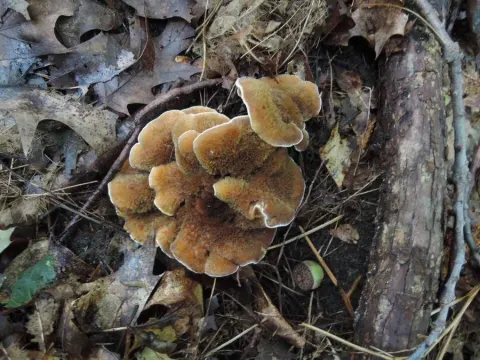
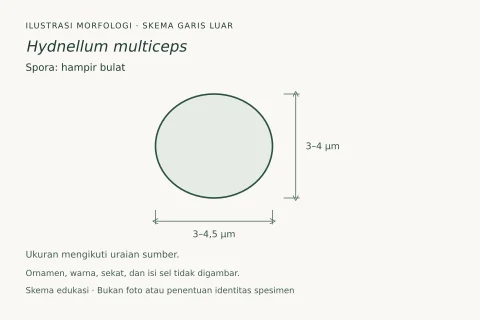
Hydnellum lepidum produces stalked fruit bodies (basidiocarps) that may occur singly or in small groups, sometimes with adjacent caps fusing together (concrescent). The cap (pileus) spans 5–10 cm in diameter and is initially flat to slightly convex, becoming gently depressed at the centre in age. Young caps are clothed in a fine, woolly down (tomentose), which soon wears away to leave a surface that is fibrous (fibrillose) and scaly—especially towards the centre. Colouration begins as pinkish‑brown and deepens to purplish‑brown with maturity. Beneath the cap, the hymenophore (fertile spore-bearing surface) bears downward‑pointing spines (teeth) up to 3 mm long that run down the stipe (decurrent). These spines start off pale and soon take on a purplish‑brown hue. The flesh (context) of the cap is white and up to 6 mm thick at its centre, remaining firm yet slightly fibrous. The stipe reaches 3–4 cm in height and 0.5–1.2 cm in width, tapering towards the base. It is initially covered in the same fine tomentum as the cap before becoming smooth (glabrous) with age. The stipe matches the cap's pinkish‑brown tones but often shows a greyish‑green tinge at its base. Under the microscope, the cap tissue comprises simply septate hyphae—thread‑like cells divided by single cross‑walls—up to 24 micrometre (μm) wide. The basidiospores are elliptic to irregularly angular or bearing small wart‑like projections (tuberculate), measuring 5.8–6.3 by 3.5–4.3 μm, and are pale brown when mature.
Habitat dan peran ekologis
Hydnellum lepidum is widely distributed in Europe, where it forms mycorrhizal associations with deciduous trees, particularly oak (Quercus). In Norway, its northern range extends to the southern tip of the country.
- Habitat atau konteks temuan
- Informasi belum tersedia pada sumber rilis ini.
- Substrat
- Informasi belum tersedia pada sumber rilis ini.
- Peran atau konteks
- Mitra tumbuhan
Reproduksi
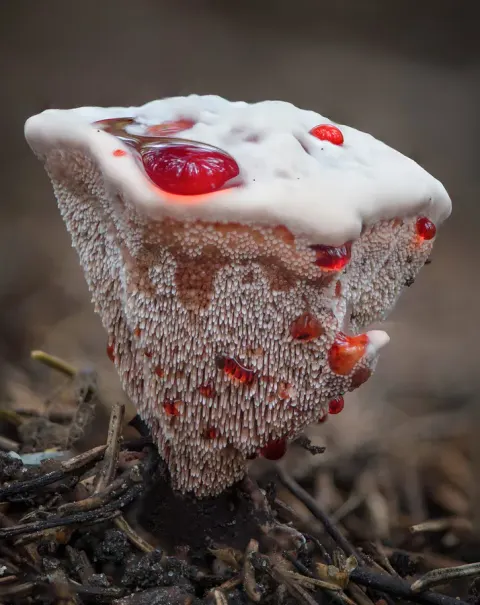
Hydnellum lepidum produces stalked fruit bodies (basidiocarps) that may occur singly or in small groups, sometimes with adjacent caps fusing together (concrescent). The cap (pileus) spans 5–10 cm in diameter and is initially flat to slightly convex, becoming gently depressed at the centre in age. Young caps are clothed in a fine, woolly down (tomentose), which soon wears away to leave a surface that is fibrous (fibrillose) and scaly—especially towards the centre. Colouration begins as pinkish‑brown and deepens to purplish‑brown with maturity. Beneath the cap, the hymenophore (fertile spore-bearing surface) bears downward‑pointing spines (teeth) up to 3 mm long that run down the stipe (decurrent).
Catatan identitas dan cakupan
- Nama diterima mengikuti Catalogue of Life Base2026-09-11; uraian mempertahankan konsep dan nama sumber aslinya.
- Original geographic, specimen and life-cycle scope retained; source import awaits individual editorial review.
- Impor dan terjemahan otomatis belum diperiksa editorial per profil. Struktur reproduktif yang disebutkan tidak membuktikan seluruh siklus hidup diketahui.
- Pengukuran pada uraian mengikuti spesimen, kultur, dan metode sumber; angka tidak diperluas ke semua populasi.
Catatan distribusi dalam narasi mengikuti sumbernya. Dokumentasi spesimen atau foto mengikuti catatan sumber. Bukti wilayah Indonesia dan penilaian konservasi tidak disimpulkan dari gambar.
Melihat dengan konteks
Dokumentasi Hydnellum lepidum menurut asosiasi foto pada record takson iNaturalist. Kredit: Brian C. Hunt. Identitas mengikuti sumber; bukan penentuan spesimen independen.
- Jenis
- Fotografi
- Kredit
- (c) Brian C. Hunt, some rights reserved (CC BY)
- Lisensi
- CC BY 4.0
- Sumber media
- Buka entri sumber
Dokumentasi tambahan
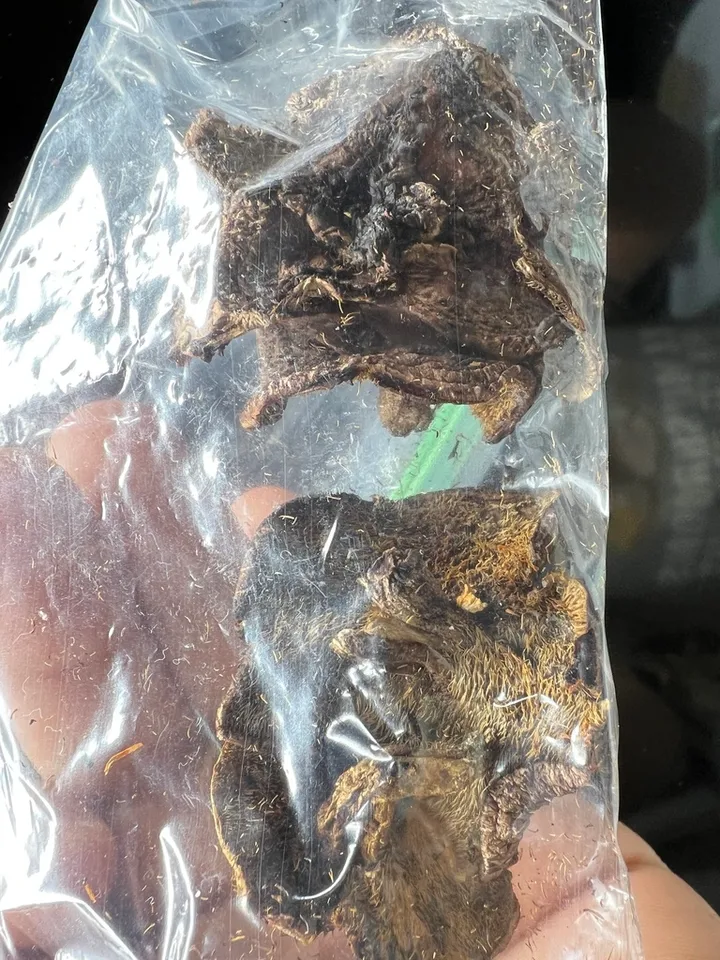
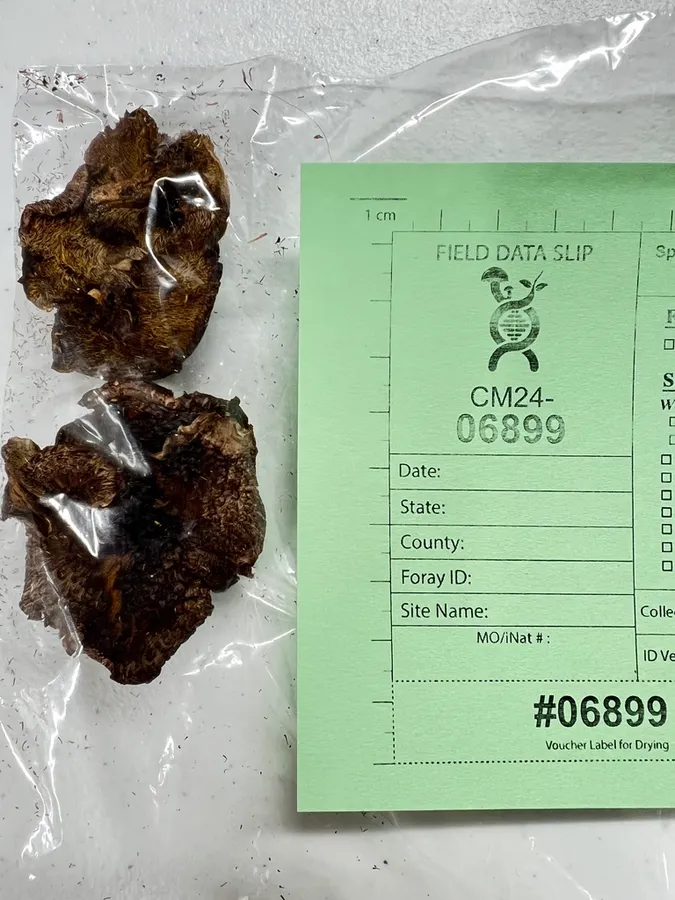
Material spesimen Hydnellum lepidum terlihat di dalam kantong transparan. Identitas mengikuti foto sumber iNaturalist.
Kredit dan penggunaan
(c) Brian C. Hunt, some rights reserved (CC BY)
Ukuran dan format gambar disesuaikan tanpa pemotongan, retus, atau penambahan skala. Lisensi sumber dipertahankan.
Sumber profil
- [1] Hydnellum lepidum — Wikipedia (en)
- [2] Catalogue of Life Base2026-09-11 — Hydnellum lepidum
- [3] Dokumentasi visual — Hydnellum lepidum
- [4] Dokumentasi visual — Hydnellum lepidum
Rujukan halaman ini
Fungi. Hydnellum lepidum. Rilis data fungi-2026-10-12-expansion-2. https://fungi-atlas.mgadib.chatgpt.site/jamur/hydnellum-lepidum/.
Status: impor sumber; pemeriksaan editorial per profil belum selesai. Untuk klaim biologis, gunakan rujukan pada bagian terkait dan periksa konteks sumber aslinya.