01 / Morfologi

Ciri dan struktur

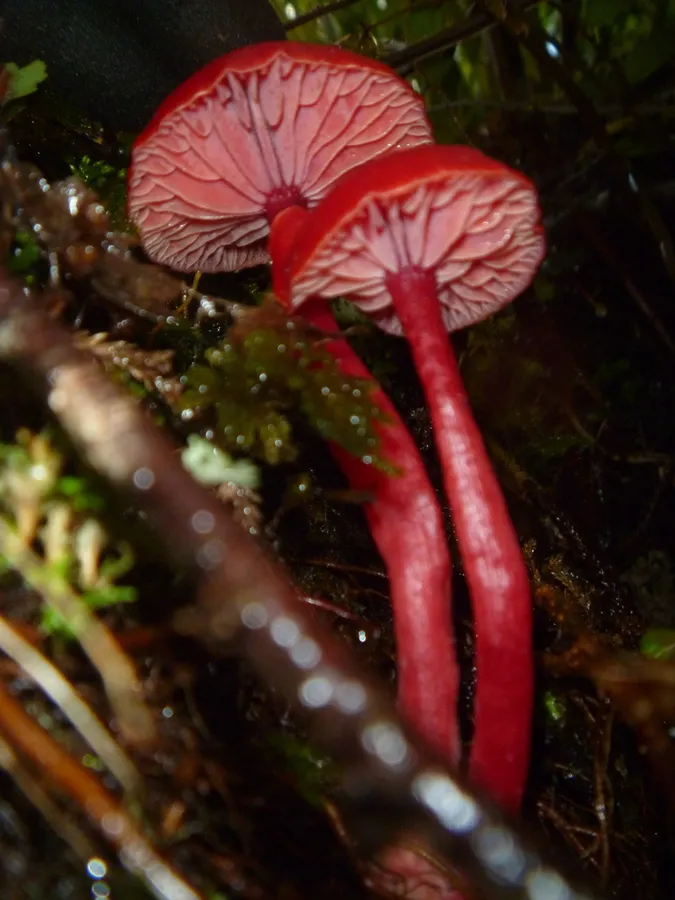
Pileus-30 mm, hemispherical to plano-convex with obtuse umbo, overmature specimens sometimes with subdepressed centre; brilliant red (scarlet) in fresh specimens, fading to yellow with faint orange tinge soon discolouring to pale yellow; dry, hygrophanous, margin non-striate in dry condition, radially fibrillose, subsquamulose or scurfy in centre due to concolorous fibrils, smooth towards subsulcate margin. - Lamellae broadly adnate to decurrent or emarginate-ventricose, nearly triangular, up to 7 mm wide, rather distant; concolorous with pileus turning yellow to pale orange, entire edges concolorous. - Stipe 40-80 x 1.5 4 (-5) mm, cylindrical, equal or gradually tapering towards base, slender, occasionally compressed and twisted; brilliant red turning orange above but yellow to whitish at tomentose or substrigose base; dry, smooth, solid at first becoming hollow in aged specimens, single or caespitose. - Context concolorous with pileus, red beneath cortex of pileus and stipe with faint orange tinge towards base of stipe. - Odour and taste not distinctive. - Chemical reactions on pileus: KOH - negative. Spores dimorphous, elliptical to ellipsoid, hyaline: macrospores 12-17 x 8-10.5 um; microspores 6-10.5 x 4.5-6 um. - Basidia dimorphous, 4- (and rarely also 2-) spored: macrobasidia 60-85 x 8-12um; microbasidia 40-50 (-60) x 5-6 um. - Cystidia absent. - Pileipellis a trichoderm of cylindrical, smooth, non-gelatinised hyphae (5-12 um diam.), terminal cells not differentiated, with yellow (KOH) plasmatic pigment, oleiferous hyphae often present in subcutis; clamp connections present (Pl. 1, Figs. 1, 2).

Sebagian uraian ditampilkan dalam bahasa sumber; terjemahannya belum tersedia atau belum lolos pemeriksaan.

Rujukan: [1]

Pengukuran mengikuti objek, spesimen atau kultur, dan metode yang disebutkan sumber. Baca uraian asli untuk konteks lengkap.

02 / Kehidupan

Habitat dan peran ekologis

DISTRIBUTION: NZ(N, NA, SA,W). - Pantropical species with wide distribution both in E Asia (Corner 1936; Hongo 1959, 1982) and Caribbean region (Dennis 1953;.Pegler 1983,1986). ECOLOGY: Common; saprobic on soil among litter in mixed conifer and broadleaved forests, rarely under Nothofagus. April-July.

Sebagian uraian ditampilkan dalam bahasa sumber; terjemahannya belum tersedia atau belum lolos pemeriksaan.

Rujukan: [1]

Habitat atau konteks temuan
hutan
Substrat
tanah
Peran atau konteks
Pengurai
Temukan hubungan serupa
03 / Siklus hidup

Reproduksi

Pileus-30 mm, hemispherical to plano-convex with obtuse umbo, overmature specimens sometimes with subdepressed centre; brilliant red (scarlet) in fresh specimens, fading to yellow with faint orange tinge soon discolouring to pale yellow; dry, hygrophanous, margin non-striate in dry condition, radially fibrillose, subsquamulose or scurfy in centre due to concolorous fibrils, smooth towards subsulcate margin. - Lamellae broadly adnate to decurrent or emarginate-ventricose, nearly triangular, up to 7 mm wide, rather distant; concolorous with pileus turning yellow to pale orange, entire edges concolorous. - Stipe 40-80 x 1.5 4 (-5) mm, cylindrical, equal or gradually tapering towards base, slender, occasionally compressed and twisted; brilliant red turning orange above but yellow to whitish at tomentose or substrigose base; dry, smooth, solid at first becoming hollow in aged specimens, single or caespitose. - Context concolorous with pileus, red beneath cortex of pileus and stipe with faint orange tinge towards base of stipe. - Odour and taste not distinctive. - Chemical reactions on pileus: KOH - negative.

Sebagian uraian ditampilkan dalam bahasa sumber; terjemahannya belum tersedia atau belum lolos pemeriksaan.

Rujukan: [1]

Sinonim menurut acuan taksonomi rilis: Hygrophorus firmus; Hygrophorus firmus var. albus; Hygrophorus firmus var. amethystinus; Hygrophorus firmus var. depallens; Hygrophorus firmus var. flavoalbus; Hygrophorus firmus var. flavus; Hygrophorus firmus var. gracillimus; Hygrophorus firmus var. longipes; Hygrophorus firmus var. militaris; Hygrophorus firmus var. minimus; Hygrophorus firmus var. pachyphyllus; Hygrophorus firmus var. pallidipes; Hygrophorus firmus var. puniceoides; Hygrophorus firmus var. purpureus; Hygrophorus firmus var. roseus; Hygrophorus firmus var. sericeus; Hygrophorus firmus var. stenophyllus; Hygrophorus firmus var. stratiotes
04 / Batas informasi

Catatan identitas dan cakupan

  • Nama diterima mengikuti Catalogue of Life Base2026-09-11; uraian mempertahankan konsep dan nama sumber aslinya.
  • Historical description as cited by BiotaNZ. Preserve explicit New Zealand/locality, host and specimen qualifiers. Distribution is the cited source scope, not a current global range.
  • Impor dan terjemahan otomatis belum diperiksa editorial per profil. Struktur reproduktif yang disebutkan tidak membuktikan seluruh siklus hidup diketahui.
  • Pengukuran pada uraian mengikuti spesimen, kultur, dan metode sumber; angka tidak diperluas ke semua populasi.

Catatan distribusi dalam narasi mengikuti sumbernya. Dokumentasi spesimen atau foto mengikuti catatan sumber. Bukti wilayah Indonesia dan penilaian konservasi tidak disimpulkan dari gambar.

05 / Dokumentasi

Melihat dengan konteks

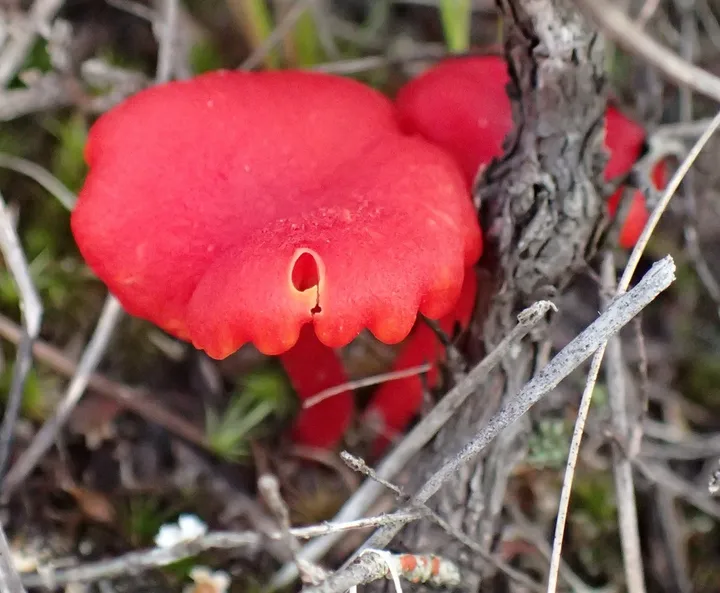
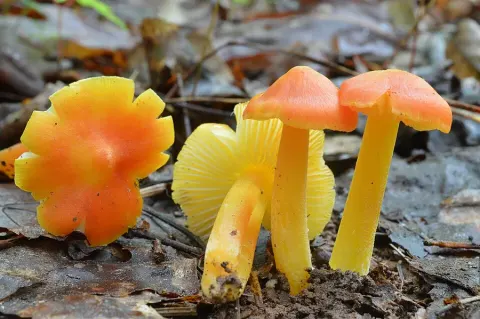
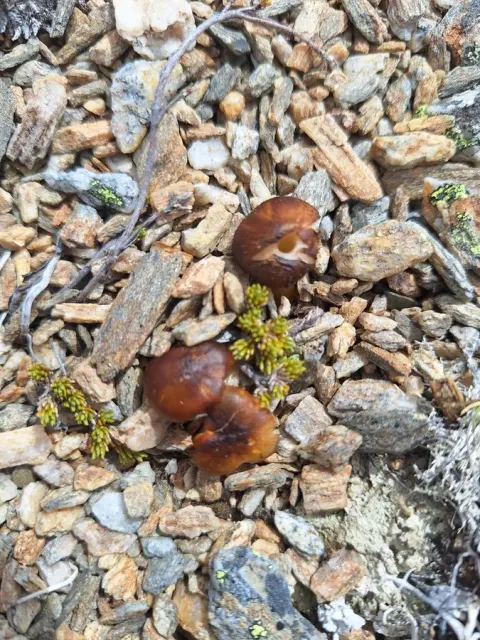
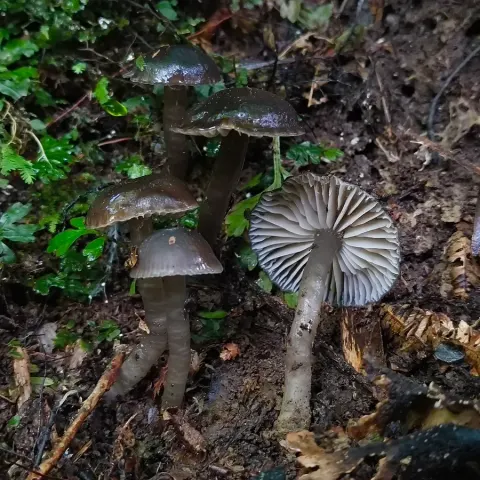
Dokumentasi Hygrocybe firma menurut asosiasi foto pada record takson iNaturalist. Kredit: Bruce Calvert. Identitas mengikuti sumber; bukan penentuan spesimen independen.

Jenis
Fotografi
Kredit
(c) Bruce Calvert, some rights reserved (CC BY), uploaded by Bruce Calvert
Lisensi
CC BY 4.0
Sumber media
Buka entri sumber

Gambar menunjukkan objek menurut identifikasi sumber, bukan verifikasi independen spesimen oleh Fungi. Tidak ada skala baru yang ditambahkan.

Dokumentasi tambahan

06 / Rujukan

Sumber profil

  1. [1] Horak, E. 1990: Monograph of the New Zealand Hygrophoraceae (Agaricales). New Zealand Journal of Botany 28(3): 255-306. — Hygrocybe firmaBagian sumber: biota:1cb0ea06-36b9-11d5-9548-00d0592d548c:1cb1b34e-36b9-11d5-9548-00d0592d548c
    Tanggal penghimpunan sumber: 2026-10-12
    Teks sumber: CC BY 4.0 · Horak, E. 1990: Monograph of the New Zealand Hygrophoraceae (Agaricales). New Zealand Journal of Botany 28(3): 255-306.
  2. [2] Catalogue of Life Base2026-09-11 — Hygrocybe firmaBagian sumber: ColDP NameUsage.tsv ID 3NB7K; accepted species; source 2073
    Tanggal penghimpunan sumber: 2026-10-12
  3. [3] Dokumentasi visual — Hygrocybe firmaBagian sumber: Identitas mengikuti sumber dokumentasi; bukan penentuan spesimen independen.
    Tanggal penghimpunan sumber: 2026-10-17
    Media sumber: CC BY 4.0 · (c) Bruce Calvert, some rights reserved (CC BY), uploaded by Bruce Calvert
  4. [4] Dokumentasi visual — Hygrocybe firmaBagian sumber: Identitas mengikuti sumber dokumentasi; bukan penentuan spesimen independen.
    Tanggal penghimpunan sumber: 2026-10-17
    Teks sumber: CC0 1.0 · no rights reserved, uploaded by corunastylis

Adaptasi teks: CC BY 4.0. Horak, E. 1990: Monograph of the New Zealand Hygrophoraceae (Agaricales). New Zealand Journal of Botany 28(3): 255-306. — Horak, E. 1990: Monograph of the New Zealand Hygrophoraceae (Agaricales). New Zealand Journal of Botany 28(3): 255-306. — Hygrocybe firma

Uraian asli dan riwayat sumber

Riwayat atau halaman sumber

Ringkasan sumber

Pileus-30 mm, hemispherical to plano-convex with obtuse umbo, overmature specimens sometimes with subdepressed centre; brilliant red (scarlet) in fresh specimens, fading to yellow with faint orange tinge soon discolouring to pale yellow; dry, hygrophanous, margin non-striate in dry condition, radially fibrillose, subsquamulose or scurfy in centre due to concolorous fibrils, smooth towards subsulcate margin. - Lamellae broadly adnate to decurrent or emarginate-ventricose, nearly triangular, up to 7 mm wide, rather distant; concolorous with pileus turning yellow to pale orange, entire edges concolorous. - Stipe 40-80 x 1.5 4 (-5) mm, cylindrical, equal or gradually tapering towards base, slender, occasionally compressed and twisted; brilliant red turning orange above but yellow to whitish at tomentose or substrigose base; dry, smooth, solid at first becoming hollow in aged specimens, single or caespitose. - Context concolorous with pileus, red beneath cortex of pileus and stipe with faint orange tinge towards base of stipe. - Odour and taste not distinctive. - Chemical reactions on pileus: KOH - negative.

Revisi sumber

Morfologi sumber

Pileus-30 mm, hemispherical to plano-convex with obtuse umbo, overmature specimens sometimes with subdepressed centre; brilliant red (scarlet) in fresh specimens, fading to yellow with faint orange tinge soon discolouring to pale yellow; dry, hygrophanous, margin non-striate in dry condition, radially fibrillose, subsquamulose or scurfy in centre due to concolorous fibrils, smooth towards subsulcate margin. - Lamellae broadly adnate to decurrent or emarginate-ventricose, nearly triangular, up to 7 mm wide, rather distant; concolorous with pileus turning yellow to pale orange, entire edges concolorous. - Stipe 40-80 x 1.5 4 (-5) mm, cylindrical, equal or gradually tapering towards base, slender, occasionally compressed and twisted; brilliant red turning orange above but yellow to whitish at tomentose or substrigose base; dry, smooth, solid at first becoming hollow in aged specimens, single or caespitose. - Context concolorous with pileus, red beneath cortex of pileus and stipe with faint orange tinge towards base of stipe. - Odour and taste not distinctive. - Chemical reactions on pileus: KOH - negative. Spores dimorphous, elliptical to ellipsoid, hyaline: macrospores 12-17 x 8-10.5 um; microspores 6-10.5 x 4.5-6 um. - Basidia dimorphous, 4- (and rarely also 2-) spored: macrobasidia 60-85 x 8-12um; microbasidia 40-50 (-60) x 5-6 um. - Cystidia absent. - Pileipellis a trichoderm of cylindrical, smooth, non-gelatinised hyphae (5-12 um diam.), terminal cells not differentiated, with yellow (KOH) plasmatic pigment, oleiferous hyphae often present in subcutis; clamp connections present (Pl. 1, Figs. 1, 2).

Revisi sumber

Ekologi sumber

DISTRIBUTION: NZ(N, NA, SA,W). - Pantropical species with wide distribution both in E Asia (Corner 1936; Hongo 1959, 1982) and Caribbean region (Dennis 1953;.Pegler 1983,1986). ECOLOGY: Common; saprobic on soil among litter in mixed conifer and broadleaved forests, rarely under Nothofagus. April-July.

Revisi sumber

Struktur reproduksi sumber

Pileus-30 mm, hemispherical to plano-convex with obtuse umbo, overmature specimens sometimes with subdepressed centre; brilliant red (scarlet) in fresh specimens, fading to yellow with faint orange tinge soon discolouring to pale yellow; dry, hygrophanous, margin non-striate in dry condition, radially fibrillose, subsquamulose or scurfy in centre due to concolorous fibrils, smooth towards subsulcate margin. - Lamellae broadly adnate to decurrent or emarginate-ventricose, nearly triangular, up to 7 mm wide, rather distant; concolorous with pileus turning yellow to pale orange, entire edges concolorous. - Stipe 40-80 x 1.5 4 (-5) mm, cylindrical, equal or gradually tapering towards base, slender, occasionally compressed and twisted; brilliant red turning orange above but yellow to whitish at tomentose or substrigose base; dry, smooth, solid at first becoming hollow in aged specimens, single or caespitose. - Context concolorous with pileus, red beneath cortex of pileus and stipe with faint orange tinge towards base of stipe. - Odour and taste not distinctive. - Chemical reactions on pileus: KOH - negative.

Revisi sumber

Rujukan halaman ini

Fungi. Hygrocybe firma. Rilis data fungi-2026-10-12-expansion-2. https://fungi-atlas.mgadib.chatgpt.site/jamur/hygrocybe-firma/.

Status: impor sumber; pemeriksaan editorial per profil belum selesai. Untuk klaim biologis, gunakan rujukan pada bagian terkait dan periksa konteks sumber aslinya.