Ciri dan struktur
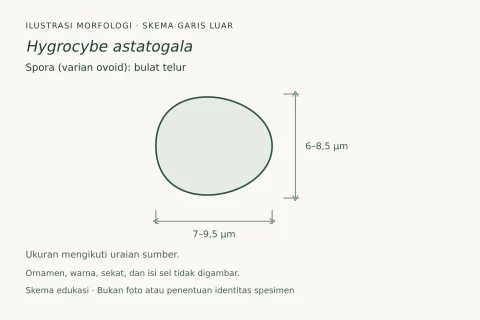
The cap is 2 to 5 cm wide, conical or convex when young, but becoming flat in maturity; the margin often curves up in age. The cap color can be variable: when young it is yellow with some orange, later becoming lime green. The cap surface is smooth, moist but not sticky, in age the margin becomes rimose (covered with a network of cracks and small crevices) and often splits into lobes. The context is lime green and very fragile. The odor and taste are not distinctive. The gills have an adnexed attachment to the stem and are attached to the top of the stipe by a tooth; the color is whitish with lime green tones near the cap, with paler serrate (appearing saw-toothed) edges. The stipe is 3 to 6 cm long, and 0.3 to 0.8 cm thick and lime green in color. The base of the stem is whitish, moist or dry, and in age develops grooves, or striations. The stem is hollow, and tapers somewhat in width towards the top. The spores are ellipsoid, smooth, and inamyloid, with dimensions of 7–10 by 5–6.5 μm. The basidia (spore-bearing cells) are 40–55 by 7–10 μm, 2- and 4-spored; there are no pleurocystidia nor cheilocystidia.
Habitat dan peran ekologis
Hygrocybe virescens appears to be limited in distribution to California, Washington (based on a single collection in Seattle), and Veracruz State, Mexico. In California and Washington, it is found fruiting in association with redwood trees; the collections in Mexico were among grass and in gardens, near cypress hedges (genus Cupressus). It is rarely collected.
- Habitat atau konteks temuan
- Informasi belum tersedia pada sumber rilis ini.
- Substrat
- Informasi belum tersedia pada sumber rilis ini.
- Peran atau konteks
- Belum dikategorikan pada rilis ini.
Reproduksi
The spores are ellipsoid, smooth, and inamyloid, with dimensions of 7–10 by 5–6.5 μm. The basidia (spore-bearing cells) are 40–55 by 7–10 μm, 2- and 4-spored; there are no pleurocystidia nor cheilocystidia.
Catatan identitas dan cakupan
- Nama diterima mengikuti Catalogue of Life Base2026-09-11; uraian mempertahankan konsep dan nama sumber aslinya.
- Original geographic, specimen and life-cycle scope retained; source import awaits individual editorial review.
- Impor dan terjemahan otomatis belum diperiksa editorial per profil. Struktur reproduktif yang disebutkan tidak membuktikan seluruh siklus hidup diketahui.
- Pengukuran pada uraian mengikuti spesimen, kultur, dan metode sumber; angka tidak diperluas ke semua populasi.
Catatan distribusi dalam narasi mengikuti sumbernya. Dokumentasi spesimen atau foto mengikuti catatan sumber. Bukti wilayah Indonesia dan penilaian konservasi tidak disimpulkan dari gambar.
Melihat dengan konteks
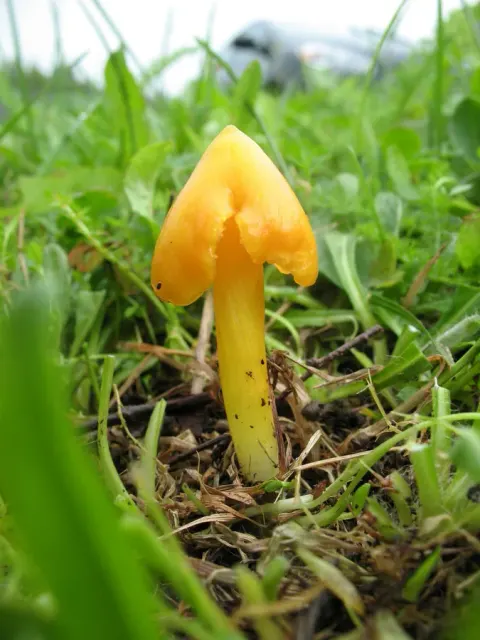
Dokumentasi Hygrocybe virescens menurut asosiasi foto pada record takson iNaturalist. Kredit: anonymous. Identitas mengikuti sumber; bukan penentuan spesimen independen.
- Jenis
- Fotografi
- Kredit
- (c) anonymous, some rights reserved (CC BY-SA)
- Lisensi
- CC BY-SA 4.0
- Sumber media
- Buka entri sumber
Dokumentasi tambahan
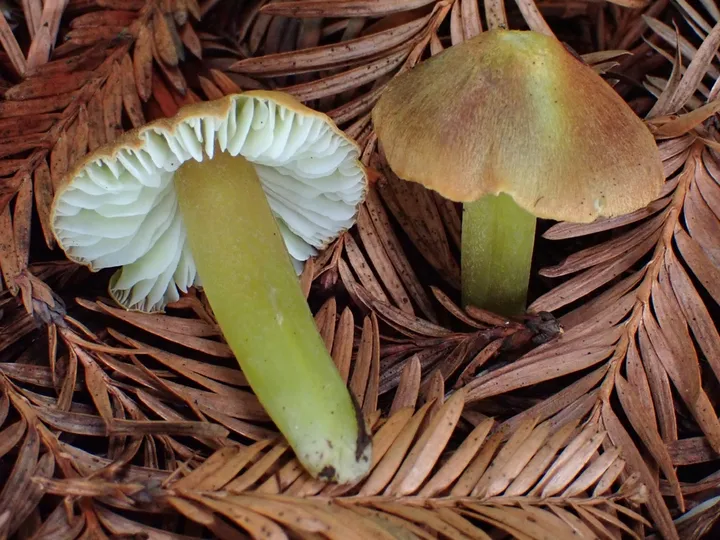
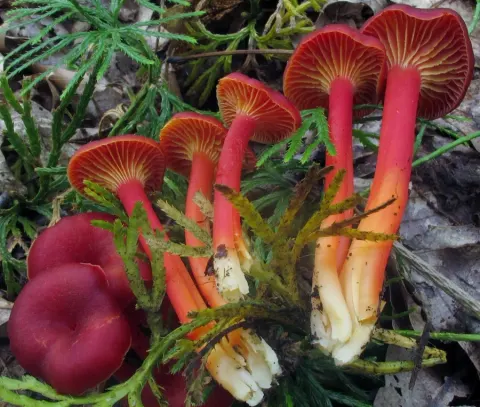
Foto yang diasosiasikan dengan Hygrocybe virescens pada iNaturalist. Identifikasi mengikuti sumber; bukan penentuan spesimen independen.
Kredit dan penggunaan
(c) Mandy Hackney, some rights reserved (CC BY), uploaded by Mandy Hackney
Ukuran dan format gambar disesuaikan tanpa pemotongan, retus, atau penambahan skala. Lisensi sumber dipertahankan.
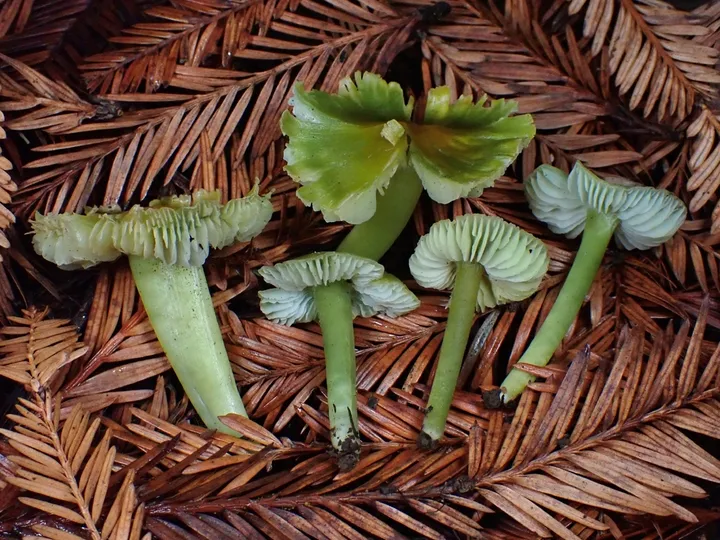
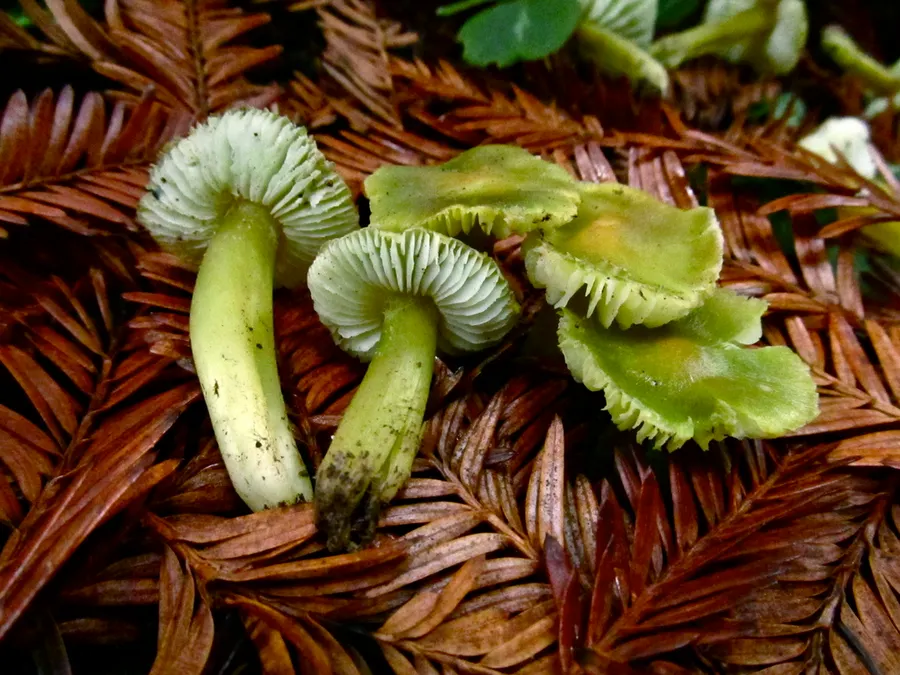
Foto yang diasosiasikan dengan Hygrocybe virescens pada iNaturalist. Identifikasi mengikuti sumber; bukan penentuan spesimen independen.
Kredit dan penggunaan
(c) Mandy Hackney, some rights reserved (CC BY), uploaded by Mandy Hackney
Ukuran dan format gambar disesuaikan tanpa pemotongan, retus, atau penambahan skala. Lisensi sumber dipertahankan.
Sumber profil
- [1] Hygrocybe virescens — Wikipedia (en)
- [2] Catalogue of Life Base2026-09-11 — Hygrocybe virescens
- [3] Dokumentasi visual — Hygrocybe virescens
- [4] Dokumentasi visual — Hygrocybe virescens
- [5] Dokumentasi visual — Hygrocybe virescens
Rujukan halaman ini
Fungi. Hygrocybe virescens. Rilis data fungi-2026-10-12-expansion-2. https://fungi-atlas.mgadib.chatgpt.site/jamur/hygrocybe-virescens/.
Status: impor sumber; pemeriksaan editorial per profil belum selesai. Untuk klaim biologis, gunakan rujukan pada bagian terkait dan periksa konteks sumber aslinya.