Ciri dan struktur
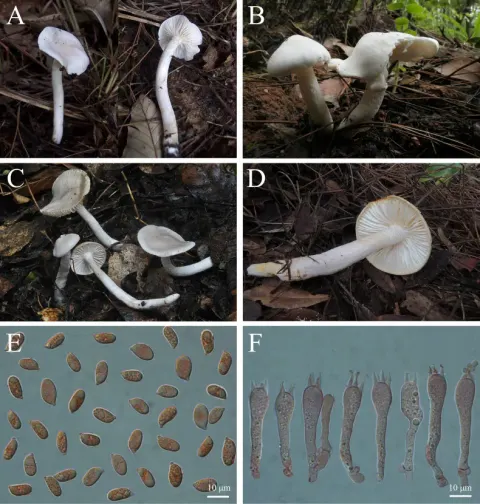
The spores are 9–12 × 5–6 μm, ellipsoid, and are not amyloid; their surface is smooth. They are yellow in Melzer's reagent. The basidia have dimension of 46–62 × 7–10 μm, and are tetrasporic with short, stubby sterigmata. They have neither pleurocystidia nor cheilocystidia. The cap cuticle has a width of 250 to 450 μm and consists of loopshaped, dark hyphae with a width from 2 to 3 μm, which form an ixocutis (a horizontal layer of hyphae embedded in slime) and possess clamp connections; the fungus has no hypocutis. The gill trama consists of hyphae about 3 to 8 μm thick; the cap tissue comprises radial hyphae. The mycorrhiza, formed from H. olivaceoalbus as a fungal partner, such as the Piceirhiza gelatinosa, is white and has a smooth, waxy surface, with several layers of hyphae layered around the tree's roots; sometimes this mycorrhiza shows hypertrophy. The hyphae are covered with a jellylike mass that is secreted from the outer walls of the hyphae. The ectomycorrhizae can reach lengths of up to 10 mm and have few side branches; many older ectomycorrhizae have a cavity at the tip that resembles a hole.
Habitat dan peran ekologis
Hygrophorus olivaceoalbus creates mycorrhizae with conifers. In the West Coast of the United States, associations are most common with Sitka spruces and giant redwoods. In the Rocky Mountains it associates with Engelmann spruce and blue spruce, and in northeast North America with hemlocks. It usually favours acidic and chalky ground with mosses in higher altitudes as well as conifer forests and occasionally mixed forests. The fruit bodies are often found singly, but may also grow in clusters. The range of H. olivaceoalbus stretches across the northern and western North America as well as across Europe (except the Mediterranean region) and Russia. The fungus typically fruits between late summer and early winter, and occasionally (depending on the geographical location and climate) as early as June or right through December. The population is currently not endangered, except in France, where it is almost extinct.
- Habitat atau konteks temuan
- hutan
- Substrat
- Informasi belum tersedia pada sumber rilis ini.
- Peran atau konteks
- Mitra tumbuhan
Reproduksi
The spores are 9–12 × 5–6 μm, ellipsoid, and are not amyloid; their surface is smooth. They are yellow in Melzer's reagent. The basidia have dimension of 46–62 × 7–10 μm, and are tetrasporic with short, stubby sterigmata. They have neither pleurocystidia nor cheilocystidia.
Catatan identitas dan cakupan
- Nama diterima mengikuti Catalogue of Life Base2026-09-11; uraian mempertahankan konsep dan nama sumber aslinya.
- Original geographic, specimen and life-cycle scope retained; source import awaits individual editorial review.
- Impor dan terjemahan otomatis belum diperiksa editorial per profil. Struktur reproduktif yang disebutkan tidak membuktikan seluruh siklus hidup diketahui.
- Pengukuran pada uraian mengikuti spesimen, kultur, dan metode sumber; angka tidak diperluas ke semua populasi.
Catatan distribusi dalam narasi mengikuti sumbernya. Dokumentasi spesimen atau foto mengikuti catatan sumber. Bukti wilayah Indonesia dan penilaian konservasi tidak disimpulkan dari gambar.
Melihat dengan konteks
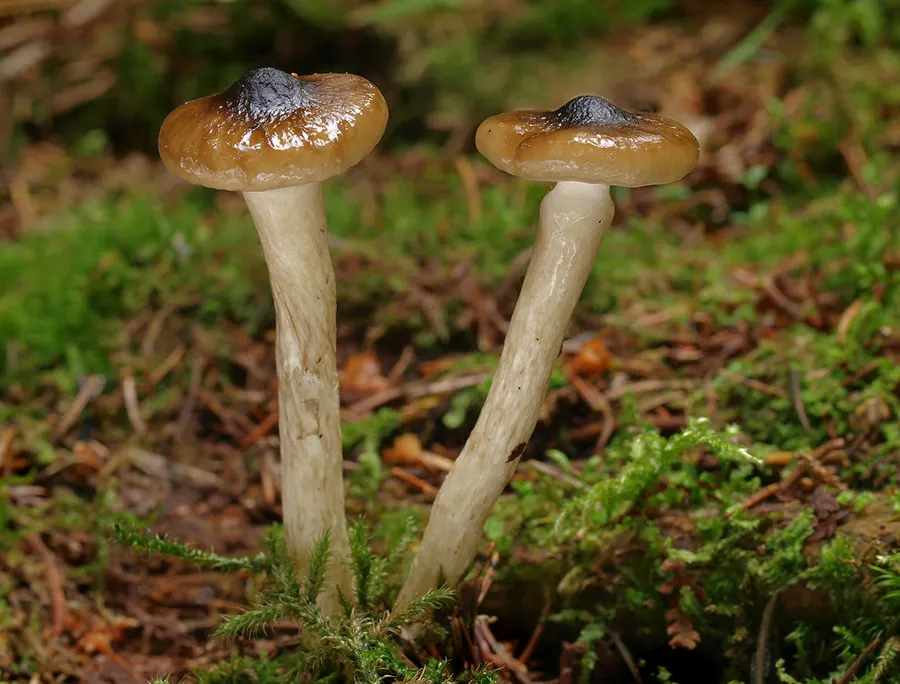
Dokumentasi Hygrophorus olivaceoalbus menurut asosiasi foto pada record takson iNaturalist. Kredit: Andreas Kunze. Identitas mengikuti sumber; bukan penentuan spesimen independen.
- Jenis
- Fotografi
- Kredit
- (c) Andreas Kunze, some rights reserved (CC BY-SA)
- Lisensi
- CC BY-SA 4.0
- Sumber media
- Buka entri sumber
Sumber profil
- [1] Hygrophorus olivaceoalbus — Wikipedia (en)
- [2] Catalogue of Life Base2026-09-11 — Hygrophorus olivaceoalbus
- [3] Dokumentasi visual — Hygrophorus olivaceoalbus
Rujukan halaman ini
Fungi. Hygrophorus olivaceoalbus. Rilis data fungi-2026-10-12-expansion-2. https://fungi-atlas.mgadib.chatgpt.site/jamur/hygrophorus-olivaceoalbus/.
Status: impor sumber; pemeriksaan editorial per profil belum selesai. Untuk klaim biologis, gunakan rujukan pada bagian terkait dan periksa konteks sumber aslinya.