Ciri dan struktur
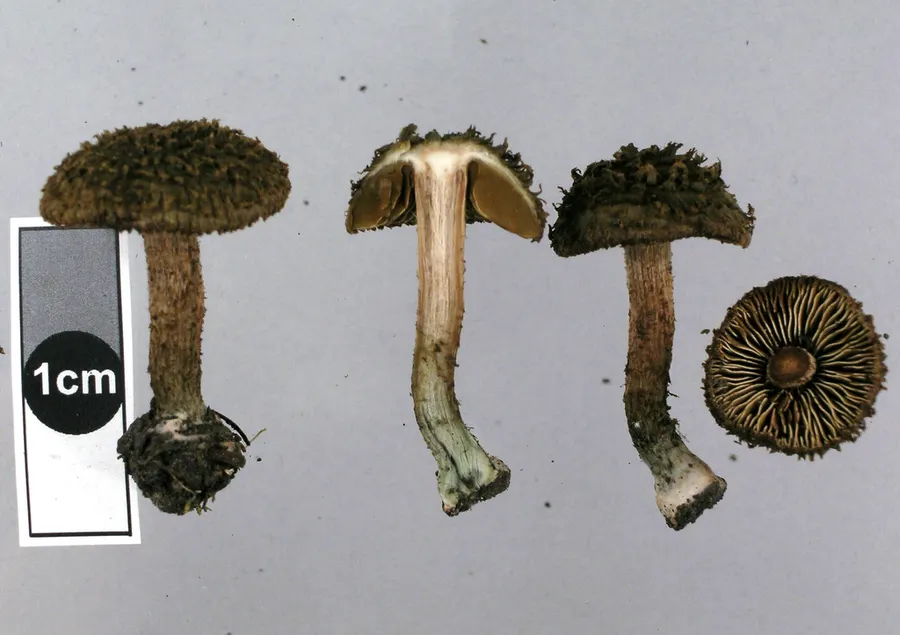
Pileus -35 mm diam., convex to umbonate-expanded or campanulate; pale brown, brown or fuscous, often with greenish or olive tinge; dry, densely covered all over with coarse, squarrose scales and squamules; margin estriate, veil remnants absent. Lamellae adnexed to adnate, ventricose, crowded; pale beige-ochraceous or beige-yellow, turning argillaceous or brown, reddening after bruising, edge albo-fimbriate. Stipe -65 x -5 mm, cylindrical, equal; concolorous with pileus or paler, black-green at base, covered with concolorous scales and squamules; dry, becoming hollow, single and cespitose. Context brown, reddening after exposure, black-green at base. Odour and taste fruity. Chemical reactions on pileus: KOH negative. Spores 8.5-11 x 5-6.5 µm, ovoid to subreniform, brown, smooth. Basidia 28-38 x 7-9 µm, 4-spored. Cheilocystidia 15-40 x 7-12 µm clavate to subcylindrical, hyaline, thin-walled, forming sterile edge. Pleurocystidia absent. Cuticle a trichoderm of cylindrical not gelatinised hyphae (5-12 µm diam) entrusted with brown pigment. Clamp connections present. The most distinctive macroscopic character of this species is the green-black context at the base of the stipe. As the specific epithet of the New Zealand fungus indicates, this taxon is closely related to I. calamistrata (Fr.) Quel. which, however, differs by having larger spores cheilocystidia.
Habitat dan peran ekologis
On soil under Nothofagus (N. fusca, N. cliffortioides), also among Sphagnum, New Zealand.
- Habitat atau konteks temuan
- Informasi belum tersedia pada sumber rilis ini.
- Substrat
- tanah
- Peran atau konteks
- Belum dikategorikan pada rilis ini.
Reproduksi
Pileus -35 mm diam., convex to umbonate-expanded or campanulate; pale brown, brown or fuscous, often with greenish or olive tinge; dry, densely covered all over with coarse, squarrose scales and squamules; margin estriate, veil remnants absent. Lamellae adnexed to adnate, ventricose, crowded; pale beige-ochraceous or beige-yellow, turning argillaceous or brown, reddening after bruising, edge albo-fimbriate. Stipe -65 x -5 mm, cylindrical, equal; concolorous with pileus or paler, black-green at base, covered with concolorous scales and squamules; dry, becoming hollow, single and cespitose. Context brown, reddening after exposure, black-green at base. Odour and taste fruity. Chemical reactions on pileus: KOH negative.
Catatan identitas dan cakupan
- Nama diterima mengikuti Catalogue of Life Base2026-09-11; uraian mempertahankan konsep dan nama sumber aslinya.
- Historical description as cited by BiotaNZ. Preserve explicit New Zealand/locality, host and specimen qualifiers. Distribution is the cited source scope, not a current global range.
- Impor dan terjemahan otomatis belum diperiksa editorial per profil. Struktur reproduktif yang disebutkan tidak membuktikan seluruh siklus hidup diketahui.
- Pengukuran pada uraian mengikuti spesimen, kultur, dan metode sumber; angka tidak diperluas ke semua populasi.
Catatan distribusi dalam narasi mengikuti sumbernya. Dokumentasi spesimen atau foto mengikuti catatan sumber. Bukti wilayah Indonesia dan penilaian konservasi tidak disimpulkan dari gambar.
Melihat dengan konteks
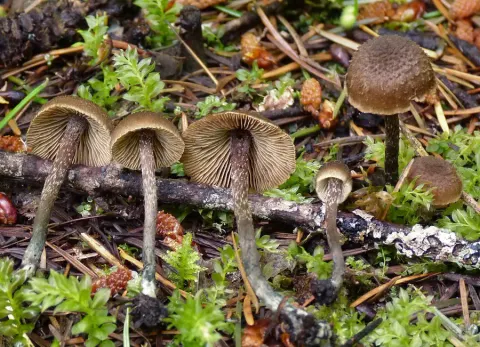
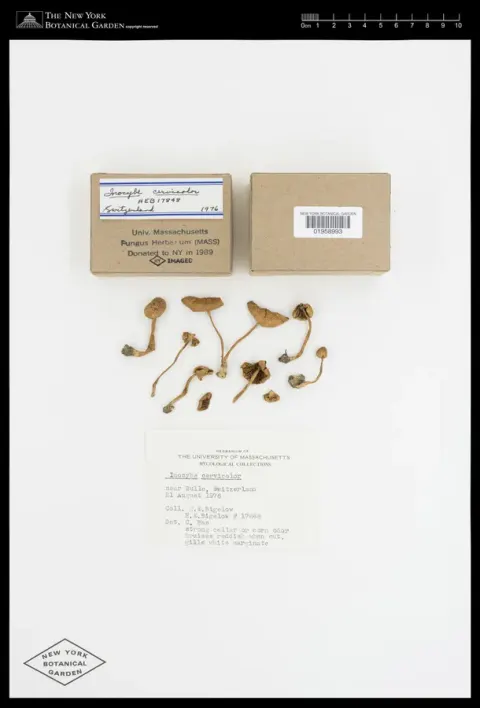
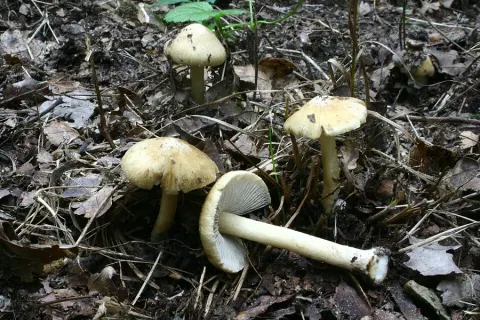
Dokumentasi Inosperma calamistratoides menurut asosiasi foto pada record takson iNaturalist. Kredit: Jerry Cooper. Identitas mengikuti sumber; bukan penentuan spesimen independen.
- Jenis
- Fotografi
- Kredit
- (c) Jerry Cooper, some rights reserved (CC BY), uploaded by Jerry Cooper
- Lisensi
- CC BY 4.0
- Sumber media
- Buka entri sumber
Sumber profil
- [1] Horak, E. 1978: Fungi Agaricini Novaezelandiae. VI. Inocybe (Fr.) Fr. and Astrosporina Schroeter. New Zealand Journal of Botany 15(4): 713–747. — Inocybe calamistratoides
- [2] Catalogue of Life Base2026-09-11 — Inosperma calamistratoides
- [3] Dokumentasi visual — Inosperma calamistratoides
Rujukan halaman ini
Fungi. Inosperma calamistratoides. Rilis data fungi-2026-10-12-expansion-2. https://fungi-atlas.mgadib.chatgpt.site/jamur/inosperma-calamistratoides/.
Status: impor sumber; pemeriksaan editorial per profil belum selesai. Untuk klaim biologis, gunakan rujukan pada bagian terkait dan periksa konteks sumber aslinya.