01 / Morfologi

Ciri dan struktur

Inosperma maculatum has a conical or bell-shaped cap which is up to 8 cm in diameter. As the mushrooms age, the cap becomes flatter, and the broad umbo becomes prominent. The flesh is white. The flesh has a mild taste, and a strong, pungent, fruity smell. Inosperma maculatum has thin-walled cheilocystidia, which are clavate (club-shaped), lack encrustation at the apex, and are colourless. The basidia are also clavate, and can be two-, three- or four-spored, and measure from 15 to 30 micrometres (μm) by 5 to 9 μm. The sterigmata (the narrow horns on the end of the basidia which hold the spores) are 4 to 5 μm long. It lacks pleurocystidia. The species leaves a snuff-brown spore print. The spores themselves are smooth and bean shaped; they have a yellow-brown to rusty brown colouration, and measure from 9 to 11 μm by 4.5 to 5.5 μm. The hyphae can have clamp connections, but can also lack them.

Sebagian uraian ditampilkan dalam bahasa sumber; terjemahannya belum tersedia atau belum lolos pemeriksaan.

Rujukan: [1]

Pengukuran mengikuti objek, spesimen atau kultur, dan metode yang disebutkan sumber. Baca uraian asli untuk konteks lengkap.

02 / Kehidupan

Habitat dan peran ekologis

Inosperma maculatum adalah spesies ektomikoriza, dengan rentang ekologi yang luas. Di Amerika Utara, itu lebih menyukai tanah pasir, tanah liat atau lumut. dan di Amerika Utara, dari mana pertama kali dikumpulkan pada tahun 1960-an. Inocybe maculata f. fulva pertama kali diidentifikasi di Prancis, dan sejak itu telah ditemukan di tempat lain di Eropa.

Rujukan: [1]

Habitat atau konteks temuan
Informasi belum tersedia pada sumber rilis ini.
Substrat
Informasi belum tersedia pada sumber rilis ini.
Peran atau konteks
Mitra tumbuhan
Temukan hubungan serupa
03 / Siklus hidup

Reproduksi

Inosperma maculatum has thin-walled cheilocystidia, which are clavate (club-shaped), lack encrustation at the apex, and are colourless. The basidia are also clavate, and can be two-, three- or four-spored, and measure from 15 to 30 micrometres (μm) by 5 to 9 μm. The sterigmata (the narrow horns on the end of the basidia which hold the spores) are 4 to 5 μm long. It lacks pleurocystidia. The species leaves a snuff-brown spore print. The spores themselves are smooth and bean shaped; they have a yellow-brown to rusty brown colouration, and measure from 9 to 11 μm by 4.5 to 5.5 μm. The hyphae can have clamp connections, but can also lack them.

Sebagian uraian ditampilkan dalam bahasa sumber; terjemahannya belum tersedia atau belum lolos pemeriksaan.

Rujukan: [1]

Sinonim menurut acuan taksonomi rilis: Inocybe maculata
04 / Batas informasi

Catatan identitas dan cakupan

  • Nama diterima mengikuti Catalogue of Life Base2026-09-11; uraian mempertahankan konsep dan nama sumber aslinya.
  • Original geographic, specimen and life-cycle scope retained; source import awaits individual editorial review.
  • Impor dan terjemahan otomatis belum diperiksa editorial per profil. Struktur reproduktif yang disebutkan tidak membuktikan seluruh siklus hidup diketahui.
  • Pengukuran pada uraian mengikuti spesimen, kultur, dan metode sumber; angka tidak diperluas ke semua populasi.

Catatan distribusi dalam narasi mengikuti sumbernya. Dokumentasi spesimen atau foto mengikuti catatan sumber. Bukti wilayah Indonesia dan penilaian konservasi tidak disimpulkan dari gambar.

05 / Dokumentasi

Melihat dengan konteks

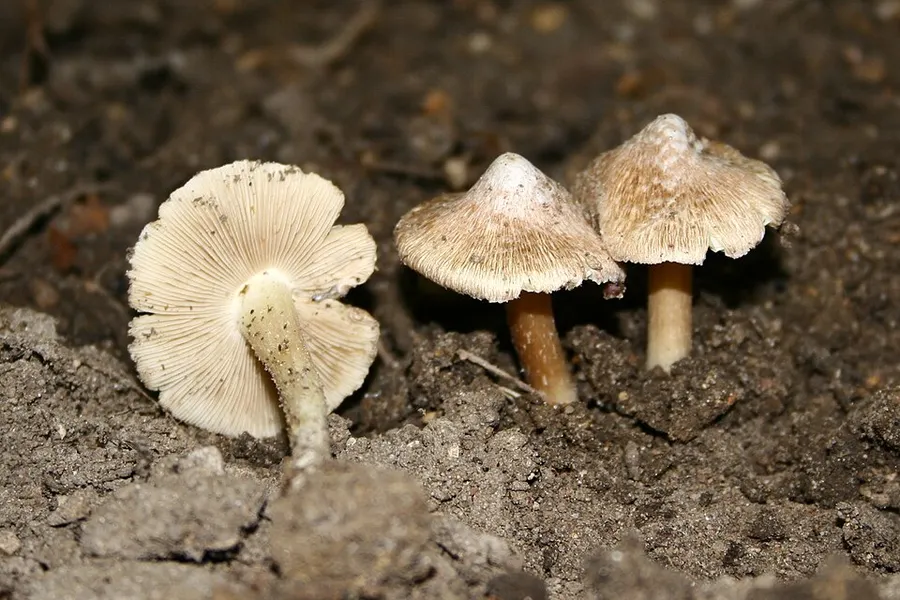
Dokumentasi Inosperma maculatum dari Wikimedia Commons. Inocybe maculata in the Forêt de Sénart near Paris, France. Identifikasi mengikuti record berkas sumber.

Jenis
Fotografi
Kredit
Strobilomyces
Sumber media
Buka entri sumber

Gambar menunjukkan objek menurut identifikasi sumber, bukan verifikasi independen spesimen oleh Fungi. Tidak ada skala baru yang ditambahkan.

06 / Rujukan

Sumber profil

  1. [1] Inosperma maculatum — Wikipedia (en)Bagian sumber: Frozen revision 1364421757
    Tanggal penghimpunan sumber: 2026-10-12
    Teks sumber: CC BY-SA4.0 · Wikipedia contributors
  2. [2] Catalogue of Life Base2026-09-11 — Inosperma maculatumBagian sumber: ColDP NameUsage.tsv ID 6MW4B; accepted species; source 2073
    Tanggal penghimpunan sumber: 2026-10-12
  3. [3] Dokumentasi visual — Inosperma maculatumBagian sumber: Individual media record; identification follows the source, not independent determination
    Tanggal penghimpunan sumber: 2026-10-12
    Media sumber: CC BY-SA 3.0 · Strobilomyces

Adaptasi teks: CC BY-SA 4.0. Wikipedia contributors — Inosperma maculatum — Wikipedia (en)

Uraian asli dan riwayat sumber

Riwayat atau halaman sumber

Ringkasan sumber

Inosperma maculatum, formerly known as Inocybe maculata and commonly known as the frosty fibrecap or brown inocybe, is a species of mushroom in the family Inocybaceae. It was first described by Jean Louis Émile Boudier in 1885. It is a medium-sized brown mushroom with a fibrous, brown cap with white remnants of a universal veil in the middle. The stem is cream or brown. The species is ectomycorrhizal and grows at the base of various trees, including beech. Inosperma maculatum is found throughout Eurasia and North America.

Revisi sumber

Morfologi sumber

Inosperma maculatum has a conical or bell-shaped cap which is up to 8 cm in diameter. As the mushrooms age, the cap becomes flatter, and the broad umbo becomes prominent. The flesh is white. The flesh has a mild taste, and a strong, pungent, fruity smell. Inosperma maculatum has thin-walled cheilocystidia, which are clavate (club-shaped), lack encrustation at the apex, and are colourless. The basidia are also clavate, and can be two-, three- or four-spored, and measure from 15 to 30 micrometres (μm) by 5 to 9 μm. The sterigmata (the narrow horns on the end of the basidia which hold the spores) are 4 to 5 μm long. It lacks pleurocystidia. The species leaves a snuff-brown spore print. The spores themselves are smooth and bean shaped; they have a yellow-brown to rusty brown colouration, and measure from 9 to 11 μm by 4.5 to 5.5 μm. The hyphae can have clamp connections, but can also lack them.

Revisi sumber

Ekologi sumber

Inosperma maculatum is an ectomycorrhizal species, with a wide ecological range. In North America, it favours sandy soil, clay or moss. and in North America, from where it was first collected in the 1960s. Inocybe maculata f. fulva was first identified in France, and has since been found elsewhere in Europe.

Revisi sumber

Struktur reproduksi sumber

Inosperma maculatum has thin-walled cheilocystidia, which are clavate (club-shaped), lack encrustation at the apex, and are colourless. The basidia are also clavate, and can be two-, three- or four-spored, and measure from 15 to 30 micrometres (μm) by 5 to 9 μm. The sterigmata (the narrow horns on the end of the basidia which hold the spores) are 4 to 5 μm long. It lacks pleurocystidia. The species leaves a snuff-brown spore print. The spores themselves are smooth and bean shaped; they have a yellow-brown to rusty brown colouration, and measure from 9 to 11 μm by 4.5 to 5.5 μm. The hyphae can have clamp connections, but can also lack them.

Revisi sumber

Rujukan halaman ini

Fungi. Inosperma maculatum. Rilis data fungi-2026-10-12-expansion-2. https://fungi-atlas.mgadib.chatgpt.site/jamur/inosperma-maculatum/.

Status: impor sumber; pemeriksaan editorial per profil belum selesai. Untuk klaim biologis, gunakan rujukan pada bagian terkait dan periksa konteks sumber aslinya.