Ciri dan struktur
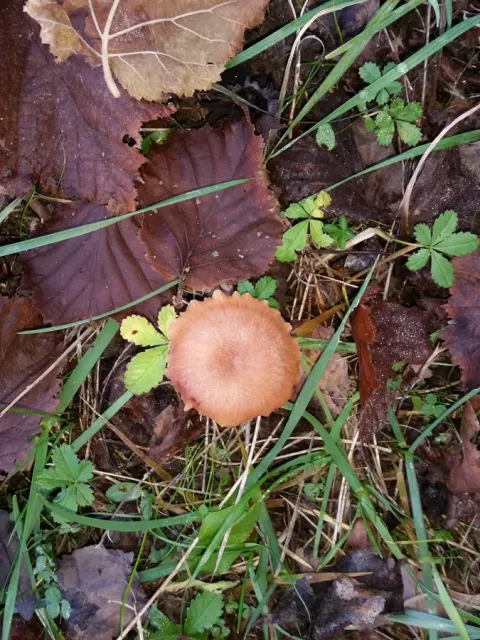
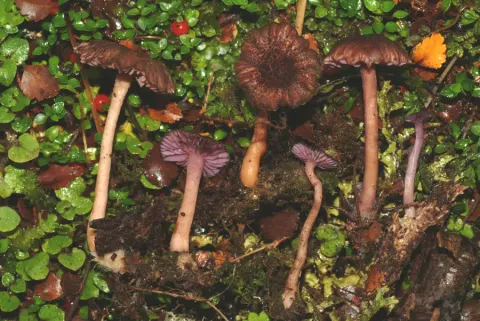
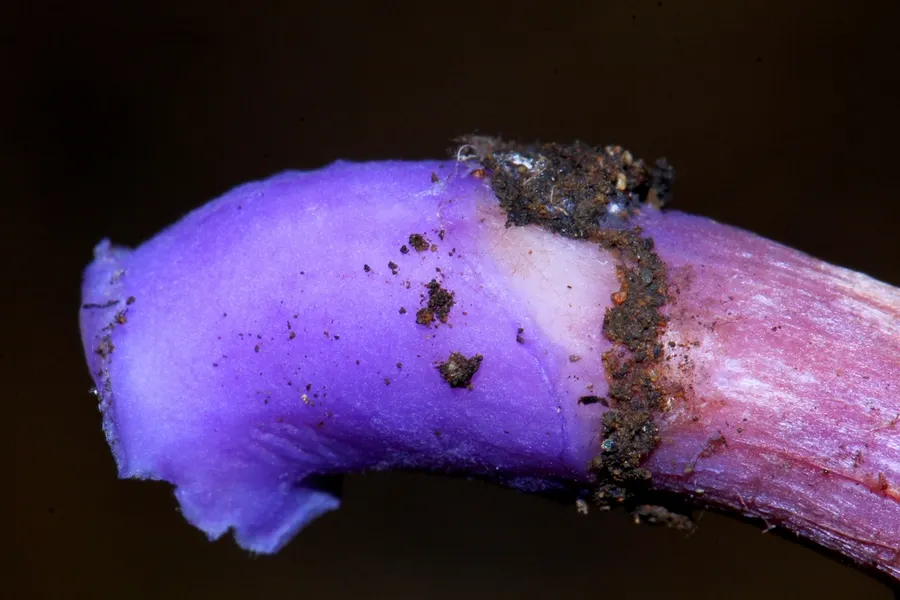
The cap is 2 – 4.5 cm across, convex to flat, and with a central navel. It is often incurved at the margin, and is various shades of ochraceous-buff, and tan, depending on moisture content. Young specimens are quite vividly colored, but more often are found duller in appearance. The fibrillose stipe is the same color, and with a distinct lilac down towards the base. The flesh is whitish, tinged with pink, or ochraceous, and has no apparent distinctive smell, or taste. The gills are pale lilac at first, fading paler. The spores are white.
Habitat dan peran ekologis
This species is mycorrhizal with a range of trees, and is found throughout the temperate zones of the world, in summer and autumn. This includes temperate and boreal forests of North America and probably Northern Europe. It seems to prefer birch and pine woods.
- Habitat atau konteks temuan
- Informasi belum tersedia pada sumber rilis ini.
- Substrat
- Informasi belum tersedia pada sumber rilis ini.
- Peran atau konteks
- Mitra tumbuhan
Reproduksi
The cap is 2 – 4.5 cm across, convex to flat, and with a central navel. It is often incurved at the margin, and is various shades of ochraceous-buff, and tan, depending on moisture content. Young specimens are quite vividly colored, but more often are found duller in appearance. The fibrillose stipe is the same color, and with a distinct lilac down towards the base. The flesh is whitish, tinged with pink, or ochraceous, and has no apparent distinctive smell, or taste. The gills are pale lilac at first, fading paler. The spores are white.
Catatan identitas dan cakupan
- Nama diterima mengikuti Catalogue of Life Base2026-09-11; uraian mempertahankan konsep dan nama sumber aslinya.
- Original geographic, specimen and life-cycle scope retained; source import awaits individual editorial review.
- Impor dan terjemahan otomatis belum diperiksa editorial per profil. Struktur reproduktif yang disebutkan tidak membuktikan seluruh siklus hidup diketahui.
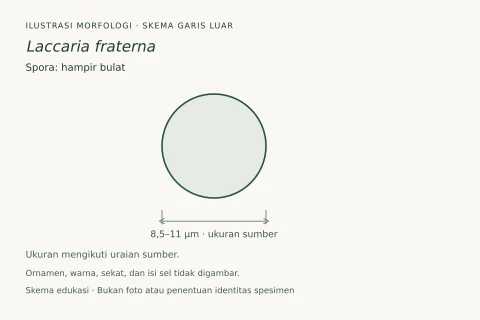
- Pengukuran pada uraian mengikuti spesimen, kultur, dan metode sumber; angka tidak diperluas ke semua populasi.
Catatan distribusi dalam narasi mengikuti sumbernya. Dokumentasi spesimen atau foto mengikuti catatan sumber. Bukti wilayah Indonesia dan penilaian konservasi tidak disimpulkan dari gambar.
Melihat dengan konteks
Dokumentasi Laccaria bicolor menurut asosiasi foto pada record takson iNaturalist. Kredit: Alan Rockefeller. Identitas mengikuti sumber; bukan penentuan spesimen independen.
- Jenis
- Fotografi
- Kredit
- (c) Alan Rockefeller, some rights reserved (CC BY), uploaded by Alan Rockefeller
- Lisensi
- CC BY 4.0
- Sumber media
- Buka entri sumber
Dokumentasi tambahan
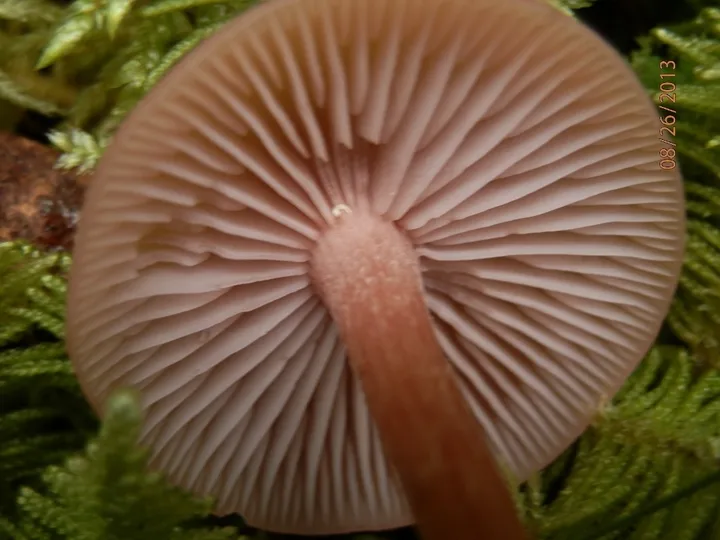
Foto yang diasosiasikan dengan Laccaria bicolor pada iNaturalist. Identifikasi mengikuti sumber; bukan penentuan spesimen independen.
Kredit dan penggunaan
(c) pinonbistro, some rights reserved (CC BY-SA), uploaded by pinonbistro
Ukuran dan format gambar disesuaikan tanpa pemotongan, retus, atau penambahan skala. Lisensi sumber dipertahankan.
Sumber profil
- [1] Laccaria bicolor — Wikipedia (en)
- [2] Catalogue of Life Base2026-09-11 — Laccaria bicolor
- [3] Dokumentasi visual — Laccaria bicolor
- [4] Dokumentasi visual — Laccaria bicolor
Rujukan halaman ini
Fungi. Laccaria bicolor. Rilis data fungi-2026-10-12-expansion-2. https://fungi-atlas.mgadib.chatgpt.site/jamur/laccaria-bicolor/.
Status: impor sumber; pemeriksaan editorial per profil belum selesai. Untuk klaim biologis, gunakan rujukan pada bagian terkait dan periksa konteks sumber aslinya.