01 / Morfologi

Ciri dan struktur

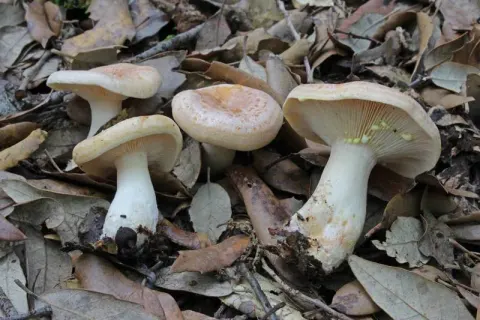
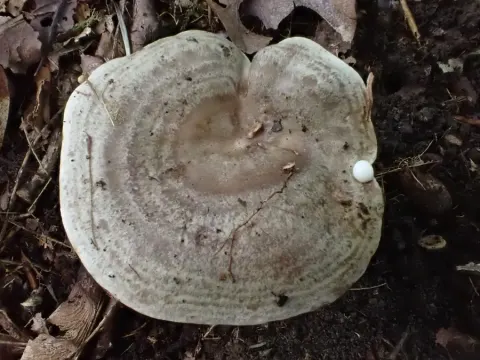
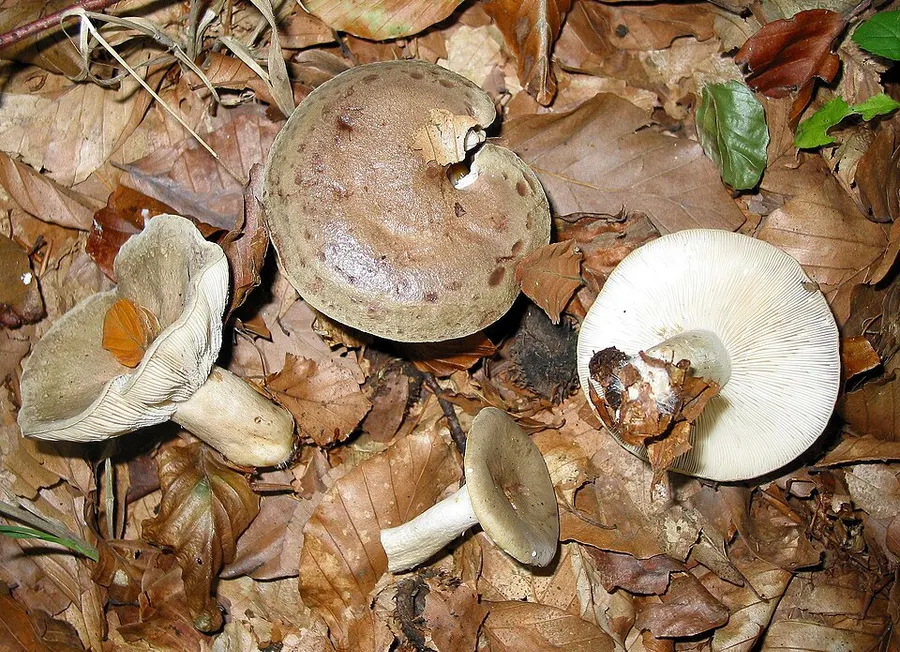
Lactarius blennius has a flattened convex cap that is 4–10 cm (1.6–4 in) across that later becomes depressed in the centre. In colour, it is pale olive to a greenish grey, sometimes a dull green or pale grey-sepia, and has blotches of darker colouration in concentric bands, though the colour can vary greatly. Heavily spotted specimens are also known, The cap is very slimy when moist and has a margin that is curved inwards. The stem is a paler colour than the cap, but also very slimy, and measures from 4–5 cm (1.6–2 in) tall by 1–1.7 cm (0.4–0.7 in) thick, The flesh is whitish, similar in colour to the gills, which later become a creamy or pale buff colour. The gills turn a brownish-grey colour when wounded, and are crowded. In shape, they are slightly decurrent or adnate, meaning that they run a small way down the stem in attachment, or that they are attached to the stem by the whole depth of the gills. The milk is white and dries grey, and is very plentiful. L. blennius spores leave a creamy print, and are elliptic with low warts joined by ridges with a small number of cross-connections, measuring from 6–9 by 5.5–7 μm.

Sebagian uraian ditampilkan dalam bahasa sumber; terjemahannya belum tersedia atau belum lolos pemeriksaan.

Rujukan: [1]

Pengukuran mengikuti objek, spesimen atau kultur, dan metode yang disebutkan sumber. Baca uraian asli untuk konteks lengkap.

02 / Kehidupan

Habitat dan peran ekologis

Lactarius blennius sangat umum dan ditemukan di hutan berdaun lebar, lebih menyukai bukit; meskipun juga telah diamati tumbuh dalam hubungan dengan spesies ek. dan dapat tumbuh di berbagai jenis subdasar, tetapi lebih khas dari tanah asam. Prancis, Italia, dan Polandia.

Rujukan: [1]

Habitat atau konteks temuan
hutan
Substrat
Informasi belum tersedia pada sumber rilis ini.
Peran atau konteks
Belum dikategorikan pada rilis ini.
Temukan hubungan serupa
03 / Siklus hidup

Reproduksi

Lactarius blennius has a flattened convex cap that is 4–10 cm (1.6–4 in) across that later becomes depressed in the centre. In colour, it is pale olive to a greenish grey, sometimes a dull green or pale grey-sepia, and has blotches of darker colouration in concentric bands, though the colour can vary greatly. Heavily spotted specimens are also known, The cap is very slimy when moist and has a margin that is curved inwards. The stem is a paler colour than the cap, but also very slimy, and measures from 4–5 cm (1.6–2 in) tall by 1–1.7 cm (0.4–0.7 in) thick, The flesh is whitish, similar in colour to the gills, which later become a creamy or pale buff colour. The gills turn a brownish-grey colour when wounded, and are crowded.

Sebagian uraian ditampilkan dalam bahasa sumber; terjemahannya belum tersedia atau belum lolos pemeriksaan.

Rujukan: [1]

Sinonim menurut acuan taksonomi rilis: Agaricus blennius; Galorrheus blennius; Lactarius albidopallens; Lactarius blennius f. viridis; Lactarius viridis; Lactifluus blennius
04 / Batas informasi

Catatan identitas dan cakupan

  • Nama diterima mengikuti Catalogue of Life Base2026-09-11; uraian mempertahankan konsep dan nama sumber aslinya.
  • Original geographic, specimen and life-cycle scope retained; source import awaits individual editorial review.
  • Impor dan terjemahan otomatis belum diperiksa editorial per profil. Struktur reproduktif yang disebutkan tidak membuktikan seluruh siklus hidup diketahui.
  • Pengukuran pada uraian mengikuti spesimen, kultur, dan metode sumber; angka tidak diperluas ke semua populasi.

Catatan distribusi dalam narasi mengikuti sumbernya. Dokumentasi spesimen atau foto mengikuti catatan sumber. Bukti wilayah Indonesia dan penilaian konservasi tidak disimpulkan dari gambar.

05 / Dokumentasi

Melihat dengan konteks

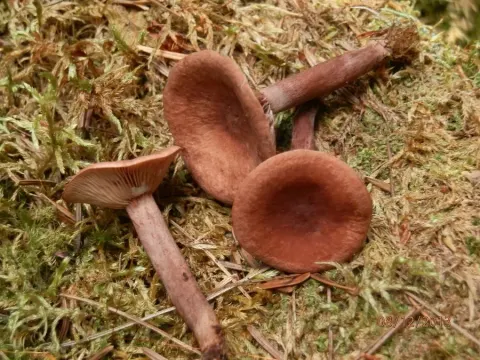
Dokumentasi Lactarius blennius dari Wikimedia Commons. Lactarius blennius (la), Grüne Milchlinge (de), Slimy milk-cap (en), Lactaire muqueux (fr), Grijsgroene melkzwam (nl), Boleû a mokions (wa) Identifikasi mengikuti record berkas sumber.

Jenis
Fotografi
Kredit
Jean-Pol GRANDMONT
Sumber media
Buka entri sumber

Gambar menunjukkan objek menurut identifikasi sumber, bukan verifikasi independen spesimen oleh Fungi. Tidak ada skala baru yang ditambahkan.

06 / Rujukan

Sumber profil

  1. [1] Lactarius blennius — Wikipedia (en)Bagian sumber: Frozen revision 1365285540
    Tanggal penghimpunan sumber: 2026-10-12
    Teks sumber: CC BY-SA4.0 · Wikipedia contributors
  2. [2] Catalogue of Life Base2026-09-11 — Lactarius blenniusBagian sumber: ColDP NameUsage.tsv ID 3RRNJ; accepted species; source 2073
    Tanggal penghimpunan sumber: 2026-10-12
  3. [3] Dokumentasi visual — Lactarius blenniusBagian sumber: Individual media record; identification follows the source, not independent determination
    Tanggal penghimpunan sumber: 2026-10-12
    Media sumber: CC BY-SA 2.5 · Jean-Pol GRANDMONT

Adaptasi teks: CC BY-SA 4.0. Wikipedia contributors — Lactarius blennius — Wikipedia (en)

Uraian asli dan riwayat sumber

Riwayat atau halaman sumber

Ringkasan sumber

Lactarius blennius (commonly known as the slimy milkcap or beech milkcap) is a medium-sized mushroom of the genus Lactarius found commonly in beech forests in Europe, where it is mycorrhizal, favouring the European beech (though associations with other trees are known). It was first described by Elias Magnus Fries. Though its colour and size vary, it is distinctive because it is slimy when wet and exudes copious amounts of milk. It has been the subject of some chemical research, and it can be used to produce pigments and blennins.

Revisi sumber

Morfologi sumber

Lactarius blennius has a flattened convex cap that is 4–10 cm (1.6–4 in) across that later becomes depressed in the centre. In colour, it is pale olive to a greenish grey, sometimes a dull green or pale grey-sepia, and has blotches of darker colouration in concentric bands, though the colour can vary greatly. Heavily spotted specimens are also known, The cap is very slimy when moist and has a margin that is curved inwards. The stem is a paler colour than the cap, but also very slimy, and measures from 4–5 cm (1.6–2 in) tall by 1–1.7 cm (0.4–0.7 in) thick, The flesh is whitish, similar in colour to the gills, which later become a creamy or pale buff colour. The gills turn a brownish-grey colour when wounded, and are crowded. In shape, they are slightly decurrent or adnate, meaning that they run a small way down the stem in attachment, or that they are attached to the stem by the whole depth of the gills. The milk is white and dries grey, and is very plentiful. L. blennius spores leave a creamy print, and are elliptic with low warts joined by ridges with a small number of cross-connections, measuring from 6–9 by 5.5–7 μm.

Revisi sumber

Ekologi sumber

Lactarius blennius is very common and is found in broad-leaved woodland, favouring beech; though it has also been observed growing in association with species of oak. and can grow on a wide variety of subsoil types, but is more typical of acidic soil. France, Italy, and Poland.

Revisi sumber

Struktur reproduksi sumber

Lactarius blennius has a flattened convex cap that is 4–10 cm (1.6–4 in) across that later becomes depressed in the centre. In colour, it is pale olive to a greenish grey, sometimes a dull green or pale grey-sepia, and has blotches of darker colouration in concentric bands, though the colour can vary greatly. Heavily spotted specimens are also known, The cap is very slimy when moist and has a margin that is curved inwards. The stem is a paler colour than the cap, but also very slimy, and measures from 4–5 cm (1.6–2 in) tall by 1–1.7 cm (0.4–0.7 in) thick, The flesh is whitish, similar in colour to the gills, which later become a creamy or pale buff colour. The gills turn a brownish-grey colour when wounded, and are crowded.

Revisi sumber

Rujukan halaman ini

Fungi. Lactarius blennius. Rilis data fungi-2026-10-12-expansion-2. https://fungi-atlas.mgadib.chatgpt.site/jamur/lactarius-blennius/.

Status: impor sumber; pemeriksaan editorial per profil belum selesai. Untuk klaim biologis, gunakan rujukan pada bagian terkait dan periksa konteks sumber aslinya.