01 / Morfologi

Ciri dan struktur

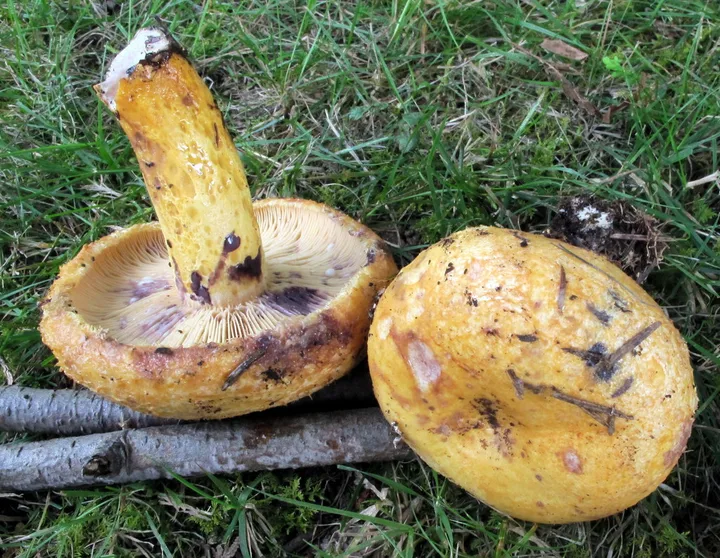
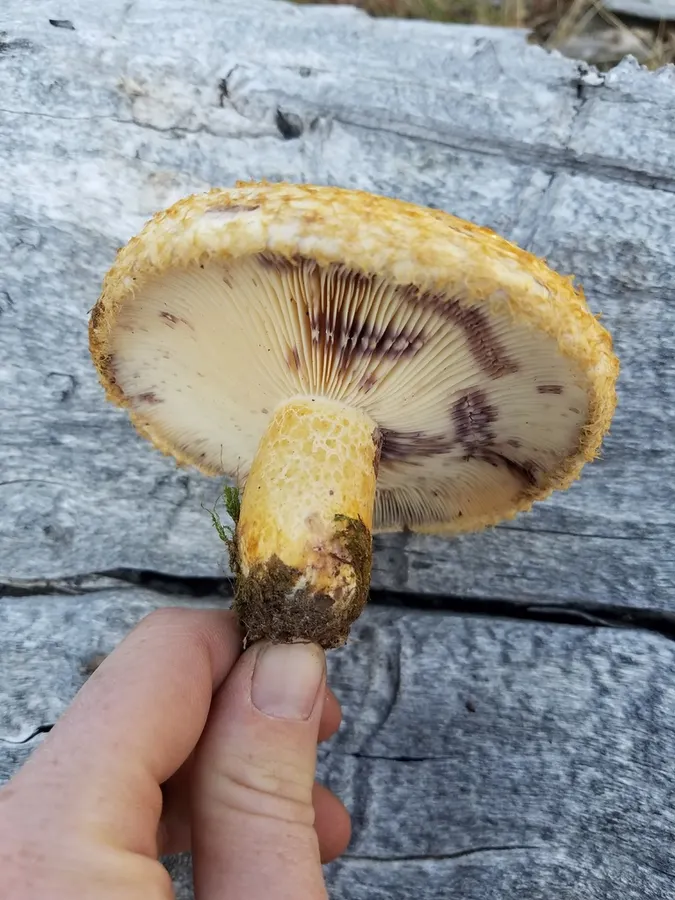
The cap of L. repraesentaneus is 6–18 cm wide, convex to broadly funnel-shaped. The margin (the edge of the cap) is conspicuously bearded on young specimens. The cap surface is faintly zoned to azonate, with a thin layer of matted fibers, often becoming scurfy with age. It is dry to somewhat sticky, light yellow to orange-yellow, sometimes with rusty tints when older. The attachment of the gills to the stem is slightly decurrent—running slightly down the length of the stem. The gills are moderately broad, close to crowded, sometimes forked near the stem. Normally a cream to pale ochraceous color, they will stain dull lilac to purple when bruised. The stem is 5–12 cm long, 1–3 cm thick, nearly equal in width throughout or enlarged downward, hollow at maturity, sticky to dry, scrobiculate (coarsely pitted), pale yellow to orange-yellow, and stains dull lilac to purple. The flesh is firm, brittle, white, and will stain dull lilac to purple when cut. The odor is sometimes faintly fragrant or not distinctive, but when the mushroom is dry it smells intensely of soap. Its taste is mild to slightly acrid or somewhat bitter, and the flavor has been compared to sweet flag (Acorus calamus). The abundant amount of latex produced by the mushroom is white to cream, unchanging, staining all tissues dull lilac to purple. It tastes mild to slightly acrid or somewhat bitter. The spore print is yellowish. A new form, Lactarius repraesentaneus f. immutabilis, was described from Le Sappey, in the Haute-Savoie department of southeastern France in 2011. It differs in the staining reaction of its injured flesh.

Sebagian uraian ditampilkan dalam bahasa sumber; terjemahannya belum tersedia atau belum lolos pemeriksaan.

Rujukan: [1]

Pengukuran mengikuti objek, spesimen atau kultur, dan metode yang disebutkan sumber. Baca uraian asli untuk konteks lengkap.

02 / Kehidupan

Habitat dan peran ekologis

Like other Lactarius species, L. repraesentaneus dianggap membentuk hubungan mikoriza dengan pohon. This is a mutually beneficial relationship where the hyphae of the fungus grow around the roots of trees, forming a sheath of tissue. Hal ini memungkinkan jamur untuk menerima kelembaban, perlindungan dan produk sampingan gizi dari pohon, dan memungkinkan pohon lebih banyak akses ke nutrisi tanah. The fruit bodies of L. repraesentaneus are found scattered or in groups on the ground under spruce from August to September. Jamur ini didistribusikan di ketinggian yang lebih tinggi di Amerika Serikat utara dan ada pohon cemara selatan Canada where. Hal ini juga dilaporkan dari Alaska, California, dan Pegunungan Rocky. Frekuensi kedatangannya digambarkan sebagai sesekali hingga cukup umum. Di Eropa, di mana sangat jarang ditemukan, terutama di bawah sallows (Salix capraea) di hutan di kaki pegunungan di tanah non kalkar. Ia telah dikumpulkan di Ceko, Swedia, Swiss, Prancis Alps and Inggris; secara keseluruhan, ia tersebar luas di seluruh zona beriklim sedang di belahan bumi utara. Jamur ini juga telah dikumpulkan di bawah birch (B. pubescens, B. nana, dan B. glandulosa) di Greenland.

Sebagian uraian ditampilkan dalam bahasa sumber; terjemahannya belum tersedia atau belum lolos pemeriksaan.

Rujukan: [1]

Habitat atau konteks temuan
hutan
Substrat
tanah
Peran atau konteks
Mitra tumbuhan
Temukan hubungan serupa
03 / Siklus hidup

Reproduksi

The stem is 5–12 cm long, 1–3 cm thick, nearly equal in width throughout or enlarged downward, hollow at maturity, sticky to dry, scrobiculate (coarsely pitted), pale yellow to orange-yellow, and stains dull lilac to purple. The flesh is firm, brittle, white, and will stain dull lilac to purple when cut. The odor is sometimes faintly fragrant or not distinctive, but when the mushroom is dry it smells intensely of soap. Its taste is mild to slightly acrid or somewhat bitter, and the flavor has been compared to sweet flag (Acorus calamus). The abundant amount of latex produced by the mushroom is white to cream, unchanging, staining all tissues dull lilac to purple. It tastes mild to slightly acrid or somewhat bitter.

Sebagian uraian ditampilkan dalam bahasa sumber; terjemahannya belum tersedia atau belum lolos pemeriksaan.

Rujukan: [1]

Sinonim menurut acuan taksonomi rilis: Lactarius repraesentaneus subsp. speciosus; Lactarius scrobiculatus var. repraesentaneus; Lactifluus repraesentaneus
04 / Batas informasi

Catatan identitas dan cakupan

  • Nama diterima mengikuti Catalogue of Life Base2026-09-11; uraian mempertahankan konsep dan nama sumber aslinya.
  • Original geographic, specimen and life-cycle scope retained; source import awaits individual editorial review.
  • Impor dan terjemahan otomatis belum diperiksa editorial per profil. Struktur reproduktif yang disebutkan tidak membuktikan seluruh siklus hidup diketahui.
  • Pengukuran pada uraian mengikuti spesimen, kultur, dan metode sumber; angka tidak diperluas ke semua populasi.

Catatan distribusi dalam narasi mengikuti sumbernya. Dokumentasi spesimen atau foto mengikuti catatan sumber. Bukti wilayah Indonesia dan penilaian konservasi tidak disimpulkan dari gambar.

05 / Dokumentasi

Melihat dengan konteks

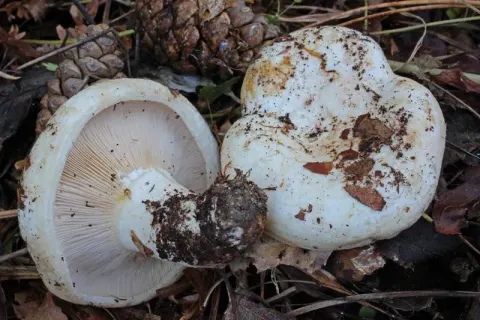
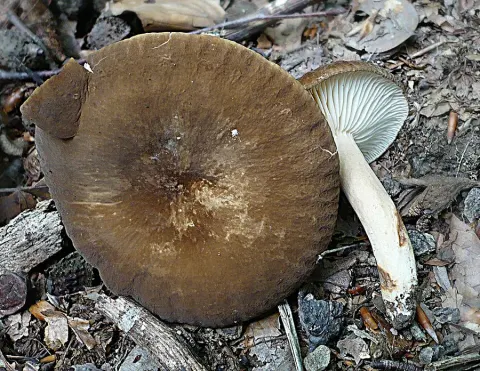
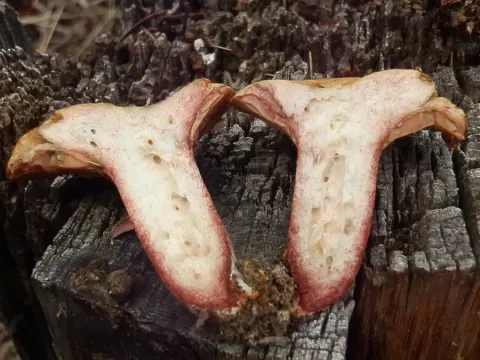
Dokumentasi Lactarius repraesentaneus menurut asosiasi foto pada record takson iNaturalist. Kredit: Thea Chesney. Identitas mengikuti sumber; bukan penentuan spesimen independen.

Jenis
Fotografi
Kredit
(c) Thea Chesney, some rights reserved (CC BY)
Lisensi
CC BY 4.0
Sumber media
Buka entri sumber

Gambar menunjukkan objek menurut identifikasi sumber, bukan verifikasi independen spesimen oleh Fungi. Tidak ada skala baru yang ditambahkan.

Dokumentasi tambahan

06 / Rujukan

Sumber profil

  1. [1] Lactarius repraesentaneus — Wikipedia (en)Bagian sumber: Frozen revision 1300437899
    Tanggal penghimpunan sumber: 2026-10-12
    Teks sumber: CC BY-SA4.0 · Wikipedia contributors
  2. [2] Catalogue of Life Base2026-09-11 — Lactarius repraesentaneusBagian sumber: ColDP NameUsage.tsv ID 3RS6Y; accepted species; source 2073
    Tanggal penghimpunan sumber: 2026-10-12
  3. [3] Dokumentasi visual — Lactarius repraesentaneusBagian sumber: Identitas mengikuti sumber dokumentasi; bukan penentuan spesimen independen.
    Tanggal penghimpunan sumber: 2026-10-17
    Media sumber: CC BY 4.0 · (c) Thea Chesney, some rights reserved (CC BY)
  4. [4] Dokumentasi visual — Lactarius repraesentaneusBagian sumber: Identitas mengikuti sumber dokumentasi; bukan penentuan spesimen independen.
    Tanggal penghimpunan sumber: 2026-10-17
    Teks sumber: CC BY-SA 4.0 · (c) mycowalt, some rights reserved (CC BY-SA), uploaded by mycowalt

Adaptasi teks: CC BY-SA 4.0. Wikipedia contributors — Lactarius repraesentaneus — Wikipedia (en)

Uraian asli dan riwayat sumber

Riwayat atau halaman sumber

Ringkasan sumber

Distinguishing features of its fruit body include the large orange-yellow cap up to 18 cm wide, cream to pale yellow gills, and a yellow coarsely-pitted stem that is up to 12 cm long and 3 cm thick. Cut fruit bodies ooze a white latex that will stain mushroom tissue lilac to purple. The species has a northerly distribution, being found in temperate regions of North America and Europe. It is associated with spruce trees. The mushroom is poisonous, its consumption causing stomach aches. It has antibiotic activity against Staphylococcus aureus and contains chemicals that can modify the growth of plants.

Revisi sumber

Morfologi sumber

The cap of L. repraesentaneus is 6–18 cm wide, convex to broadly funnel-shaped. The margin (the edge of the cap) is conspicuously bearded on young specimens. The cap surface is faintly zoned to azonate, with a thin layer of matted fibers, often becoming scurfy with age. It is dry to somewhat sticky, light yellow to orange-yellow, sometimes with rusty tints when older. The attachment of the gills to the stem is slightly decurrent—running slightly down the length of the stem. The gills are moderately broad, close to crowded, sometimes forked near the stem. Normally a cream to pale ochraceous color, they will stain dull lilac to purple when bruised. The stem is 5–12 cm long, 1–3 cm thick, nearly equal in width throughout or enlarged downward, hollow at maturity, sticky to dry, scrobiculate (coarsely pitted), pale yellow to orange-yellow, and stains dull lilac to purple. The flesh is firm, brittle, white, and will stain dull lilac to purple when cut. The odor is sometimes faintly fragrant or not distinctive, but when the mushroom is dry it smells intensely of soap. Its taste is mild to slightly acrid or somewhat bitter, and the flavor has been compared to sweet flag (Acorus calamus). The abundant amount of latex produced by the mushroom is white to cream, unchanging, staining all tissues dull lilac to purple. It tastes mild to slightly acrid or somewhat bitter. The spore print is yellowish. A new form, Lactarius repraesentaneus f. immutabilis, was described from Le Sappey, in the Haute-Savoie department of southeastern France in 2011. It differs in the staining reaction of its injured flesh.

Revisi sumber

Ekologi sumber

Like other Lactarius species, L. repraesentaneus is thought to form mycorrhizal relationships with trees. This is a mutually beneficial relationship where the hyphae of the fungus grow around the roots of trees, forming a sheath of tissue. This enables the fungus to receive moisture, protection and nutritive byproducts of the tree, and affords the tree greater access to soil nutrients. The fruit bodies of L. repraesentaneus are found scattered or in groups on the ground under spruce from August to September. The fungus is distributed in higher elevations in the northern USA and southern Canada where spruce is present. It has also been reported from Alaska, California, and the Rocky Mountains. The frequency of its appearance is described as occasional to fairly common. In Europe, where it is fairly rare, it is found mainly underneath sallows (Salix capraea) in forests at the foot of mountains on non-calcareous soil. It has been collected in Czechoslovakia, Sweden, Switzerland, the French Alps and England; overall, it is widely distributed throughout the temperate zone of the northern hemisphere. The fungus has also been collected under birch (B. pubescens, B. nana, and B. glandulosa) in Greenland.

Revisi sumber

Struktur reproduksi sumber

The stem is 5–12 cm long, 1–3 cm thick, nearly equal in width throughout or enlarged downward, hollow at maturity, sticky to dry, scrobiculate (coarsely pitted), pale yellow to orange-yellow, and stains dull lilac to purple. The flesh is firm, brittle, white, and will stain dull lilac to purple when cut. The odor is sometimes faintly fragrant or not distinctive, but when the mushroom is dry it smells intensely of soap. Its taste is mild to slightly acrid or somewhat bitter, and the flavor has been compared to sweet flag (Acorus calamus). The abundant amount of latex produced by the mushroom is white to cream, unchanging, staining all tissues dull lilac to purple. It tastes mild to slightly acrid or somewhat bitter.

Revisi sumber

Rujukan halaman ini

Fungi. Lactarius repraesentaneus. Rilis data fungi-2026-10-12-expansion-2. https://fungi-atlas.mgadib.chatgpt.site/jamur/lactarius-repraesentaneus/.

Status: impor sumber; pemeriksaan editorial per profil belum selesai. Untuk klaim biologis, gunakan rujukan pada bagian terkait dan periksa konteks sumber aslinya.