Ciri dan struktur
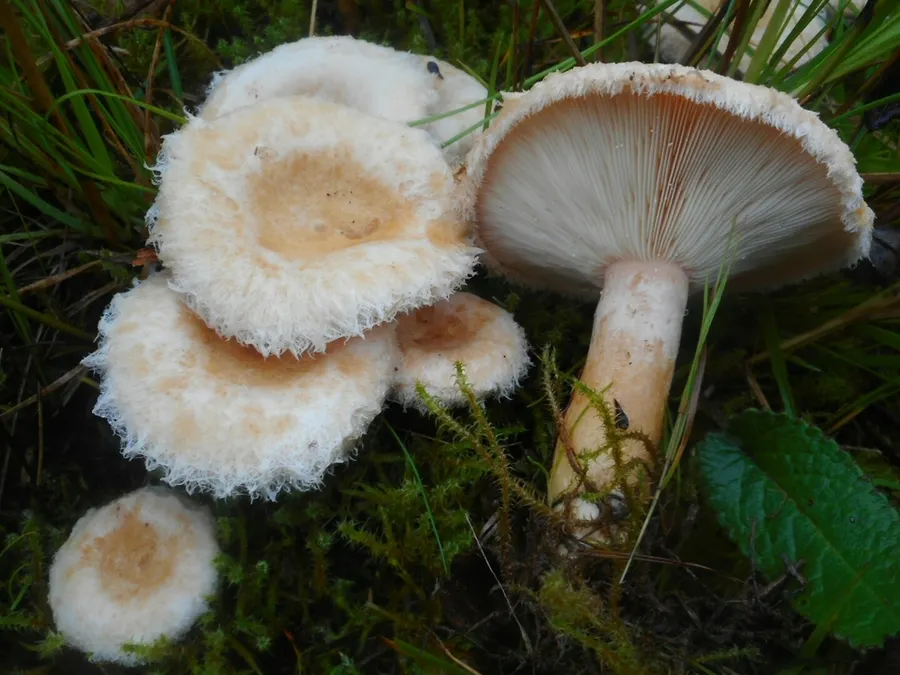
The cap is initially convex before developing a central depression, sometimes becoming funnel-shaped, and reaches diameters of 1.4 – 6 cm. The cap surface is smooth overall and dry, but sometimes has small cracks in the center, and an increasingly felt-like texture moving towards the margin, which is usually fringed with 1–2-mm long hairs. The colour is initially pale cream to whitish, later becoming pale pinkish-buff to cream, with a more yellowish to yellowish-brown centre. The crowded gills have an adnate to decurrent attachment to the stipe. Whitish to pale pinkish-buff in colour, they are sometimes forked near the stipe attachment. The stipe measures 2.0 – 7.5 cm long by 0.4 – 1 cm in diameter, and is either cylindrical to slightly club-shaped. It has a smooth to finely felty surface with a light cream to pinkish-buff colour. The flesh is similar in colour to the outer surfaces; it has an acrid taste and an acidic to fruity odour. The sparse latex is white and has an immediately acrid taste. Lactarius scoticus mushrooms produce a pale cream spore print. Spores are ellipsoid in shape, measuring on average 6.5–6.9 by 4.9–5.0 μm. The spore surface features warts and ridges up to 0.5 μm high that are connected by thin ridges to form an incomplete reticulum. The basidia (spore-bearing cells) are cylindrical to club-shaped, four-spored, and measure 30–45 by 7–9 μm.
Habitat dan peran ekologis
Lactarius scoticus is found in European peat bogs, where is grows in a mycorrhizal association with birch species. Fruiting occurs from July to October.
- Habitat atau konteks temuan
- Informasi belum tersedia pada sumber rilis ini.
- Substrat
- Informasi belum tersedia pada sumber rilis ini.
- Peran atau konteks
- Mitra tumbuhan
Reproduksi
Lactarius scoticus mushrooms produce a pale cream spore print. Spores are ellipsoid in shape, measuring on average 6.5–6.9 by 4.9–5.0 μm. The spore surface features warts and ridges up to 0.5 μm high that are connected by thin ridges to form an incomplete reticulum. The basidia (spore-bearing cells) are cylindrical to club-shaped, four-spored, and measure 30–45 by 7–9 μm.
Catatan identitas dan cakupan
- Nama diterima mengikuti Catalogue of Life Base2026-09-11; uraian mempertahankan konsep dan nama sumber aslinya.
- Original geographic, specimen and life-cycle scope retained; source import awaits individual editorial review.
- Impor dan terjemahan otomatis belum diperiksa editorial per profil. Struktur reproduktif yang disebutkan tidak membuktikan seluruh siklus hidup diketahui.
- Pengukuran pada uraian mengikuti spesimen, kultur, dan metode sumber; angka tidak diperluas ke semua populasi.
Catatan distribusi dalam narasi mengikuti sumbernya. Dokumentasi spesimen atau foto mengikuti catatan sumber. Bukti wilayah Indonesia dan penilaian konservasi tidak disimpulkan dari gambar.
Melihat dengan konteks
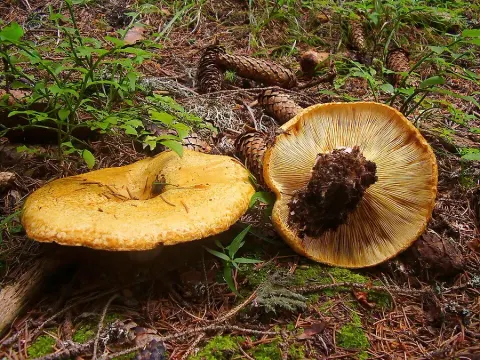
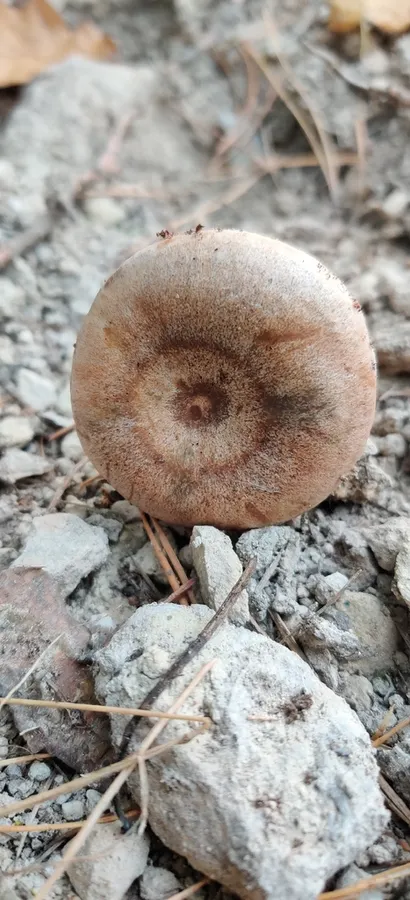
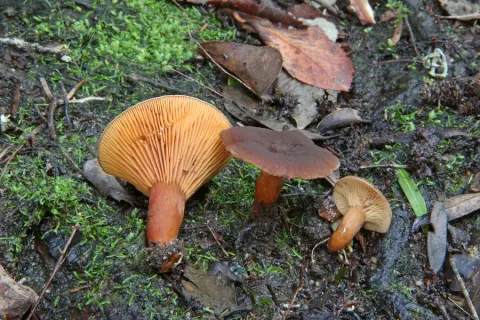
Dokumentasi Lactarius scoticus menurut asosiasi foto pada record takson iNaturalist. Kredit: Eugene Popov. Identitas mengikuti sumber; bukan penentuan spesimen independen.
- Jenis
- Fotografi
- Kredit
- (c) Eugene Popov, some rights reserved (CC BY), uploaded by Eugene Popov
- Lisensi
- CC BY 4.0
- Sumber media
- Buka entri sumber
Sumber profil
- [1] Lactarius scoticus — Wikipedia (en)
- [2] Catalogue of Life Base2026-09-11 — Lactarius scoticus
- [3] Dokumentasi visual — Lactarius scoticus
Rujukan halaman ini
Fungi. Lactarius scoticus. Rilis data fungi-2026-10-12-expansion-2. https://fungi-atlas.mgadib.chatgpt.site/jamur/lactarius-scoticus/.
Status: impor sumber; pemeriksaan editorial per profil belum selesai. Untuk klaim biologis, gunakan rujukan pada bagian terkait dan periksa konteks sumber aslinya.