01 / Morfologi

Ciri dan struktur

The cap is initially convex, but as it matures the center forms a depression and the outer edges rise until it assumes the shape of a shallow funnel; its final width is typically between 2 and 12 cm. The fruit body formation of L. torminosus is pileostipitocarpic. In this type of development, the hymenium forms early on the underside of the cap and upper stem of the mushroom primordium. As the cap enlarges, the margin, made of flaring filamentous hyphae that grow outward and downward, tends to curve inward, eventually forming a flap of tissue roughly parallel to the stem surface. As further development takes place, these hyphae make contact with and adhere to the hymenial surface of the stem, covering basidia and macrocystidia (very long cystidia) already present. The junction between the two tissues produces a cavity that provides some temporary protection to the basidia, although they are already fertile when the cap margin starts to grow. The spore print of L. torminosus is cream to pale yellow, and the spores 8–10.2 by 5.8–6.6 μm, roughly spherical to broadly elliptical in side view, and hyaline (translucent). Only the ornamentation on their surface is amyloid; it is partially reticulate (network-like) with interrupted ridges roughly 0.5–0.7 μm high, and a few isolated warts. Spores have a conspicuous apiculus, demarcating where it was once attached to the basidia via the sterigma. The basidia are four-spored, hyaline and club-shaped to cylindrical, measuring 30–47.7 by 7.3–8.2 μm. Pleurocystidia are present only in the form of macrocystidia embedded and originating in the hymenium and just below it, they reach 40.3–80.0 by 5.1–9.5 μm.

Sebagian uraian ditampilkan dalam bahasa sumber; terjemahannya belum tersedia atau belum lolos pemeriksaan.

Rujukan: [1]

Pengukuran mengikuti objek, spesimen atau kultur, dan metode yang disebutkan sumber. Baca uraian asli untuk konteks lengkap.

02 / Kehidupan

Habitat dan peran ekologis

Lactarius torminosus is found in northern temperate and boreal climates, penetrating sometimes into subarctic regions. It has been recorded from North Africa, northern Asia, Europe, and is common in North America, where it sometimes grows with aspen (Populus species). The North American distribution extends north into the Yukon and Alaska and south to Mexico. Lactarius torminosus is a mycorrhizal species, and as such plays an important role in facilitating nutrient and water uptake by trees. It grows in association with birch (Betula) and hemlock (Tsuga) in mixed forests. It is also known to grow in urban settings when birch trees are nearby. A field study in Scotland concluded that the species is more likely to be present in older than in younger birch woodlands. Fruit bodies grow on the ground, scattered or grouped together. They are a component of the diet of the red squirrel, and serve as breeding sites for some fungus-feeding flies in the Drosophilidae and Mycetophilidae families. Lactarius torminosus mushrooms may be parasitized by the mold Hypomyces lithuanicus, which produces a cream-ochre to cinnamon-colored granular or velvety growth of mycelium on the surfaces of the gills and causes them to be deformed.

Sebagian uraian ditampilkan dalam bahasa sumber; terjemahannya belum tersedia atau belum lolos pemeriksaan.

Rujukan: [1]

Habitat atau konteks temuan
hutan
Substrat
tanah
Peran atau konteks
Mitra tumbuhan
Temukan hubungan serupa
03 / Siklus hidup

Reproduksi

The fruit body formation of L. torminosus is pileostipitocarpic. In this type of development, the hymenium forms early on the underside of the cap and upper stem of the mushroom primordium. As the cap enlarges, the margin, made of flaring filamentous hyphae that grow outward and downward, tends to curve inward, eventually forming a flap of tissue roughly parallel to the stem surface. As further development takes place, these hyphae make contact with and adhere to the hymenial surface of the stem, covering basidia and macrocystidia (very long cystidia) already present. The junction between the two tissues produces a cavity that provides some temporary protection to the basidia, although they are already fertile when the cap margin starts to grow.

Sebagian uraian ditampilkan dalam bahasa sumber; terjemahannya belum tersedia atau belum lolos pemeriksaan.

Rujukan: [1]

Sinonim menurut acuan taksonomi rilis: Agaricus cilicioides; Agaricus torminosus; Galorrheus cilicioides; Galorrheus torminosus; Lactarius cilicioides; Lactarius cilicioides subsp. intermedius; Lactarius cilicioides var. albus; Lactarius intermedius; Lactarius nordmanensis; Lactarius torminosus f. albida; Lactarius torminosus subsp. cilicioides; Lactarius torminosus var. cilicioides; Lactarius torminosus var. gracillimus; Lactarius torminosus var. nordmanensis; Lactarius torminosus var. sublateritius; Lactifluus cilicioides; Lactifluus torminosus
04 / Batas informasi

Catatan identitas dan cakupan

  • Nama diterima mengikuti Catalogue of Life Base2026-09-11; uraian mempertahankan konsep dan nama sumber aslinya.
  • Original geographic, specimen and life-cycle scope retained; source import awaits individual editorial review.
  • Impor dan terjemahan otomatis belum diperiksa editorial per profil. Struktur reproduktif yang disebutkan tidak membuktikan seluruh siklus hidup diketahui.
  • Pengukuran pada uraian mengikuti spesimen, kultur, dan metode sumber; angka tidak diperluas ke semua populasi.

Catatan distribusi dalam narasi mengikuti sumbernya. Dokumentasi spesimen atau foto mengikuti catatan sumber. Bukti wilayah Indonesia dan penilaian konservasi tidak disimpulkan dari gambar.

05 / Dokumentasi

Melihat dengan konteks

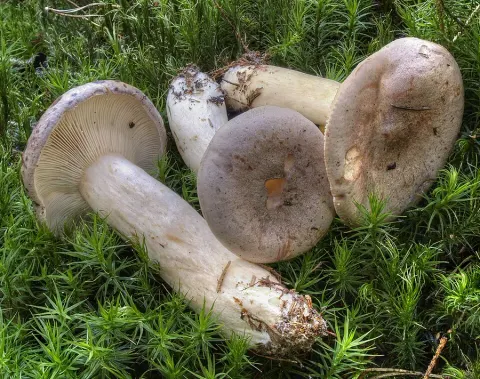
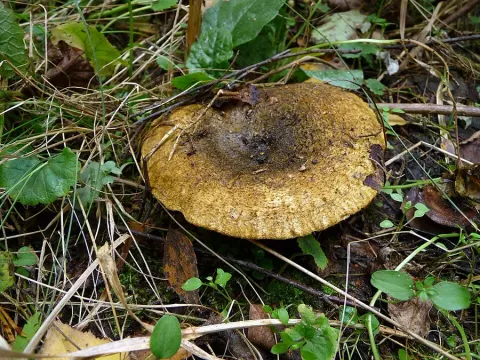
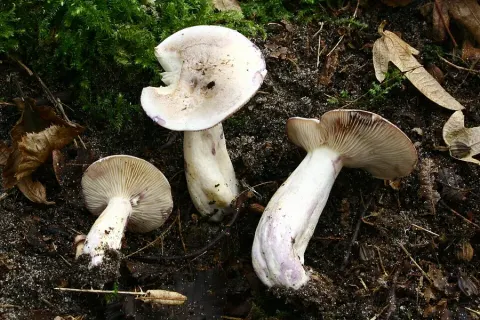
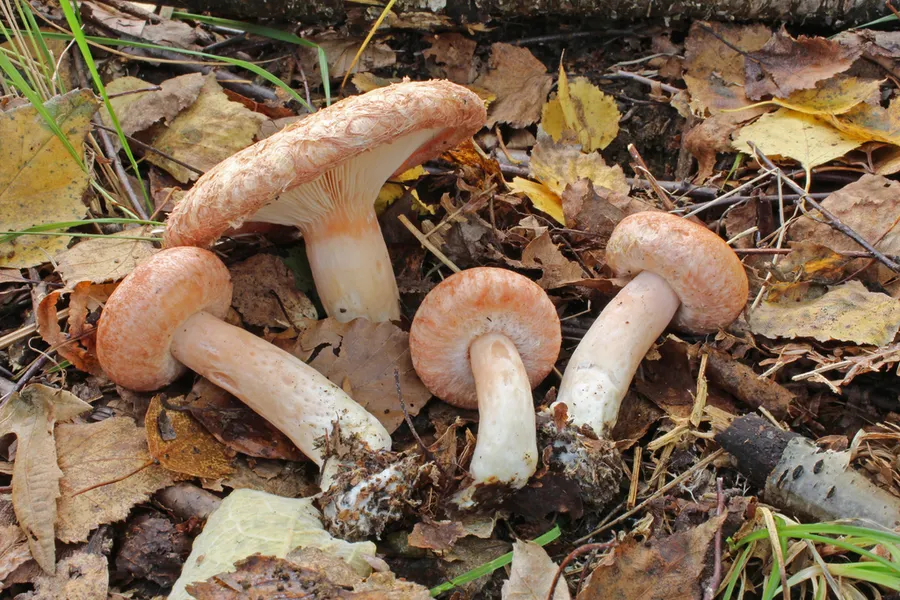
Dokumentasi Lactarius torminosus menurut asosiasi foto pada record takson iNaturalist. Kredit: Davide Puddu. Identitas mengikuti sumber; bukan penentuan spesimen independen.

Jenis
Fotografi
Kredit
(c) Davide Puddu, some rights reserved (CC BY), uploaded by Davide Puddu
Lisensi
CC BY 4.0
Sumber media
Buka entri sumber

Gambar menunjukkan objek menurut identifikasi sumber, bukan verifikasi independen spesimen oleh Fungi. Tidak ada skala baru yang ditambahkan.

06 / Rujukan

Sumber profil

  1. [1] Lactarius torminosus — Wikipedia (en)Bagian sumber: Frozen revision 1348731095
    Tanggal penghimpunan sumber: 2026-10-12
    Teks sumber: CC BY-SA4.0 · Wikipedia contributors
  2. [2] Catalogue of Life Base2026-09-11 — Lactarius torminosusBagian sumber: ColDP NameUsage.tsv ID 9XZKX; accepted species; source 2073
    Tanggal penghimpunan sumber: 2026-10-12
  3. [3] Dokumentasi visual — Lactarius torminosusBagian sumber: Individual media record; identification follows the source, not independent determination
    Tanggal penghimpunan sumber: 2026-10-12
    Media sumber: CC BY 4.0 · (c) Davide Puddu, some rights reserved (CC BY), uploaded by Davide Puddu

Adaptasi teks: CC BY-SA 4.0. Wikipedia contributors — Lactarius torminosus — Wikipedia (en)

Uraian asli dan riwayat sumber

Riwayat atau halaman sumber

Ringkasan sumber

Lactarius torminosus, commonly known as the woolly milkcap or the bearded milkcap, is a large species of agaric fungus. It was first described scientifically by Jacob Christian Schäffer in 1774 as an Agaricus, and later transferred to the genus Lactarius in 1821 by Samuel Frederick Gray. L. torminosus officially became the type species of Lactarius in 2011 after molecular studies prompted the taxonomic reshuffling of species between several Russulaceae genera. The caps are convex with a central depression, and attain a diameter of up to 10 cm.

Revisi sumber

Morfologi sumber

The cap is initially convex, but as it matures the center forms a depression and the outer edges rise until it assumes the shape of a shallow funnel; its final width is typically between 2 and 12 cm. The fruit body formation of L. torminosus is pileostipitocarpic. In this type of development, the hymenium forms early on the underside of the cap and upper stem of the mushroom primordium. As the cap enlarges, the margin, made of flaring filamentous hyphae that grow outward and downward, tends to curve inward, eventually forming a flap of tissue roughly parallel to the stem surface. As further development takes place, these hyphae make contact with and adhere to the hymenial surface of the stem, covering basidia and macrocystidia (very long cystidia) already present. The junction between the two tissues produces a cavity that provides some temporary protection to the basidia, although they are already fertile when the cap margin starts to grow. The spore print of L. torminosus is cream to pale yellow, and the spores 8–10.2 by 5.8–6.6 μm, roughly spherical to broadly elliptical in side view, and hyaline (translucent). Only the ornamentation on their surface is amyloid; it is partially reticulate (network-like) with interrupted ridges roughly 0.5–0.7 μm high, and a few isolated warts. Spores have a conspicuous apiculus, demarcating where it was once attached to the basidia via the sterigma. The basidia are four-spored, hyaline and club-shaped to cylindrical, measuring 30–47.7 by 7.3–8.2 μm. Pleurocystidia are present only in the form of macrocystidia embedded and originating in the hymenium and just below it, they reach 40.3–80.0 by 5.1–9.5 μm.

Revisi sumber

Ekologi sumber

Lactarius torminosus is found in northern temperate and boreal climates, penetrating sometimes into subarctic regions. It has been recorded from North Africa, northern Asia, Europe, and is common in North America, where it sometimes grows with aspen (Populus species). The North American distribution extends north into the Yukon and Alaska and south to Mexico. Lactarius torminosus is a mycorrhizal species, and as such plays an important role in facilitating nutrient and water uptake by trees. It grows in association with birch (Betula) and hemlock (Tsuga) in mixed forests. It is also known to grow in urban settings when birch trees are nearby. A field study in Scotland concluded that the species is more likely to be present in older than in younger birch woodlands. Fruit bodies grow on the ground, scattered or grouped together. They are a component of the diet of the red squirrel, and serve as breeding sites for some fungus-feeding flies in the Drosophilidae and Mycetophilidae families. Lactarius torminosus mushrooms may be parasitized by the mold Hypomyces lithuanicus, which produces a cream-ochre to cinnamon-colored granular or velvety growth of mycelium on the surfaces of the gills and causes them to be deformed.

Revisi sumber

Struktur reproduksi sumber

The fruit body formation of L. torminosus is pileostipitocarpic. In this type of development, the hymenium forms early on the underside of the cap and upper stem of the mushroom primordium. As the cap enlarges, the margin, made of flaring filamentous hyphae that grow outward and downward, tends to curve inward, eventually forming a flap of tissue roughly parallel to the stem surface. As further development takes place, these hyphae make contact with and adhere to the hymenial surface of the stem, covering basidia and macrocystidia (very long cystidia) already present. The junction between the two tissues produces a cavity that provides some temporary protection to the basidia, although they are already fertile when the cap margin starts to grow.

Revisi sumber

Rujukan halaman ini

Fungi. Lactarius torminosus. Rilis data fungi-2026-10-12-expansion-2. https://fungi-atlas.mgadib.chatgpt.site/jamur/lactarius-torminosus/.

Status: impor sumber; pemeriksaan editorial per profil belum selesai. Untuk klaim biologis, gunakan rujukan pada bagian terkait dan periksa konteks sumber aslinya.