Ciri dan struktur
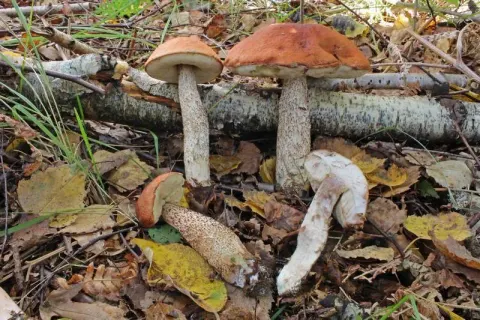
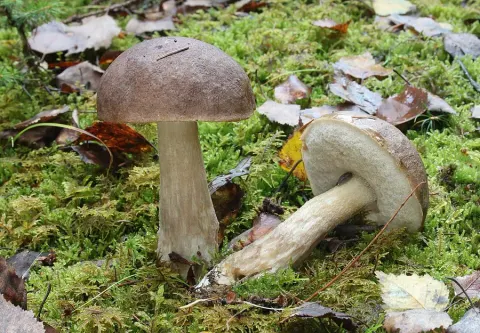
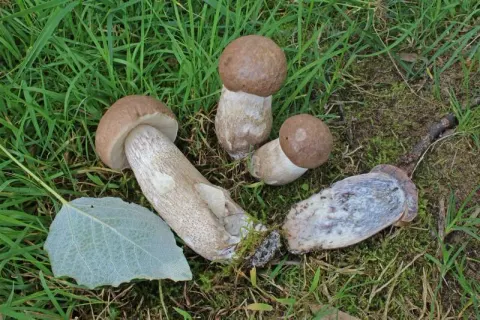
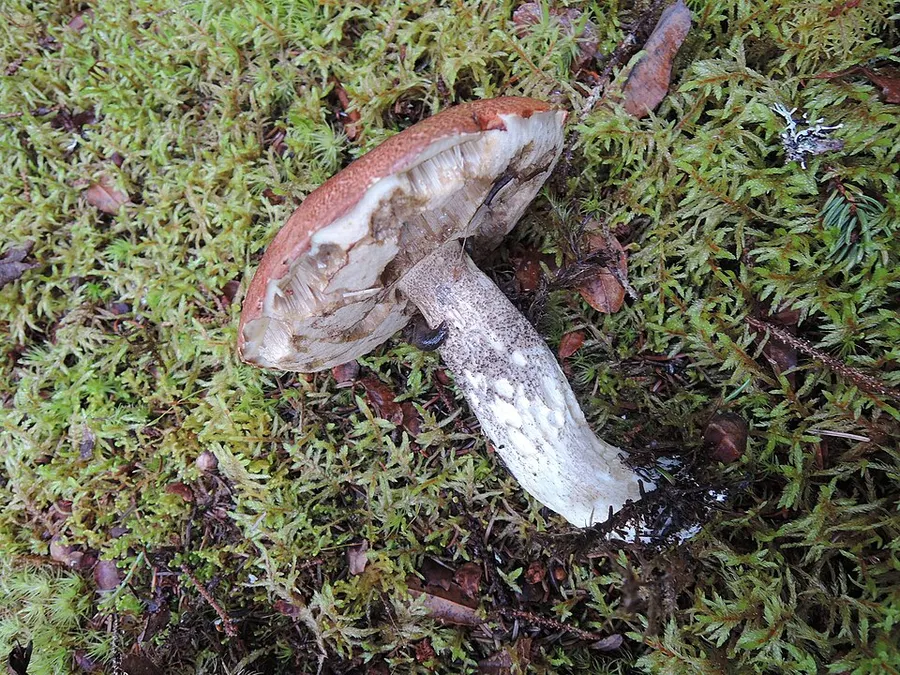
Fruit bodies have convex caps with ragged margins, and reach a diameter of 5 – 15 cm. The cap surface is dry and wrinkled, and develops cracks in maturity. Its color is orange to yellowish-orange, which fades in age to dull cinnamon or yellowish. The flesh is white, but will stain vinaceous (the color of red wine) to purplish gray when it is cut or otherwise injured. The pore surface is initially whitish to pale yellow or buff before changing to tan or pale yellow-brown in age; when bruised, it color deepens. There are about 1–3 circular pores per millimeter, and the tubes are up to 2 cm deep. The stem is 8 – 14 cm long by 1.6 – 2.5 cm thick, enlarging towards the base. Its surface is dry, and is covered with hazel to vinaceous-buff scabers (tufts of tiny fibers, characteristic of the genus Leccinum) on a buff background color. Leccinum arenicola produces a cinnamon to pinkish-cinnamon spore print. The spores are somewhat spindle-shaped (tapered on each end), smooth, and measure 11–16 by 3–5 μm.
Habitat dan peran ekologis
Fruit bodies of Leccinum arenicola grow singly, scattered, or in groups on the ground in coastal sand dunes between July and September. Nearby plants typically found with the mushroom include American beachgrass (Ammophila breviligulata), beach heather (Hudsonia tomentosa) and sedges (Carex spp.). Redhead and Watling speculate that the fungus may be mycorrhizal with Hudsonia. The distribution of the fungus ranges from New Brunswick, Canada, south to Cape Cod. Leccinum arenicola is one of only three North American Boletaceae species that occur in coastal sand dunes; the others are Boletus abruptibulbus, found in Gulf Coast of the Florida Panhandle, and Phylloporus arenicola, described from Oregon.
- Habitat atau konteks temuan
- Informasi belum tersedia pada sumber rilis ini.
- Substrat
- tanah
- Peran atau konteks
- Belum dikategorikan pada rilis ini.
Reproduksi
Leccinum arenicola produces a cinnamon to pinkish-cinnamon spore print. The spores are somewhat spindle-shaped (tapered on each end), smooth, and measure 11–16 by 3–5 μm.
Catatan identitas dan cakupan
- Nama diterima mengikuti Catalogue of Life Base2026-09-11; uraian mempertahankan konsep dan nama sumber aslinya.
- Original geographic, specimen and life-cycle scope retained; source import awaits individual editorial review.
- Impor dan terjemahan otomatis belum diperiksa editorial per profil. Struktur reproduktif yang disebutkan tidak membuktikan seluruh siklus hidup diketahui.
- Pengukuran pada uraian mengikuti spesimen, kultur, dan metode sumber; angka tidak diperluas ke semua populasi.
Catatan distribusi dalam narasi mengikuti sumbernya. Dokumentasi spesimen atau foto mengikuti catatan sumber. Bukti wilayah Indonesia dan penilaian konservasi tidak disimpulkan dari gambar.
Melihat dengan konteks
Dokumentasi Leccinum arenicola dari Wikimedia Commons. For more information about this, see the observation page at Mushroom Observer. Identifikasi mengikuti record berkas sumber.
- Jenis
- Fotografi
- Kredit
- This image was created by user Eva Skific (Evica) at Mushroom Observer , a source for mycological images. You can contact this user here .
- Lisensi
- CC BY-SA 3.0
- Sumber media
- Buka entri sumber
Sumber profil
- [1] Leccinum arenicola — Wikipedia (en)
- [2] Catalogue of Life Base2026-09-11 — Leccinum arenicola
- [3] Dokumentasi visual — Leccinum arenicola
Rujukan halaman ini
Fungi. Leccinum arenicola. Rilis data fungi-2026-10-12-expansion-2. https://fungi-atlas.mgadib.chatgpt.site/jamur/leccinum-arenicola/.
Status: impor sumber; pemeriksaan editorial per profil belum selesai. Untuk klaim biologis, gunakan rujukan pada bagian terkait dan periksa konteks sumber aslinya.