Ciri dan struktur
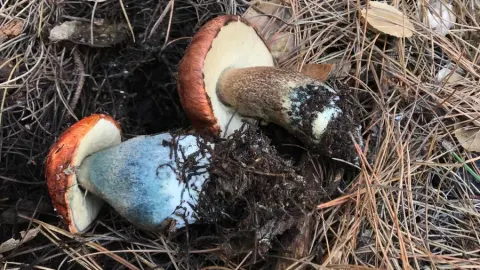
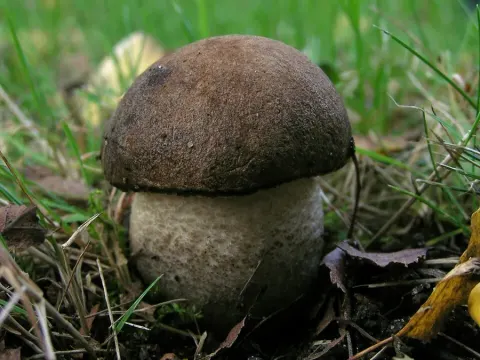
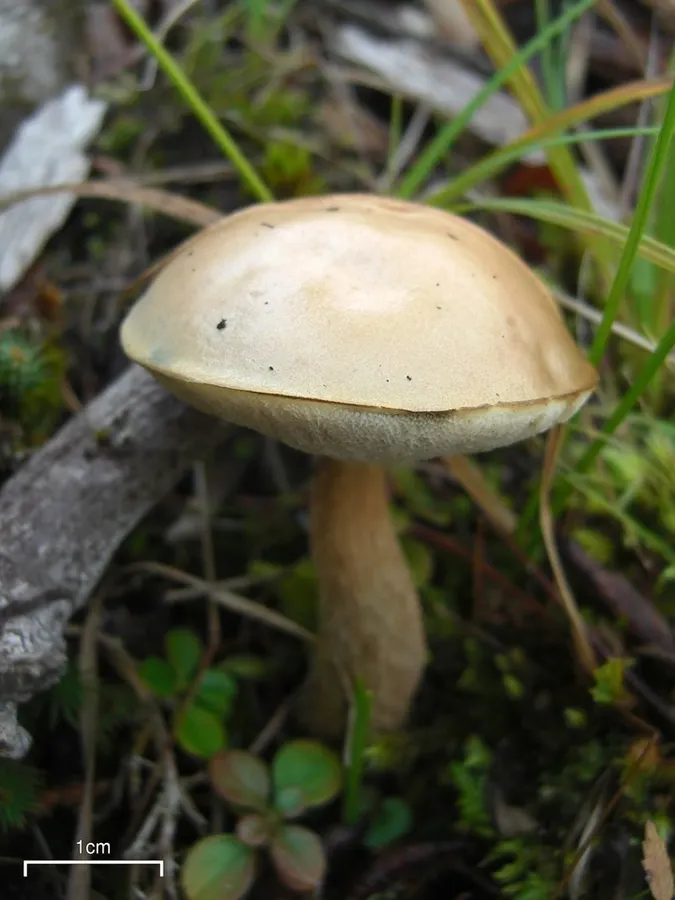
Fruitbodies of Leccinum holopus have convex to flattened caps measuring 3 – 10 cm in diameter, with a narrow band of sterile tissue surrounding the margin. The caps are initially whitish, but can develop gray, buff, tan, or pinkish tints during maturity; the color may also darken and become greenish with age. The cap surface is initially covered with very fine hairs, but later becomes more or less smooth, often with a sticky texture in age or in moist conditions. The flesh is white and lacks any distinct odor or taste; it can have either little or no bruising color reaction with injury, or may become light pink in variety americanum. On the cap underside is a porous surface comprising pores numbering 2 to 3 per millimeter, each of which is the end of a tube that extends to 2.5 cm deep. The color of the pore surface ranges from whitish to grayish to dingy brown, and has little color reaction to injury, although it may discolor yellowish or brownish. There is a depression where the pores meet the stipe. The stipe measures 8 – 14 cm long by 1 – 2 cm wide. Its whitish surface is covered with scabers that darken in age to tan or darker. The stipe base often stains bluish. Leccinum holopus produces a brown spore print. Spores are somewhat fusoid (spindle-shaped) and measure 14–20 by 5–6.5 μm. The basidia (spore-bearing cells) are four-spored and measure 28.5–36.5 by 11.5–12.5 μm. Cystidia on the pores are flask-shaped (lageniform) to fusiform, and 39.0–45.5 by 7.5–9.0 μm, while those of the stipe (caulocystidia) are fusiform, club-shaped, or cylindrical, measuring 39.0–54.5 x 9.1–13.5 μm.
Habitat dan peran ekologis
Leccinum holopus is a mycorrhizal species. It fruits on the ground (often among Sphagnum moss), singly to scattered in wet areas like cedar swamps, bogs, or soggy forests. Like most Leccinum species, the fungus is highly host-specific and associates with birch (Betula). In North America, the range of Leccinum holopus extends from eastern Canada to New York, extending west to the northern Rocky Mountains, roughly coinciding with the distribution of the paper birch (Betula papyrifera). In this range, it is common and fruits from August to October. L. holopus var. americanum is known only from North America. The fungus is rare in southern Europe, but more common in the Sphagnum swamps in the north. In Asia, it has been recorded from Taiwan and Qinghai (China). Fruitbodies of L. holopus are a source of food for fly species such as Pegomya winthemi (family Anthomyiidae) and Megaelia pygmaeoides (family Phoridae).
- Habitat atau konteks temuan
- hutan
- Substrat
- tanah
- Peran atau konteks
- Mitra tumbuhan
Reproduksi
Leccinum holopus produces a brown spore print. Spores are somewhat fusoid (spindle-shaped) and measure 14–20 by 5–6.5 μm. The basidia (spore-bearing cells) are four-spored and measure 28.5–36.5 by 11.5–12.5 μm. Cystidia on the pores are flask-shaped (lageniform) to fusiform, and 39.0–45.5 by 7.5–9.0 μm, while those of the stipe (caulocystidia) are fusiform, club-shaped, or cylindrical, measuring 39.0–54.5 x 9.1–13.5 μm. There are no clamp connections present in the hyphae of L. holopus. The cap cuticle is arranged in the form of a cutis—with hyphae that run parallel to the cap surface.
Catatan identitas dan cakupan
- Nama diterima mengikuti Catalogue of Life Base2026-09-11; uraian mempertahankan konsep dan nama sumber aslinya.
- Original geographic, specimen and life-cycle scope retained; source import awaits individual editorial review.
- Impor dan terjemahan otomatis belum diperiksa editorial per profil. Struktur reproduktif yang disebutkan tidak membuktikan seluruh siklus hidup diketahui.
- Pengukuran pada uraian mengikuti spesimen, kultur, dan metode sumber; angka tidak diperluas ke semua populasi.
Catatan distribusi dalam narasi mengikuti sumbernya. Dokumentasi spesimen atau foto mengikuti catatan sumber. Bukti wilayah Indonesia dan penilaian konservasi tidak disimpulkan dari gambar.
Melihat dengan konteks
Dokumentasi Leccinum holopus menurut asosiasi foto pada record takson iNaturalist. Kredit: Jason Hollinger. Identitas mengikuti sumber; bukan penentuan spesimen independen.
- Jenis
- Fotografi
- Kredit
- (c) Jason Hollinger, some rights reserved (CC BY)
- Lisensi
- CC BY 4.0
- Sumber media
- Buka entri sumber
Dokumentasi tambahan
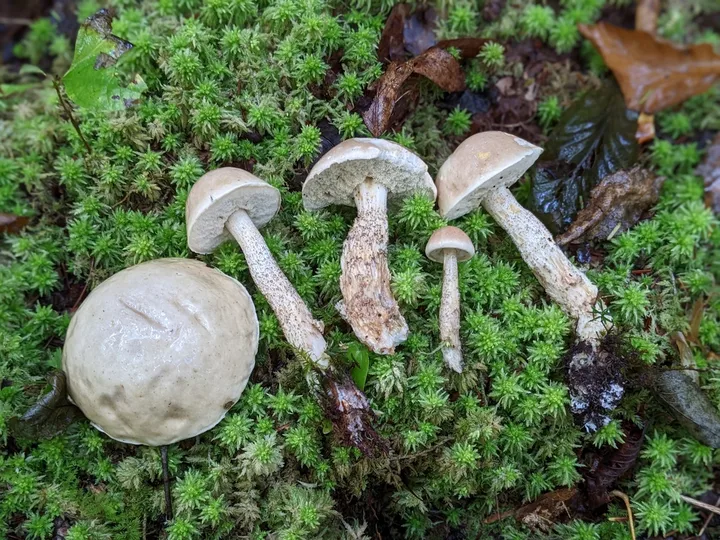
Foto yang diasosiasikan dengan Leccinum holopus pada iNaturalist. Identifikasi mengikuti sumber; bukan penentuan spesimen independen.
Kredit dan penggunaan
(c) Annie Weissman, some rights reserved (CC BY), uploaded by Annie Weissman
Ukuran dan format gambar disesuaikan tanpa pemotongan, retus, atau penambahan skala. Lisensi sumber dipertahankan.
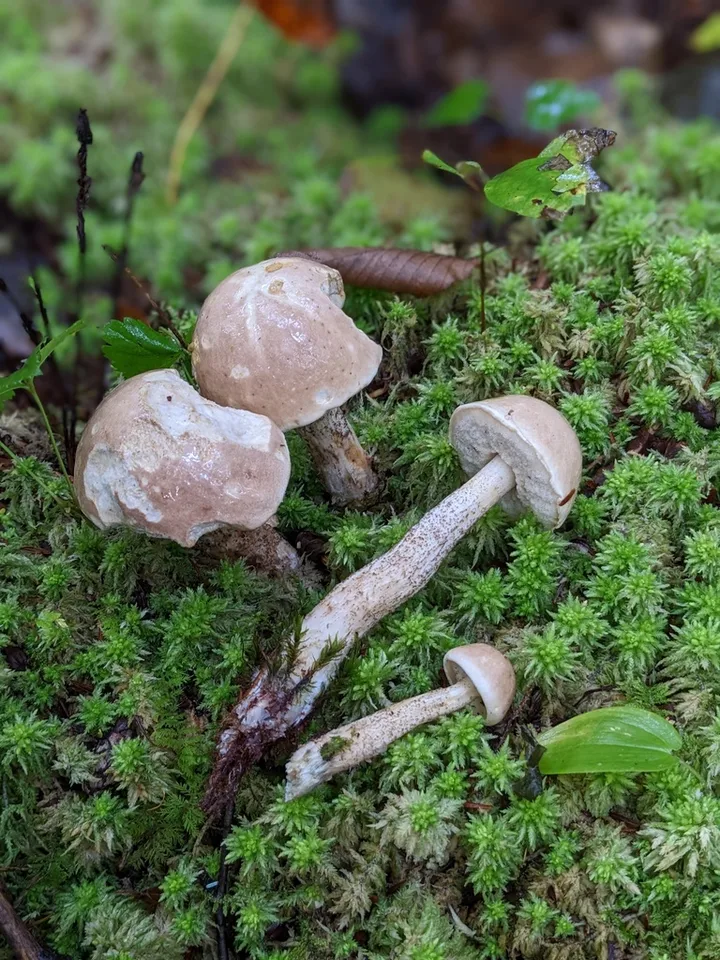
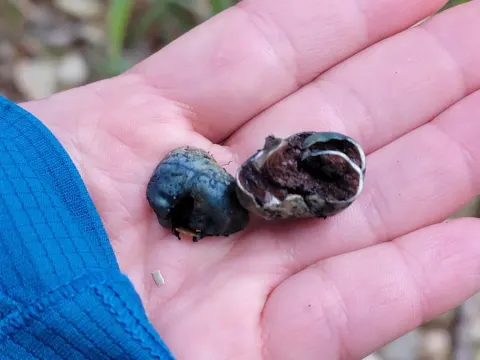
Foto yang diasosiasikan dengan Leccinum holopus pada iNaturalist. Identifikasi mengikuti sumber; bukan penentuan spesimen independen.
Kredit dan penggunaan
(c) Annie Weissman, some rights reserved (CC BY), uploaded by Annie Weissman
Ukuran dan format gambar disesuaikan tanpa pemotongan, retus, atau penambahan skala. Lisensi sumber dipertahankan.
Sumber profil
- [1] Leccinum holopus — Wikipedia (en)
- [2] Catalogue of Life Base2026-09-11 — Leccinum holopus
- [3] Dokumentasi visual — Leccinum holopus
- [4] Dokumentasi visual — Leccinum holopus
- [5] Dokumentasi visual — Leccinum holopus
Rujukan halaman ini
Fungi. Leccinum holopus. Rilis data fungi-2026-10-12-expansion-2. https://fungi-atlas.mgadib.chatgpt.site/jamur/leccinum-holopus/.
Status: impor sumber; pemeriksaan editorial per profil belum selesai. Untuk klaim biologis, gunakan rujukan pada bagian terkait dan periksa konteks sumber aslinya.