Ciri dan struktur
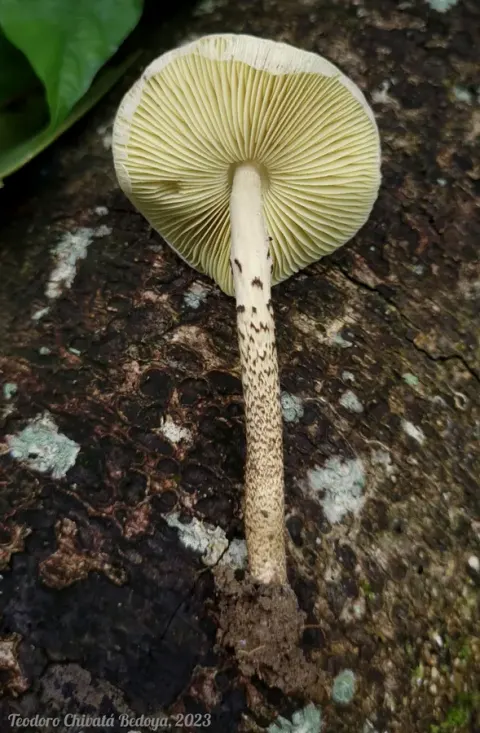
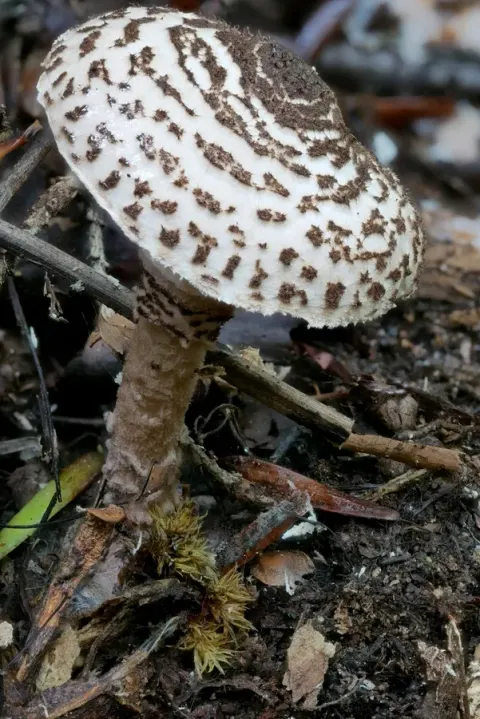
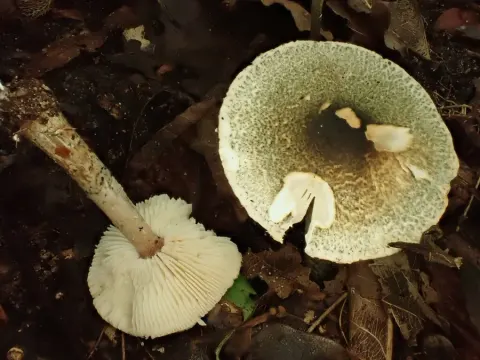
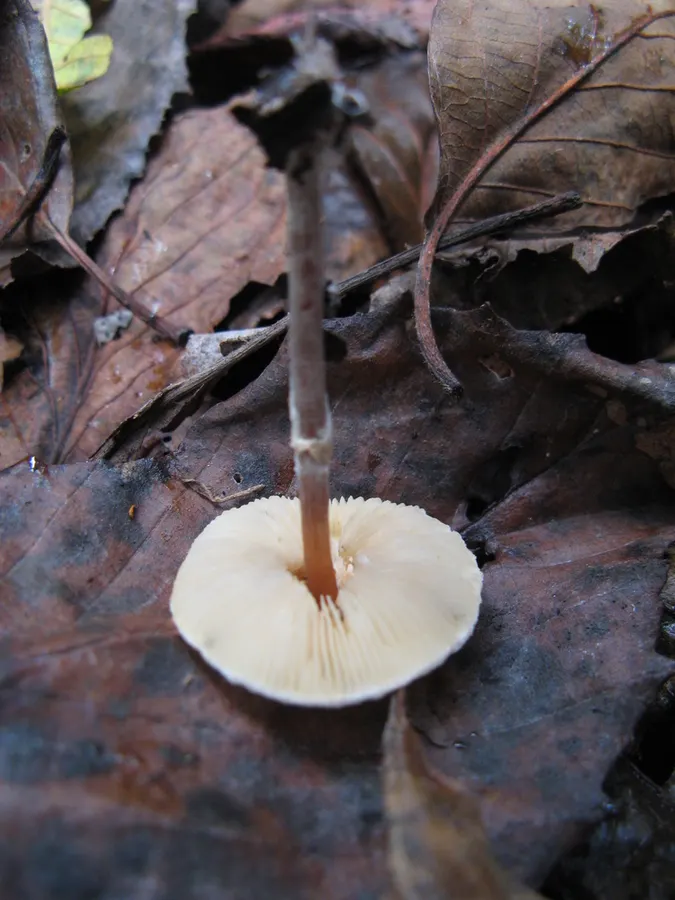
The fruit body produced by Lepiota cristata has a cap with a white to cream base colour, covered with concentrically arranged reddish-brown scales; at maturity the cap diameter ranges from 1 – 5 cm across. The center of the cap is a darker reddish-brown than the rest of the cap. The cap is initial bell-shaped to convex, then later flattens out and develops an umbo. The crowded gills of Lepiota cristata are white to cream, free from attachment to the stipe, and darken/become brownish as the mushroom ages and the spores mature. The stipe is usually between 2–6 cm, and 0.2–0.7 cm thick. With a stipe which is nearly smooth and a pale white-tinged flesh colour, L. cristata also has a transient ring, which is membranous and deciduous. The flesh is thin and white. The dorsal spur on the spores of Lepiota cristata gives them a triangular or wedge shape; they measure 7–8.5 by 3–4 μm. These spores are slightly dextrinoid, meaning they stain deep red to reddish brown with the application of Melzer's reagent. The cystidia on the gill edge (cheilocystidia) in L. cristata are club-shaped and measure about 15–25 by 8–14 μm; there are no cystidia on the gill face (pleurocystidia); the pileipellis is a hymeniform layer of hyphal cells about 30–50 by 10–25 μm. When the spores fall onto a surface, the powdery deposit they leave behind (the spore print) is white, apart from in L. cristata var. viridispora where the spore print is greyish green, similar to that of false parasol (Chlorophyllum molybdites). Lepiota cristata has been described as having a strong, distinctive and unpleasant odour; it has been described as rubbery, fishy, pungent, foul, fungusy, fruity, mealy and sweet.
Habitat dan peran ekologis
Lepiota cristata is a saprobic species, deriving nutrients through decomposing dead or decayed organic material. L. cristata can be found growing either singly or in small groups and in multiple habitats including woodlands, gardens (especially shady and damp ones), garden waste, short grass, leaf litter, paths, ditches, and other areas of disturbed ground. Lepiota cristata is one of the most widely distributed Lepiota species, and can be found in North America (north of Mexico), throughout Europe, and northern Asia. It is also found in New Zealand.
- Habitat atau konteks temuan
- Informasi belum tersedia pada sumber rilis ini.
- Substrat
- Informasi belum tersedia pada sumber rilis ini.
- Peran atau konteks
- Pengurai
Reproduksi
The crowded gills of Lepiota cristata are white to cream, free from attachment to the stipe, and darken/become brownish as the mushroom ages and the spores mature. The stipe is usually between 2–6 cm, and 0.2–0.7 cm thick. With a stipe which is nearly smooth and a pale white-tinged flesh colour, L. cristata also has a transient ring, which is membranous and deciduous. The flesh is thin and white. The dorsal spur on the spores of Lepiota cristata gives them a triangular or wedge shape; they measure 7–8.5 by 3–4 μm. These spores are slightly dextrinoid, meaning they stain deep red to reddish brown with the application of Melzer's reagent. The cystidia on the gill edge (cheilocystidia) in L. cristata are club-shaped and measure about 15–25 by 8–14 μm; there are no cystidia on the gill face (pleurocystidia); the pileipellis is a hymeniform layer of hyphal cells about 30–50 by 10–25 μm.
Catatan identitas dan cakupan
- Nama diterima mengikuti Catalogue of Life Base2026-09-11; uraian mempertahankan konsep dan nama sumber aslinya.
- Original geographic, specimen and life-cycle scope retained; source import awaits individual editorial review.
- Impor dan terjemahan otomatis belum diperiksa editorial per profil. Struktur reproduktif yang disebutkan tidak membuktikan seluruh siklus hidup diketahui.
- Pengukuran pada uraian mengikuti spesimen, kultur, dan metode sumber; angka tidak diperluas ke semua populasi.
Catatan distribusi dalam narasi mengikuti sumbernya. Dokumentasi spesimen atau foto mengikuti catatan sumber. Bukti wilayah Indonesia dan penilaian konservasi tidak disimpulkan dari gambar.
Melihat dengan konteks
Dokumentasi Lepiota cristata menurut asosiasi foto pada record takson iNaturalist. Kredit: Alan Rockefeller. Identitas mengikuti sumber; bukan penentuan spesimen independen.
- Jenis
- Fotografi
- Kredit
- (c) Alan Rockefeller, some rights reserved (CC BY), uploaded by Alan Rockefeller
- Lisensi
- CC BY 4.0
- Sumber media
- Buka entri sumber
Dokumentasi tambahan
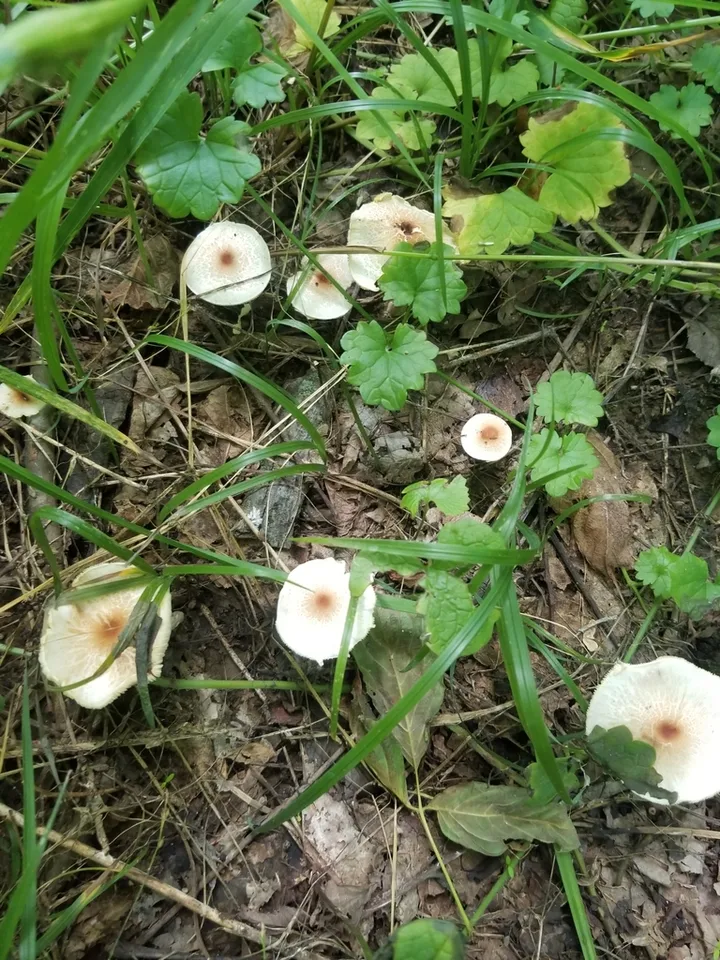
Foto yang diasosiasikan dengan Lepiota cristata pada iNaturalist. Identifikasi mengikuti sumber; bukan penentuan spesimen independen.
Kredit dan penggunaan
(c) Kevin Speray, some rights reserved (CC BY), uploaded by Kevin Speray
Ukuran dan format gambar disesuaikan tanpa pemotongan, retus, atau penambahan skala. Lisensi sumber dipertahankan.
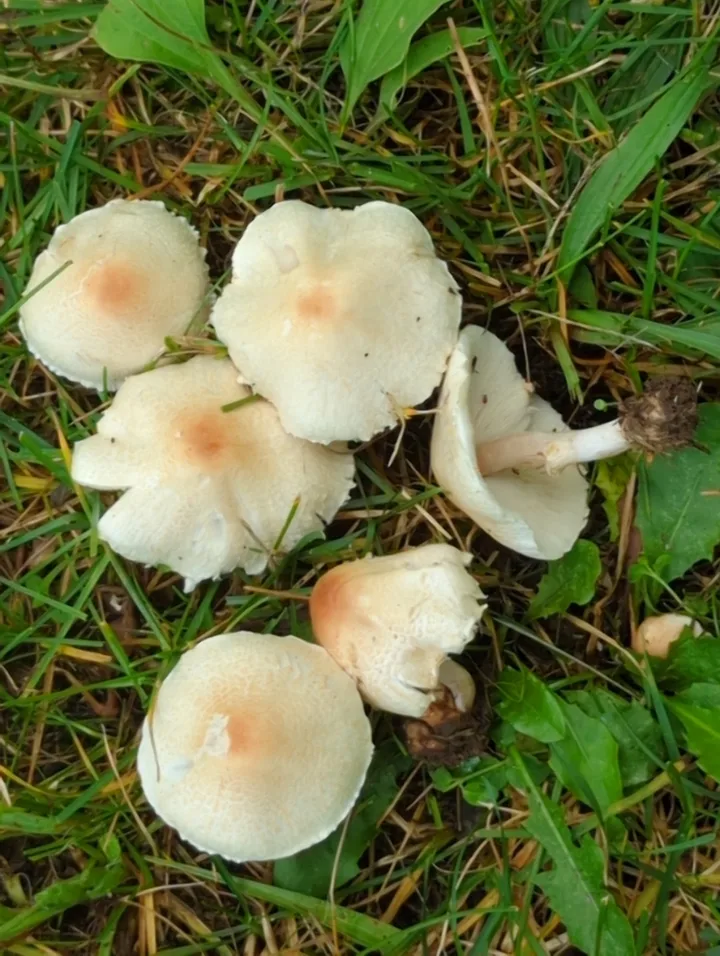
Foto yang diasosiasikan dengan Lepiota cristata pada iNaturalist. Identifikasi mengikuti sumber; bukan penentuan spesimen independen.
Kredit dan penggunaan
no rights reserved, uploaded by Garrett Taylor
Ukuran dan format gambar disesuaikan tanpa pemotongan, retus, atau penambahan skala. Lisensi sumber dipertahankan.
Sumber profil
- [1] Lepiota cristata — Wikipedia (en)
- [2] Catalogue of Life Base2026-09-11 — Lepiota cristata
- [3] Dokumentasi visual — Lepiota cristata
- [4] Dokumentasi visual — Lepiota cristata
- [5] Dokumentasi visual — Lepiota cristata
Rujukan halaman ini
Fungi. Lepiota cristata. Rilis data fungi-2026-10-12-expansion-2. https://fungi-atlas.mgadib.chatgpt.site/jamur/lepiota-cristata/.
Status: impor sumber; pemeriksaan editorial per profil belum selesai. Untuk klaim biologis, gunakan rujukan pada bagian terkait dan periksa konteks sumber aslinya.