Ciri dan struktur
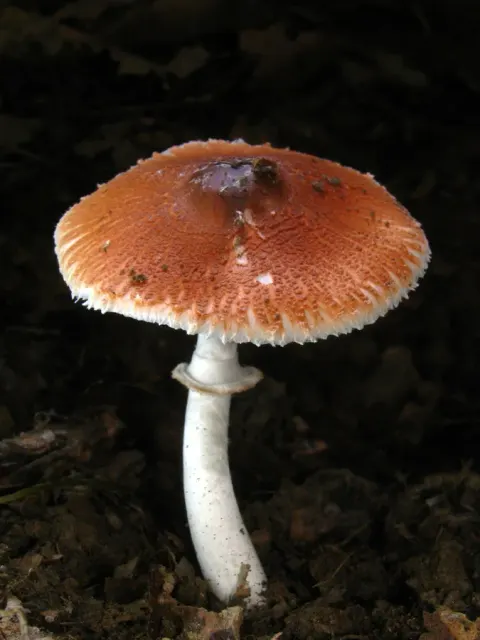
Lepiota magnusiana only has a brief description provided by Hennings. It is described as having red flesh and a stem which discolours reddish. This is a common feature in Lepiota species but would be unusual for a Leucocoprinus. Cap: 1–5 cm wide, starting ovoid or cylindrical before expanding to campanulate (bell shaped) with thin flesh. The surface is white and covered in powdery scales whilst the centre discolours yellow with age and the cap edges are striated. Gills: Free, crowded and white. Stem: 2–7 cm tall and 2–3 mm thick with a white surface that discolours reddish and a hollow interior. The membranous stem ring has a woolly (floccose) texture. Spores: Ovoid. Smell: Indistinct.Taste: Indistinct.
Habitat dan peran ekologis
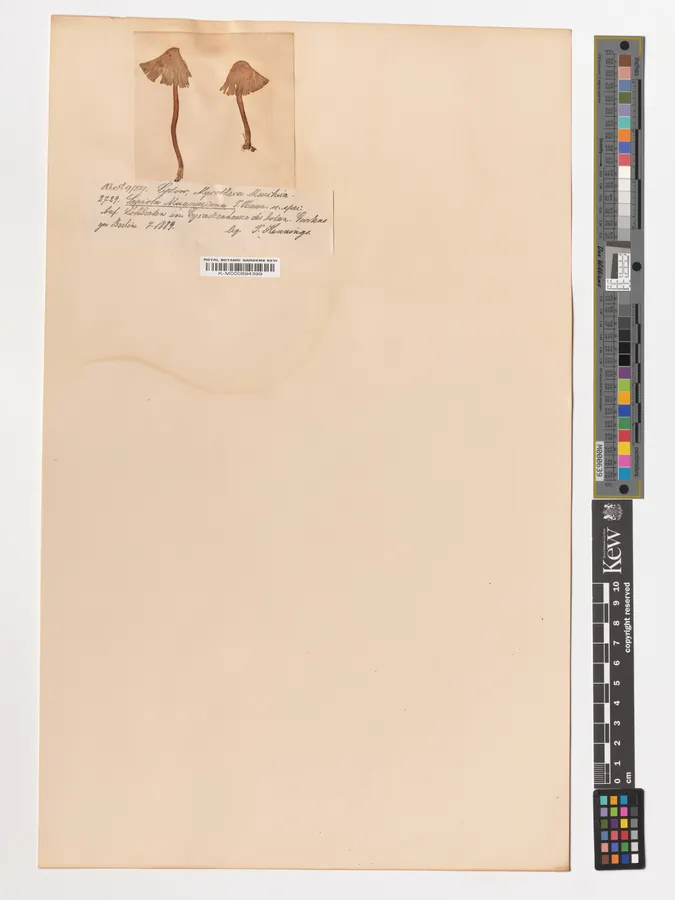
L. magnusianus is scarcely recorded and little known. Hennings documented it from a hothouse in the Berlin botanical garden.
- Habitat atau konteks temuan
- Informasi belum tersedia pada sumber rilis ini.
- Substrat
- Informasi belum tersedia pada sumber rilis ini.
- Peran atau konteks
- Belum dikategorikan pada rilis ini.
Reproduksi
Cap: 1–5 cm wide, starting ovoid or cylindrical before expanding to campanulate (bell shaped) with thin flesh. The surface is white and covered in powdery scales whilst the centre discolours yellow with age and the cap edges are striated. Gills: Free, crowded and white. Stem: 2–7 cm tall and 2–3 mm thick with a white surface that discolours reddish and a hollow interior. The membranous stem ring has a woolly (floccose) texture. Spores: Ovoid. Smell: Indistinct.Taste: Indistinct.
Catatan identitas dan cakupan
- Nama diterima mengikuti Catalogue of Life Base2026-09-11; uraian mempertahankan konsep dan nama sumber aslinya.
- Original geographic, specimen and life-cycle scope retained; source import awaits individual editorial review.
- Impor dan terjemahan otomatis belum diperiksa editorial per profil. Struktur reproduktif yang disebutkan tidak membuktikan seluruh siklus hidup diketahui.
- Pengukuran pada uraian mengikuti spesimen, kultur, dan metode sumber; angka tidak diperluas ke semua populasi.
Catatan distribusi dalam narasi mengikuti sumbernya. Dokumentasi spesimen atau foto mengikuti catatan sumber. Bukti wilayah Indonesia dan penilaian konservasi tidak disimpulkan dari gambar.
Melihat dengan konteks
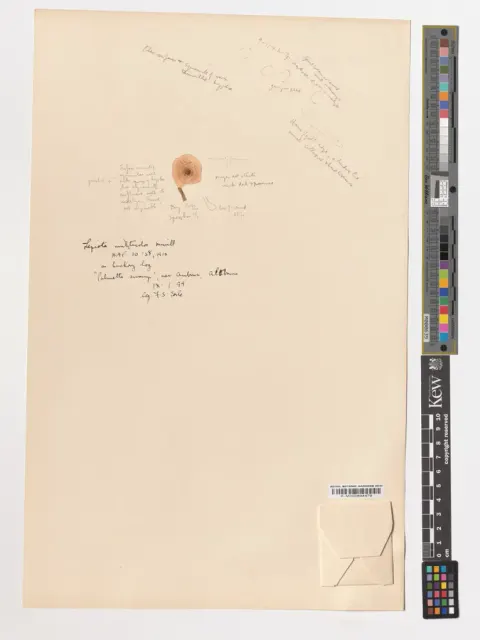
Voucher herbarium Lepiota magnusiana (K-M000894399), Royal Botanic Gardens, Kew. Identifikasi mengikuti record spesimen sumber. Foto bahan, kemasan, atau label herbarium sebagaimana tersedia pada record institusi; bukan foto lapangan atau penentuan spesimen independen.
- Jenis
- Voucher herbarium
- Kredit
- Royal Botanic Gardens, Kew
- Lisensi
- CC BY 4.0
- Sumber media
- Buka entri sumber
Sumber profil
- [1] Leucocoprinus magnusianus — Wikipedia (en)
- [2] Catalogue of Life Base2026-09-11 — Leucocoprinus magnusianus
- [3] Dokumentasi visual — Lepiota magnusiana
Rujukan halaman ini
Fungi. Leucocoprinus magnusianus. Rilis data fungi-2026-10-12-expansion-2. https://fungi-atlas.mgadib.chatgpt.site/jamur/leucocoprinus-magnusianus/.
Status: impor sumber; pemeriksaan editorial per profil belum selesai. Untuk klaim biologis, gunakan rujukan pada bagian terkait dan periksa konteks sumber aslinya.