Ciri dan struktur
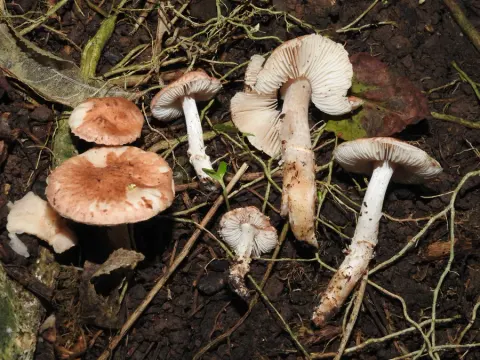
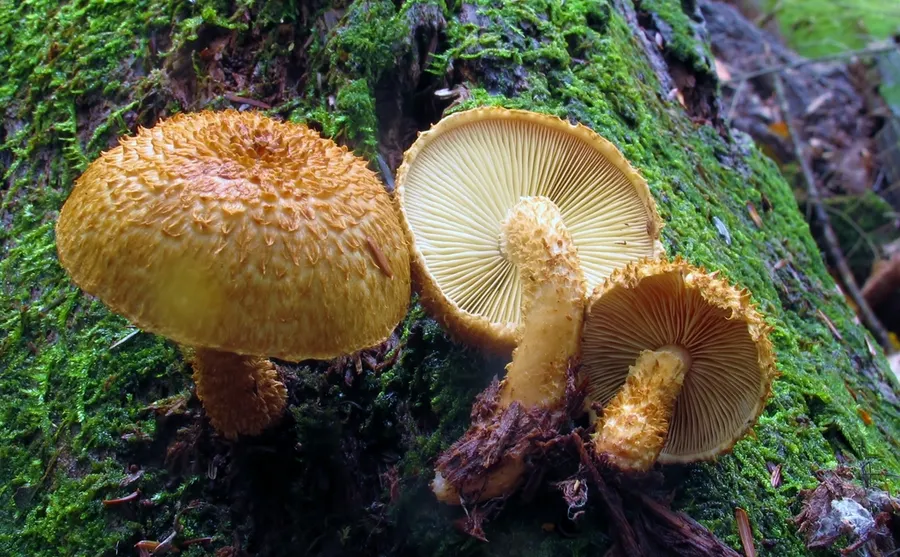
The caps of L. decorosa, initially conic or hemispherical in shape, later expand to become convex or flattened in maturity. The caps are typically between 2 and 6 cm in diameter, with surfaces covered with many small curved brown scales. The edge of the cap is typically curved inwards and may have coarse brown fibers attached. The cap is cinnamon brown, darker in the center. The gills are spaced together closely; they have a narrow (adnexed) attachment to the stem, and their edges are "finely scalloped". The stem is 2.5 to 7.0 cm tall by 0.6 to 1.2 cm thick, and like the cap, is covered with scales from the bottom to the level of the annular zone; above this point the stipe is smooth. The partial veil is made up of brown fibers "that flare upward as an annulus." It is roughly the same thickness throughout the length of the stem, or may be slightly thinner near the top. The flesh is white and thick, and has a firm texture; its odor is indistinct, and the taste either mild or bitter. The spore deposit is white. The spores are hyaline (translucent), roughly elliptical in shape, have thin walls, and are amyloid, meaning they absorb iodine stain in Melzer's reagent. Additionally, in acetocarmine stain, they appear binucleate (having two nuclei). They have dimensions of 5.5–6 (more rarely 7) by 3.5–4.0 μm. The spore-bearing cells, the basidia, are club-shaped, translucent, and four-spored. The cheilocystida (cystidia on the gill edge) are club-shaped and 19-24 by 3–5 μm. The cap cuticle is a trichodermium—a type of tissue composed of erect, long, threadlike hyphae of same or different lengths, and originating from an interwoven layer of hyphae that ascends gradually until terminal cells are somewhat parallel to each other.
Habitat dan peran ekologis
Leucopholiota decorosa is a saprobic species, deriving nutrients from decaying organic matter, particularly the rotting branches and stumps of deciduous trees. One field panduan mencatat preferensi untuk mapel gula. Tumbuh secara tunggal atau berkelompok, dikelompokkan bersama-sama di dasar batang. Di Ohio, biasanya buahnya dari akhir September to pertengahan November. Selain distribusi yang diketahui di sebagian besar Amerika Utara timur, Leucopholiota decorosa juga telah dikumpulkan dari Prancis. Di 2007, laporan itu dibuat dari Astore District of Pakistan, pada ketinggian sekitar 3600 m.
- Habitat atau konteks temuan
- Informasi belum tersedia pada sumber rilis ini.
- Substrat
- Informasi belum tersedia pada sumber rilis ini.
- Peran atau konteks
- Pengurai
Reproduksi
The caps of L. decorosa, initially conic or hemispherical in shape, later expand to become convex or flattened in maturity. The caps are typically between 2 and 6 cm in diameter, with surfaces covered with many small curved brown scales. The edge of the cap is typically curved inwards and may have coarse brown fibers attached. The cap is cinnamon brown, darker in the center. The gills are spaced together closely; they have a narrow (adnexed) attachment to the stem, and their edges are "finely scalloped". The stem is 2.5 to 7.0 cm tall by 0.6 to 1.2 cm thick, and like the cap, is covered with scales from the bottom to the level of the annular zone; above this point the stipe is smooth. The partial veil is made up of brown fibers "that flare upward as an annulus." It is roughly the same thickness throughout the length of the stem, or may be slightly thinner near the top.
Catatan identitas dan cakupan
- Nama diterima mengikuti Catalogue of Life Base2026-09-11; uraian mempertahankan konsep dan nama sumber aslinya.
- Original geographic, specimen and life-cycle scope retained; source import awaits individual editorial review.
- Impor dan terjemahan otomatis belum diperiksa editorial per profil. Struktur reproduktif yang disebutkan tidak membuktikan seluruh siklus hidup diketahui.
- Pengukuran pada uraian mengikuti spesimen, kultur, dan metode sumber; angka tidak diperluas ke semua populasi.
Catatan distribusi dalam narasi mengikuti sumbernya. Dokumentasi spesimen atau foto mengikuti catatan sumber. Bukti wilayah Indonesia dan penilaian konservasi tidak disimpulkan dari gambar.
Melihat dengan konteks
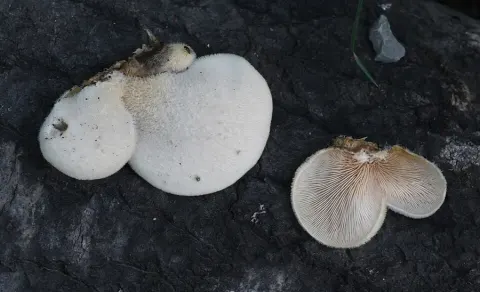
Dokumentasi Leucopholiota decorosa menurut asosiasi foto pada record takson iNaturalist. Kredit: mycowalt. Identitas mengikuti sumber; bukan penentuan spesimen independen.
- Jenis
- Fotografi
- Kredit
- (c) mycowalt, some rights reserved (CC BY-SA), uploaded by mycowalt
- Lisensi
- CC BY-SA 4.0
- Sumber media
- Buka entri sumber
Dokumentasi tambahan
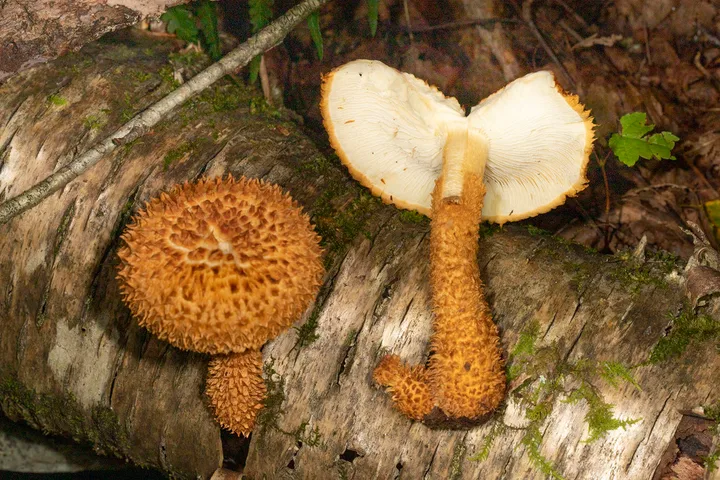
Foto yang diasosiasikan dengan Leucopholiota decorosa pada iNaturalist. Identifikasi mengikuti sumber; bukan penentuan spesimen independen.
Kredit dan penggunaan
(c) Kristof Zyskowski, some rights reserved (CC BY), uploaded by Kristof Zyskowski
Ukuran dan format gambar disesuaikan tanpa pemotongan, retus, atau penambahan skala. Lisensi sumber dipertahankan.
Sumber profil
- [1] Leucopholiota decorosa — Wikipedia (en)
- [2] Catalogue of Life Base2026-09-11 — Leucopholiota decorosa
- [3] Dokumentasi visual — Leucopholiota decorosa
- [4] Dokumentasi visual — Leucopholiota decorosa
Rujukan halaman ini
Fungi. Leucopholiota decorosa. Rilis data fungi-2026-10-12-expansion-2. https://fungi-atlas.mgadib.chatgpt.site/jamur/leucopholiota-decorosa/.
Status: impor sumber; pemeriksaan editorial per profil belum selesai. Untuk klaim biologis, gunakan rujukan pada bagian terkait dan periksa konteks sumber aslinya.