01 / Morfologi

Ciri dan struktur

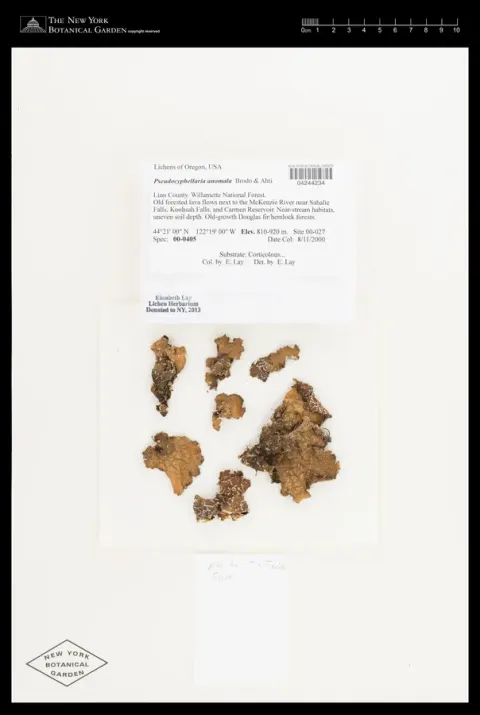
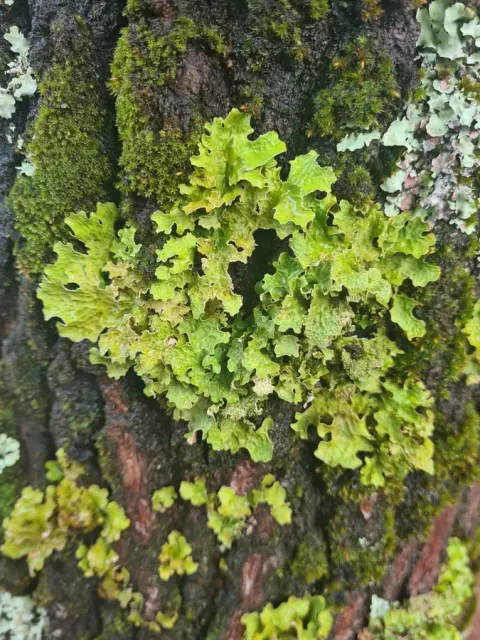
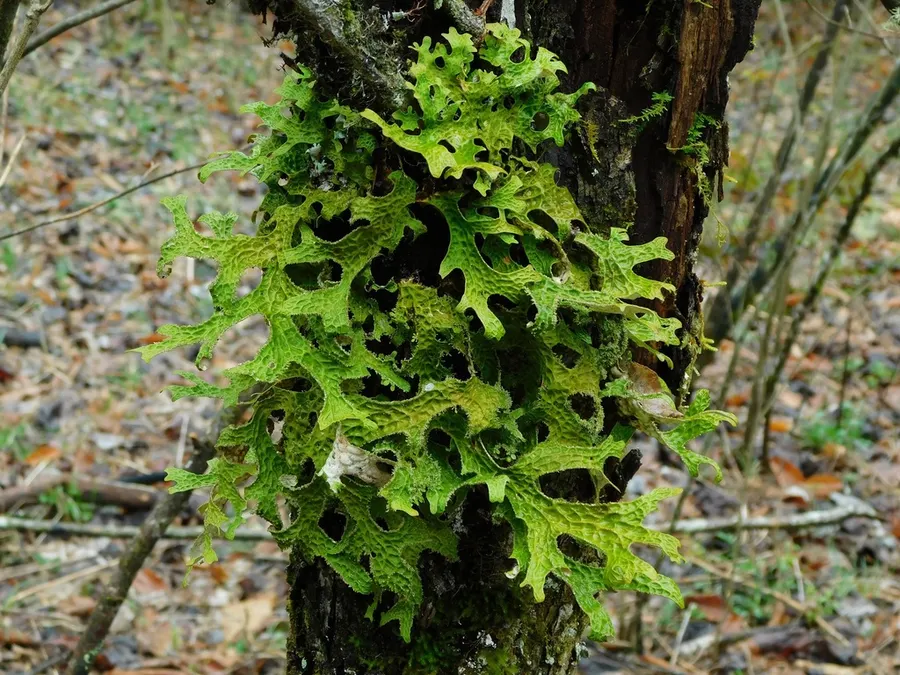
It is a foliose lichen and its leaf-like thallus is green, leathery and lobed with a pattern of ridges and depressions on the upper surface. Bright green under moist conditions, it becomes brownish and papery when dry. This species often has a fine layers of hairs, a tomentum, on its lower surface. The cortex, the outer protective layer on the thallus surface, is roughly comparable to the epidermis of a green plant. The thallus is typically 5 – 15 cm in diameter, with individual lobes 1 – 3 cm wide and up to 7 cm long. The asexual reproductive structures soredia and isidia are present on the thallus surface. Minute (0.5–1.5 mm in diameter) cephalodia—pockets of cyanobacteria—are often present on the lower surface of the thallus; these spots are conspicuously darker than the green surface of the thallus. Like other foliose lichens, the thallus is only loosely attached to the surface on which it grows.

Sebagian uraian ditampilkan dalam bahasa sumber; terjemahannya belum tersedia atau belum lolos pemeriksaan.

Rujukan: [1]

Pengukuran mengikuti objek, spesimen atau kultur, dan metode yang disebutkan sumber. Baca uraian asli untuk konteks lengkap.

02 / Kehidupan

Habitat dan peran ekologis

Ini memiliki distribusi yang luas di Eropa, Asia, Afrika Utara America and, lebih memilih habitat lembap dengan curah hujan tinggi, terutama daerah pesisir. termasuk genus Lobaria, khususnya Lobaria pulmonaria. Associated with hutan tumbuh tua, kehadirannya dan kelimpahannya dapat digunakan sebagai indikator usia hutan, setidaknya di Zona Cedar Interior-Hemlock biogeoclimatic di timur British Columbia. Biasanya tumbuh di kulit pohon berdaun lebar seperti ek, buk dan mapel tetapi juga akan tumbuh di batuan. Di laboratorium, L. pulmonaria telah ditanam pada mikrofilamen nilon. Various environmental faktor dianggap mempengaruhi distribusi L. pulmonaria, seperti suhu, kelembaban (kelembaban rata-rata, kecepatan dan frekuensi siklus kering basah), paparan sinar matahari, dan tingkat polusi udara. Attempts to Mengevaluasi secara kuantitatif kontribusi faktor-faktor ini terhadap pertumbuhan lichen sulit karena perbedaan lingkungan asli di mana lichen talus dikumpulkan akan sangat mempengaruhi toleransi panas dan pengeringan. Due to populasi menurun, L. pulmonaria dianggap langka atau terancam di banyak bagian dunia, terutama di daerah dataran rendah Eropa. Penurunan ini disebabkan oleh kehutanan industri dan polusi udara, terutama hujan asam.

Rujukan: [1]

Habitat atau konteks temuan
Informasi belum tersedia pada sumber rilis ini.
Substrat
Informasi belum tersedia pada sumber rilis ini.
Peran atau konteks
Pembentuk liken
Temukan hubungan serupa
03 / Siklus hidup

Reproduksi

It is a foliose lichen and its leaf-like thallus is green, leathery and lobed with a pattern of ridges and depressions on the upper surface. Bright green under moist conditions, it becomes brownish and papery when dry. This species often has a fine layers of hairs, a tomentum, on its lower surface. The cortex, the outer protective layer on the thallus surface, is roughly comparable to the epidermis of a green plant. The thallus is typically 5 – 15 cm in diameter, with individual lobes 1 – 3 cm wide and up to 7 cm long. The asexual reproductive structures soredia and isidia are present on the thallus surface. Minute (0.5–1.5 mm in diameter) cephalodia—pockets of cyanobacteria—are often present on the lower surface of the thallus; these spots are conspicuously darker than the green surface of the thallus.

Sebagian uraian ditampilkan dalam bahasa sumber; terjemahannya belum tersedia atau belum lolos pemeriksaan.

Rujukan: [1]

Sinonim menurut acuan taksonomi rilis: Dermatodea pulmonaria; Lichen pulmonarius; Lobaria pulmonacea; Lobaria pulmonacea var. hypomela; Lobaria pulmonaria f. hypomela; Parmelia pulmonacea; Parmelia pulmonaria; Platisma pulmonarium; Platysma pulmonarium; Pulmonaria reticulata; Sticta pulmonacea; Sticta pulmonacea var. hypomela; Sticta pulmonaria; Sticta pulmonaria f. hypomela; Sticta pulmonaria var. hypomela
04 / Batas informasi

Catatan identitas dan cakupan

  • Nama diterima mengikuti Catalogue of Life Base2026-09-11; uraian mempertahankan konsep dan nama sumber aslinya.
  • Original geographic, specimen and life-cycle scope retained; source import awaits individual editorial review.
  • Impor dan terjemahan otomatis belum diperiksa editorial per profil. Struktur reproduktif yang disebutkan tidak membuktikan seluruh siklus hidup diketahui.
  • Pengukuran pada uraian mengikuti spesimen, kultur, dan metode sumber; angka tidak diperluas ke semua populasi.

Catatan distribusi dalam narasi mengikuti sumbernya. Dokumentasi spesimen atau foto mengikuti catatan sumber. Bukti wilayah Indonesia dan penilaian konservasi tidak disimpulkan dari gambar.

05 / Dokumentasi

Melihat dengan konteks

Dokumentasi Lobaria pulmonaria menurut asosiasi foto pada record takson iNaturalist. Kredit: Michael J. Papay. Identitas mengikuti sumber; bukan penentuan spesimen independen.

Jenis
Fotografi
Kredit
(c) Michael J. Papay, some rights reserved (CC BY), uploaded by Michael J. Papay
Lisensi
CC BY 4.0
Sumber media
Buka entri sumber

Gambar menunjukkan objek menurut identifikasi sumber, bukan verifikasi independen spesimen oleh Fungi. Tidak ada skala baru yang ditambahkan.

06 / Rujukan

Sumber profil

  1. [1] Lobaria pulmonaria — Wikipedia (en)Bagian sumber: Frozen revision 1379063250
    Tanggal penghimpunan sumber: 2026-10-12
    Teks sumber: CC BY-SA4.0 · Wikipedia contributors
  2. [2] Catalogue of Life Base2026-09-11 — Lobaria pulmonariaBagian sumber: ColDP NameUsage.tsv ID 3VR6N; accepted species; source 2073
    Tanggal penghimpunan sumber: 2026-10-12
  3. [3] Dokumentasi visual — Lobaria pulmonariaBagian sumber: Individual media record; identification follows the source, not independent determination
    Tanggal penghimpunan sumber: 2026-10-12
    Media sumber: CC BY 4.0 · (c) Michael J. Papay, some rights reserved (CC BY), uploaded by Michael J. Papay

Adaptasi teks: CC BY-SA 4.0. Wikipedia contributors — Lobaria pulmonaria — Wikipedia (en)

Uraian asli dan riwayat sumber

Riwayat atau halaman sumber

Ringkasan sumber

Lobaria pulmonaria is a large epiphytic lichen consisting of an ascomycete fungus and a green algal partner living together in a symbiotic relationship with a cyanobacterium—a symbiosis involving members of three kingdoms of organisms. Commonly known by various names like tree lungwort, lung lichen, lung moss, lungwort lichen, oak lungs or oak lungwort, it is sensitive to air pollution and is also harmed by habitat loss and changes in forestry practices. Its population has declined across Europe and L. pulmonaria is considered endangered in many lowland areas.

Revisi sumber

Morfologi sumber

It is a foliose lichen and its leaf-like thallus is green, leathery and lobed with a pattern of ridges and depressions on the upper surface. Bright green under moist conditions, it becomes brownish and papery when dry. This species often has a fine layers of hairs, a tomentum, on its lower surface. The cortex, the outer protective layer on the thallus surface, is roughly comparable to the epidermis of a green plant. The thallus is typically 5 – 15 cm in diameter, with individual lobes 1 – 3 cm wide and up to 7 cm long. The asexual reproductive structures soredia and isidia are present on the thallus surface. Minute (0.5–1.5 mm in diameter) cephalodia—pockets of cyanobacteria—are often present on the lower surface of the thallus; these spots are conspicuously darker than the green surface of the thallus. Like other foliose lichens, the thallus is only loosely attached to the surface on which it grows.

Revisi sumber

Ekologi sumber

It has a wide distribution in Europe, Asia, North America and Africa, preferring damp habitats with high rainfall, especially coastal areas. including the genus Lobaria, in particular Lobaria pulmonaria. Associated with old-growth forests, its presence and abundance may be used as an indicator of forest age, at least in the Interior Cedar-Hemlock biogeoclimatic zone in eastern British Columbia. It usually grows on the bark of broad-leaved trees such as oak, beech and maple but will also grow on rocks. In the laboratory, L. pulmonaria has been grown on nylon microfilaments. Various environmental factors are thought to affect the distribution of L. pulmonaria, such as temperature, moisture (average humidity, rapidity and frequency of wet-dry cycles), sunlight exposure, and levels of air pollution. Attempts to quantitatively evaluate the contribution of these factors to lichen growth is difficult because differences in the original environment from which the lichen thalli are collected will greatly affect heat and desiccation tolerances. Due to declining population, L. pulmonaria is considered to be rare or threatened in many parts of the world, especially in lowland areas of Europe. The decline has been attributed to industrial forestry and air pollution, particularly acid rain.

Revisi sumber

Struktur reproduksi sumber

It is a foliose lichen and its leaf-like thallus is green, leathery and lobed with a pattern of ridges and depressions on the upper surface. Bright green under moist conditions, it becomes brownish and papery when dry. This species often has a fine layers of hairs, a tomentum, on its lower surface. The cortex, the outer protective layer on the thallus surface, is roughly comparable to the epidermis of a green plant. The thallus is typically 5 – 15 cm in diameter, with individual lobes 1 – 3 cm wide and up to 7 cm long. The asexual reproductive structures soredia and isidia are present on the thallus surface. Minute (0.5–1.5 mm in diameter) cephalodia—pockets of cyanobacteria—are often present on the lower surface of the thallus; these spots are conspicuously darker than the green surface of the thallus.

Revisi sumber

Rujukan halaman ini

Fungi. Lobaria pulmonaria. Rilis data fungi-2026-10-12-expansion-2. https://fungi-atlas.mgadib.chatgpt.site/jamur/lobaria-pulmonaria/.

Status: impor sumber; pemeriksaan editorial per profil belum selesai. Untuk klaim biologis, gunakan rujukan pada bagian terkait dan periksa konteks sumber aslinya.