Ciri dan struktur
Pileus 15-25(-40) mm diam, convex to obtusely convex-umbonate when young, expanding with age to plano-convex or plano-umbonate; disc radially wrinkled; margin non-striate, incurved and remaining so in age; surface dull, dry, conspicuously velutinous; evenly deep brown with sooty tones, dark chestnut, dark orangish brown or dark reddish brown. Texture membranaceous, tough; context white to cream.- Lamellae adnexed to adnate, close (27-32) with 1-2 series of lamellulae, broad (up to 3 mm), yellowish white to cream; edges fimbriate, reddish brown.- Stipe (20-)35-70 x 2-3(-4) mm, central, cylindrical, equal or gradually attenuated towards the apex, tough, hollow, dry, pruinose to minutely velutinous overall, non-insititious, base covered with dense, yellowish ochre mycelial strands or strigose hairs; apex cream to orange brown, grading to dark orangish brown to dark brown towards the base; context orangish brown.- Odor and taste unpleasant, weakly spermatic. Basidiospores (9-)10-12 x 4.5-5.5 µm, ellipsoid to subfusoid, sometimes slightly curved in profile, smooth, thin-walled, hyaline, inamyloid. - Basidia 24-36 x 6-8 µm, cylindrical to subclavate, 4-spored, clamped. - Cheilocystidia common, of Siccus -type cells; main body 15-35 x 4-8 µm, cylindrical to subfusoid, moderately thick-walled (up to 0.5 µm), yellowish brown to brown; apical setulae 2-30 x 2-3 µm, cylindrical to needle-shaped, acute, thin-walled to thick-walled, hyaline to pale reddish brown.- Pleurocystidia and hymenial setae absent. - Pileipellis hymeniform, of Siccus -type cells; main body 15-35 x 5-10 µm, cylindrical to clavate or a irregular in outline, sometimes forked, thin-walled to thick-walled, yellowish brown to brown; apical setulae 5-25 x 1.0-2.5 µm, cylindrical to narrowly acute; or needle-shaped, thin-walled to thick-walled, brownish; pilosetae absent. - Pi1eus trama dextrinoid-.
Habitat dan peran ekologis
Habit, habitat and distribution.- Solitary,onleaflitterofNo thofagus solandri (Holotype), or on litter under Nothofagus fusca, N. menziesii, N. truncata (Fagaceae), Dacrydium cupressinum (Podocarpaceae), and Metrosideros umbellata (Myrtaceae). New Zealand.
- Habitat atau konteks temuan
- Informasi belum tersedia pada sumber rilis ini.
- Substrat
- Informasi belum tersedia pada sumber rilis ini.
- Peran atau konteks
- Belum dikategorikan pada rilis ini.
Reproduksi
Pileus 15-25(-40) mm diam, convex to obtusely convex-umbonate when young, expanding with age to plano-convex or plano-umbonate; disc radially wrinkled; margin non-striate, incurved and remaining so in age; surface dull, dry, conspicuously velutinous; evenly deep brown with sooty tones, dark chestnut, dark orangish brown or dark reddish brown. Texture membranaceous, tough; context white to cream.- Lamellae adnexed to adnate, close (27-32) with 1-2 series of lamellulae, broad (up to 3 mm), yellowish white to cream; edges fimbriate, reddish brown.- Stipe (20-)35-70 x 2-3(-4) mm, central, cylindrical, equal or gradually attenuated towards the apex, tough, hollow, dry, pruinose to minutely velutinous overall, non-insititious, base covered with dense, yellowish ochre mycelial strands or strigose hairs; apex cream to orange brown, grading to dark orangish brown to dark brown towards the base; context orangish brown.- Odor and taste unpleasant, weakly spermatic.
Catatan identitas dan cakupan
- Nama diterima mengikuti Catalogue of Life Base2026-09-11; uraian mempertahankan konsep dan nama sumber aslinya.
- Historical description as cited by BiotaNZ. Preserve explicit New Zealand/locality, host and specimen qualifiers. Distribution is the cited source scope, not a current global range.
- Impor dan terjemahan otomatis belum diperiksa editorial per profil. Struktur reproduktif yang disebutkan tidak membuktikan seluruh siklus hidup diketahui.
- Pengukuran pada uraian mengikuti spesimen, kultur, dan metode sumber; angka tidak diperluas ke semua populasi.
Catatan distribusi dalam narasi mengikuti sumbernya. Dokumentasi spesimen atau foto mengikuti catatan sumber. Bukti wilayah Indonesia dan penilaian konservasi tidak disimpulkan dari gambar.
Melihat dengan konteks
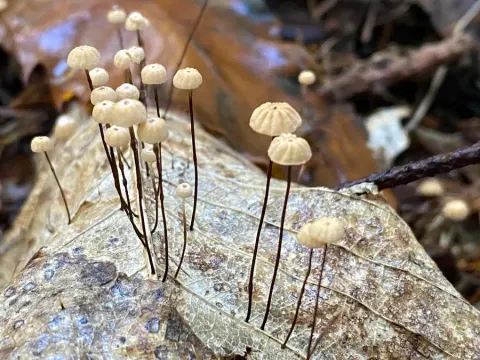
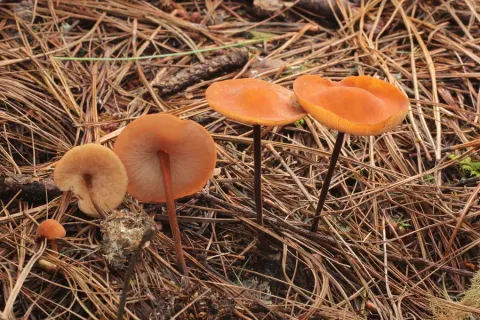
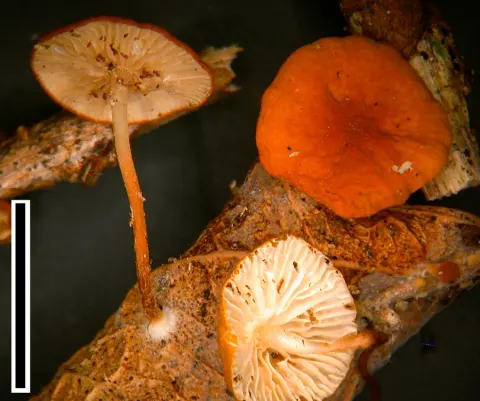
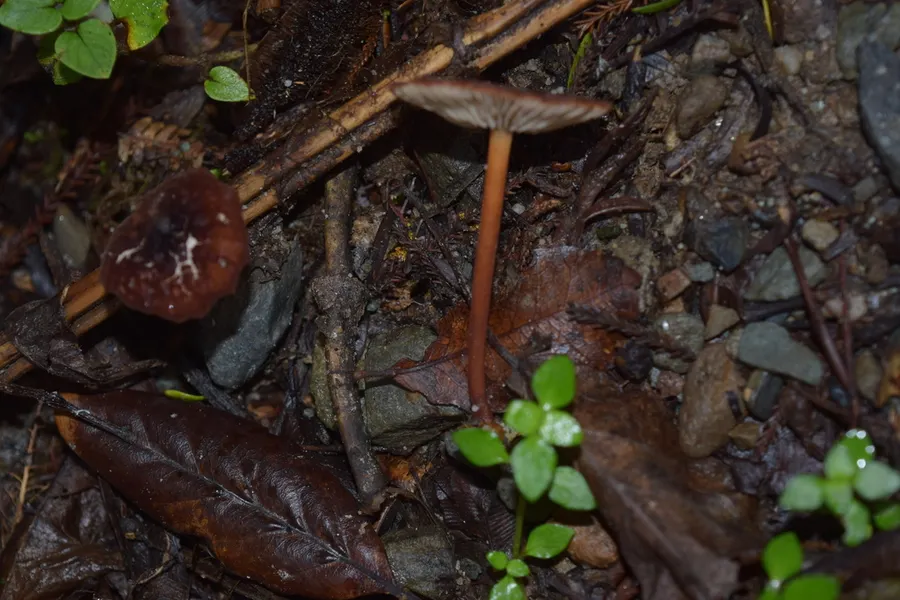
Dokumentasi Marasmius atrocastaneus menurut asosiasi foto pada record takson iNaturalist. Kredit: David Whyte. Identitas mengikuti sumber; bukan penentuan spesimen independen.
- Jenis
- Fotografi
- Kredit
- (c) David Whyte, some rights reserved (CC BY-SA)
- Lisensi
- CC BY-SA 4.0
- Sumber media
- Buka entri sumber
Dokumentasi tambahan
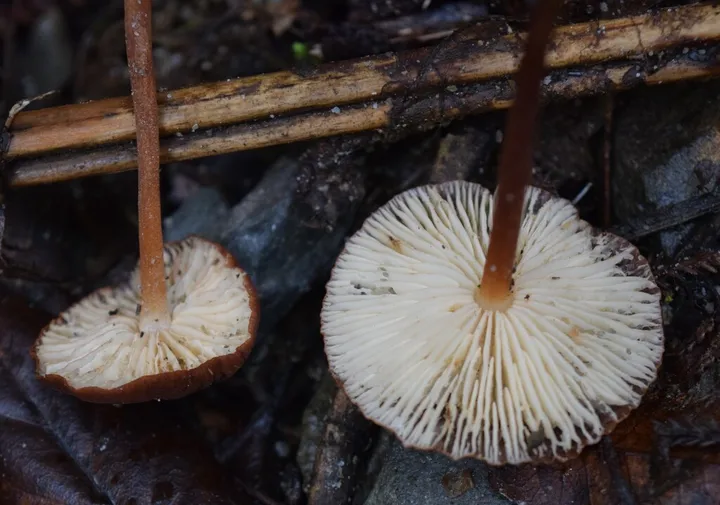
Foto yang diasosiasikan dengan Marasmius atrocastaneus pada iNaturalist. Identifikasi mengikuti sumber; bukan penentuan spesimen independen.
Kredit dan penggunaan
(c) David Whyte, some rights reserved (CC BY-SA)
Ukuran dan format gambar disesuaikan tanpa pemotongan, retus, atau penambahan skala. Lisensi sumber dipertahankan.
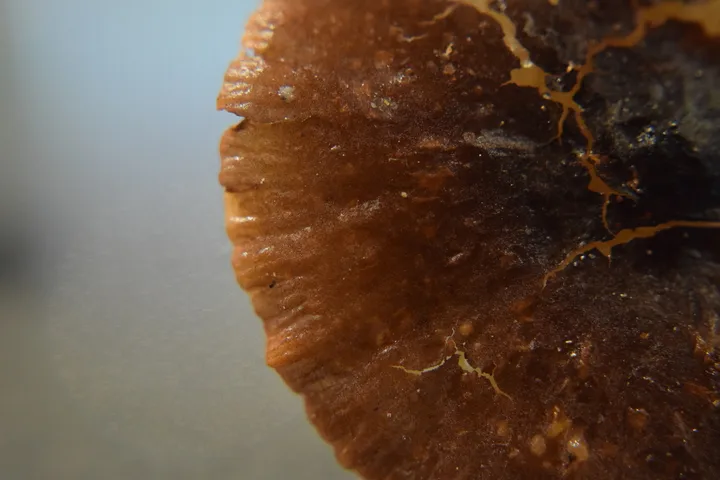
Foto yang diasosiasikan dengan Marasmius atrocastaneus pada iNaturalist. Identifikasi mengikuti sumber; bukan penentuan spesimen independen.
Kredit dan penggunaan
(c) David Whyte, some rights reserved (CC BY-SA)
Ukuran dan format gambar disesuaikan tanpa pemotongan, retus, atau penambahan skala. Lisensi sumber dipertahankan.
Sumber profil
- [1] Desjardin, D.E.; Horak, E. 1997: Marasmius and Gloiocephala in the South Pacific Region: Papua New Guinea, New Caledonia, and New Zealand taxa. Bibliotheca Mycologica. 168. — Marasmius atrocastaneus
- [2] Catalogue of Life Base2026-09-11 — Marasmius atrocastaneus
- [3] Dokumentasi visual — Marasmius atrocastaneus
- [4] Dokumentasi visual — Marasmius atrocastaneus
- [5] Dokumentasi visual — Marasmius atrocastaneus
Rujukan halaman ini
Fungi. Marasmius atrocastaneus. Rilis data fungi-2026-10-12-expansion-2. https://fungi-atlas.mgadib.chatgpt.site/jamur/marasmius-atrocastaneus/.
Status: impor sumber; pemeriksaan editorial per profil belum selesai. Untuk klaim biologis, gunakan rujukan pada bagian terkait dan periksa konteks sumber aslinya.