Ciri dan struktur
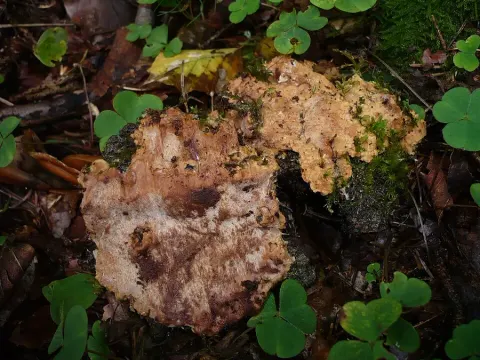
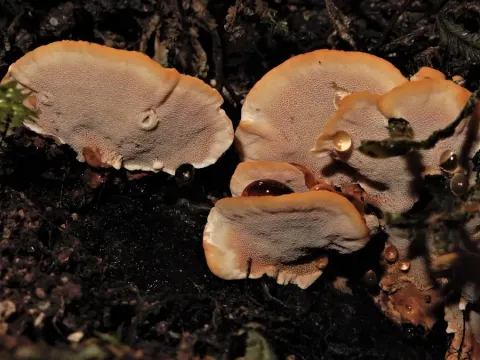
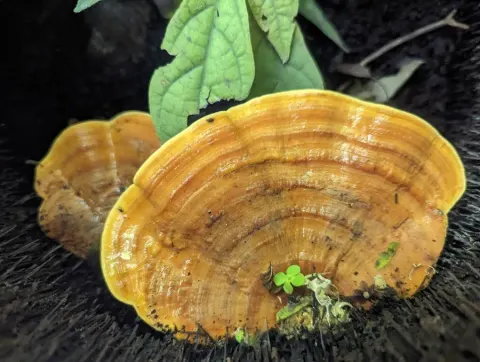
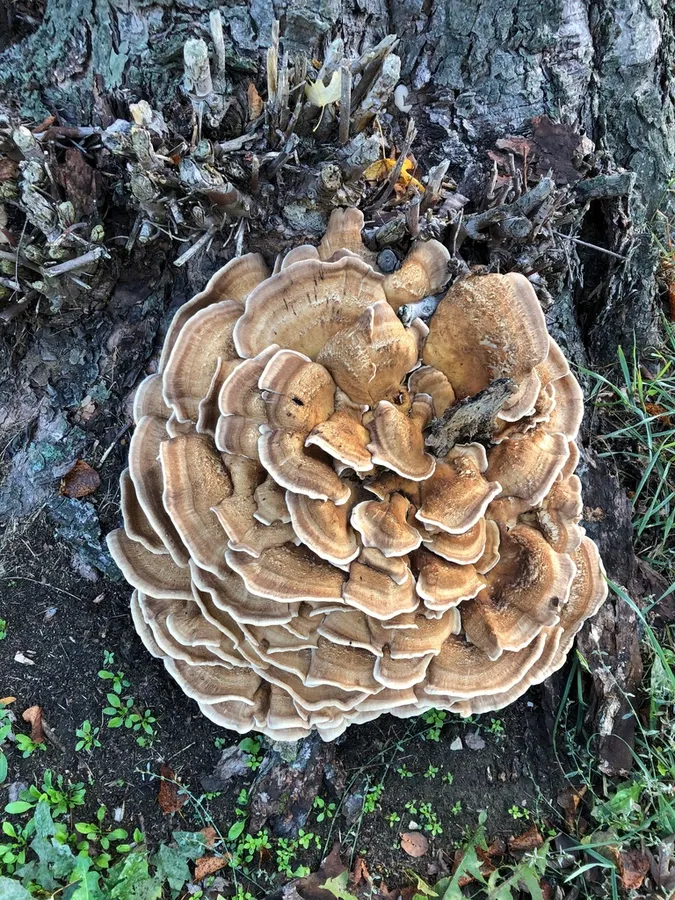
The basidiocarps consist of numerous rosette-like flattened fan-shaped pilei; they are typically 50 – 150 cm, rarely 250 cm in diameter and 10 – 50 cm, rarely 90 cm high. The individual caps, up to 10 - 50 cm, rarely 90 cm in diameter and 1 – 5 cm thick, arise from a common basal stem. The weight is 10 - 50 kg, but the heaviest specimen can reach 90 kg. The color of the cap surface is pale tan to dull chestnut brown in young specimens but darkens in age to become concentric zones (zonate) of various shades of brown. The surface is also finely fibrillose with tiny scales (squamules). There are 3 to 6 pores per millimeter on the underside; the pore surface bruises brown and black, helping to distinguish it from the similar species Grifola frondosa. The fruiting body appears in autumn but does not persist and collapses into a slimy black mass after the first frosts of the year. Infection of a tree is often through a dead tap root, and decay is largely restricted to roots, and then mainly on the underside. Infected trees often show thinning of the outer crown due to impaired root function. Whole tree failure is due to brittle fracture of degraded lateral roots. The fungus carries on fructifying on stumps or in surface roots for some years after the felling of infected hosts. Microscopic features Spores are roughly spherical to ovoid or ellipsoid in shape, with typical dimensions of 6–6.5 × 5.5–6 μm. Under a microscope, they appear translucent (hyaline), smooth, and nonamyloid, meaning that they do not absorb stain from Melzer's reagent. The basidia—the spore-bearing cells—are club-shaped, 4-spored, and are 22–40 by 7–8 μm.
Habitat dan peran ekologis
M. giganteus memiliki distribusi sirkumoreal di belahan bumi utara. Hal ini telah dikumpulkan dari Eropa, Skandinavia, daerah yang sebelumnya dikenal sebagai USSR, Iran and Turki. Although many panduan lapangan mencantumkannya sebagai terjadi di Amerika Utara, ini karena kebingungan dengan terkait M. sumstinei; M. giganteus tidak ditemukan di Amerika Utara. This mushroom can be found growing on hardwoods, more rarely on conifers. According to Ryvarden and Gilbertson in their monograph on the polypores of Europe, M. giganteus grows especially on Quercus and Fagus tree species, but it has also been collected on the hardwoods Acer, Aesculus, Alnus, Betula, Castanea, Celtis, Corylus, Eucalyptus, Laurus, Myrica, Persea, Pittosporum, Platanus, Populus, Prunus, Pyrus, Tilia, Ulmus; it has also been found growing on the coniferous species Abies, Larix, and Pinus.
- Habitat atau konteks temuan
- Informasi belum tersedia pada sumber rilis ini.
- Substrat
- Informasi belum tersedia pada sumber rilis ini.
- Peran atau konteks
- Belum dikategorikan pada rilis ini.
Reproduksi
The basidiocarps consist of numerous rosette-like flattened fan-shaped pilei; they are typically 50 – 150 cm, rarely 250 cm in diameter and 10 – 50 cm, rarely 90 cm high. The individual caps, up to 10 - 50 cm, rarely 90 cm in diameter and 1 – 5 cm thick, arise from a common basal stem. The weight is 10 - 50 kg, but the heaviest specimen can reach 90 kg. Microscopic features Spores are roughly spherical to ovoid or ellipsoid in shape, with typical dimensions of 6–6.5 × 5.5–6 μm. Under a microscope, they appear translucent (hyaline), smooth, and nonamyloid, meaning that they do not absorb stain from Melzer's reagent. The basidia—the spore-bearing cells—are club-shaped, 4-spored, and are 22–40 by 7–8 μm.
Catatan identitas dan cakupan
- Nama diterima mengikuti Catalogue of Life Base2026-09-11; uraian mempertahankan konsep dan nama sumber aslinya.
- Original geographic, specimen and life-cycle scope retained; source import awaits individual editorial review.
- Impor dan terjemahan otomatis belum diperiksa editorial per profil. Struktur reproduktif yang disebutkan tidak membuktikan seluruh siklus hidup diketahui.
- Pengukuran pada uraian mengikuti spesimen, kultur, dan metode sumber; angka tidak diperluas ke semua populasi.
Catatan distribusi dalam narasi mengikuti sumbernya. Dokumentasi spesimen atau foto mengikuti catatan sumber. Bukti wilayah Indonesia dan penilaian konservasi tidak disimpulkan dari gambar.
Melihat dengan konteks
Dokumentasi Meripilus giganteus menurut asosiasi foto pada record takson iNaturalist. Kredit: Katrin Simon. Identitas mengikuti sumber; bukan penentuan spesimen independen.
- Jenis
- Fotografi
- Kredit
- (c) Katrin Simon, some rights reserved (CC BY), uploaded by Katrin Simon
- Lisensi
- CC BY 4.0
- Sumber media
- Buka entri sumber
Dokumentasi tambahan
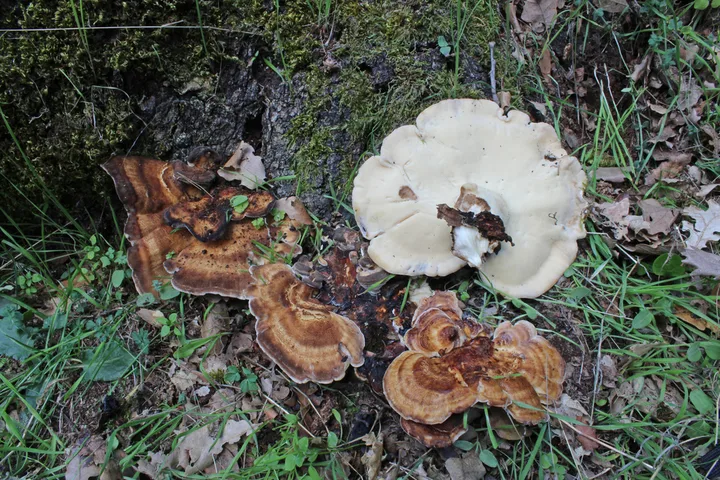
Foto yang diasosiasikan dengan Meripilus giganteus pada iNaturalist. Identifikasi mengikuti sumber; bukan penentuan spesimen independen.
Kredit dan penggunaan
(c) Davide Puddu, some rights reserved (CC BY), uploaded by Davide Puddu
Ukuran dan format gambar disesuaikan tanpa pemotongan, retus, atau penambahan skala. Lisensi sumber dipertahankan.
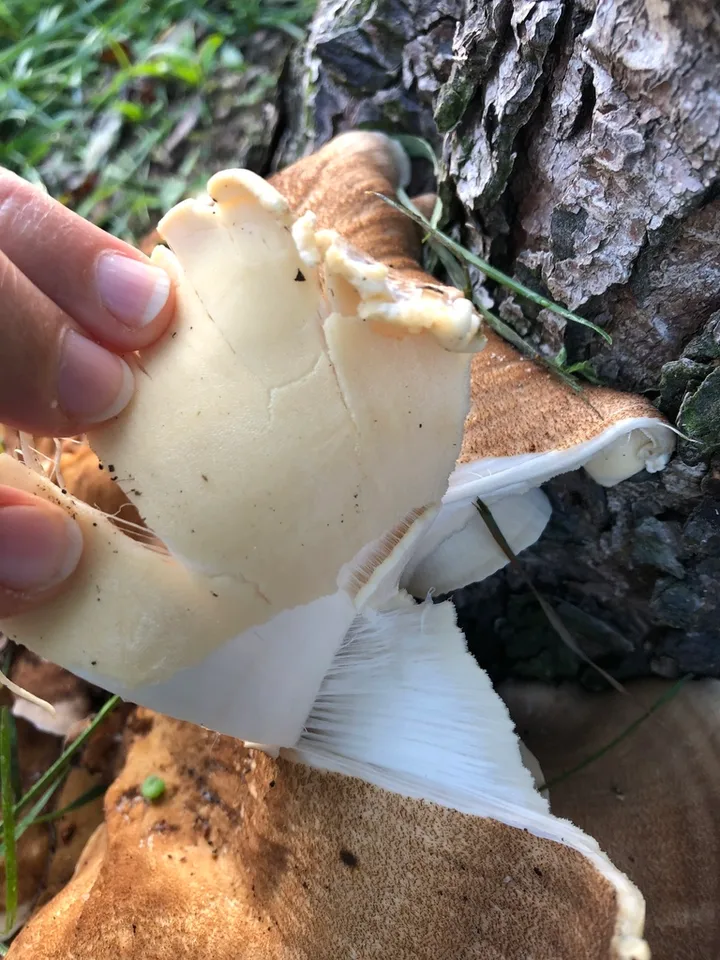
Foto yang diasosiasikan dengan Meripilus giganteus pada iNaturalist. Identifikasi mengikuti sumber; bukan penentuan spesimen independen.
Kredit dan penggunaan
(c) Katrin Simon, some rights reserved (CC BY), uploaded by Katrin Simon
Ukuran dan format gambar disesuaikan tanpa pemotongan, retus, atau penambahan skala. Lisensi sumber dipertahankan.
Sumber profil
- [1] Meripilus giganteus — Wikipedia (en)
- [2] Catalogue of Life Base2026-09-11 — Meripilus giganteus
- [3] Dokumentasi visual — Meripilus giganteus
- [4] Dokumentasi visual — Meripilus giganteus
- [5] Dokumentasi visual — Meripilus giganteus
Rujukan halaman ini
Fungi. Meripilus giganteus. Rilis data fungi-2026-10-12-expansion-2. https://fungi-atlas.mgadib.chatgpt.site/jamur/meripilus-giganteus/.
Status: impor sumber; pemeriksaan editorial per profil belum selesai. Untuk klaim biologis, gunakan rujukan pada bagian terkait dan periksa konteks sumber aslinya.