01 / Morfologi

Ciri dan struktur

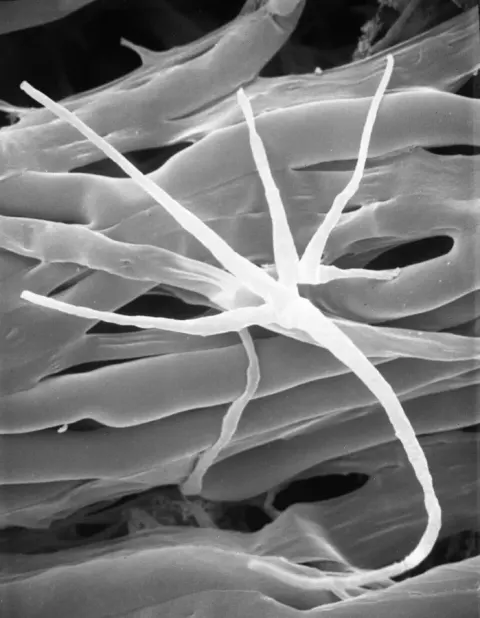
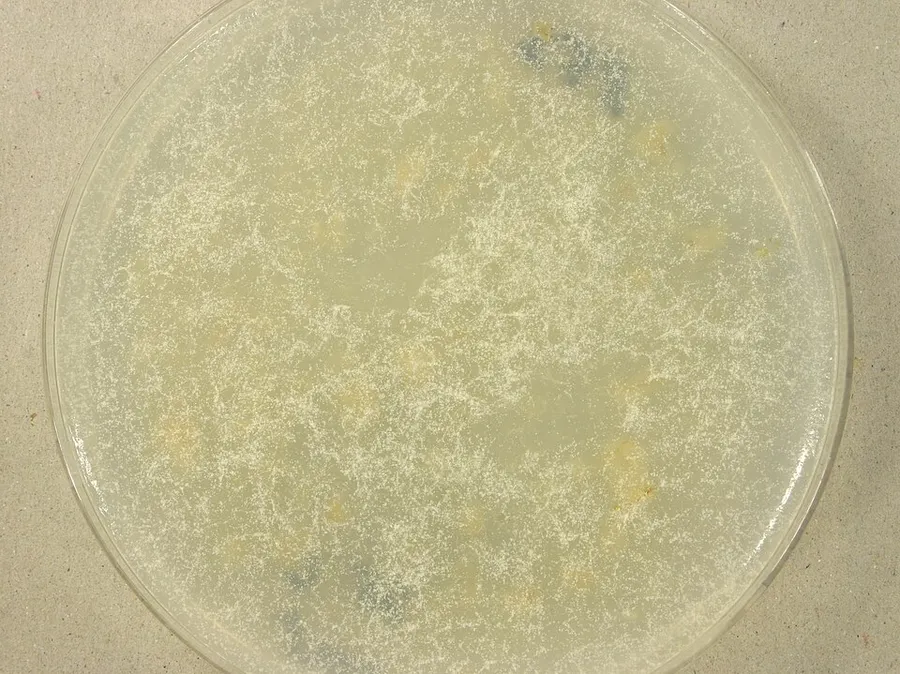
Colonies are white with a spider web-like texture and sparse growth; they have a garlic-like aroma and can measure up to 7.5 cm in diameter after 5 days at 20 °C on malt extract agar. Sporangiophores in this species measure 300–500 μm long: they are 12.5–20 μm wide at the base, being reduced to 3.5–5 μm at the tip. They can be single or come in clusters; primary branches are present mostly in the upper part of the sporangiophore and they may give rise to secondary and tertiary branches of 12–90 μm long. Sporangia are brown, round (globose), with a diameter of 37–75 μm and they can contain 4–20 spores. M. polycephala sporangia can grow well between 10 °C and 25 °C, with an optimum temperature of about 17 °C. Sporangiospores are hyaline, they measure 5.5–13.2 μm long and have an oval to irregular shape. The optimum germination temperature is 27 °C. Zygospores can be up to 1 mm in diameter andare produced by both homothallic and heterothallic mechanisms; they are well formed between 15 °C and 22 °C. Stylospores can be aerial or submerged, they are hyaline and can be found alone or in groups. Their diameter is around 20 μm.

Sebagian uraian ditampilkan dalam bahasa sumber; terjemahannya belum tersedia atau belum lolos pemeriksaan.

Rujukan: [1]

Pengukuran mengikuti objek, spesimen atau kultur, dan metode yang disebutkan sumber. Baca uraian asli untuk konteks lengkap.

02 / Kehidupan

Habitat dan peran ekologis

Mortierella polycephala has been reported on decaying polypores, arable and desert soil, trees such as beech and spruce, flowering plants like Calluna, alfalfa roots, wheat, tomato and cabbage; and other ecosystems like salt marshes and slate slopes. It is a saprotroph fungi, extensively distributed in Europe: Belgium, France, The Netherlands, United Kingdom, Ukraine, Germany and Switzerland; Asia: China, Japan, India and Indonesia; and America: Brazil and Mexico. Its spores are transmitted via air or water movement. Although several articles and books report M. polycephala as a cause of pulmonary infections for cattle and abortion in cattle, a primary source that confirms this statement has not been found and no other sources have reproduced the findings. A single report of animal infection attributed M. polycephala may represent a misidentified strain of M. wolfii.

Sebagian uraian ditampilkan dalam bahasa sumber; terjemahannya belum tersedia atau belum lolos pemeriksaan.

Rujukan: [1]

Habitat atau konteks temuan
Informasi belum tersedia pada sumber rilis ini.
Substrat
Informasi belum tersedia pada sumber rilis ini.
Peran atau konteks
Pengurai
Temukan hubungan serupa
03 / Siklus hidup

Reproduksi

Colonies are white with a spider web-like texture and sparse growth; they have a garlic-like aroma and can measure up to 7.5 cm in diameter after 5 days at 20 °C on malt extract agar. Sporangiophores in this species measure 300–500 μm long: they are 12.5–20 μm wide at the base, being reduced to 3.5–5 μm at the tip. They can be single or come in clusters; primary branches are present mostly in the upper part of the sporangiophore and they may give rise to secondary and tertiary branches of 12–90 μm long. Sporangia are brown, round (globose), with a diameter of 37–75 μm and they can contain 4–20 spores. M. polycephala sporangia can grow well between 10 °C and 25 °C, with an optimum temperature of about 17 °C.

Sebagian uraian ditampilkan dalam bahasa sumber; terjemahannya belum tersedia atau belum lolos pemeriksaan.

Rujukan: [1]

Sinonim menurut acuan taksonomi rilis: Mortierella canina; Mortierella crystallina; Mortierella lemonnieri; Mortierella polycephala var. canina; Mortierella polycephala var. raphani; Mortierella raphani; Mortierella vantieghemii; Mortierella vantieghemii var. cannabidis; Mortierella vantieghemii var. raphani
04 / Batas informasi

Catatan identitas dan cakupan

  • Nama diterima mengikuti Catalogue of Life Base2026-09-11; uraian mempertahankan konsep dan nama sumber aslinya.
  • Original geographic, specimen and life-cycle scope retained; source import awaits individual editorial review.
  • Impor dan terjemahan otomatis belum diperiksa editorial per profil. Struktur reproduktif yang disebutkan tidak membuktikan seluruh siklus hidup diketahui.
  • Pengukuran pada uraian mengikuti spesimen, kultur, dan metode sumber; angka tidak diperluas ke semua populasi.

Catatan distribusi dalam narasi mengikuti sumbernya. Dokumentasi spesimen atau foto mengikuti catatan sumber. Bukti wilayah Indonesia dan penilaian konservasi tidak disimpulkan dari gambar.

05 / Dokumentasi

Melihat dengan konteks

Dokumentasi Mortierella polycephala dari Wikimedia Commons. Mortierella polycephala UAMH 1152 grown at 25C on oatmeal agar for 66 days. Identifikasi mengikuti record berkas sumber.

Jenis
Fotografi
Kredit
Medmyco
Sumber media
Buka entri sumber

Gambar menunjukkan objek menurut identifikasi sumber, bukan verifikasi independen spesimen oleh Fungi. Tidak ada skala baru yang ditambahkan.

06 / Rujukan

Sumber profil

  1. [1] Mortierella polycephala — Wikipedia (en)Bagian sumber: Frozen revision 1364422158
    Tanggal penghimpunan sumber: 2026-10-12
    Teks sumber: CC BY-SA4.0 · Wikipedia contributors
  2. [2] Catalogue of Life Base2026-09-11 — Mortierella polycephalaBagian sumber: ColDP NameUsage.tsv ID 44F9L; accepted species; source 2073
    Tanggal penghimpunan sumber: 2026-10-12
  3. [3] Dokumentasi visual — Mortierella polycephalaBagian sumber: Individual media record; identification follows the source, not independent determination
    Tanggal penghimpunan sumber: 2026-10-12
    Media sumber: CC BY-SA 4.0 · Medmyco

Adaptasi teks: CC BY-SA 4.0. Wikipedia contributors — Mortierella polycephala — Wikipedia (en)

Uraian asli dan riwayat sumber

Riwayat atau halaman sumber

Ringkasan sumber

Mortierella polycephala is a saprotrophic fungus with a wide geographical distribution occurring in many different habitats from soil and plants to salt marshes and slate slopes. It is the type species of the genus Mortierella, and was first described in 1863 by Henri Coemans. A characteristic feature of the fungus is the presence of stylospores, which are aerial, spiny resting spores (chlamydospores).

Revisi sumber

Morfologi sumber

Colonies are white with a spider web-like texture and sparse growth; they have a garlic-like aroma and can measure up to 7.5 cm in diameter after 5 days at 20 °C on malt extract agar. Sporangiophores in this species measure 300–500 μm long: they are 12.5–20 μm wide at the base, being reduced to 3.5–5 μm at the tip. They can be single or come in clusters; primary branches are present mostly in the upper part of the sporangiophore and they may give rise to secondary and tertiary branches of 12–90 μm long. Sporangia are brown, round (globose), with a diameter of 37–75 μm and they can contain 4–20 spores. M. polycephala sporangia can grow well between 10 °C and 25 °C, with an optimum temperature of about 17 °C. Sporangiospores are hyaline, they measure 5.5–13.2 μm long and have an oval to irregular shape. The optimum germination temperature is 27 °C. Zygospores can be up to 1 mm in diameter andare produced by both homothallic and heterothallic mechanisms; they are well formed between 15 °C and 22 °C. Stylospores can be aerial or submerged, they are hyaline and can be found alone or in groups. Their diameter is around 20 μm.

Revisi sumber

Ekologi sumber

Mortierella polycephala has been reported on decaying polypores, arable and desert soil, trees such as beech and spruce, flowering plants like Calluna, alfalfa roots, wheat, tomato and cabbage; and other ecosystems like salt marshes and slate slopes. It is a saprotroph fungi, extensively distributed in Europe: Belgium, France, The Netherlands, United Kingdom, Ukraine, Germany and Switzerland; Asia: China, Japan, India and Indonesia; and America: Brazil and Mexico. Its spores are transmitted via air or water movement. Although several articles and books report M. polycephala as a cause of pulmonary infections for cattle and abortion in cattle, a primary source that confirms this statement has not been found and no other sources have reproduced the findings. A single report of animal infection attributed M. polycephala may represent a misidentified strain of M. wolfii.

Revisi sumber

Struktur reproduksi sumber

Colonies are white with a spider web-like texture and sparse growth; they have a garlic-like aroma and can measure up to 7.5 cm in diameter after 5 days at 20 °C on malt extract agar. Sporangiophores in this species measure 300–500 μm long: they are 12.5–20 μm wide at the base, being reduced to 3.5–5 μm at the tip. They can be single or come in clusters; primary branches are present mostly in the upper part of the sporangiophore and they may give rise to secondary and tertiary branches of 12–90 μm long. Sporangia are brown, round (globose), with a diameter of 37–75 μm and they can contain 4–20 spores. M. polycephala sporangia can grow well between 10 °C and 25 °C, with an optimum temperature of about 17 °C.

Revisi sumber

Rujukan halaman ini

Fungi. Mortierella polycephala. Rilis data fungi-2026-10-12-expansion-2. https://fungi-atlas.mgadib.chatgpt.site/jamur/mortierella-polycephala/.

Status: impor sumber; pemeriksaan editorial per profil belum selesai. Untuk klaim biologis, gunakan rujukan pada bagian terkait dan periksa konteks sumber aslinya.