01 / Morfologi

Ciri dan struktur

The cap is 1 – 3 cm in diameter, and initially a fat conical shape with the margin pressed close to the stem. As the cap expands, it becomes broadly conic to convex, sometimes broadly bell-shaped, and sometimes convex with a flaring margin. The cap surface has a whitish sheen because of its pruinose coating. The coating gradually sloughs off, leaving the surface smooth and moist. The cap shows radial grooves that outline the position of the gills underneath. Its color is initially dusky brownish-gray to blackish (after the pruinose coating has sloughed off), soon fading from dark to light gray and finally ashy-gray. The flesh is thin and fragile, grayish, and has a slightly sour (acidulous) taste, and a weakly alkaline odor that strengthens in intensity if the flesh is crushed. Its edibility is unknown, 1–2 mm thick, equal in width throughout, hollow, and very fragile. It is usually bluish-black initially (darker than the cap) but gradually turns sordid brownish-gray, and finally fades to pallid or cinereous. The surface is densely white-pruinose overall, but soon polished and translucent when the pruinose coating wears off. The stem base is nearly smooth to rather densely white-strigose. The species has a distinctive bleach-like odor. The spore print is white. The spores are broadly ellipsoid, amyloid (meaning they will adsorb iodine when stained with Melzer's reagent), and measure 7–10 by 4–6 μm. The basidia (the spore-bearing cells) are usually four-spored, although two- and three-spored forms have been found on which the spores measure 11–14 by 6–6.5 μm or 8–10 by 3.5–4.5 μm, respectively.

Sebagian uraian ditampilkan dalam bahasa sumber; terjemahannya belum tersedia atau belum lolos pemeriksaan.

Rujukan: [1]

Pengukuran mengikuti objek, spesimen atau kultur, dan metode yang disebutkan sumber. Baca uraian asli untuk konteks lengkap.

02 / Kehidupan

Habitat dan peran ekologis

Mycena leptocephala adalah spesies saprobik, yang berarti ia memperoleh nutrisi dari pemecahan materi organik. Fruit bodies are found growing scattered to gregarious on fallen sticks and on needle carpets under conifers, and are rather common during early summer and again in the autumn. Fruit bodies dapat terinfeksi oleh jamur bonnet Spinellus fusiger. Di Amerika Utara, jamur ini ditemukan di Kanada (British Columbia, Manitoba, Nova Scotia, Prince Edward Island), Washington and selatan hingga California and North Carolina. Di Amerika Selatan, jamur telah dikumpulkan di Venezuela. It also grows in the Archipelago of the Recherche, off the southern coast of Western Australia. Di Eropa, itu dikenal dari Inggris, Finlandia, Belanda, Norwegia, dan Spanyol. Ia juga telah ditemukan di berbagai lokasi di Asia: Vindhya Range of India; Gwangneung Forest Museum in Arboretum Nasional Korea; dan zona alpine Changbai Mountain Nature Reserve, Provinsi Jilin, China. Jamur ini juga dikenal dari Arctic and Alpine regions seperti Islandia, Greenland, dan Murmansk region.

Sebagian uraian ditampilkan dalam bahasa sumber; terjemahannya belum tersedia atau belum lolos pemeriksaan.

Rujukan: [1]

Habitat atau konteks temuan
hutan
Substrat
Informasi belum tersedia pada sumber rilis ini.
Peran atau konteks
Pengurai
Temukan hubungan serupa
03 / Siklus hidup

Reproduksi

The cap is 1 – 3 cm in diameter, and initially a fat conical shape with the margin pressed close to the stem. As the cap expands, it becomes broadly conic to convex, sometimes broadly bell-shaped, and sometimes convex with a flaring margin. The cap surface has a whitish sheen because of its pruinose coating. The coating gradually sloughs off, leaving the surface smooth and moist. The cap shows radial grooves that outline the position of the gills underneath. Its color is initially dusky brownish-gray to blackish (after the pruinose coating has sloughed off), soon fading from dark to light gray and finally ashy-gray. The flesh is thin and fragile, grayish, and has a slightly sour (acidulous) taste, and a weakly alkaline odor that strengthens in intensity if the flesh is crushed.

Sebagian uraian ditampilkan dalam bahasa sumber; terjemahannya belum tersedia atau belum lolos pemeriksaan.

Rujukan: [1]

Sinonim menurut acuan taksonomi rilis: Agaricus alcalinus leptocephalus; Agaricus leptocephalus; Agaricus leptocephalus subsp. caesius; Mycena alcalina var. chlorinella; Mycena chlorinella; Mycena leptocephala var. minuta
04 / Batas informasi

Catatan identitas dan cakupan

  • Nama diterima mengikuti Catalogue of Life Base2026-09-11; uraian mempertahankan konsep dan nama sumber aslinya.
  • Original geographic, specimen and life-cycle scope retained; source import awaits individual editorial review.
  • Impor dan terjemahan otomatis belum diperiksa editorial per profil. Struktur reproduktif yang disebutkan tidak membuktikan seluruh siklus hidup diketahui.
  • Pengukuran pada uraian mengikuti spesimen, kultur, dan metode sumber; angka tidak diperluas ke semua populasi.

Catatan distribusi dalam narasi mengikuti sumbernya. Dokumentasi spesimen atau foto mengikuti catatan sumber. Bukti wilayah Indonesia dan penilaian konservasi tidak disimpulkan dari gambar.

05 / Dokumentasi

Melihat dengan konteks

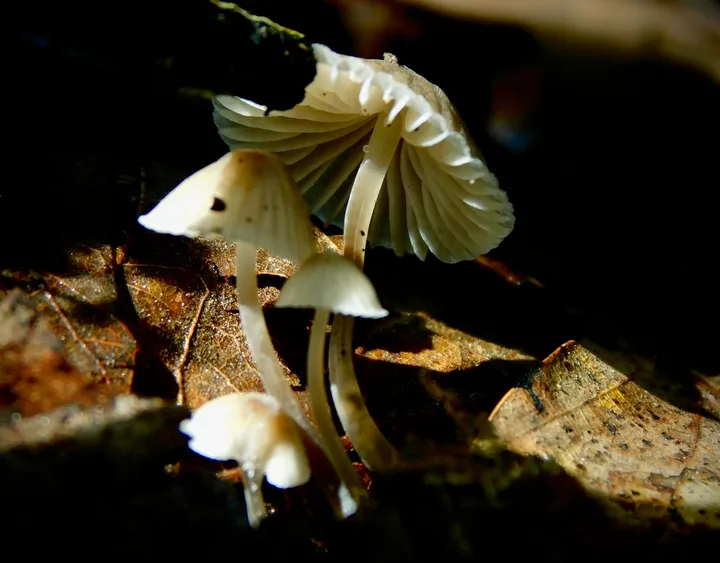
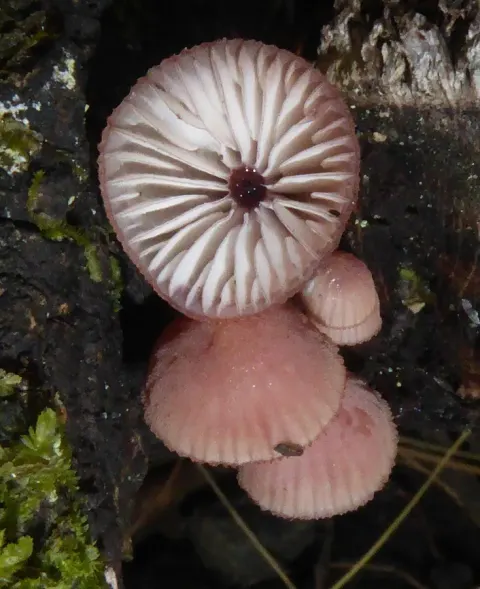
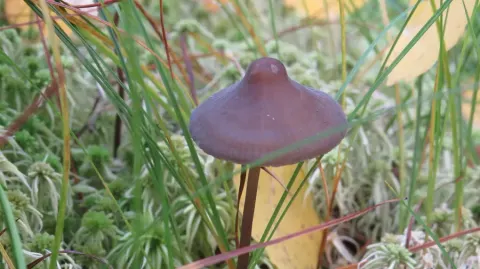
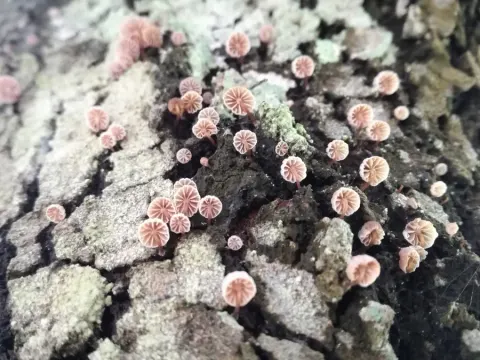
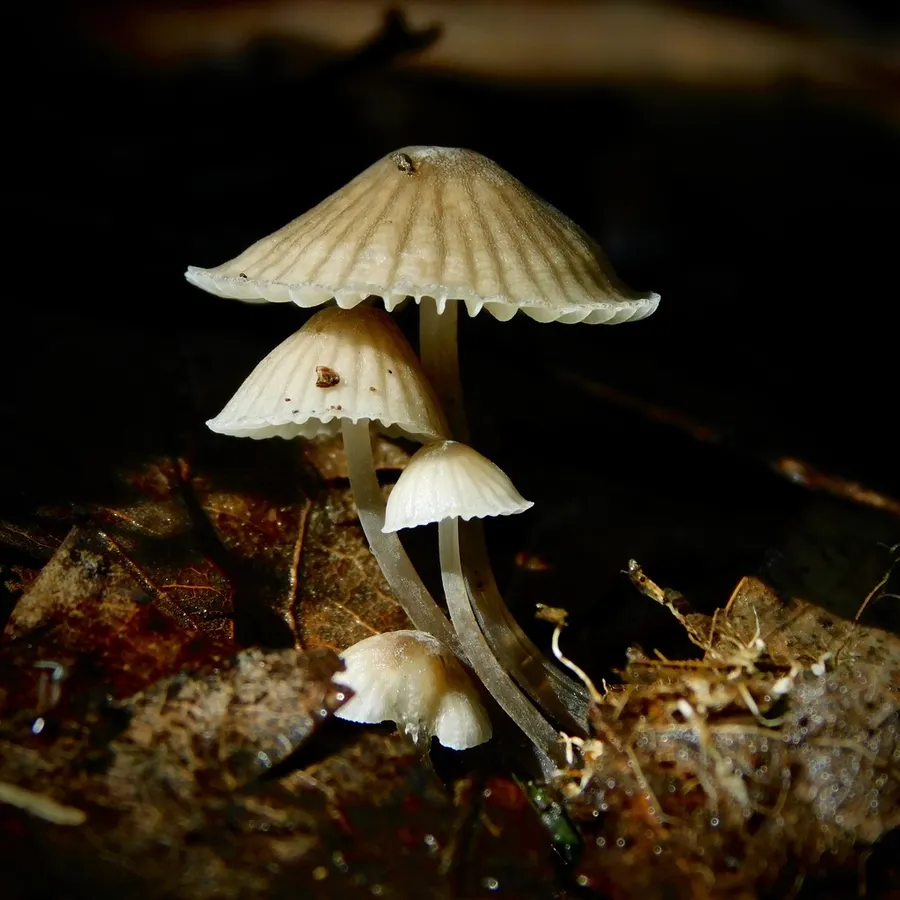
Dokumentasi Mycena leptocephala menurut asosiasi foto pada record takson iNaturalist. Kredit: Michael J. Papay. Identitas mengikuti sumber; bukan penentuan spesimen independen.

Jenis
Fotografi
Kredit
(c) Michael J. Papay, some rights reserved (CC BY), uploaded by Michael J. Papay
Lisensi
CC BY 4.0
Sumber media
Buka entri sumber

Gambar menunjukkan objek menurut identifikasi sumber, bukan verifikasi independen spesimen oleh Fungi. Tidak ada skala baru yang ditambahkan.

Dokumentasi tambahan

06 / Rujukan

Sumber profil

  1. [1] Mycena leptocephala — Wikipedia (en)Bagian sumber: Frozen revision 1378024789
    Tanggal penghimpunan sumber: 2026-10-12
    Teks sumber: CC BY-SA4.0 · Wikipedia contributors
  2. [2] Catalogue of Life Base2026-09-11 — Mycena leptocephalaBagian sumber: ColDP NameUsage.tsv ID 44TCN; accepted species; source 2073
    Tanggal penghimpunan sumber: 2026-10-12
  3. [3] Dokumentasi visual — Mycena leptocephalaBagian sumber: Identitas mengikuti sumber dokumentasi; bukan penentuan spesimen independen.
    Tanggal penghimpunan sumber: 2026-10-17
    Media sumber: CC BY 4.0 · (c) Michael J. Papay, some rights reserved (CC BY), uploaded by Michael J. Papay
  4. [4] Dokumentasi visual — Mycena leptocephalaBagian sumber: Identitas mengikuti sumber dokumentasi; bukan penentuan spesimen independen.
    Tanggal penghimpunan sumber: 2026-10-17
    Teks sumber: CC BY 4.0 · (c) Michael J. Papay, some rights reserved (CC BY), uploaded by Michael J. Papay

Adaptasi teks: CC BY-SA 4.0. Wikipedia contributors — Mycena leptocephala — Wikipedia (en)

Uraian asli dan riwayat sumber

Riwayat atau halaman sumber

Ringkasan sumber

Mycena leptocephala, commonly known as the nitrous bonnet, is a species of fungus in the family Mycenaceae. The mushrooms have conical grayish caps that reach up to 3 cm in diameter, and thin fragile stems up to 5 cm long. The gills are gray and distantly spaced. The spores are elliptical, typically measure 7–10 by 4–6 μm, and are white in deposit. When viewed under a light microscope, the gills have abundant spindle-shaped cystidia on the gill edges, but few on the gill faces. Similar species include Mycena alcalina, M. austera, and M. brevipes.

Revisi sumber

Morfologi sumber

The cap is 1 – 3 cm in diameter, and initially a fat conical shape with the margin pressed close to the stem. As the cap expands, it becomes broadly conic to convex, sometimes broadly bell-shaped, and sometimes convex with a flaring margin. The cap surface has a whitish sheen because of its pruinose coating. The coating gradually sloughs off, leaving the surface smooth and moist. The cap shows radial grooves that outline the position of the gills underneath. Its color is initially dusky brownish-gray to blackish (after the pruinose coating has sloughed off), soon fading from dark to light gray and finally ashy-gray. The flesh is thin and fragile, grayish, and has a slightly sour (acidulous) taste, and a weakly alkaline odor that strengthens in intensity if the flesh is crushed. Its edibility is unknown, 1–2 mm thick, equal in width throughout, hollow, and very fragile. It is usually bluish-black initially (darker than the cap) but gradually turns sordid brownish-gray, and finally fades to pallid or cinereous. The surface is densely white-pruinose overall, but soon polished and translucent when the pruinose coating wears off. The stem base is nearly smooth to rather densely white-strigose. The species has a distinctive bleach-like odor. The spore print is white. The spores are broadly ellipsoid, amyloid (meaning they will adsorb iodine when stained with Melzer's reagent), and measure 7–10 by 4–6 μm. The basidia (the spore-bearing cells) are usually four-spored, although two- and three-spored forms have been found on which the spores measure 11–14 by 6–6.5 μm or 8–10 by 3.5–4.5 μm, respectively.

Revisi sumber

Ekologi sumber

Mycena leptocephala is a saprobic species, meaning it derives nutrients from the breakdown of organic matter. Fruit bodies are found growing scattered to gregarious on fallen sticks and on needle carpets under conifers, and are rather common during early summer and again in the autumn. Fruit bodies may be infected by the bonnet mold Spinellus fusiger. In North America, the fungus is found in Canada (British Columbia, Manitoba, Nova Scotia, Prince Edward Island), to Washington and south to California and North Carolina. In South America, the mushroom has been collected in Venezuela. It also grows in the Archipelago of the Recherche, off the southern coast of Western Australia. In Europe, it is known from Britain, Finland, The Netherlands, Norway, and Spain It has also been found in various locations in Asia: the Vindhya Range of India; the Gwangneung Forest Museum in the Korea National Arboretum; and the alpine zone of Changbai Mountain Nature Reserve, Jilin Province, China. The fungus is also known from Arctic and Alpine regions such as Iceland, Greenland, and the Murmansk region.

Revisi sumber

Struktur reproduksi sumber

The cap is 1 – 3 cm in diameter, and initially a fat conical shape with the margin pressed close to the stem. As the cap expands, it becomes broadly conic to convex, sometimes broadly bell-shaped, and sometimes convex with a flaring margin. The cap surface has a whitish sheen because of its pruinose coating. The coating gradually sloughs off, leaving the surface smooth and moist. The cap shows radial grooves that outline the position of the gills underneath. Its color is initially dusky brownish-gray to blackish (after the pruinose coating has sloughed off), soon fading from dark to light gray and finally ashy-gray. The flesh is thin and fragile, grayish, and has a slightly sour (acidulous) taste, and a weakly alkaline odor that strengthens in intensity if the flesh is crushed.

Revisi sumber

Rujukan halaman ini

Fungi. Mycena leptocephala. Rilis data fungi-2026-10-12-expansion-2. https://fungi-atlas.mgadib.chatgpt.site/jamur/mycena-leptocephala/.

Status: impor sumber; pemeriksaan editorial per profil belum selesai. Untuk klaim biologis, gunakan rujukan pada bagian terkait dan periksa konteks sumber aslinya.