Ciri dan struktur
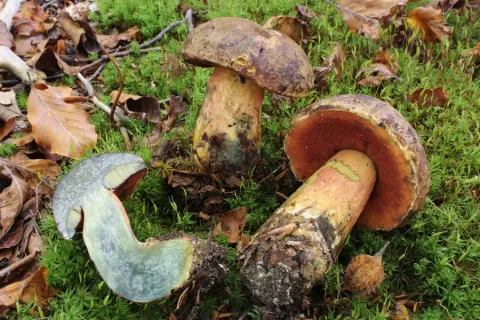
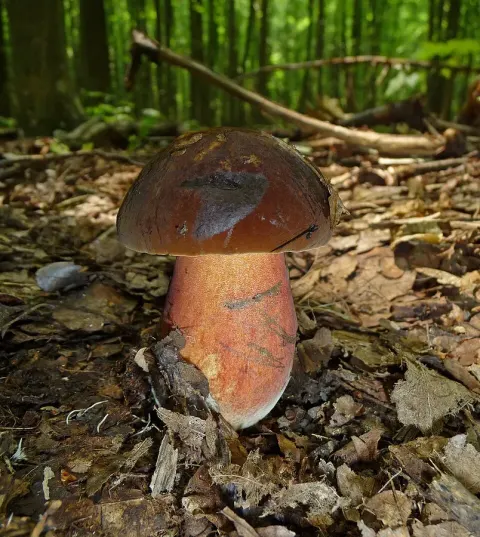
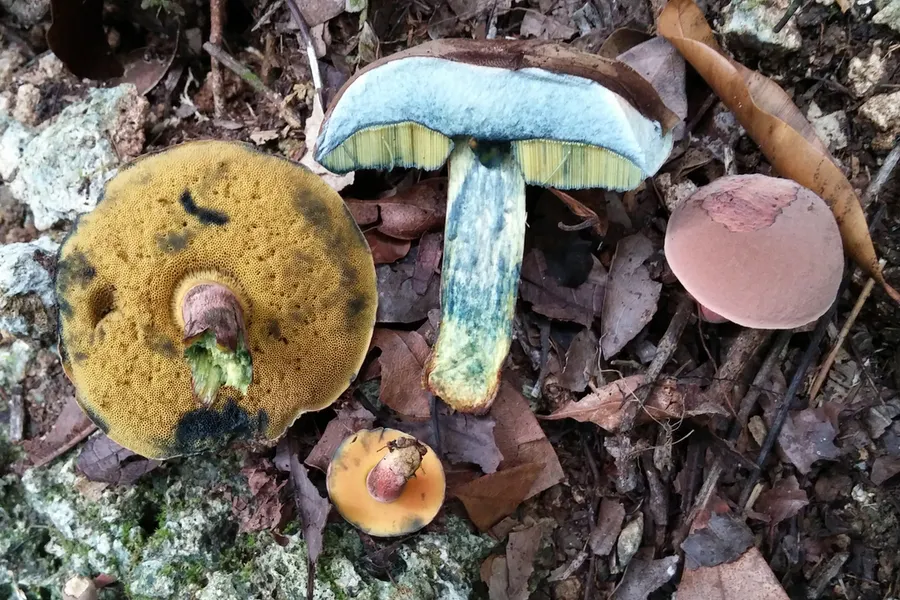
Basidiomes stipitate-pileate with tubular hymenophore characterized by medium-small size, pinkish red to reddish pileus surface, orange-red pores, reddish orange to purple-red punctuations on a yellow stipe surface, golden yellow strigosity at the stipe base, yellow context, tissues bruising dark blue when injured or exposed, ellipsoid-fusiform, smooth basidiospores, ixocutis pileipellis consisting of gelatinized, repent filamentous hyphae and occurrence in neotropical lowland mixed broadleaved forests in putative ECM association with host species (Coccoloba uvifera) other than Fagaceae and Pinaceae.
Habitat dan peran ekologis
solitary to gregarious, growing on limestone among litter in a seasonally dry and moist anthropised lowland mixed stand under a large array of neotropical broadleaved trees, including Coccoloba uvifera, which represents its probable ECM host tree. See Parra et al. (2018) for further details on vegetation. Presently only known from the type locality in the Dominican Republic (Greater Antilles, Caribbean).
- Habitat atau konteks temuan
- Informasi belum tersedia pada sumber rilis ini.
- Substrat
- Informasi belum tersedia pada sumber rilis ini.
- Peran atau konteks
- Belum dikategorikan pada rilis ini.
Reproduksi
Basidiomes stipitate-pileate with tubular hymenophore characterized by medium-small size, pinkish red to reddish pileus surface, orange-red pores, reddish orange to purple-red punctuations on a yellow stipe surface, golden yellow strigosity at the stipe base, yellow context, tissues bruising dark blue when injured or exposed, ellipsoid-fusiform, smooth basidiospores, ixocutis pileipellis consisting of gelatinized, repent filamentous hyphae and occurrence in neotropical lowland mixed broadleaved forests in putative ECM association with host species (Coccoloba uvifera) other than Fagaceae and Pinaceae.
Catatan identitas dan cakupan
- Nama diterima mengikuti Catalogue of Life Base2026-09-11; uraian mempertahankan konsep dan nama sumber aslinya.
- Preserve original treatment localities, hosts and substrate scope. Materials examined describe documented specimens, not the full global range.
- Impor dan terjemahan otomatis belum diperiksa editorial per profil. Struktur reproduktif yang disebutkan tidak membuktikan seluruh siklus hidup diketahui.
- Pengukuran pada uraian mengikuti spesimen, kultur, dan metode sumber; angka tidak diperluas ke semua populasi.
Catatan distribusi dalam narasi mengikuti sumbernya. Dokumentasi spesimen atau foto mengikuti catatan sumber. Bukti wilayah Indonesia dan penilaian konservasi tidak disimpulkan dari gambar.
Melihat dengan konteks
Dokumentasi Neoboletus antillanus menurut asosiasi foto pada record takson iNaturalist. Kredit: Kristof Zyskowski. Identitas mengikuti sumber; bukan penentuan spesimen independen.
- Jenis
- Fotografi
- Kredit
- (c) Kristof Zyskowski, some rights reserved (CC BY), uploaded by Kristof Zyskowski
- Lisensi
- CC BY 4.0
- Sumber media
- Buka entri sumber
Dokumentasi tambahan
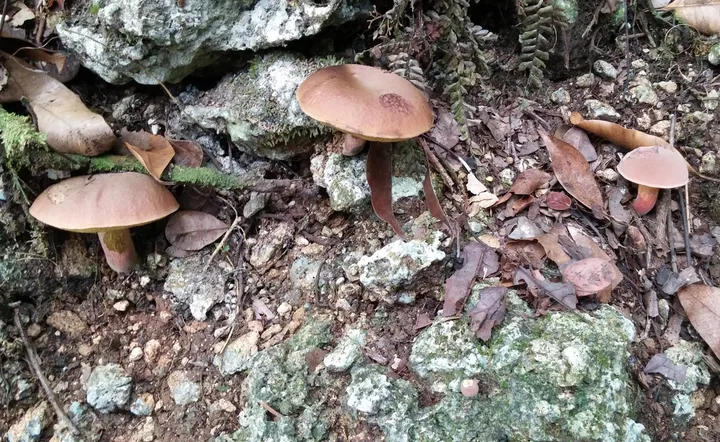
Foto yang diasosiasikan dengan Neoboletus antillanus pada iNaturalist. Identifikasi mengikuti sumber; bukan penentuan spesimen independen.
Kredit dan penggunaan
(c) Kristof Zyskowski, some rights reserved (CC BY), uploaded by Kristof Zyskowski
Ukuran dan format gambar disesuaikan tanpa pemotongan, retus, atau penambahan skala. Lisensi sumber dipertahankan.
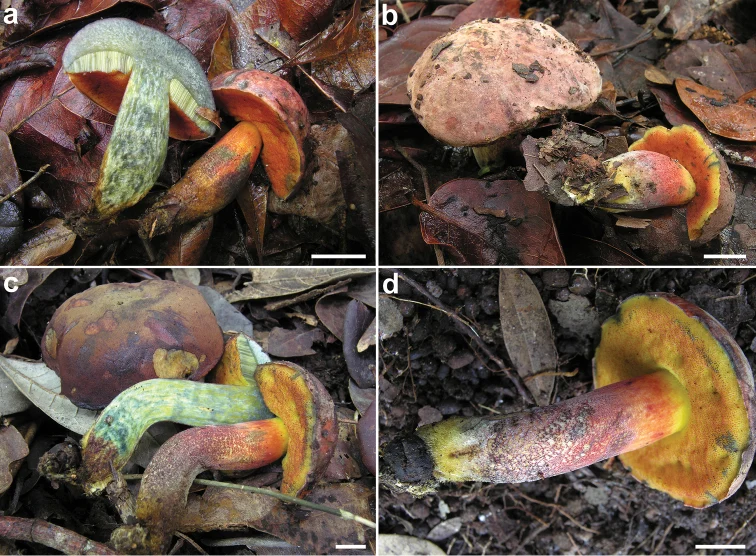
Neoboletus antillanus. Basidiomata in situ. a JBSD127416 b JBSD127417 (holotype) c, d JBSD127418. Scale bars: 1 cm. Photos by C. Angelini.
Kredit dan penggunaan
Matteo Gelardi, Claudio Angelini, Federica Costanzo, Francesco Dovana, Beatriz Ortiz-Santana, Alfredo Vizzini
Ukuran dan format gambar disesuaikan tanpa pemotongan, retus, atau penambahan skala. Lisensi sumber dipertahankan.
Sumber profil
- [1] Neoboletus antillanus sp. nov. (Boletaceae), first report of a red-pored bolete from the Dominican Republic and insights on the genus Neoboletus — Neoboletus antillanus
- [2] Catalogue of Life Base2026-09-11 — Neoboletus antillanus
- [3] Dokumentasi visual — Neoboletus antillanus
- [4] Dokumentasi visual — Neoboletus antillanus
- [5] Dokumentasi visual — Neoboletus antillanus
Rujukan halaman ini
Fungi. Neoboletus antillanus. Rilis data fungi-2026-10-12-expansion-2. https://fungi-atlas.mgadib.chatgpt.site/jamur/neoboletus-antillanus/.
Status: impor sumber; pemeriksaan editorial per profil belum selesai. Untuk klaim biologis, gunakan rujukan pada bagian terkait dan periksa konteks sumber aslinya.