Ciri dan struktur
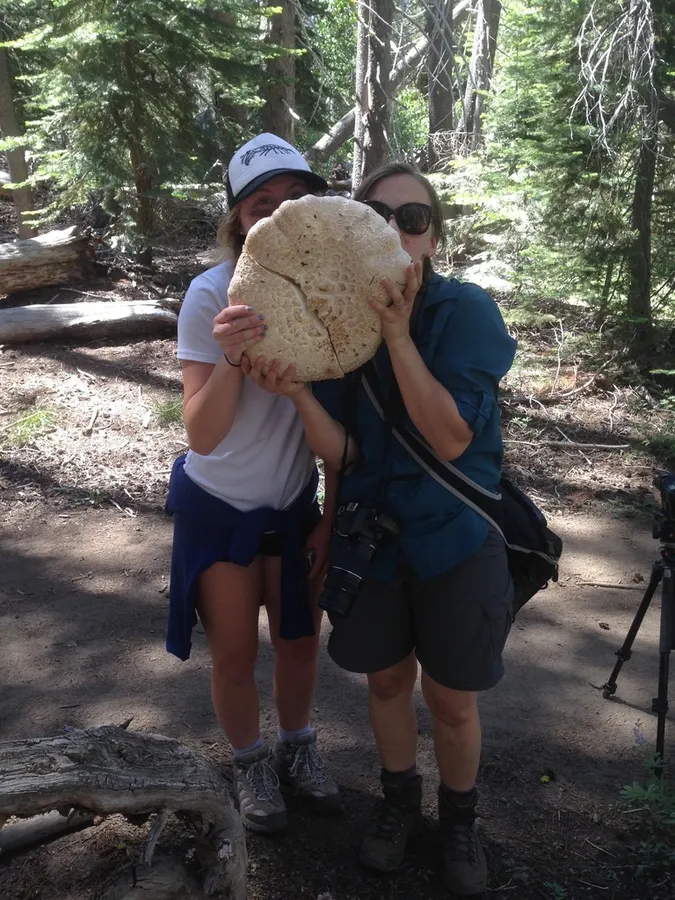
The fruit bodies have convex to flattened caps ranging from 5-50 cm in diameter. Tubuh buah menghasilkan cetakan spora putih untuk buff. Secara mikroskopis, spora agak berbentuk spindle jika dilihat dari sisi, dan eliptik dilihat dari depan; mereka mengukur 8–10.5 dengan 3–5.5 μm dan inamyloid. Sel-sel yang mengandung spora basidia memiliki dinding tipis, berbentuk tongkat dan berpatung spora, ukurannya 26–36 dengan 5–8.8 μm. The cystidia on both the faces and edges of the gills are thin-walled, hyaline (translucent), narrowly club-shaped, and measure 26–36 by 5–8.8 μm. Kutikul cap terdiri dari benang seperti hifa dengan diameter 4.4–8 μm, sedangkan daging cap terbuat dari jaringan hifa (baik tebal dan tipis) ukuran 2.5–6 μm. sambungan apit hadir di hifa.
Habitat dan peran ekologis
Neolentinus ponderosus adalah spesies saprophytic, dan tumbuh di batang dan batang kayu konifer, terutama pondrosa pinus. Hal ini menyebabkan kutu kutu pada kayu, dimana ia memecah hemicellulose dan selulosa untuk menyebabkan perubahan warna cokelat, dan kemudian retakan kayu menjadi potongan-potongan kira-kira kubik. Fruit bodies tumbuh secara terpisah atau dalam kelompok kecil, dan biasanya lebih suka tempat terbuka dengan sinar matahari langsung. Daerah penyebaran jamur ini terbatas pada Pasifik Northwest region di Amerika Utara barat. Fruiting occurs pada akhir musim semi, atau kemudian (musim panas) di daerah pegunungan.
- Habitat atau konteks temuan
- Informasi belum tersedia pada sumber rilis ini.
- Substrat
- Informasi belum tersedia pada sumber rilis ini.
- Peran atau konteks
- Belum dikategorikan pada rilis ini.
Reproduksi
Tubuh buah menghasilkan cetakan spora putih untuk buff. Secara mikroskopis, spora agak berbentuk spindle jika dilihat dari sisi, dan eliptik dilihat dari depan; mereka mengukur 8–10.5 dengan 3–5.5 μm dan inamyloid. Sel-sel yang mengandung spora basidia memiliki dinding tipis, berbentuk tongkat dan berpatung spora, ukurannya 26–36 dengan 5–8.8 μm. The cystidia on both the faces and edges of the gills are thin-walled, hyaline (translucent), narrowly club-shaped, and measure 26–36 by 5–8.8 μm. Kutikul cap terdiri dari benang seperti hifa dengan diameter 4.4–8 μm, sedangkan daging cap terbuat dari jaringan hifa (baik tebal dan tipis) ukuran 2.5–6 μm. sambungan apit hadir di hifa.
Catatan identitas dan cakupan
- Nama diterima mengikuti Catalogue of Life Base2026-09-11; uraian mempertahankan konsep dan nama sumber aslinya.
- Original geographic, specimen and life-cycle scope retained; source import awaits individual editorial review.
- Impor dan terjemahan otomatis belum diperiksa editorial per profil. Struktur reproduktif yang disebutkan tidak membuktikan seluruh siklus hidup diketahui.
- Pengukuran pada uraian mengikuti spesimen, kultur, dan metode sumber; angka tidak diperluas ke semua populasi.
Catatan distribusi dalam narasi mengikuti sumbernya. Dokumentasi spesimen atau foto mengikuti catatan sumber. Bukti wilayah Indonesia dan penilaian konservasi tidak disimpulkan dari gambar.
Melihat dengan konteks
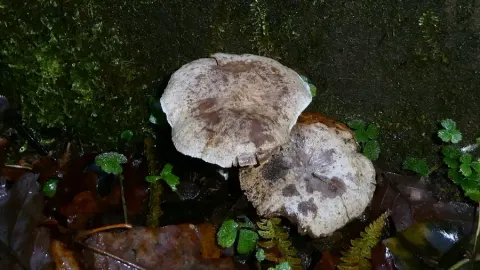
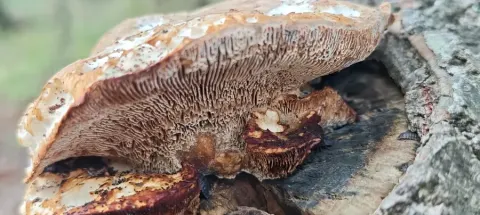
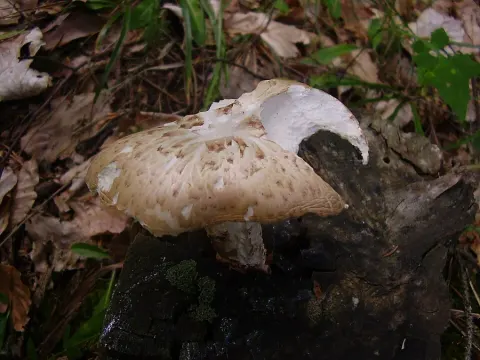
Dokumentasi Neolentinus ponderosus menurut asosiasi foto pada record takson iNaturalist. Kredit: Adam J. Searcy. Identitas mengikuti sumber; bukan penentuan spesimen independen.
- Jenis
- Fotografi
- Kredit
- (c) Adam J. Searcy, some rights reserved (CC BY), uploaded by Adam J. Searcy
- Lisensi
- CC BY 4.0
- Sumber media
- Buka entri sumber
Dokumentasi tambahan
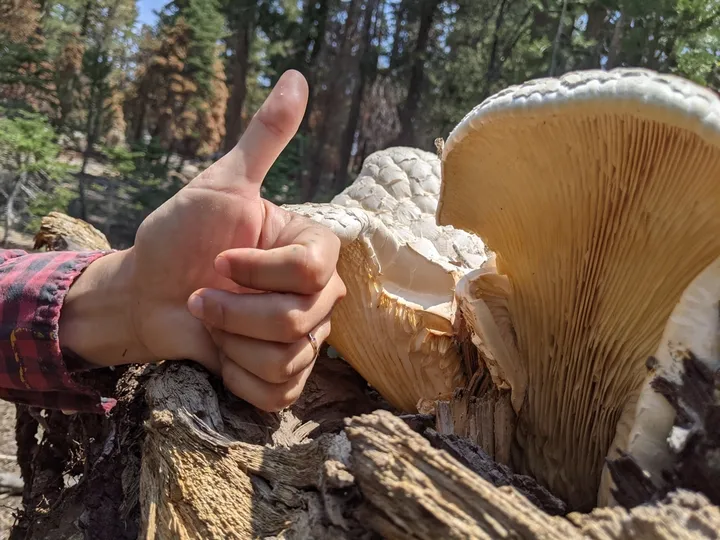
Foto yang diasosiasikan dengan Neolentinus ponderosus pada iNaturalist. Identifikasi mengikuti sumber; bukan penentuan spesimen independen.
Kredit dan penggunaan
(c) Ken-ichi Ueda, some rights reserved (CC BY), uploaded by Ken-ichi Ueda
Ukuran dan format gambar disesuaikan tanpa pemotongan, retus, atau penambahan skala. Lisensi sumber dipertahankan.
Sumber profil
- [1] Neolentinus ponderosus — Wikipedia (en)
- [2] Catalogue of Life Base2026-09-11 — Neolentinus ponderosus
- [3] Dokumentasi visual — Neolentinus ponderosus
- [4] Dokumentasi visual — Neolentinus ponderosus
Rujukan halaman ini
Fungi. Neolentinus ponderosus. Rilis data fungi-2026-10-12-expansion-2. https://fungi-atlas.mgadib.chatgpt.site/jamur/neolentinus-ponderosus/.
Status: impor sumber; pemeriksaan editorial per profil belum selesai. Untuk klaim biologis, gunakan rujukan pada bagian terkait dan periksa konteks sumber aslinya.