01 / Morfologi

Ciri dan struktur

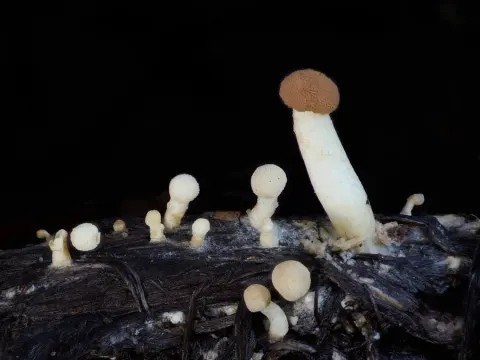
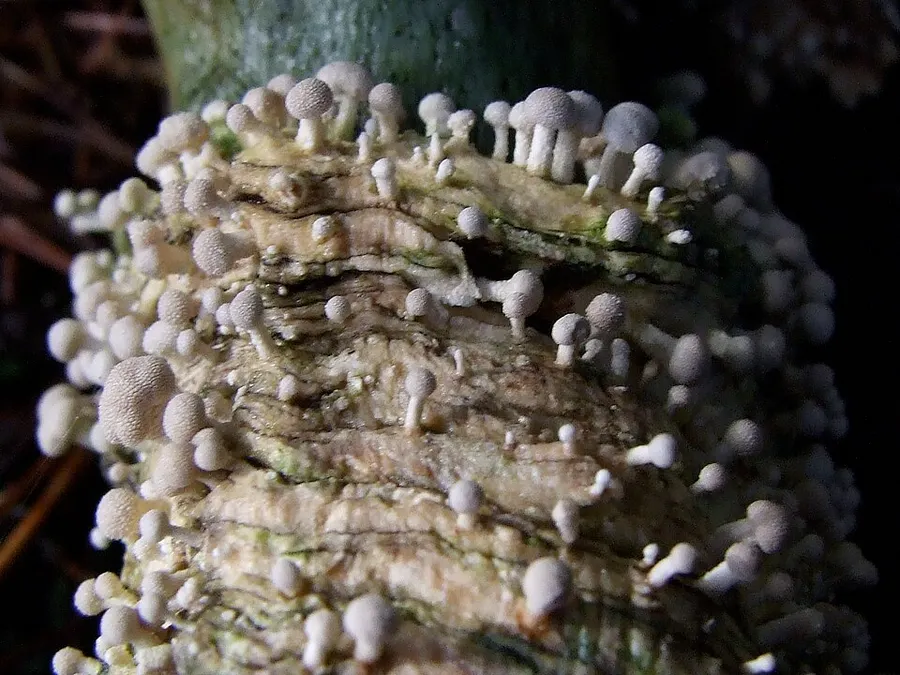
The fruit bodies have a spherical, flattened head that is whitish to cream before becoming brownish. Its white to brownish cylindrical stipe measures 3 – 6 mm by 2 mm thick. The perineum (outer skin) of the head breaks when the fruit body is mature, which exposes the brown and powdery spores inside. Spores are broadly elliptical, smooth, light brown, and measure 8–9 by 4.5–5.5 μm. They contain one or two oil droplets. The asci (spore-bearing cells) are 14–20 by 12–14 μm, nearly spherical and inamyloid. Fruit bodies of O. equina are not edible. Onygena corvina is a similar species that grows on the remains of small mammals in owl pellets, on old feathers, or on tufts of animal hair. Another lookalike, Phleogena faginea, grows on wood and smells of curry.

Sebagian uraian ditampilkan dalam bahasa sumber; terjemahannya belum tersedia atau belum lolos pemeriksaan.

Rujukan: [1]

Pengukuran mengikuti objek, spesimen atau kultur, dan metode yang disebutkan sumber. Baca uraian asli untuk konteks lengkap.

02 / Kehidupan

Habitat dan peran ekologis

The fruit bodies of Onygena equina grow singly or in tufts or clusters, on rotting horns of cattle and sheep, as well as remains of hooves. Fruiting occurs from spring to autumn. Fruit bodies are often overlooked by mushroom hunters, as animal remains are not a typical substrate for macrofungi. The species has been recorded from Europe and North America.

Sebagian uraian ditampilkan dalam bahasa sumber; terjemahannya belum tersedia atau belum lolos pemeriksaan.

Rujukan: [1]

Habitat atau konteks temuan
Informasi belum tersedia pada sumber rilis ini.
Substrat
Informasi belum tersedia pada sumber rilis ini.
Peran atau konteks
Belum dikategorikan pada rilis ini.
Temukan hubungan serupa
03 / Siklus hidup

Reproduksi

The fruit bodies have a spherical, flattened head that is whitish to cream before becoming brownish. Its white to brownish cylindrical stipe measures 3 – 6 mm by 2 mm thick. The perineum (outer skin) of the head breaks when the fruit body is mature, which exposes the brown and powdery spores inside. Spores are broadly elliptical, smooth, light brown, and measure 8–9 by 4.5–5.5 μm. They contain one or two oil droplets. The asci (spore-bearing cells) are 14–20 by 12–14 μm, nearly spherical and inamyloid. Fruit bodies of O. equina are not edible.

Sebagian uraian ditampilkan dalam bahasa sumber; terjemahannya belum tersedia atau belum lolos pemeriksaan.

Rujukan: [1]

Sinonim menurut acuan taksonomi rilis: Lycoperdon equinum; Onygena caespitosa; Onygena mougeotii; Sphaeropus equinus
04 / Batas informasi

Catatan identitas dan cakupan

  • Nama diterima mengikuti Catalogue of Life Base2026-09-11; uraian mempertahankan konsep dan nama sumber aslinya.
  • Original geographic, specimen and life-cycle scope retained; source import awaits individual editorial review.
  • Impor dan terjemahan otomatis belum diperiksa editorial per profil. Struktur reproduktif yang disebutkan tidak membuktikan seluruh siklus hidup diketahui.
  • Pengukuran pada uraian mengikuti spesimen, kultur, dan metode sumber; angka tidak diperluas ke semua populasi.

Catatan distribusi dalam narasi mengikuti sumbernya. Dokumentasi spesimen atau foto mengikuti catatan sumber. Bukti wilayah Indonesia dan penilaian konservasi tidak disimpulkan dari gambar.

05 / Dokumentasi

Melihat dengan konteks

Dokumentasi Onygena equina dari Wikimedia Commons. Onygena equina growing on sheep's horn. In a conifer plantation near Portavadie, Argyll, UK Identifikasi mengikuti record berkas sumber.

Jenis
Fotografi
Kredit
Ben Mitchell Wildeep
Sumber media
Buka entri sumber

Gambar menunjukkan objek menurut identifikasi sumber, bukan verifikasi independen spesimen oleh Fungi. Tidak ada skala baru yang ditambahkan.

06 / Rujukan

Sumber profil

  1. [1] Onygena equina — Wikipedia (en)Bagian sumber: Frozen revision 1378688339
    Tanggal penghimpunan sumber: 2026-10-12
    Teks sumber: CC BY-SA4.0 · Wikipedia contributors
  2. [2] Catalogue of Life Base2026-09-11 — Onygena equinaBagian sumber: ColDP NameUsage.tsv ID 49RM9; accepted species; source 2073
    Tanggal penghimpunan sumber: 2026-10-12
  3. [3] Dokumentasi visual — Onygena equinaBagian sumber: Individual media record; identification follows the source, not independent determination
    Tanggal penghimpunan sumber: 2026-10-12
    Media sumber: Public domain · Ben Mitchell Wildeep

Adaptasi teks: CC BY-SA 4.0. Wikipedia contributors — Onygena equina — Wikipedia (en)

Uraian asli dan riwayat sumber

Riwayat atau halaman sumber

Ringkasan sumber

Onygena equina, commonly known as the horn stalkball, is a species of fungus in the family Onygenaceae. The fungus grows on putrefying hooves and horns, and can digest the keratin in those substrates. Fruit bodies are small and white, with thick stipes supporting a "head" shaped like a flattened sphere. The skin, or peridium, of the head appears powdery or like a white crust, and breaks open in maturity, falling off in irregular pieces to expose the pale reddish-brown powdery spores within. The fungus is known from Europe and North America.

Revisi sumber

Morfologi sumber

The fruit bodies have a spherical, flattened head that is whitish to cream before becoming brownish. Its white to brownish cylindrical stipe measures 3 – 6 mm by 2 mm thick. The perineum (outer skin) of the head breaks when the fruit body is mature, which exposes the brown and powdery spores inside. Spores are broadly elliptical, smooth, light brown, and measure 8–9 by 4.5–5.5 μm. They contain one or two oil droplets. The asci (spore-bearing cells) are 14–20 by 12–14 μm, nearly spherical and inamyloid. Fruit bodies of O. equina are not edible. Onygena corvina is a similar species that grows on the remains of small mammals in owl pellets, on old feathers, or on tufts of animal hair. Another lookalike, Phleogena faginea, grows on wood and smells of curry.

Revisi sumber

Ekologi sumber

The fruit bodies of Onygena equina grow singly or in tufts or clusters, on rotting horns of cattle and sheep, as well as remains of hooves. Fruiting occurs from spring to autumn. Fruit bodies are often overlooked by mushroom hunters, as animal remains are not a typical substrate for macrofungi. The species has been recorded from Europe and North America.

Revisi sumber

Struktur reproduksi sumber

The fruit bodies have a spherical, flattened head that is whitish to cream before becoming brownish. Its white to brownish cylindrical stipe measures 3 – 6 mm by 2 mm thick. The perineum (outer skin) of the head breaks when the fruit body is mature, which exposes the brown and powdery spores inside. Spores are broadly elliptical, smooth, light brown, and measure 8–9 by 4.5–5.5 μm. They contain one or two oil droplets. The asci (spore-bearing cells) are 14–20 by 12–14 μm, nearly spherical and inamyloid. Fruit bodies of O. equina are not edible.

Revisi sumber

Rujukan halaman ini

Fungi. Onygena equina. Rilis data fungi-2026-10-12-expansion-2. https://fungi-atlas.mgadib.chatgpt.site/jamur/onygena-equina/.

Status: impor sumber; pemeriksaan editorial per profil belum selesai. Untuk klaim biologis, gunakan rujukan pada bagian terkait dan periksa konteks sumber aslinya.