01 / Morfologi

Ciri dan struktur

Broad dead areas known as cankers form on the main stem, branches, young twigs, and exposed roots. Most cankers are covered with bark cracks. The fungus forms a dark mat of branching mycelium below the bark, from which arise peg-like hypha that lift and rupture the bark. In the later stages of infection, the bark above the canker is shredded. Ophiognomonia clavigignenti-juglandacearum produces its spores asexually; its sexual form of reproduction has never been observed. Pycnidiospores are released during rainy periods. When the spores make contact with wounds or broken branches, they germinate and penetrate deep into the tree to produce cankers. Infection hyphae typically penetrates through the parenchyma phloem intracellularly but they can also penetrate intercellularly through uni and multicellate xylem ray cells and parenchyma cells. Later, the fungus will produce mycelial mats of stroma and mycelial pegs. Stroma mats will produce uni- or multilocular pycnidia. Inside the pycnidia are branched and unbranched conidiophores with two-celled pycniospores, which later are ejected from the pycnidial ostiole. Additionally, the stroma will produce a peg of interwoven mycelium. These pegs put pressure on the outer peridium of the host bark, which exposes the pycnidia below. These pegs also produce pycnidia that are smaller than the pycnidia in the stroma. While different in size, the spores produced are identical.

Sebagian uraian ditampilkan dalam bahasa sumber; terjemahannya belum tersedia atau belum lolos pemeriksaan.

Rujukan: [1]

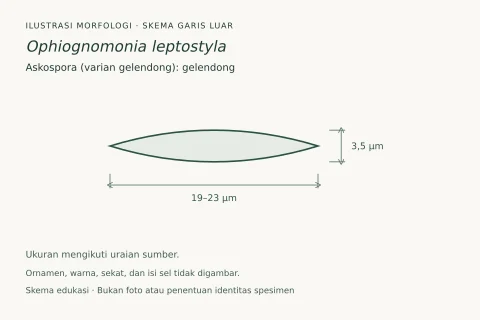
Pengukuran mengikuti objek, spesimen atau kultur, dan metode yang disebutkan sumber. Baca uraian asli untuk konteks lengkap.

02 / Kehidupan

Habitat dan peran ekologis

Butternut, the primary host of O. clavigignenti-juglandacearum, is found in mixed hardwood forests throughout central North America, from New Brunswick to North Carolina. The pathogen was identified as an invasive species in 1967. It was first discovered in Wisconsin, but has since spread to other states and into Canada, later surveys by the Wisconsin Department of Natural Resources revealed that 91% of all living trees in Wisconsin were diseased or cankered. In Virginia and North Carolina, the butternut population has been reduced from 7.5 million to 2.5 million.

Sebagian uraian ditampilkan dalam bahasa sumber; terjemahannya belum tersedia atau belum lolos pemeriksaan.

Rujukan: [1]

Habitat atau konteks temuan
hutan
Substrat
Informasi belum tersedia pada sumber rilis ini.
Peran atau konteks
Belum dikategorikan pada rilis ini.
Temukan hubungan serupa
03 / Siklus hidup

Reproduksi

Ophiognomonia clavigignenti-juglandacearum produces its spores asexually; its sexual form of reproduction has never been observed. Pycnidiospores are released during rainy periods. When the spores make contact with wounds or broken branches, they germinate and penetrate deep into the tree to produce cankers. Infection hyphae typically penetrates through the parenchyma phloem intracellularly but they can also penetrate intercellularly through uni and multicellate xylem ray cells and parenchyma cells. Later, the fungus will produce mycelial mats of stroma and mycelial pegs. Stroma mats will produce uni- or multilocular pycnidia. Inside the pycnidia are branched and unbranched conidiophores with two-celled pycniospores, which later are ejected from the pycnidial ostiole.

Sebagian uraian ditampilkan dalam bahasa sumber; terjemahannya belum tersedia atau belum lolos pemeriksaan.

Rujukan: [1]

Sinonim menurut acuan taksonomi rilis: Sirococcus clavigignenti-juglandacearum
04 / Batas informasi

Catatan identitas dan cakupan

  • Nama diterima mengikuti Catalogue of Life Base2026-09-11; uraian mempertahankan konsep dan nama sumber aslinya.
  • Original geographic, specimen and life-cycle scope retained; source import awaits individual editorial review.
  • Impor dan terjemahan otomatis belum diperiksa editorial per profil. Struktur reproduktif yang disebutkan tidak membuktikan seluruh siklus hidup diketahui.
  • Pengukuran pada uraian mengikuti spesimen, kultur, dan metode sumber; angka tidak diperluas ke semua populasi.

Catatan distribusi dalam narasi mengikuti sumbernya. Dokumentasi spesimen atau foto mengikuti catatan sumber. Bukti wilayah Indonesia dan penilaian konservasi tidak disimpulkan dari gambar.

05 / Dokumentasi

Melihat dengan konteks

Dokumentasi visual yang memenuhi pemeriksaan subjek dan hak penggunaan belum tersedia. Foto gejala, label, dan gambar yang meragukan tidak dihitung.

06 / Rujukan

Sumber profil

  1. [1] Ophiognomonia clavigignenti-juglandacearum — Wikipedia (en)Bagian sumber: Frozen revision 1340813577
    Tanggal penghimpunan sumber: 2026-10-12
    Teks sumber: CC BY-SA4.0 · Wikipedia contributors
  2. [2] Catalogue of Life Base2026-09-11 — Ophiognomonia clavigignenti-juglandacearumBagian sumber: ColDP NameUsage.tsv ID 49XG8; accepted species; source 2073
    Tanggal penghimpunan sumber: 2026-10-12

Adaptasi teks: CC BY-SA 4.0. Wikipedia contributors — Ophiognomonia clavigignenti-juglandacearum — Wikipedia (en)

Uraian asli dan riwayat sumber

Riwayat atau halaman sumber

Ringkasan sumber

Ophiognomonia clavigignenti-juglandacearum is a mitosporic fungus that causes the butternut canker, a lethal disease of butternut trees (Juglans cinerea). It is also known to parasitize other members of the genus Juglans on occasion, and very rarely other related trees including hickories. The fungus is found throughout North America, occurring on up to 91% of butternut trees, and may be threatening the viability of butternut as a species.

Revisi sumber

Morfologi sumber

Broad dead areas known as cankers form on the main stem, branches, young twigs, and exposed roots. Most cankers are covered with bark cracks. The fungus forms a dark mat of branching mycelium below the bark, from which arise peg-like hypha that lift and rupture the bark. In the later stages of infection, the bark above the canker is shredded. Ophiognomonia clavigignenti-juglandacearum produces its spores asexually; its sexual form of reproduction has never been observed. Pycnidiospores are released during rainy periods. When the spores make contact with wounds or broken branches, they germinate and penetrate deep into the tree to produce cankers. Infection hyphae typically penetrates through the parenchyma phloem intracellularly but they can also penetrate intercellularly through uni and multicellate xylem ray cells and parenchyma cells. Later, the fungus will produce mycelial mats of stroma and mycelial pegs. Stroma mats will produce uni- or multilocular pycnidia. Inside the pycnidia are branched and unbranched conidiophores with two-celled pycniospores, which later are ejected from the pycnidial ostiole. Additionally, the stroma will produce a peg of interwoven mycelium. These pegs put pressure on the outer peridium of the host bark, which exposes the pycnidia below. These pegs also produce pycnidia that are smaller than the pycnidia in the stroma. While different in size, the spores produced are identical.

Revisi sumber

Ekologi sumber

Butternut, the primary host of O. clavigignenti-juglandacearum, is found in mixed hardwood forests throughout central North America, from New Brunswick to North Carolina. The pathogen was identified as an invasive species in 1967. It was first discovered in Wisconsin, but has since spread to other states and into Canada, later surveys by the Wisconsin Department of Natural Resources revealed that 91% of all living trees in Wisconsin were diseased or cankered. In Virginia and North Carolina, the butternut population has been reduced from 7.5 million to 2.5 million.

Revisi sumber

Struktur reproduksi sumber

Ophiognomonia clavigignenti-juglandacearum produces its spores asexually; its sexual form of reproduction has never been observed. Pycnidiospores are released during rainy periods. When the spores make contact with wounds or broken branches, they germinate and penetrate deep into the tree to produce cankers. Infection hyphae typically penetrates through the parenchyma phloem intracellularly but they can also penetrate intercellularly through uni and multicellate xylem ray cells and parenchyma cells. Later, the fungus will produce mycelial mats of stroma and mycelial pegs. Stroma mats will produce uni- or multilocular pycnidia. Inside the pycnidia are branched and unbranched conidiophores with two-celled pycniospores, which later are ejected from the pycnidial ostiole.

Revisi sumber

Rujukan halaman ini

Fungi. Ophiognomonia clavigignenti-juglandacearum. Rilis data fungi-2026-10-12-expansion-2. https://fungi-atlas.mgadib.chatgpt.site/jamur/ophiognomonia-clavigignenti-juglandacearum/.

Status: impor sumber; pemeriksaan editorial per profil belum selesai. Untuk klaim biologis, gunakan rujukan pada bagian terkait dan periksa konteks sumber aslinya.