01 / Morfologi

Ciri dan struktur

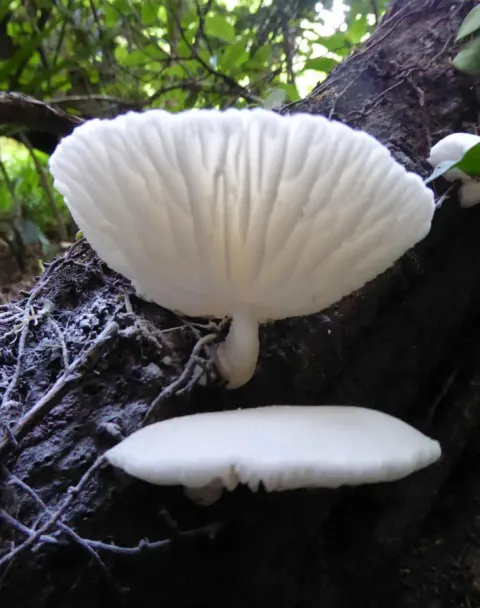
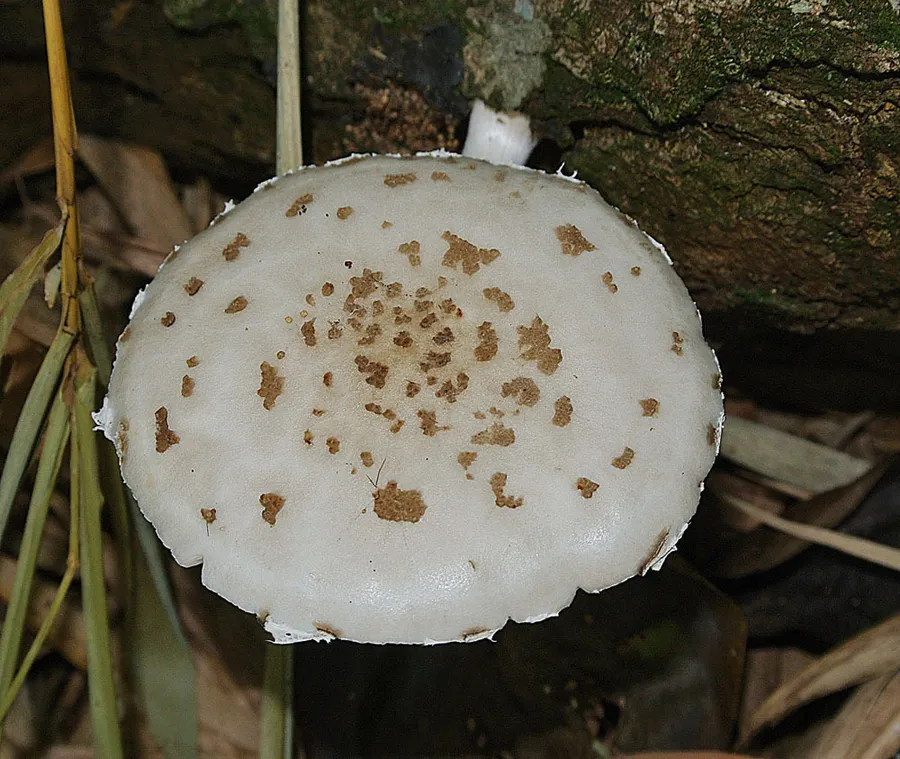
Oudemansiella canarii is a white, pilliate stipate mushroom that grows on fallen, decaying, and wet logs. Some of its determining features are its subdeccurent gill type and a piliate stipate stipe. This species of mushroom produces basidiospores. The cap of O. canarii is also has a determining feature of intact and ruptured warts on the cap. The life cycle of O. canarii is similar to that of most Agaricales in the way that the primary mycelium produced by the germination of basidiospore is of short duration. It is haploid with septate hyphae. The cells contain oil globules, vacuoles and are short and uninucleate. As a result of hyphal fusions, the primary mycelium becomes binucleate usually without clamp connections rarely with clamp connections. The mycelium with binucleate cells is called secondary or dikaryotie mycelium. It is long-lived and abundant. It produces mushrooms year after year. The hyphae are long and branched. Commonly the hyphae interlace and twist to form thick, white hyphal cords called the rhizomorphs which bear the fruiting bodies.

Sebagian uraian ditampilkan dalam bahasa sumber; terjemahannya belum tersedia atau belum lolos pemeriksaan.

Rujukan: [1]

Pengukuran mengikuti objek, spesimen atau kultur, dan metode yang disebutkan sumber. Baca uraian asli untuk konteks lengkap.

02 / Kehidupan

Habitat dan peran ekologis

This species gets its energy through being a saprobe of dead or decaying wood. Some other organisms that O. canarii can be associated with certain types of bacteria, such as Spirochaeta cytophaga, due their ability to break down cellulose. This relationship would be described as a commensalitic relationship due to the fact that the S. cytophaga helps break down the cellulose in the decaying or rotting wood which O. canarii uses for its nutrition. As previously stated, O. canarii is a saprobe of wood in the way that it feeds off of dead or decaying wood. The habitat that O. canarii can be readily found would be in tropical forests or forest that contain types of hardwood such as evergreen. These types of trees are commonly found in Tropical USA, Central and South America and some parts of Australia. The geographic distribution of O. canarii is concentrated mostly around the tropical areas such as that as previously stated, of Argentina, tropical Central and North America, with a smaller density located in North Australia.

Sebagian uraian ditampilkan dalam bahasa sumber; terjemahannya belum tersedia atau belum lolos pemeriksaan.

Rujukan: [1]

Habitat atau konteks temuan
hutan
Substrat
Informasi belum tersedia pada sumber rilis ini.
Peran atau konteks
Belum dikategorikan pada rilis ini.
Temukan hubungan serupa
03 / Siklus hidup

Reproduksi

Oudemansiella canarii is a white, pilliate stipate mushroom that grows on fallen, decaying, and wet logs. Some of its determining features are its subdeccurent gill type and a piliate stipate stipe. This species of mushroom produces basidiospores. The cap of O. canarii is also has a determining feature of intact and ruptured warts on the cap. The life cycle of O. canarii is similar to that of most Agaricales in the way that the primary mycelium produced by the germination of basidiospore is of short duration. It is haploid with septate hyphae. The cells contain oil globules, vacuoles and are short and uninucleate. As a result of hyphal fusions, the primary mycelium becomes binucleate usually without clamp connections rarely with clamp connections.

Sebagian uraian ditampilkan dalam bahasa sumber; terjemahannya belum tersedia atau belum lolos pemeriksaan.

Rujukan: [1]

Sinonim menurut acuan taksonomi rilis: Agaricus canarii; Amanitopsis canarii; Pseudofarinaceus canarii; Vaginata canarii
04 / Batas informasi

Catatan identitas dan cakupan

  • Nama diterima mengikuti Catalogue of Life Base2026-09-11; uraian mempertahankan konsep dan nama sumber aslinya.
  • Original geographic, specimen and life-cycle scope retained; source import awaits individual editorial review.
  • Impor dan terjemahan otomatis belum diperiksa editorial per profil. Struktur reproduktif yang disebutkan tidak membuktikan seluruh siklus hidup diketahui.
  • Pengukuran pada uraian mengikuti spesimen, kultur, dan metode sumber; angka tidak diperluas ke semua populasi.

Catatan distribusi dalam narasi mengikuti sumbernya. Dokumentasi spesimen atau foto mengikuti catatan sumber. Bukti wilayah Indonesia dan penilaian konservasi tidak disimpulkan dari gambar.

05 / Dokumentasi

Melihat dengan konteks

Dokumentasi Oudemansiella canarii menurut asosiasi foto pada record takson iNaturalist. Kredit: Dick Culbert. Identitas mengikuti sumber; bukan penentuan spesimen independen.

Jenis
Fotografi
Kredit
(c) Dick Culbert, some rights reserved (CC BY)
Lisensi
CC BY 4.0
Sumber media
Buka entri sumber

Gambar menunjukkan objek menurut identifikasi sumber, bukan verifikasi independen spesimen oleh Fungi. Tidak ada skala baru yang ditambahkan.

06 / Rujukan

Sumber profil

  1. [1] Oudemansiella canarii — Wikipedia (en)Bagian sumber: Frozen revision 1224015372
    Tanggal penghimpunan sumber: 2026-10-12
    Teks sumber: CC BY-SA4.0 · Wikipedia contributors
  2. [2] Catalogue of Life Base2026-09-11 — Oudemansiella canariiBagian sumber: ColDP NameUsage.tsv ID 4B8M8; accepted species; source 2073
    Tanggal penghimpunan sumber: 2026-10-12
  3. [3] Dokumentasi visual — Oudemansiella canariiBagian sumber: Individual media record; identification follows the source, not independent determination
    Tanggal penghimpunan sumber: 2026-10-12
    Media sumber: CC BY 4.0 · (c) Dick Culbert, some rights reserved (CC BY)

Adaptasi teks: CC BY-SA 4.0. Wikipedia contributors — Oudemansiella canarii — Wikipedia (en)

Uraian asli dan riwayat sumber

Riwayat atau halaman sumber

Ringkasan sumber

Oudemansiella canarii is a species of gilled mushroom in the family Physalacriaceae. It is found in tropical America, southeast Asia, and Australia, where it grows as a saprotroph on hardwood logs.

Revisi sumber

Morfologi sumber

Oudemansiella canarii is a white, pilliate stipate mushroom that grows on fallen, decaying, and wet logs. Some of its determining features are its subdeccurent gill type and a piliate stipate stipe. This species of mushroom produces basidiospores. The cap of O. canarii is also has a determining feature of intact and ruptured warts on the cap. The life cycle of O. canarii is similar to that of most Agaricales in the way that the primary mycelium produced by the germination of basidiospore is of short duration. It is haploid with septate hyphae. The cells contain oil globules, vacuoles and are short and uninucleate. As a result of hyphal fusions, the primary mycelium becomes binucleate usually without clamp connections rarely with clamp connections. The mycelium with binucleate cells is called secondary or dikaryotie mycelium. It is long-lived and abundant. It produces mushrooms year after year. The hyphae are long and branched. Commonly the hyphae interlace and twist to form thick, white hyphal cords called the rhizomorphs which bear the fruiting bodies.

Revisi sumber

Ekologi sumber

This species gets its energy through being a saprobe of dead or decaying wood. Some other organisms that O. canarii can be associated with certain types of bacteria, such as Spirochaeta cytophaga, due their ability to break down cellulose. This relationship would be described as a commensalitic relationship due to the fact that the S. cytophaga helps break down the cellulose in the decaying or rotting wood which O. canarii uses for its nutrition. As previously stated, O. canarii is a saprobe of wood in the way that it feeds off of dead or decaying wood. The habitat that O. canarii can be readily found would be in tropical forests or forest that contain types of hardwood such as evergreen. These types of trees are commonly found in Tropical USA, Central and South America and some parts of Australia. The geographic distribution of O. canarii is concentrated mostly around the tropical areas such as that as previously stated, of Argentina, tropical Central and North America, with a smaller density located in North Australia.

Revisi sumber

Struktur reproduksi sumber

Oudemansiella canarii is a white, pilliate stipate mushroom that grows on fallen, decaying, and wet logs. Some of its determining features are its subdeccurent gill type and a piliate stipate stipe. This species of mushroom produces basidiospores. The cap of O. canarii is also has a determining feature of intact and ruptured warts on the cap. The life cycle of O. canarii is similar to that of most Agaricales in the way that the primary mycelium produced by the germination of basidiospore is of short duration. It is haploid with septate hyphae. The cells contain oil globules, vacuoles and are short and uninucleate. As a result of hyphal fusions, the primary mycelium becomes binucleate usually without clamp connections rarely with clamp connections.

Revisi sumber

Rujukan halaman ini

Fungi. Oudemansiella canarii. Rilis data fungi-2026-10-12-expansion-2. https://fungi-atlas.mgadib.chatgpt.site/jamur/oudemansiella-canarii/.

Status: impor sumber; pemeriksaan editorial per profil belum selesai. Untuk klaim biologis, gunakan rujukan pada bagian terkait dan periksa konteks sumber aslinya.