Ciri dan struktur
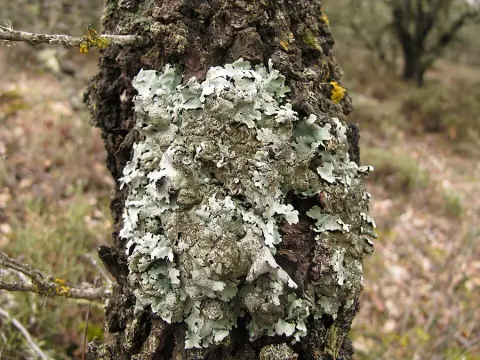
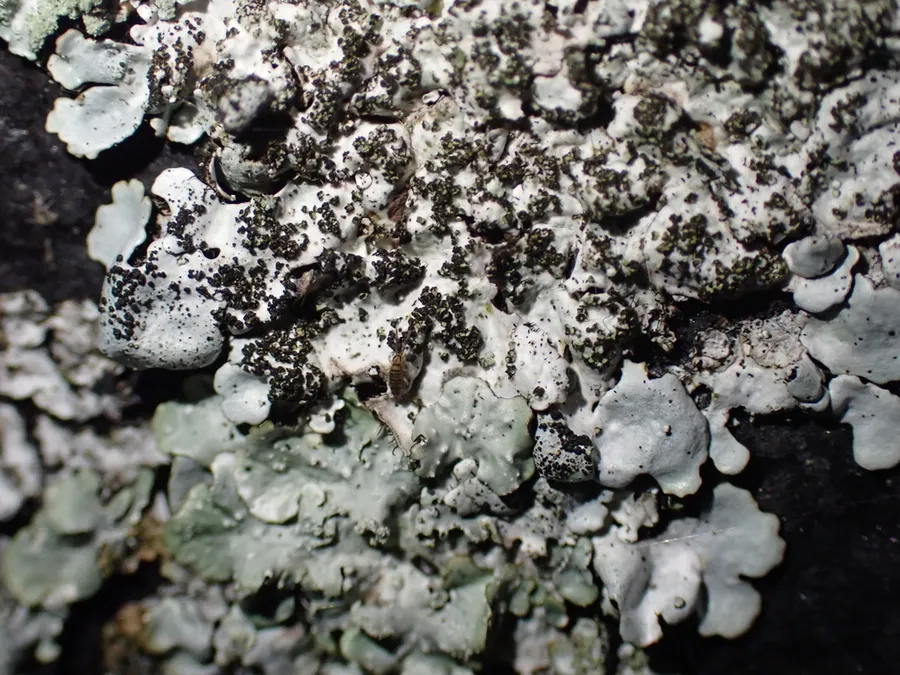
Parmelina pastillifera forms a closely attached, rosette-like thallus usually 4–8 cm across, occasionally reaching up to about 15 cm. The are relatively narrow (about 3–7 mm wide), more or less linear and lie close together or slightly overlapping, often with a gently wavy appearance near the centre. Their margins are broadly rounded but irregularly indented, with short, hair-like in the angles between adjacent lobes. The upper surface is mineral grey with a bluish tinge, faintly spotted and often dusted with a pale towards the lobe tips. The underside is black, becoming brown near the lobe edges, and bears unbranched rhizines that extend right out to the margins. The thallus is characteristically isidiate. The isidia are blue-black, , and may be scattered across the lobes or form a dense covering in the centre. They begin as short, flat-topped outgrowths but their tips soon develop a raised rim, giving them a button-like appearance, and they can become knobbly, twisted and sometimes merge. Where apothecia are present they are reported to resemble those of Parmelina carporrhizans. In standard chemical spot tests, the reacts K+ (yellow), while the medulla is C+ (carmine-red), KC+ (red), and negative with K and Pd and under UV light, indicating the presence of atranorin and lecanoric acid.
Habitat dan peran ekologis
Parmelina pastillifera occurs in Europe and Great Britain. It grows on well-lit, nutrient-rich or nutrient-enriched bark, particularly on the branches of Fraxinus and Acer, and also grows on siliceous rocks, roof tiles and memorials in similarly exposed positions.
- Habitat atau konteks temuan
- Informasi belum tersedia pada sumber rilis ini.
- Substrat
- Informasi belum tersedia pada sumber rilis ini.
- Peran atau konteks
- Pembentuk liken
Reproduksi
The thallus is characteristically isidiate. The isidia are blue-black, , and may be scattered across the lobes or form a dense covering in the centre. They begin as short, flat-topped outgrowths but their tips soon develop a raised rim, giving them a button-like appearance, and they can become knobbly, twisted and sometimes merge. Where apothecia are present they are reported to resemble those of Parmelina carporrhizans. In standard chemical spot tests, the reacts K+ (yellow), while the medulla is C+ (carmine-red), KC+ (red), and negative with K and Pd and under UV light, indicating the presence of atranorin and lecanoric acid.
Catatan identitas dan cakupan
- Nama diterima mengikuti Catalogue of Life Base2026-09-11; uraian mempertahankan konsep dan nama sumber aslinya.
- Original geographic, specimen and life-cycle scope retained; source import awaits individual editorial review.
- Impor dan terjemahan otomatis belum diperiksa editorial per profil. Struktur reproduktif yang disebutkan tidak membuktikan seluruh siklus hidup diketahui.
- Pengukuran pada uraian mengikuti spesimen, kultur, dan metode sumber; angka tidak diperluas ke semua populasi.
Catatan distribusi dalam narasi mengikuti sumbernya. Dokumentasi spesimen atau foto mengikuti catatan sumber. Bukti wilayah Indonesia dan penilaian konservasi tidak disimpulkan dari gambar.
Melihat dengan konteks
Dokumentasi Parmelina pastillifera menurut asosiasi foto pada record takson iNaturalist. Kredit: Fotografer tidak dicantumkan. Sumber observasi iNaturalist; pengunggah: Kian Hayles-Cotton. Identitas mengikuti sumber; bukan penentuan spesimen independen.
- Jenis
- Fotografi
- Kredit
- Fotografer tidak dicantumkan. Sumber observasi iNaturalist; pengunggah: Kian Hayles-Cotton
- Lisensi
- CC0 1.0
- Sumber media
- Buka entri sumber
Dokumentasi tambahan
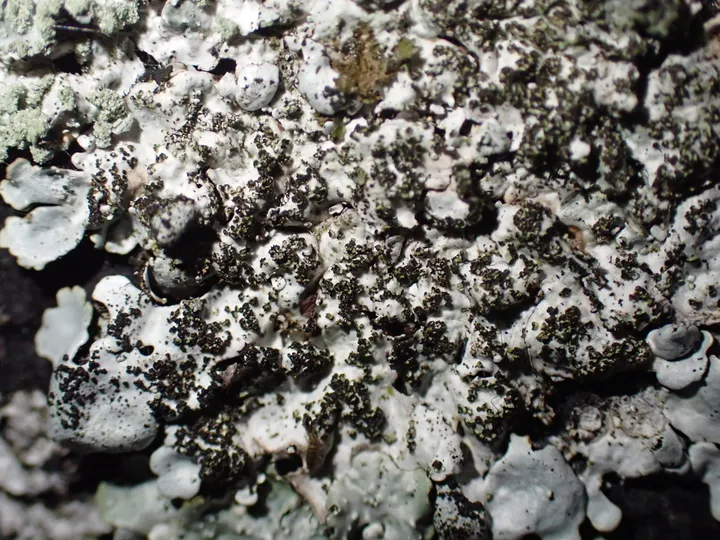
Foto yang diasosiasikan dengan Parmelina pastillifera pada iNaturalist. Identifikasi mengikuti sumber; bukan penentuan spesimen independen.
Kredit dan penggunaan
no rights reserved
Ukuran dan format gambar disesuaikan tanpa pemotongan, retus, atau penambahan skala. Lisensi sumber dipertahankan.
Sumber profil
- [1] Parmelina pastillifera — Wikipedia (en)
- [2] Catalogue of Life Base2026-09-11 — Parmelina pastillifera
- [3] Dokumentasi visual — Parmelina pastillifera
- [4] Dokumentasi visual — Parmelina pastillifera
Rujukan halaman ini
Fungi. Parmelina pastillifera. Rilis data fungi-2026-10-12-expansion-2. https://fungi-atlas.mgadib.chatgpt.site/jamur/parmelina-pastillifera/.
Status: impor sumber; pemeriksaan editorial per profil belum selesai. Untuk klaim biologis, gunakan rujukan pada bagian terkait dan periksa konteks sumber aslinya.