Ciri dan struktur
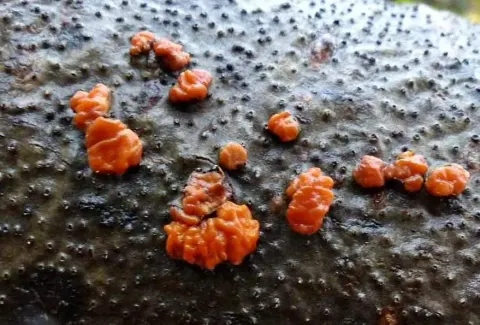
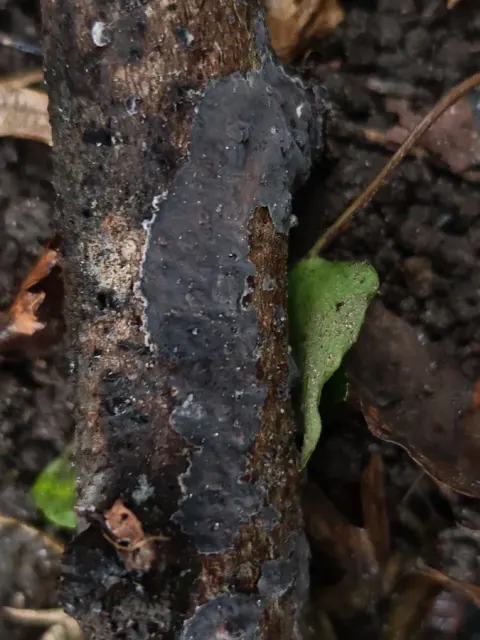
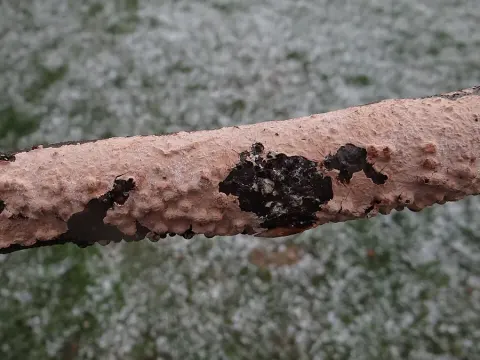
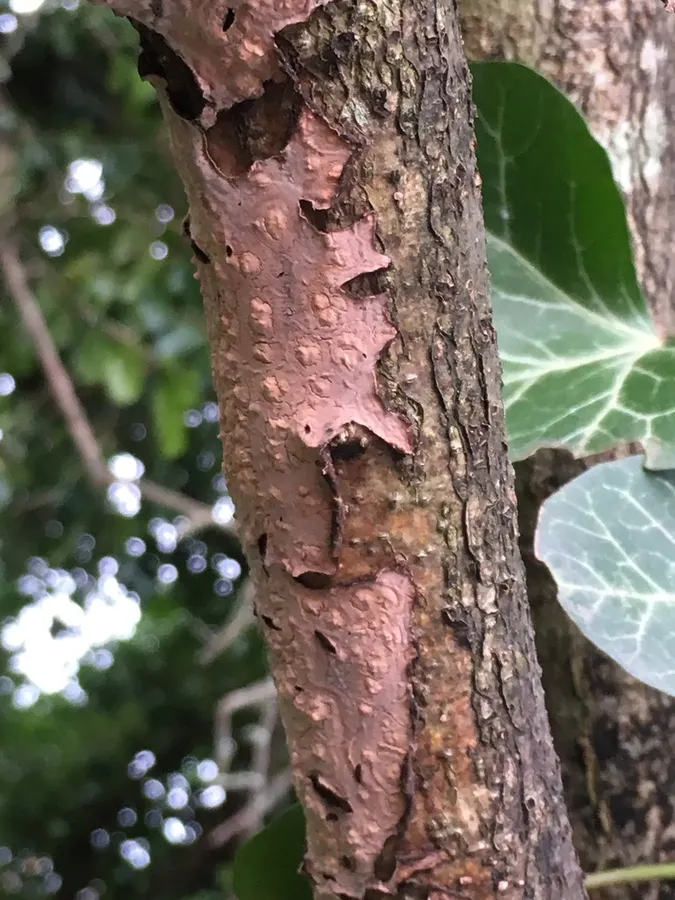
Peniophora quercina produces resupinate fruit bodies that vary in appearance depending on whether they are wet or dry. They are up to 0.5 mm thick, and form irregular patches that sometimes measure several centimetres across. When fresh, the surface is reminiscent of jelly or wax, and can be smooth or warty, varying in colour from a dull blue to lilac. Initially, they are firmly attached to the wood on which they are growing, but as they dry, the edges roll inwards There is a relatively thick layer of gelatinous flesh. Apart from a brown layer close to the wood, the flesh is hyaline. The species has no distinctive odour or taste, and is inedible. Peniophora quercina produces spores that take the shape of a curved cylinder (sausage shaped), The spores are borne on basidia, with four spores per basidium, which measure 50 to 70 by 5 to 12 μm. The species has hyaline cystidia with thick cell walls, which are "heavily encrusted with crystalline material". The cystidia are often buried within the fruit body as it grows, but can be found in large numbers. They have been variously described as spindle-shaped or conical, and measure 25 to 35 by 10 to 15 μm. The hyphae have clamp connections, and the base of the fruit body is made up of brown hyphae with moderately thick cell walls, measuring 3 to 4 μm in width.
Habitat dan peran ekologis
Peniophora quercina biasanya tumbuh di atas kayu mati, yang dapat melekat pada pohon atau jatuh, Ini ditemukan di Eropa, di mana itu sangat umum. Spesies ini juga telah diidentifikasi dalam sapwood hidup, meskipun itu laten pada saat ini, dan kemungkinan bahwa itu menunggu sampai kayu mulai mati (ketika lebih kering, tetapi mengandung lebih banyak oksigen) sebelum mycelia mulai tumbuh. When the spesies diinokulasi ke dalam kayu hidup, itu tumbuh, tapi hanya di sekitar luka inoculation; spesies tidak menyebar seperti yang akan dilakukan pada kayu mati.
- Habitat atau konteks temuan
- Informasi belum tersedia pada sumber rilis ini.
- Substrat
- Informasi belum tersedia pada sumber rilis ini.
- Peran atau konteks
- Belum dikategorikan pada rilis ini.
Reproduksi
Peniophora quercina produces spores that take the shape of a curved cylinder (sausage shaped), The spores are borne on basidia, with four spores per basidium, which measure 50 to 70 by 5 to 12 μm. The species has hyaline cystidia with thick cell walls, which are "heavily encrusted with crystalline material". The cystidia are often buried within the fruit body as it grows, but can be found in large numbers. They have been variously described as spindle-shaped or conical, and measure 25 to 35 by 10 to 15 μm. The hyphae have clamp connections, and the base of the fruit body is made up of brown hyphae with moderately thick cell walls, measuring 3 to 4 μm in width.
Catatan identitas dan cakupan
- Nama diterima mengikuti Catalogue of Life Base2026-09-11; uraian mempertahankan konsep dan nama sumber aslinya.
- Original geographic, specimen and life-cycle scope retained; source import awaits individual editorial review.
- Impor dan terjemahan otomatis belum diperiksa editorial per profil. Struktur reproduktif yang disebutkan tidak membuktikan seluruh siklus hidup diketahui.
- Pengukuran pada uraian mengikuti spesimen, kultur, dan metode sumber; angka tidak diperluas ke semua populasi.
Catatan distribusi dalam narasi mengikuti sumbernya. Dokumentasi spesimen atau foto mengikuti catatan sumber. Bukti wilayah Indonesia dan penilaian konservasi tidak disimpulkan dari gambar.
Melihat dengan konteks
Dokumentasi Peniophora quercina menurut asosiasi foto pada record takson iNaturalist. Kredit: Paul Cook. Identitas mengikuti sumber; bukan penentuan spesimen independen.
- Jenis
- Fotografi
- Kredit
- (c) Paul Cook, some rights reserved (CC BY), uploaded by Paul Cook
- Lisensi
- CC BY 4.0
- Sumber media
- Buka entri sumber
Dokumentasi tambahan
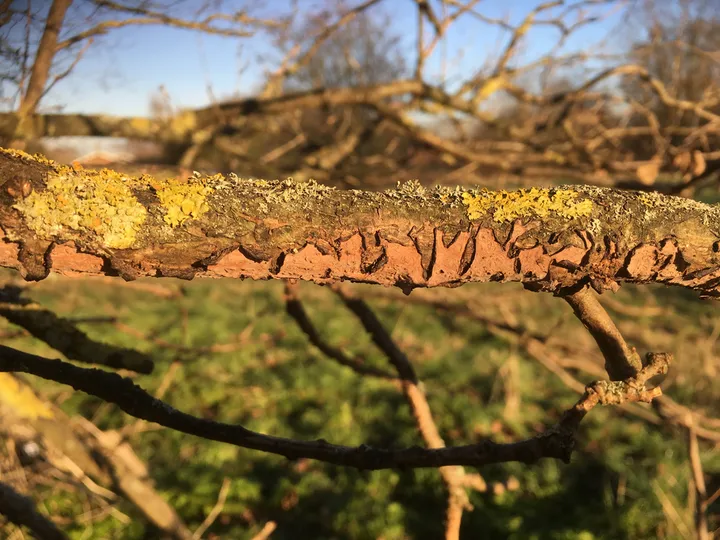
Foto yang diasosiasikan dengan Peniophora quercina pada iNaturalist. Identifikasi mengikuti sumber; bukan penentuan spesimen independen.
Kredit dan penggunaan
(c) Paul Cook, some rights reserved (CC BY), uploaded by Paul Cook
Ukuran dan format gambar disesuaikan tanpa pemotongan, retus, atau penambahan skala. Lisensi sumber dipertahankan.
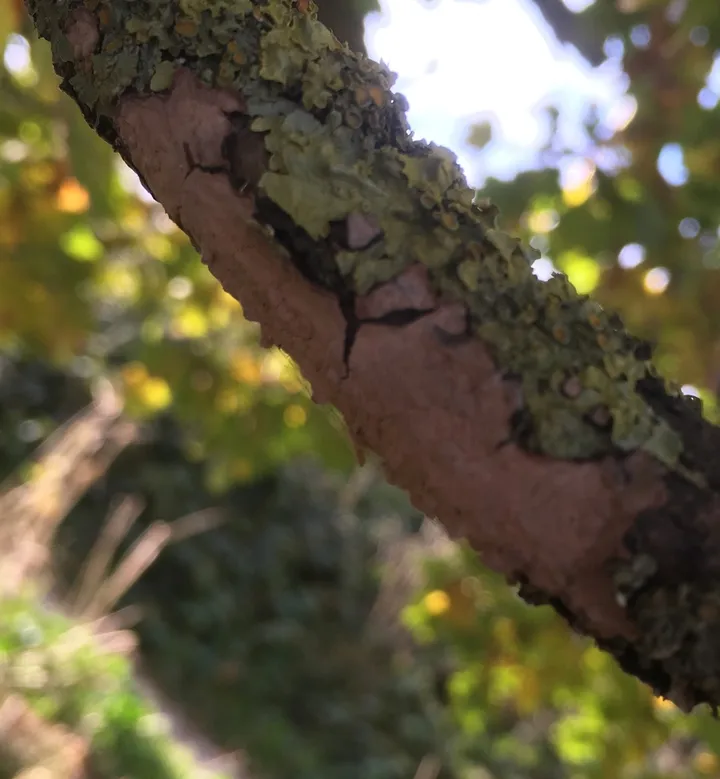
Foto yang diasosiasikan dengan Peniophora quercina pada iNaturalist. Identifikasi mengikuti sumber; bukan penentuan spesimen independen.
Kredit dan penggunaan
(c) Paul Cook, some rights reserved (CC BY), uploaded by Paul Cook
Ukuran dan format gambar disesuaikan tanpa pemotongan, retus, atau penambahan skala. Lisensi sumber dipertahankan.
Sumber profil
- [1] Peniophora quercina — Wikipedia (en)
- [2] Catalogue of Life Base2026-09-11 — Peniophora quercina
- [3] Dokumentasi visual — Peniophora quercina
- [4] Dokumentasi visual — Peniophora quercina
- [5] Dokumentasi visual — Peniophora quercina
Rujukan halaman ini
Fungi. Peniophora quercina. Rilis data fungi-2026-10-12-expansion-2. https://fungi-atlas.mgadib.chatgpt.site/jamur/peniophora-quercina/.
Status: impor sumber; pemeriksaan editorial per profil belum selesai. Untuk klaim biologis, gunakan rujukan pada bagian terkait dan periksa konteks sumber aslinya.