Ciri dan struktur
The cap is initially conical before expanding to become broadly conical with a pointed umbo; it reaches a diameter of 2 – 5 cm. The cap surface is smooth, and marked by a variable number of raised radial grooves extending from the center of the cap to the margin. Depending on the age of the fruit body and the levels of moisture in the environment, the cap may be sticky or moist. When hydrated, the cap color is orange-red to yellow-brown; the color fades to reddish yellow, gold-colored, or tawny when dry. The cap flesh is the same color as the cap surface. The gills are slightly adnexed and seceding, and crowded closely together. They are initially pallid before becoming fulvous to deep reddish-yellow, slightly spotted, and shining. The stem is 6 – 8 cm long by 0.4 – 0.6 cm thick, and roughly equal in width throughout its length. The stem surface is smooth, and the stem flesh has a cartilage-like consistency. The base of the stem is radicating, that is, it extends deep into the substrate. Its color is dark red, lightening to pale reddish-yellow near the top. The spore print is colored cinnamon to rusty brown. The spores are broadly egg-shaped in face view, and somewhat elliptical in side view, with a flattened suprahilar area; they have dimensions of 7-10 by 4-5 μm. The basidia (spore-bearing cells) are four-spored and measure 18–22 by 3.5–5 μm. There are no clamp connections in the hyphae.
Habitat dan peran ekologis
Fruit bodies of Phaeocollybia christinae grow scattered or in groups, deeply rooted in moss or leaf litter. Suspected to be mycorrhizal, they usually appear under conifer trees, particularly spruce. The fungus is found in Europe and eastern North America.
- Habitat atau konteks temuan
- Informasi belum tersedia pada sumber rilis ini.
- Substrat
- Informasi belum tersedia pada sumber rilis ini.
- Peran atau konteks
- Mitra tumbuhan
Reproduksi
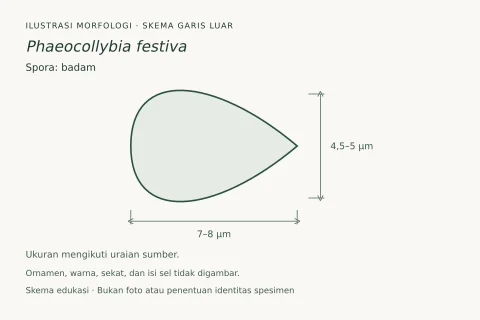
The spore print is colored cinnamon to rusty brown. The spores are broadly egg-shaped in face view, and somewhat elliptical in side view, with a flattened suprahilar area; they have dimensions of 7-10 by 4-5 μm. The basidia (spore-bearing cells) are four-spored and measure 18–22 by 3.5–5 μm. There are no clamp connections in the hyphae.
Catatan identitas dan cakupan
- Nama diterima mengikuti Catalogue of Life Base2026-09-11; uraian mempertahankan konsep dan nama sumber aslinya.
- Original geographic, specimen and life-cycle scope retained; source import awaits individual editorial review.
- Impor dan terjemahan otomatis belum diperiksa editorial per profil. Struktur reproduktif yang disebutkan tidak membuktikan seluruh siklus hidup diketahui.
- Pengukuran pada uraian mengikuti spesimen, kultur, dan metode sumber; angka tidak diperluas ke semua populasi.
Catatan distribusi dalam narasi mengikuti sumbernya. Dokumentasi spesimen atau foto mengikuti catatan sumber. Bukti wilayah Indonesia dan penilaian konservasi tidak disimpulkan dari gambar.
Melihat dengan konteks
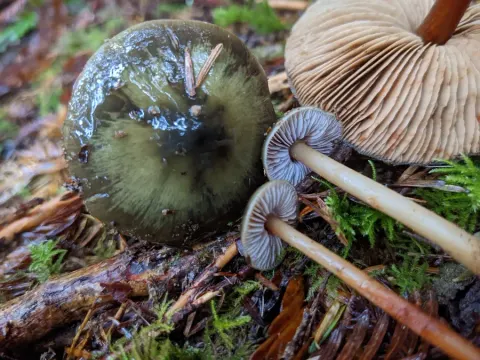
Dokumentasi Phaeocollybia christinae menurut asosiasi foto pada record takson iNaturalist. Kredit: Django Grootmyers. Identitas mengikuti sumber; bukan penentuan spesimen independen.
- Jenis
- Fotografi
- Kredit
- (c) Django Grootmyers, some rights reserved (CC BY-SA), uploaded by Django Grootmyers
- Lisensi
- CC BY-SA 4.0
- Sumber media
- Buka entri sumber
Dokumentasi tambahan
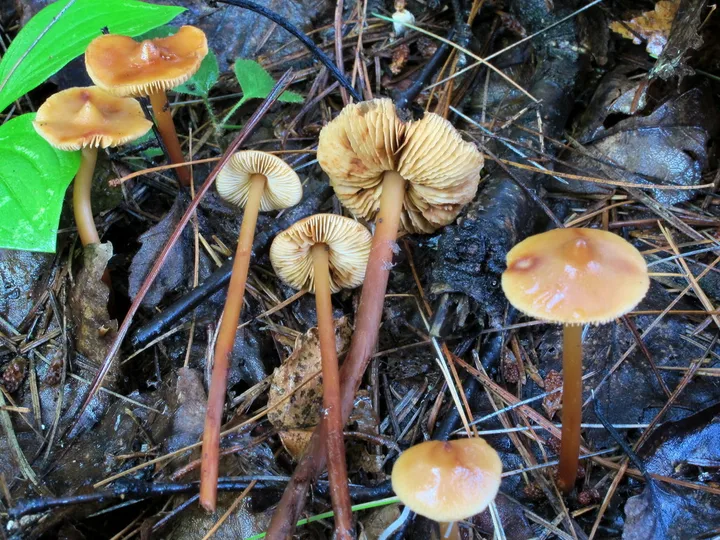
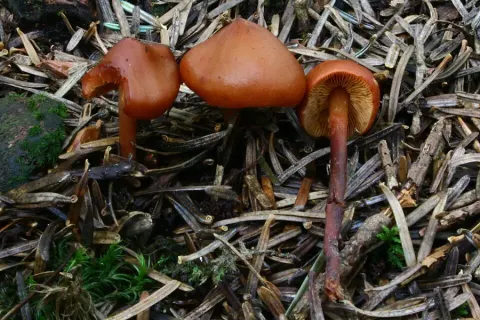
Foto yang diasosiasikan dengan Phaeocollybia christinae pada iNaturalist. Identifikasi mengikuti sumber; bukan penentuan spesimen independen.
Kredit dan penggunaan
(c) mycowalt, some rights reserved (CC BY-SA), uploaded by mycowalt
Ukuran dan format gambar disesuaikan tanpa pemotongan, retus, atau penambahan skala. Lisensi sumber dipertahankan.
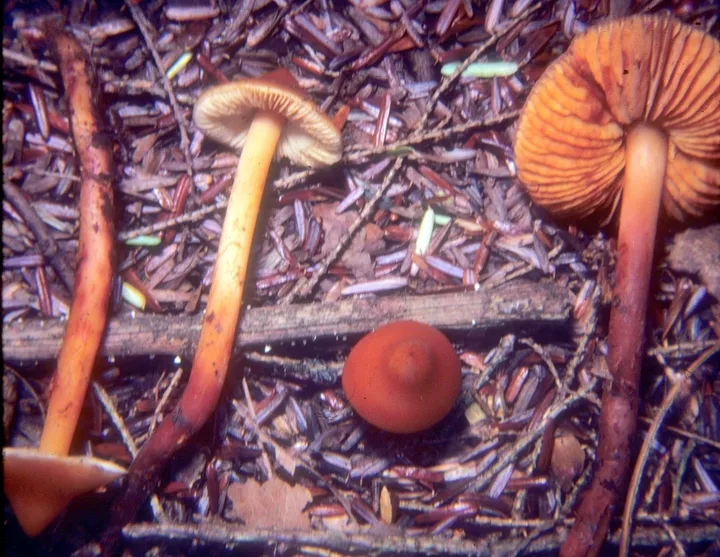
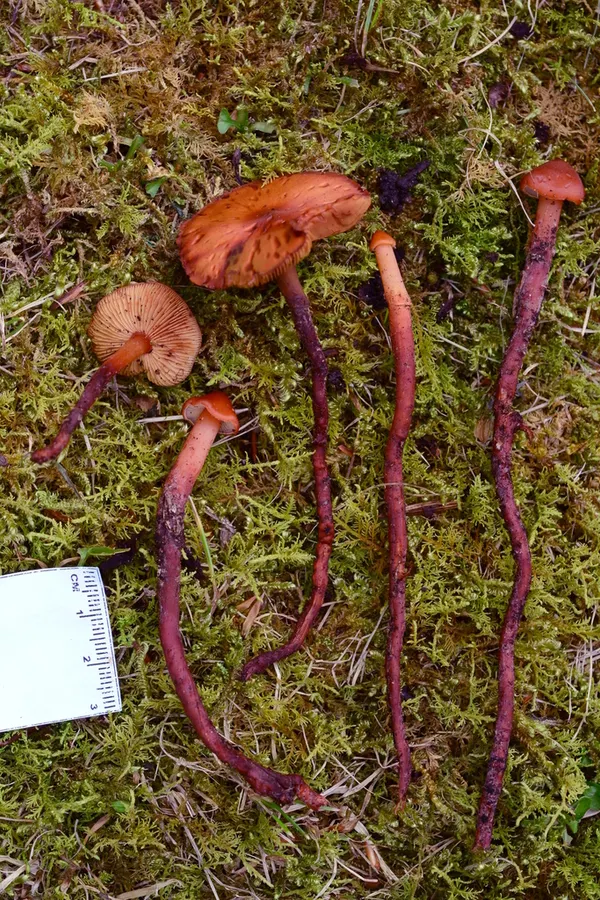
Foto yang diasosiasikan dengan Phaeocollybia christinae pada iNaturalist. Identifikasi mengikuti sumber; bukan penentuan spesimen independen.
Kredit dan penggunaan
(c) mycowalt, some rights reserved (CC BY-SA), uploaded by mycowalt
Ukuran dan format gambar disesuaikan tanpa pemotongan, retus, atau penambahan skala. Lisensi sumber dipertahankan.
Sumber profil
- [1] Phaeocollybia christinae — Wikipedia (en)
- [2] Catalogue of Life Base2026-09-11 — Phaeocollybia christinae
- [3] Dokumentasi visual — Phaeocollybia christinae
- [4] Dokumentasi visual — Phaeocollybia christinae
- [5] Dokumentasi visual — Phaeocollybia christinae
Rujukan halaman ini
Fungi. Phaeocollybia christinae. Rilis data fungi-2026-10-12-expansion-2. https://fungi-atlas.mgadib.chatgpt.site/jamur/phaeocollybia-christinae/.
Status: impor sumber; pemeriksaan editorial per profil belum selesai. Untuk klaim biologis, gunakan rujukan pada bagian terkait dan periksa konteks sumber aslinya.