01 / Morfologi

Ciri dan struktur

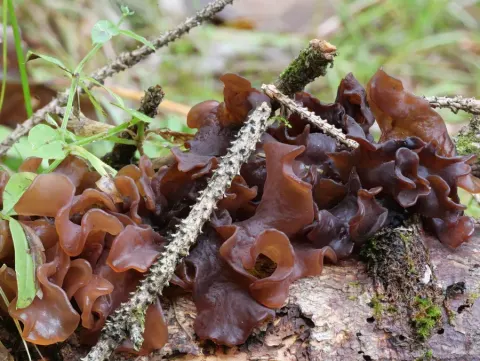
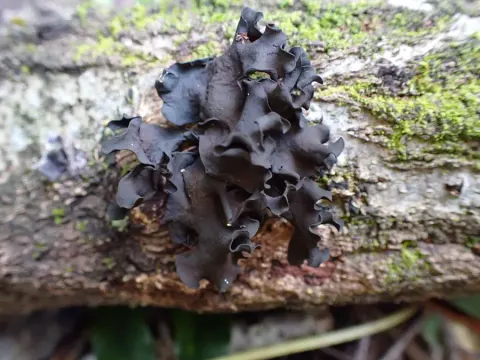
Fruit bodies are gelatinous, dark blackish brown becoming black, up to 4 cm (1.5 in) across, and seaweed-like (with branched, undulating fronds). Microscopically, the hyphae are clamped and occur in a dense gelatinous matrix. Haustorial cells arise on the hyphae, producing filaments that attach to and penetrate the hyphae of the host. The basidia are tremelloid (globose to ellipsoid, with oblique to vertical septa), 9 to 14 by 9 to 12 μm, usually unstalked. The basidiospores are mostly ellipsoid, smooth, 5 to 8 by 4.5 to 6.5 μm, and germinate by hyphal tube or by yeast cells.

Sebagian uraian ditampilkan dalam bahasa sumber; terjemahannya belum tersedia atau belum lolos pemeriksaan.

Rujukan: [1]

Pengukuran mengikuti objek, spesimen atau kultur, dan metode yang disebutkan sumber. Baca uraian asli untuk konteks lengkap.

02 / Kehidupan

Habitat dan peran ekologis

Phaeotremella fimbriata is a parasite of Stereum rugosum, growing on the host's hyphae in the wood rather than on the host's fruit bodies. Following its hosts, fruit bodies of P. fimbriata are typically found on dead, attached or recently fallen branches of broad-leaved trees, particularly alder. The species is currently known only from northern Europe.

Sebagian uraian ditampilkan dalam bahasa sumber; terjemahannya belum tersedia atau belum lolos pemeriksaan.

Rujukan: [1]

Habitat atau konteks temuan
Informasi belum tersedia pada sumber rilis ini.
Substrat
Informasi belum tersedia pada sumber rilis ini.
Peran atau konteks
Belum dikategorikan pada rilis ini.
Temukan hubungan serupa
03 / Siklus hidup

Reproduksi

Fruit bodies are gelatinous, dark blackish brown becoming black, up to 4 cm (1.5 in) across, and seaweed-like (with branched, undulating fronds). Microscopically, the hyphae are clamped and occur in a dense gelatinous matrix. Haustorial cells arise on the hyphae, producing filaments that attach to and penetrate the hyphae of the host. The basidia are tremelloid (globose to ellipsoid, with oblique to vertical septa), 9 to 14 by 9 to 12 μm, usually unstalked. The basidiospores are mostly ellipsoid, smooth, 5 to 8 by 4.5 to 6.5 μm, and germinate by hyphal tube or by yeast cells.

Sebagian uraian ditampilkan dalam bahasa sumber; terjemahannya belum tersedia atau belum lolos pemeriksaan.

Rujukan: [1]

Sinonim menurut acuan taksonomi rilis: Tremella foliacea var. fimbriata
04 / Batas informasi

Catatan identitas dan cakupan

  • Nama diterima mengikuti Catalogue of Life Base2026-09-11; uraian mempertahankan konsep dan nama sumber aslinya.
  • Original geographic, specimen and life-cycle scope retained; source import awaits individual editorial review.
  • Impor dan terjemahan otomatis belum diperiksa editorial per profil. Struktur reproduktif yang disebutkan tidak membuktikan seluruh siklus hidup diketahui.
  • Pengukuran pada uraian mengikuti spesimen, kultur, dan metode sumber; angka tidak diperluas ke semua populasi.

Catatan distribusi dalam narasi mengikuti sumbernya. Dokumentasi spesimen atau foto mengikuti catatan sumber. Bukti wilayah Indonesia dan penilaian konservasi tidak disimpulkan dari gambar.

05 / Dokumentasi

Melihat dengan konteks

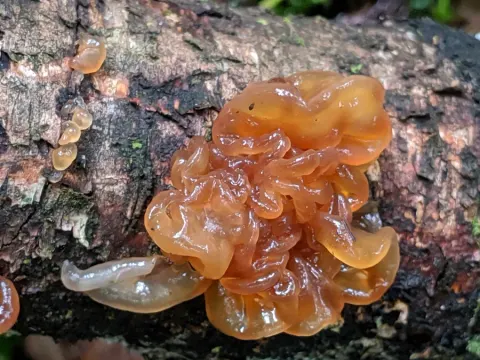
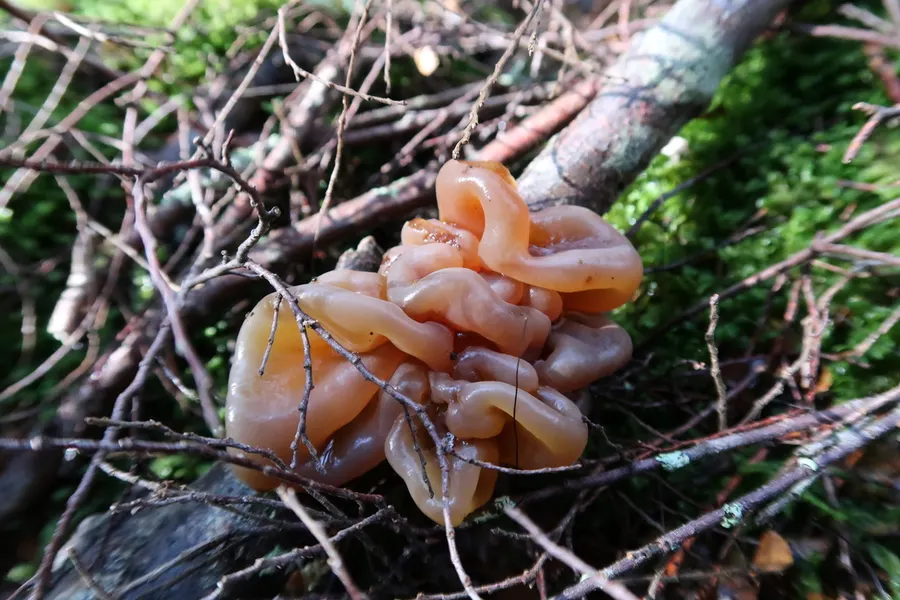
Dokumentasi Phaeotremella fimbriata menurut asosiasi foto pada record takson iNaturalist. Kredit: Cowirrie. Identitas mengikuti sumber; bukan penentuan spesimen independen.

Jenis
Fotografi
Kredit
no rights reserved, uploaded by Cowirrie
Lisensi
CC0 1.0
Sumber media
Buka entri sumber

Gambar menunjukkan objek menurut identifikasi sumber, bukan verifikasi independen spesimen oleh Fungi. Tidak ada skala baru yang ditambahkan.

06 / Rujukan

Sumber profil

  1. [1] Phaeotremella fimbriata — Wikipedia (en)Bagian sumber: Frozen revision 1355169118
    Tanggal penghimpunan sumber: 2026-10-12
    Teks sumber: CC BY-SA4.0 · Wikipedia contributors
  2. [2] Catalogue of Life Base2026-09-11 — Phaeotremella fimbriataBagian sumber: ColDP NameUsage.tsv ID 4FPWW; accepted species; source 2073
    Tanggal penghimpunan sumber: 2026-10-12
  3. [3] Dokumentasi visual — Phaeotremella fimbriataBagian sumber: Individual media record; identification follows the source, not independent determination
    Tanggal penghimpunan sumber: 2026-10-12
    Media sumber: CC0 1.0 · no rights reserved, uploaded by Cowirrie

Adaptasi teks: CC BY-SA 4.0. Wikipedia contributors — Phaeotremella fimbriata — Wikipedia (en)

Uraian asli dan riwayat sumber

Riwayat atau halaman sumber

Ringkasan sumber

Phaeotremella fimbriata is a species of fungus in the family Phaeotremellaceae. It produces blackish, frondose, gelatinous basidiocarps (fruit bodies) and is parasitic on the mycelium of Stereum rugosum, a fungus that grows on dead attached and recently fallen branches of broad-leaved trees. It is widespread in northern Europe. Prior to 2017, the species was generally considered a synonym of Tremella foliacea, but this latter species (now known as Phaeotremella foliacea) is restricted to conifers.

Revisi sumber

Morfologi sumber

Fruit bodies are gelatinous, dark blackish brown becoming black, up to 4 cm (1.5 in) across, and seaweed-like (with branched, undulating fronds). Microscopically, the hyphae are clamped and occur in a dense gelatinous matrix. Haustorial cells arise on the hyphae, producing filaments that attach to and penetrate the hyphae of the host. The basidia are tremelloid (globose to ellipsoid, with oblique to vertical septa), 9 to 14 by 9 to 12 μm, usually unstalked. The basidiospores are mostly ellipsoid, smooth, 5 to 8 by 4.5 to 6.5 μm, and germinate by hyphal tube or by yeast cells.

Revisi sumber

Ekologi sumber

Phaeotremella fimbriata is a parasite of Stereum rugosum, growing on the host's hyphae in the wood rather than on the host's fruit bodies. Following its hosts, fruit bodies of P. fimbriata are typically found on dead, attached or recently fallen branches of broad-leaved trees, particularly alder. The species is currently known only from northern Europe.

Revisi sumber

Struktur reproduksi sumber

Fruit bodies are gelatinous, dark blackish brown becoming black, up to 4 cm (1.5 in) across, and seaweed-like (with branched, undulating fronds). Microscopically, the hyphae are clamped and occur in a dense gelatinous matrix. Haustorial cells arise on the hyphae, producing filaments that attach to and penetrate the hyphae of the host. The basidia are tremelloid (globose to ellipsoid, with oblique to vertical septa), 9 to 14 by 9 to 12 μm, usually unstalked. The basidiospores are mostly ellipsoid, smooth, 5 to 8 by 4.5 to 6.5 μm, and germinate by hyphal tube or by yeast cells.

Revisi sumber

Rujukan halaman ini

Fungi. Phaeotremella fimbriata. Rilis data fungi-2026-10-12-expansion-2. https://fungi-atlas.mgadib.chatgpt.site/jamur/phaeotremella-fimbriata/.

Status: impor sumber; pemeriksaan editorial per profil belum selesai. Untuk klaim biologis, gunakan rujukan pada bagian terkait dan periksa konteks sumber aslinya.