01 / Morfologi

Ciri dan struktur

Phellinus ellipsoideus produces resupinate fruit bodies that are hard and woody, whether fresh or dry. 20 cm in width, and extending 8 mm from the wood on which they grow at their thickest point. The outermost layer is typically yellow to yellowish-brown, measuring 2 mm in thickness. The shiny surface of the hymenium, the spore-producing section of the fruit body, is covered in pores and ranges in colour from yellow-brown to rust-brown. There are between 5 and 8 pores per millimetre. The tubes are up to 8 mm in depth, have the same colouration as the surface of the hymenium, and are distinctively layered. They are also hard and woody. The very thin yellow-brown layer of flesh measures less than 0.5 mm in width. As with much of the rest of the fruit body, it is firm, solid, and reminiscent of wood. The fruit bodies lack any odour or taste. Phellinus ellipsoideus produces basidiospores that are ellipsoidal or broadly ellipsoidal in shape. The spore shape is one of the features that makes the species readily recognisable microscopically, and the spores measure from 4.5 to 6.1 by 3.5 to 5 micrometres (μm). The average spore length is 5.25 μm, while the average width is 4.14 μm. The spores have thick cell walls, and are hyaline. They are strongly cyanophilous, meaning that the cell walls will readily absorb methyl blue stain. In addition, they are weakly dextrinoid, meaning that they will stain slightly reddish-brown in Melzer's reagent or Lugol's solution. The spores are borne on barrel-shaped basidia, with four spores per basidium, measuring 8 to 12 by 6 to 7 μm. There are also basidioles, which are similar in shape to the basidia, but slightly smaller.

Sebagian uraian ditampilkan dalam bahasa sumber; terjemahannya belum tersedia atau belum lolos pemeriksaan.

Rujukan: [1]

Pengukuran mengikuti objek, spesimen atau kultur, dan metode yang disebutkan sumber. Baca uraian asli untuk konteks lengkap.

02 / Kehidupan

Habitat dan peran ekologis

Phellinus ellipsoideus (sebelumnya Fomitiporia ellipsoidea) adalah spesies jamur polipor dalam keluarga Hymenochaetaceae, spesimen yang menghasilkan tubuh buah jamur terbesar yang pernah tercatat. Found in China, tubuh buah yang diproduksi oleh spesies ini adalah cokelat, basidiocarps kayu yang tumbuh di kayu mati, di mana jamur makan sebagai saprotroph. Basidiocarps adalah perennial, memungkinkan mereka tumbuh sangat besar dalam kondisi yang menguntungkan. They are resupinate, ukuran 30 cm atau lebih panjang, meskipun biasanya membentang kurang dari satu sentimeter dari permukaan kayu. P. ellipsoideus menghasilkan spora elipsoid yang berbeda, setelah yang namanya, dan setae yang tidak biasa. Dua fitur ini memungkinkan untuk mudah dibedakan mikroskopis dari spesies lain yang serupa. Chemical compounds terisolasi dari spesies ini mencakup beberapa senyawa steroidal. Ini mungkin memiliki aplikasi farmakologis, tetapi penelitian lebih lanjut diperlukan. Spesies ini dinamai dalam 2008 oleh Bao-Kai Cui and Yu-Cheng Dai based pada koleksi yang dibuat di Provinsi Fujian. Hal ini ditempatkan dalam genus Fomitiporia, tetapi analisis kemudian menunjukkan bahwa hal ini lebih erat terkait dengan Phellinus species. Diungkapkan di 2011 bahwa tubuh buah yang sangat besar, berukuran hingga 1085 cm panjang, telah ditemukan di Pulau Hainan.

Rujukan: [1]

Habitat atau konteks temuan
Informasi belum tersedia pada sumber rilis ini.
Substrat
kayu
Peran atau konteks
Pengurai
Temukan hubungan serupa
03 / Siklus hidup

Reproduksi

Phellinus ellipsoideus produces resupinate fruit bodies that are hard and woody, whether fresh or dry. 20 cm in width, and extending 8 mm from the wood on which they grow at their thickest point. The outermost layer is typically yellow to yellowish-brown, measuring 2 mm in thickness. The shiny surface of the hymenium, the spore-producing section of the fruit body, is covered in pores and ranges in colour from yellow-brown to rust-brown. There are between 5 and 8 pores per millimetre. The tubes are up to 8 mm in depth, have the same colouration as the surface of the hymenium, and are distinctively layered. They are also hard and woody. The very thin yellow-brown layer of flesh measures less than 0.5 mm in width.

Sebagian uraian ditampilkan dalam bahasa sumber; terjemahannya belum tersedia atau belum lolos pemeriksaan.

Rujukan: [1]

Sinonim menurut acuan taksonomi rilis: Fomitiporia ellipsoidea
04 / Batas informasi

Catatan identitas dan cakupan

  • Nama diterima mengikuti Catalogue of Life Base2026-09-11; uraian mempertahankan konsep dan nama sumber aslinya.
  • Original geographic, specimen and life-cycle scope retained; source import awaits individual editorial review.
  • Impor dan terjemahan otomatis belum diperiksa editorial per profil. Struktur reproduktif yang disebutkan tidak membuktikan seluruh siklus hidup diketahui.
  • Pengukuran pada uraian mengikuti spesimen, kultur, dan metode sumber; angka tidak diperluas ke semua populasi.

Catatan distribusi dalam narasi mengikuti sumbernya. Dokumentasi spesimen atau foto mengikuti catatan sumber. Bukti wilayah Indonesia dan penilaian konservasi tidak disimpulkan dari gambar.

05 / Dokumentasi

Melihat dengan konteks

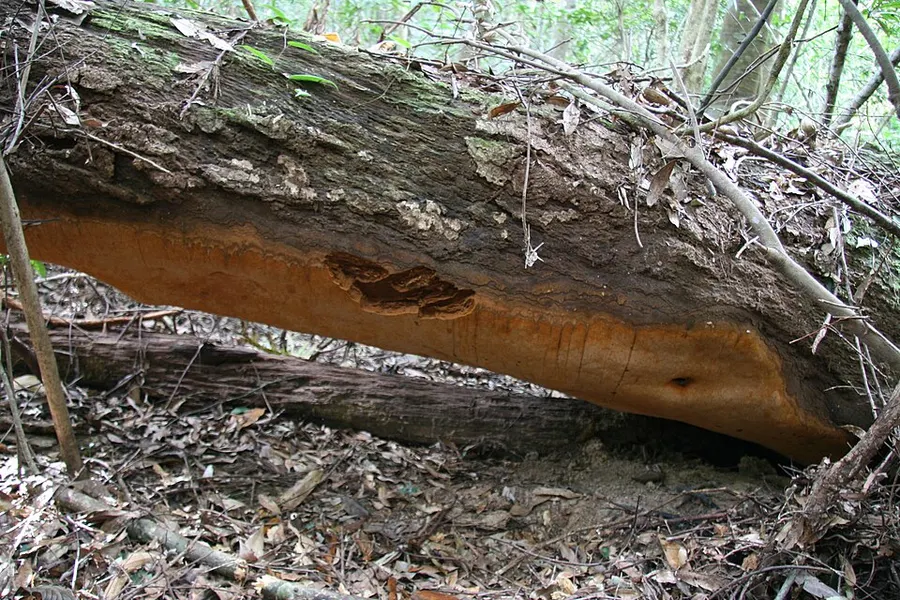
Dokumentasi Phellinus ellipsoideus dari Wikimedia Commons. Phellinus ellipsoidea . Image shows the largest fungal fruit body ever recorded. Identifikasi mengikuti record berkas sumber.

Jenis
Fotografi
Kredit
Dr. Bao-Kai Cui
Sumber media
Buka entri sumber

Gambar menunjukkan objek menurut identifikasi sumber, bukan verifikasi independen spesimen oleh Fungi. Tidak ada skala baru yang ditambahkan.

06 / Rujukan

Sumber profil

  1. [1] Phellinus ellipsoideus — Wikipedia (en)Bagian sumber: Frozen revision 1376757068
    Tanggal penghimpunan sumber: 2026-10-12
    Teks sumber: CC BY-SA4.0 · Wikipedia contributors
  2. [2] Catalogue of Life Base2026-09-11 — Phellinus ellipsoideusBagian sumber: ColDP NameUsage.tsv ID 4FZCP; accepted species; source 2073
    Tanggal penghimpunan sumber: 2026-10-12
  3. [3] Dokumentasi visual — Phellinus ellipsoideusBagian sumber: Individual media record; identification follows the source, not independent determination
    Tanggal penghimpunan sumber: 2026-10-12
    Media sumber: CC BY-SA 3.0 · Dr. Bao-Kai Cui

Adaptasi teks: CC BY-SA 4.0. Wikipedia contributors — Phellinus ellipsoideus — Wikipedia (en)

Uraian asli dan riwayat sumber

Riwayat atau halaman sumber

Ringkasan sumber

Phellinus ellipsoideus (formerly Fomitiporia ellipsoidea) is a species of polypore fungus in the family Hymenochaetaceae, a specimen of which produced the largest fungal fruit body ever recorded. Found in China, the fruit bodies produced by the species are brown, woody basidiocarps that grow on dead wood, where the fungus feeds as a saprotroph. The basidiocarps are perennial, allowing them to grow very large under favourable circumstances. They are resupinate, measuring 30 cm or more in length, though typically extending less than a centimetre from the surface of the wood.

Revisi sumber

Morfologi sumber

Phellinus ellipsoideus produces resupinate fruit bodies that are hard and woody, whether fresh or dry. 20 cm in width, and extending 8 mm from the wood on which they grow at their thickest point. The outermost layer is typically yellow to yellowish-brown, measuring 2 mm in thickness. The shiny surface of the hymenium, the spore-producing section of the fruit body, is covered in pores and ranges in colour from yellow-brown to rust-brown. There are between 5 and 8 pores per millimetre. The tubes are up to 8 mm in depth, have the same colouration as the surface of the hymenium, and are distinctively layered. They are also hard and woody. The very thin yellow-brown layer of flesh measures less than 0.5 mm in width. As with much of the rest of the fruit body, it is firm, solid, and reminiscent of wood. The fruit bodies lack any odour or taste. Phellinus ellipsoideus produces basidiospores that are ellipsoidal or broadly ellipsoidal in shape. The spore shape is one of the features that makes the species readily recognisable microscopically, and the spores measure from 4.5 to 6.1 by 3.5 to 5 micrometres (μm). The average spore length is 5.25 μm, while the average width is 4.14 μm. The spores have thick cell walls, and are hyaline. They are strongly cyanophilous, meaning that the cell walls will readily absorb methyl blue stain. In addition, they are weakly dextrinoid, meaning that they will stain slightly reddish-brown in Melzer's reagent or Lugol's solution. The spores are borne on barrel-shaped basidia, with four spores per basidium, measuring 8 to 12 by 6 to 7 μm. There are also basidioles, which are similar in shape to the basidia, but slightly smaller.

Revisi sumber

Ekologi sumber

Phellinus ellipsoideus (formerly Fomitiporia ellipsoidea) is a species of polypore fungus in the family Hymenochaetaceae, a specimen of which produced the largest fungal fruit body ever recorded. Found in China, the fruit bodies produced by the species are brown, woody basidiocarps that grow on dead wood, where the fungus feeds as a saprotroph. The basidiocarps are perennial, allowing them to grow very large under favourable circumstances. They are resupinate, measuring 30 cm or more in length, though typically extending less than a centimetre from the surface of the wood. P. ellipsoideus produces distinct ellipsoidal spores, after which it is named, and unusual setae. These two features allow it to be readily differentiated microscopically from other, similar species. Chemical compounds isolated from the species include several steroidal compounds. These may have pharmacological applications, but further research is needed. The species was named in 2008 by Bao-Kai Cui and Yu-Cheng Dai based on collections made in Fujian Province. It was placed in the genus Fomitiporia, but later analysis suggests that it is more closely related to Phellinus species. It was revealed in 2011 that a very large fruit body, measuring up to 1085 cm in length, had been found on Hainan Island.

Revisi sumber

Struktur reproduksi sumber

Phellinus ellipsoideus produces resupinate fruit bodies that are hard and woody, whether fresh or dry. 20 cm in width, and extending 8 mm from the wood on which they grow at their thickest point. The outermost layer is typically yellow to yellowish-brown, measuring 2 mm in thickness. The shiny surface of the hymenium, the spore-producing section of the fruit body, is covered in pores and ranges in colour from yellow-brown to rust-brown. There are between 5 and 8 pores per millimetre. The tubes are up to 8 mm in depth, have the same colouration as the surface of the hymenium, and are distinctively layered. They are also hard and woody. The very thin yellow-brown layer of flesh measures less than 0.5 mm in width.

Revisi sumber

Rujukan halaman ini

Fungi. Phellinus ellipsoideus. Rilis data fungi-2026-10-12-expansion-2. https://fungi-atlas.mgadib.chatgpt.site/jamur/phellinus-ellipsoideus/.

Status: impor sumber; pemeriksaan editorial per profil belum selesai. Untuk klaim biologis, gunakan rujukan pada bagian terkait dan periksa konteks sumber aslinya.