Ciri dan struktur
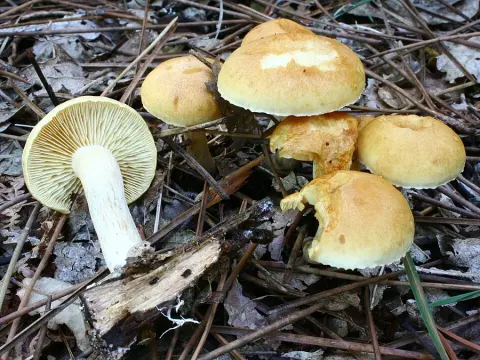
The fruit bodies of N. nubigenum are 1.5–4 cm tall and have round to convex caps measuring 1–2.4 cm in diameter. The smooth, thick-walled elliptical spores typically measure 7.5–10 by 5–7 μm. They have a narrow germ pore. The mushroom does not produce a spore print, but the spores are yellow-brown in mass. The basidia (spore-bearing cells) are hyaline (translucent), club-shaped, usually four-spored (some are two-spored), and measure 17–21 by 6–8.2 μm. Pseudoparaphyses (cells that grow down from the roof of locules, and often end up connecting the roof and the floor of the locule) are abundant in the gleba; they measure about 16 by 12.5 μm. Cystidia are yellowish to brownish, thin-walled, with dimensions of 60–100 by 15–25 μm. The peridium is made of two distinct tissue layers. The epicutis comprises narrow, gelatinous interwoven hyphae in a layer that is 15–50 μm. Underneath the epicutis is the subcutis, which consists of thin-walled hyphae up to 12 μm in diameter. All hyphae are inamyloid, and all have clamp connections.
Habitat dan peran ekologis
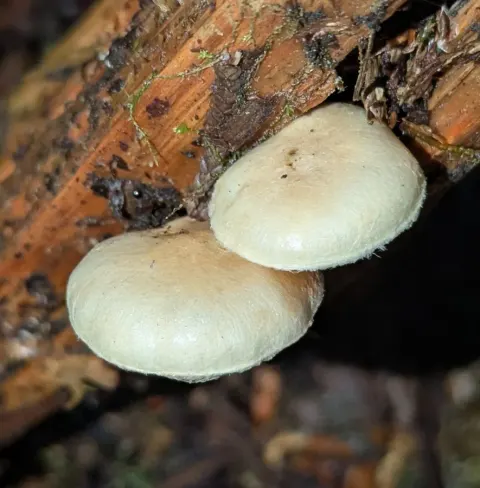
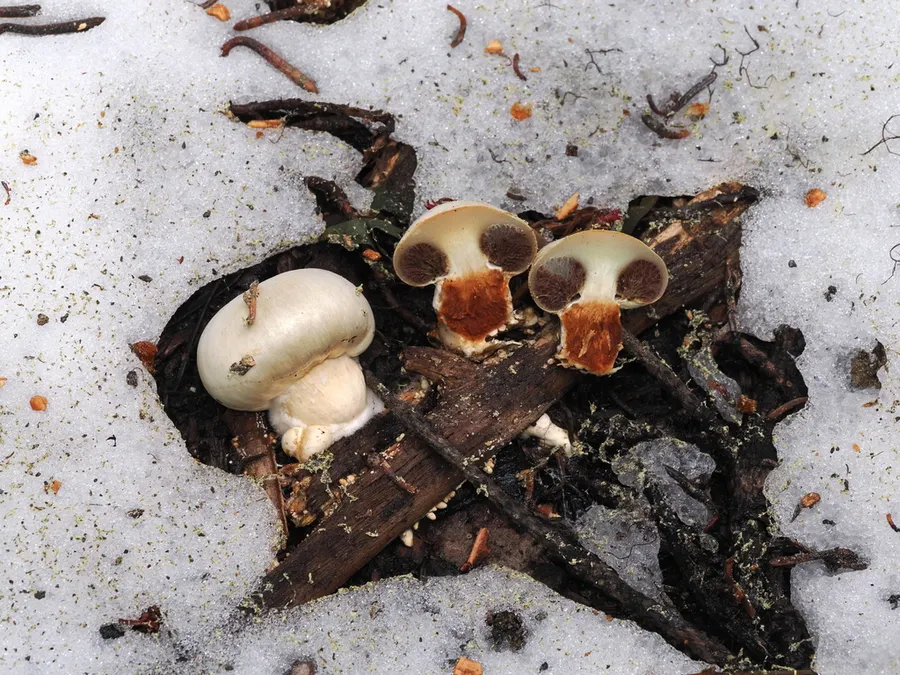
Pholiota nubigena fruits singly, in groups, or in small clusters on rotting conifer wood, especially fir and lodgepole pine. Fruiting in spring and early summer, it is a snowbank fungus, meaning it is often found near melting snow or soon after the snow has disappeared. In the United States, it is common in the Sierra Nevada and the Cascade Mountains, and usually found in elevations ranging from 1650 to 2400 m. The fungus has been collected from the US states of California, Idaho, Oregon, and Washington. Squirrels consume the fungus, sometimes collecting fruit bodies and leaving them out in sunny spots to dry for later use.
- Habitat atau konteks temuan
- Informasi belum tersedia pada sumber rilis ini.
- Substrat
- Informasi belum tersedia pada sumber rilis ini.
- Peran atau konteks
- Belum dikategorikan pada rilis ini.
Reproduksi
The smooth, thick-walled elliptical spores typically measure 7.5–10 by 5–7 μm. They have a narrow germ pore. The mushroom does not produce a spore print, but the spores are yellow-brown in mass. The basidia (spore-bearing cells) are hyaline (translucent), club-shaped, usually four-spored (some are two-spored), and measure 17–21 by 6–8.2 μm. Pseudoparaphyses (cells that grow down from the roof of locules, and often end up connecting the roof and the floor of the locule) are abundant in the gleba; they measure about 16 by 12.5 μm. Cystidia are yellowish to brownish, thin-walled, with dimensions of 60–100 by 15–25 μm. The peridium is made of two distinct tissue layers. The epicutis comprises narrow, gelatinous interwoven hyphae in a layer that is 15–50 μm.
Catatan identitas dan cakupan
- Nama diterima mengikuti Catalogue of Life Base2026-09-11; uraian mempertahankan konsep dan nama sumber aslinya.
- Original geographic, specimen and life-cycle scope retained; source import awaits individual editorial review.
- Impor dan terjemahan otomatis belum diperiksa editorial per profil. Struktur reproduktif yang disebutkan tidak membuktikan seluruh siklus hidup diketahui.
- Pengukuran pada uraian mengikuti spesimen, kultur, dan metode sumber; angka tidak diperluas ke semua populasi.
Catatan distribusi dalam narasi mengikuti sumbernya. Dokumentasi spesimen atau foto mengikuti catatan sumber. Bukti wilayah Indonesia dan penilaian konservasi tidak disimpulkan dari gambar.
Melihat dengan konteks
Dokumentasi Pholiota nubigena menurut asosiasi foto pada record takson iNaturalist. Kredit: Justin Paulin. Identitas mengikuti sumber; bukan penentuan spesimen independen.
- Jenis
- Fotografi
- Kredit
- (c) Justin Paulin, some rights reserved (CC BY), uploaded by Justin Paulin
- Lisensi
- CC BY 4.0
- Sumber media
- Buka entri sumber
Dokumentasi tambahan
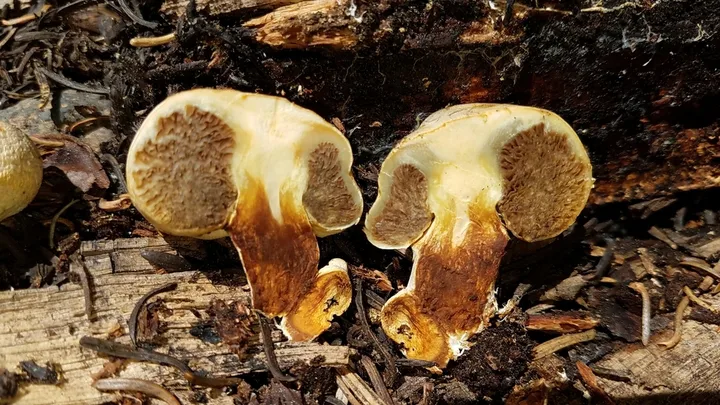
Foto yang diasosiasikan dengan Pholiota nubigena pada iNaturalist. Identifikasi mengikuti sumber; bukan penentuan spesimen independen.
Kredit dan penggunaan
(c) Alan Rockefeller, some rights reserved (CC BY), uploaded by Alan Rockefeller
Ukuran dan format gambar disesuaikan tanpa pemotongan, retus, atau penambahan skala. Lisensi sumber dipertahankan.
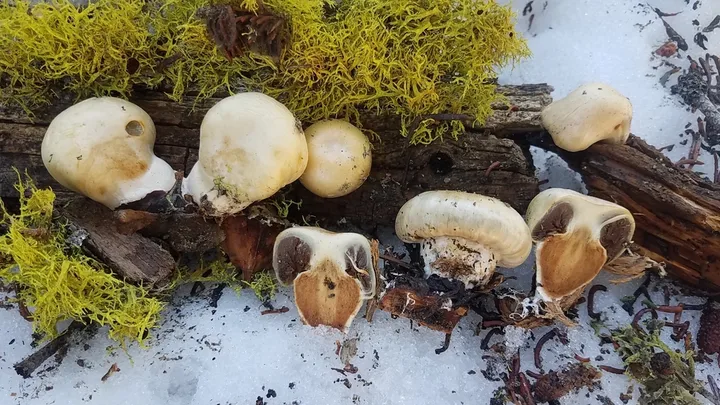
Foto yang diasosiasikan dengan Pholiota nubigena pada iNaturalist. Identifikasi mengikuti sumber; bukan penentuan spesimen independen.
Kredit dan penggunaan
(c) Alan Rockefeller, some rights reserved (CC BY), uploaded by Alan Rockefeller
Ukuran dan format gambar disesuaikan tanpa pemotongan, retus, atau penambahan skala. Lisensi sumber dipertahankan.
Sumber profil
- [1] Pholiota nubigena — Wikipedia (en)
- [2] Catalogue of Life Base2026-09-11 — Pholiota nubigena
- [3] Dokumentasi visual — Pholiota nubigena
- [4] Dokumentasi visual — Pholiota nubigena
- [5] Dokumentasi visual — Pholiota nubigena
Rujukan halaman ini
Fungi. Pholiota nubigena. Rilis data fungi-2026-10-12-expansion-2. https://fungi-atlas.mgadib.chatgpt.site/jamur/pholiota-nubigena/.
Status: impor sumber; pemeriksaan editorial per profil belum selesai. Untuk klaim biologis, gunakan rujukan pada bagian terkait dan periksa konteks sumber aslinya.