Ciri dan struktur
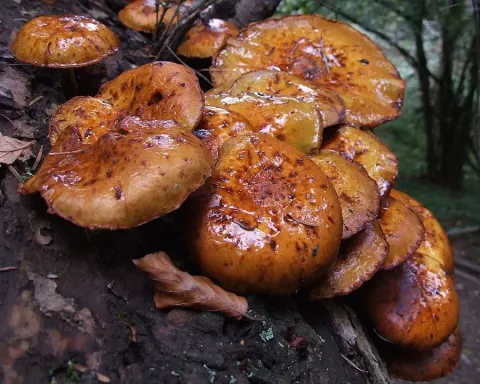
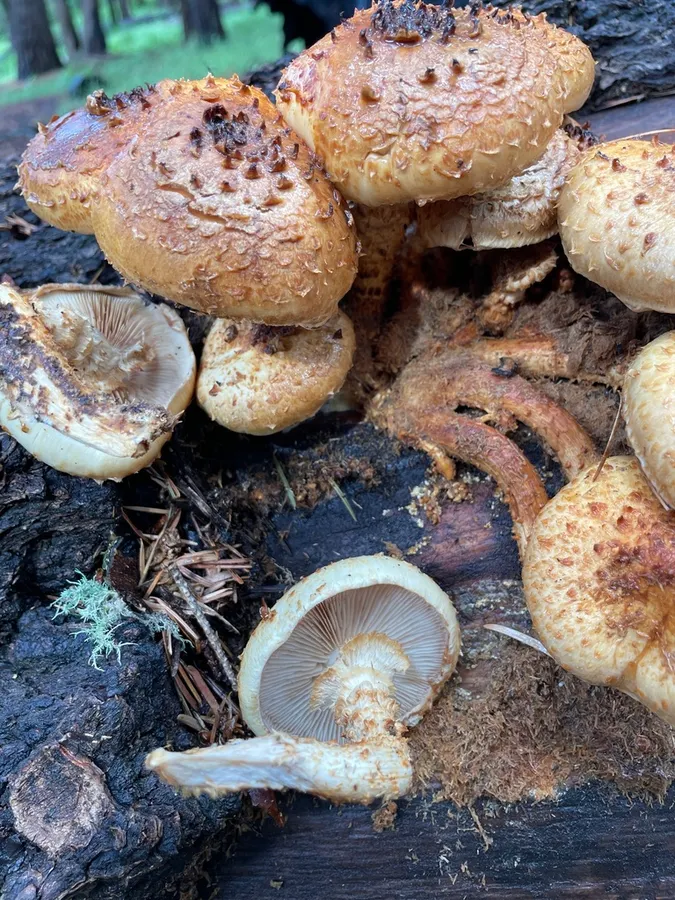
This mushroom grows in crowded clusters, with caps up to 10 cm in diameter and stems up to 14 cm in length. The caps are convex at first, becoming flattened with age, and are sticky when wet. They are yellowish-brown with prominent cone-shaped, tawny scales which are crowded together near the centre. The gills are closely packed, yellow at first becoming rusty-brown later. The stem is the same colour as the cap and is covered with small scales. Near the top it bears a cottony yellowish ring which flares out. The spores are brown, producing a rusty brown spore print.
Habitat dan peran ekologis
The species can commonly be found in late summer in the Great Lakes states, the Pacific Northwest, and eastern North America. Its habitat is on the bark of hardwood trees. The Poland discovery happened at the Łężczok Nature Reserve near the town of Racibórz. The mushroom might also be found in the temperate regions of Asia. Although the mushroom is considered a saprophyte, rather than a parasite, it can cause the wood to degrade rapidly. In the Great Lakes region, it decays logs of the trees Acer saccharum and Tilia glabra.
- Habitat atau konteks temuan
- Informasi belum tersedia pada sumber rilis ini.
- Substrat
- Informasi belum tersedia pada sumber rilis ini.
- Peran atau konteks
- Belum dikategorikan pada rilis ini.
Reproduksi
This mushroom grows in crowded clusters, with caps up to 10 cm in diameter and stems up to 14 cm in length. The caps are convex at first, becoming flattened with age, and are sticky when wet. They are yellowish-brown with prominent cone-shaped, tawny scales which are crowded together near the centre. The gills are closely packed, yellow at first becoming rusty-brown later. The stem is the same colour as the cap and is covered with small scales. Near the top it bears a cottony yellowish ring which flares out. The spores are brown, producing a rusty brown spore print.
Catatan identitas dan cakupan
- Nama diterima mengikuti Catalogue of Life Base2026-09-11; uraian mempertahankan konsep dan nama sumber aslinya.
- Original geographic, specimen and life-cycle scope retained; source import awaits individual editorial review.
- Impor dan terjemahan otomatis belum diperiksa editorial per profil. Struktur reproduktif yang disebutkan tidak membuktikan seluruh siklus hidup diketahui.
- Pengukuran pada uraian mengikuti spesimen, kultur, dan metode sumber; angka tidak diperluas ke semua populasi.
Catatan distribusi dalam narasi mengikuti sumbernya. Dokumentasi spesimen atau foto mengikuti catatan sumber. Bukti wilayah Indonesia dan penilaian konservasi tidak disimpulkan dari gambar.
Melihat dengan konteks
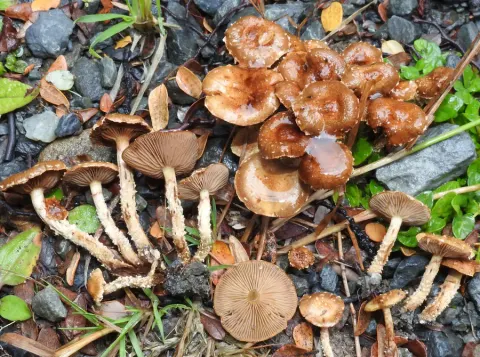
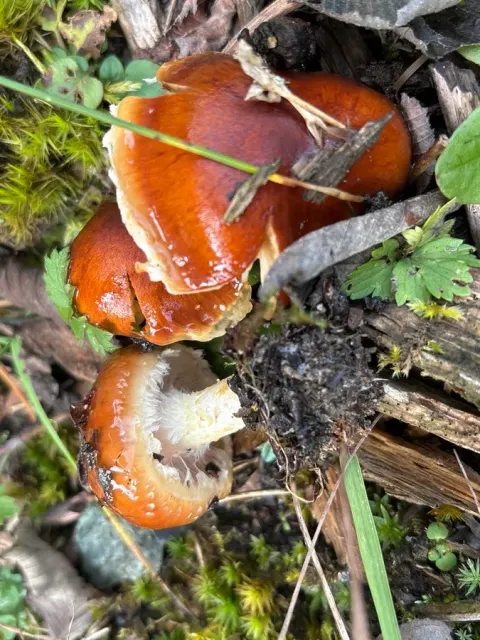
Dokumentasi Pholiota squarrosoides menurut asosiasi foto pada record takson iNaturalist. Kredit: Mike Dechter. Identitas mengikuti sumber; bukan penentuan spesimen independen.
- Jenis
- Fotografi
- Kredit
- (c) Mike Dechter, some rights reserved (CC BY), uploaded by Mike Dechter
- Lisensi
- CC BY 4.0
- Sumber media
- Buka entri sumber
Dokumentasi tambahan
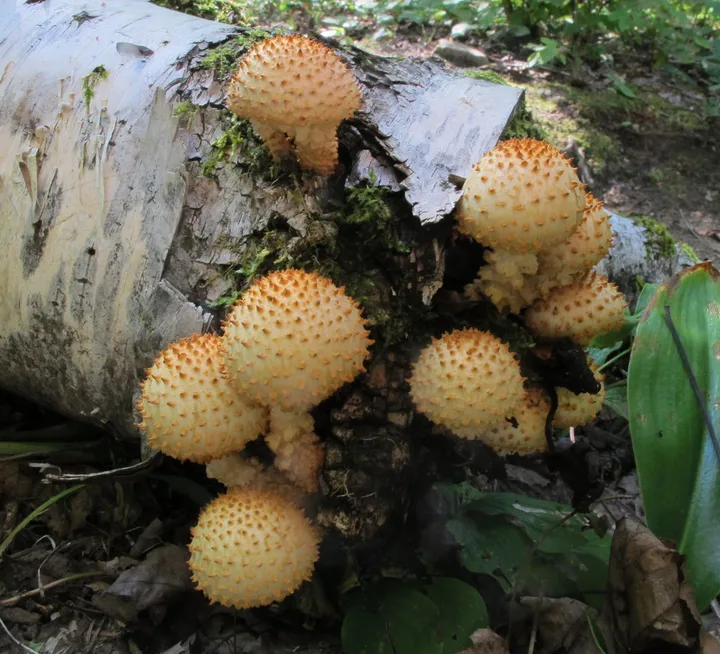
Foto yang diasosiasikan dengan Pholiota squarrosoides pada iNaturalist. Identifikasi mengikuti sumber; bukan penentuan spesimen independen.
Kredit dan penggunaan
(c) mycowalt, some rights reserved (CC BY-SA), uploaded by mycowalt
Ukuran dan format gambar disesuaikan tanpa pemotongan, retus, atau penambahan skala. Lisensi sumber dipertahankan.
Sumber profil
- [1] Pholiota squarrosoides — Wikipedia (en)
- [2] Catalogue of Life Base2026-09-11 — Pholiota squarrosoides
- [3] Dokumentasi visual — Pholiota squarrosoides
- [4] Dokumentasi visual — Pholiota squarrosoides
Rujukan halaman ini
Fungi. Pholiota squarrosoides. Rilis data fungi-2026-10-12-expansion-2. https://fungi-atlas.mgadib.chatgpt.site/jamur/pholiota-squarrosoides/.
Status: impor sumber; pemeriksaan editorial per profil belum selesai. Untuk klaim biologis, gunakan rujukan pada bagian terkait dan periksa konteks sumber aslinya.