Ciri dan struktur
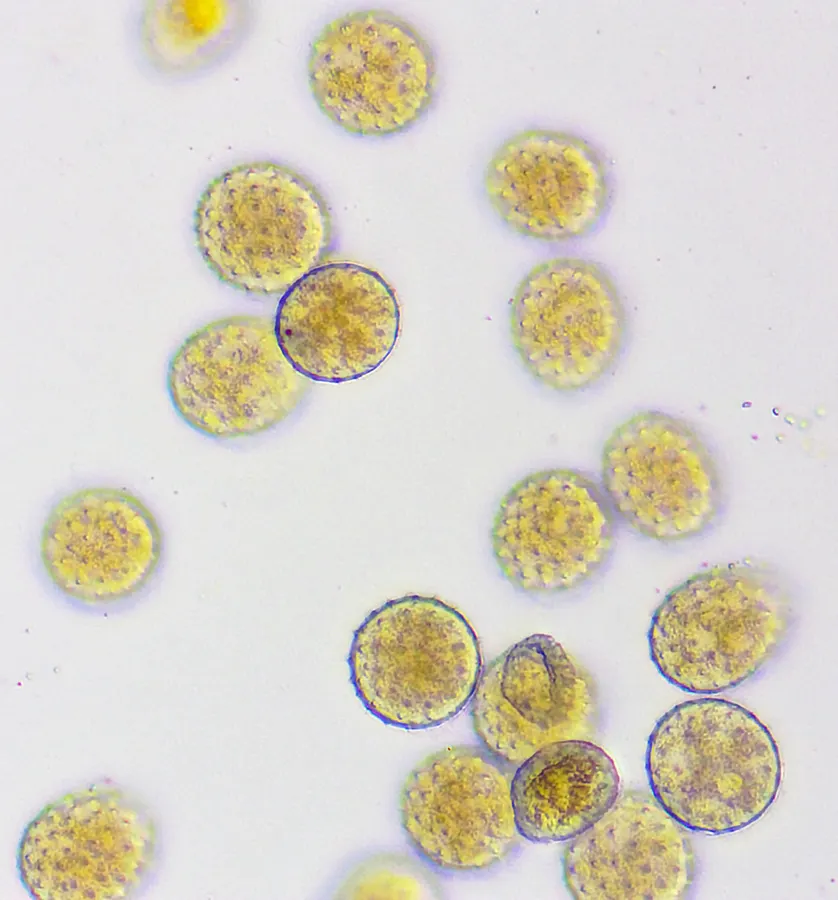
Patogen adalah jamur karat makroiklik, autoecious, dan menghasilkan lima negara spora yang berbeda yang mewakili komponen asexual dan seksual dari siklus hidup. Dikaryotic urediniospores dilepaskan selama musim panas dan musim semi sementara teliospores mewakili tahap overwintering. When the outcrossing seksual terjadi eciospores karyot dan urediniospores dimulai. Teliospores di musim semi kemudian akan mengalami meiosis untuk menghasilkan haploid basidiospora. Hal ini mengikuti transfer sperma dari spermogonia dari berbagai jenis kawin ke reseptif hifa. Spor menyebar dengan mudah dan dapat menyebar dengan angin.
Habitat dan peran ekologis
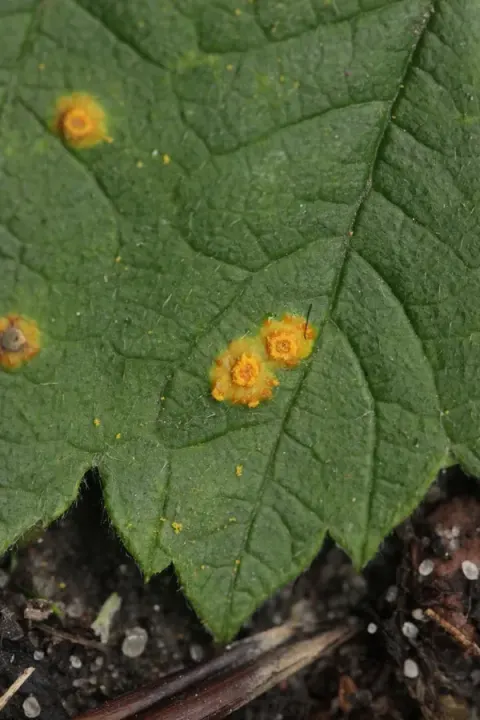
Gejala daun yang dapat ditemukan termasuk bintik-bintik daun ungu bersama dengan pusat kuning dan cokelat. Ini dapat ditemukan di permukaan atas daun dan dapat menyerupai titik Septoria leaf. Pada permukaan bawah daun kuning sampai oranye pustules akan dikelilingi oleh warna ungu. Ini bisa menyerupai batang dan karat daun. Daun yang terinfeksi parah bisa mulai kering dan mulai bergoyang. Daun yang lebih tua dan lebih dekat dengan batang akan terinfeksi terlebih dahulu dan juga bisa mati. Bunga dan buah yang terinfeksi mungkin tidak matang. Stem infections serta defoliasi terus-menerus dapat menyebabkan mati kembali batang. During the musim panas dan musim gugur daun yang terinfeksi dapat mulai mengembangkan pustules hitam yang dikenal sebagai telia di antara uredinia.
- Habitat atau konteks temuan
- Informasi belum tersedia pada sumber rilis ini.
- Substrat
- Informasi belum tersedia pada sumber rilis ini.
- Peran atau konteks
- Belum dikategorikan pada rilis ini.
Reproduksi
Patogen adalah jamur karat makroiklik, autoecious, dan menghasilkan lima negara spora yang berbeda yang mewakili komponen asexual dan seksual dari siklus hidup. Dikaryotic urediniospores dilepaskan selama musim panas dan musim semi sementara teliospores mewakili tahap overwintering. When the outcrossing seksual terjadi eciospores karyot dan urediniospores dimulai. Teliospores di musim semi kemudian akan mengalami meiosis untuk menghasilkan haploid basidiospora. Hal ini mengikuti transfer sperma dari spermogonia dari berbagai jenis kawin ke reseptif hifa. Spor menyebar dengan mudah dan dapat menyebar dengan angin.
Catatan identitas dan cakupan
- Nama diterima mengikuti Catalogue of Life Base2026-09-11; uraian mempertahankan konsep dan nama sumber aslinya.
- Original geographic, specimen and life-cycle scope retained; source import awaits individual editorial review.
- Impor dan terjemahan otomatis belum diperiksa editorial per profil. Struktur reproduktif yang disebutkan tidak membuktikan seluruh siklus hidup diketahui.
- Pengukuran pada uraian mengikuti spesimen, kultur, dan metode sumber; angka tidak diperluas ke semua populasi.
Catatan distribusi dalam narasi mengikuti sumbernya. Dokumentasi spesimen atau foto mengikuti catatan sumber. Bukti wilayah Indonesia dan penilaian konservasi tidak disimpulkan dari gambar.
Melihat dengan konteks
Dokumentasi Phragmidium violaceum menurut asosiasi foto pada record takson iNaturalist. Kredit: Lukas Large. Identitas mengikuti sumber; bukan penentuan spesimen independen.
- Jenis
- Fotografi
- Kredit
- (c) Lukas Large, some rights reserved (CC BY-SA)
- Lisensi
- CC BY-SA 4.0
- Sumber media
- Buka entri sumber
Dokumentasi tambahan
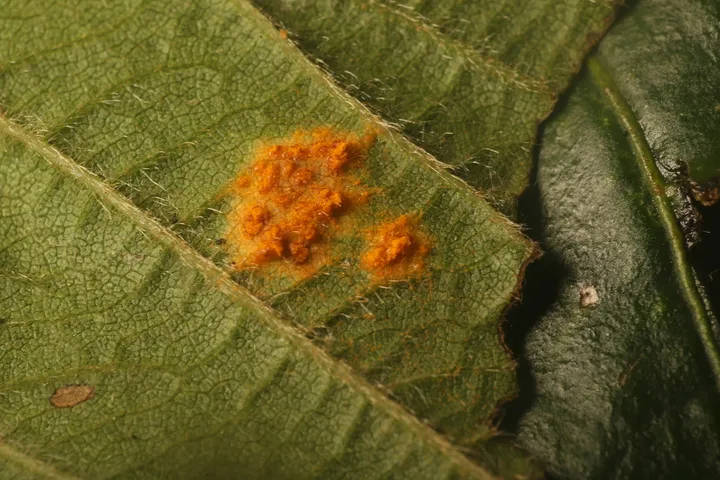
Foto yang diasosiasikan dengan Phragmidium violaceum pada iNaturalist. Identifikasi mengikuti sumber; bukan penentuan spesimen independen.
Kredit dan penggunaan
(c) Steven Bodzin, some rights reserved (CC BY), uploaded by Steven Bodzin
Ukuran dan format gambar disesuaikan tanpa pemotongan, retus, atau penambahan skala. Lisensi sumber dipertahankan.
Sumber profil
- [1] Phragmidium violaceum — Wikipedia (en)
- [2] Catalogue of Life Base2026-09-11 — Phragmidium violaceum
- [3] Dokumentasi visual — Phragmidium violaceum
- [4] Dokumentasi visual — Phragmidium violaceum
Rujukan halaman ini
Fungi. Phragmidium violaceum. Rilis data fungi-2026-10-12-expansion-2. https://fungi-atlas.mgadib.chatgpt.site/jamur/phragmidium-violaceum/.
Status: impor sumber; pemeriksaan editorial per profil belum selesai. Untuk klaim biologis, gunakan rujukan pada bagian terkait dan periksa konteks sumber aslinya.