Ciri dan struktur
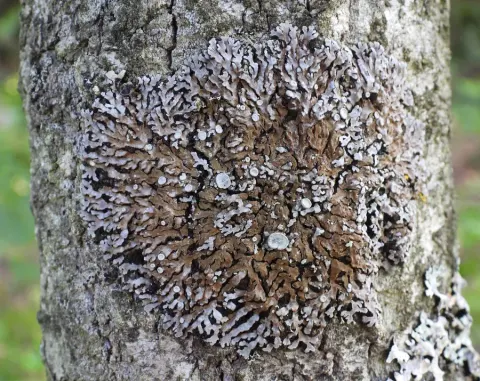
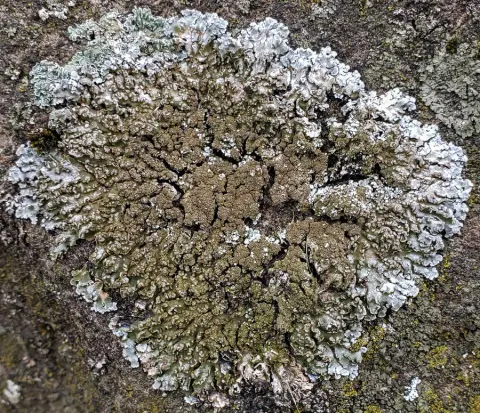
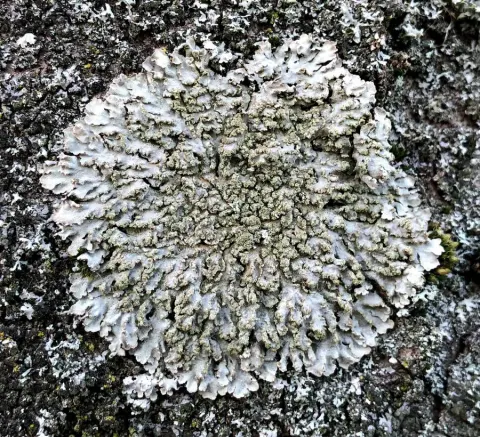
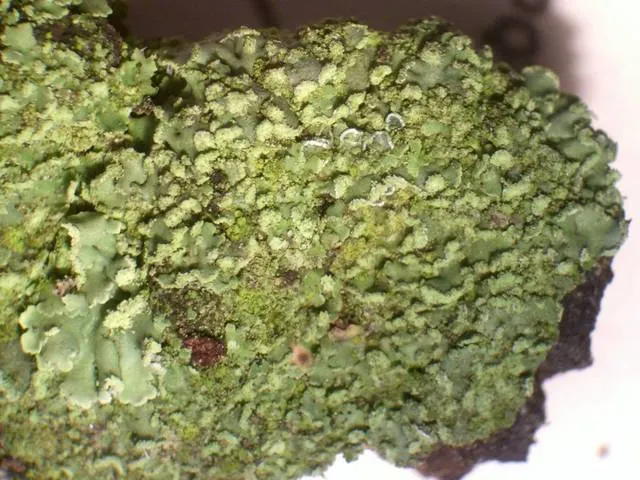
Physciella chloantha typically forms rounded units up to about 3 cm in diameter, comprising numerous, discrete ascending . These lobes, which measure 0.5–1.5 mm across, can coalesce to cover large areas, often blending with other species. They range from short and rounded to somewhat elongate and frequently ascend at the tip, especially when sorediate. The thallus is characterised by numerous marginal and terminal, (lip-shaped) soralia, and sometimes scattered laminal soralia that develop over time. The lower surface of the lichen is white to pale tan, featuring sparse, similarly coloured rhizines. The placement of these rhizines varies considerably across specimens. Apothecia (fruiting bodies) are rare in this species, measuring up to 1 mm in diameter, and may be sessile or very shortly stipitate with an entire or irregularly (scalloped) margin. The spores are typical of the Physcia-type, measuring 17–22.5 by 8–11 μm, with that often become rounded with age. Conidia are ellipsoid, measuring 2.5–3.5 by 1 μm. Physciella chloantha is often confused with its close relative, Physciella melanchra, which primarily differs in having mainly laminal soralia and being somewhat larger on average. Specimens of Physciella chloantha with well-developed laminal soralia must be carefully distinguished from Physciella melanchra, particularly as they sometimes coexist in the same habitats.
Habitat dan peran ekologis
Physciella chloantha, once overlooked in North America, is quite common in some parts of its range. It was previously mapped under the synonym Physcia luganensis in North America. This species has also been reported in southern and south-central Europe, as well as Japan. It predominantly inhabits bark but is also found on rock surfaces. The lichen's distribution includes diverse regions, from the Upper Midwest of the US to parts of Europe and Japan, Pakistan, and European Russia.
- Habitat atau konteks temuan
- Informasi belum tersedia pada sumber rilis ini.
- Substrat
- Informasi belum tersedia pada sumber rilis ini.
- Peran atau konteks
- Pembentuk liken
Reproduksi
Physciella chloantha typically forms rounded units up to about 3 cm in diameter, comprising numerous, discrete ascending . These lobes, which measure 0.5–1.5 mm across, can coalesce to cover large areas, often blending with other species. They range from short and rounded to somewhat elongate and frequently ascend at the tip, especially when sorediate. The thallus is characterised by numerous marginal and terminal, (lip-shaped) soralia, and sometimes scattered laminal soralia that develop over time. The lower surface of the lichen is white to pale tan, featuring sparse, similarly coloured rhizines. The placement of these rhizines varies considerably across specimens. Apothecia (fruiting bodies) are rare in this species, measuring up to 1 mm in diameter, and may be sessile or very shortly stipitate with an entire or irregularly (scalloped) margin.
Catatan identitas dan cakupan
- Nama diterima mengikuti Catalogue of Life Base2026-09-11; uraian mempertahankan konsep dan nama sumber aslinya.
- Original geographic, specimen and life-cycle scope retained; source import awaits individual editorial review.
- Impor dan terjemahan otomatis belum diperiksa editorial per profil. Struktur reproduktif yang disebutkan tidak membuktikan seluruh siklus hidup diketahui.
- Pengukuran pada uraian mengikuti spesimen, kultur, dan metode sumber; angka tidak diperluas ke semua populasi.
Catatan distribusi dalam narasi mengikuti sumbernya. Dokumentasi spesimen atau foto mengikuti catatan sumber. Bukti wilayah Indonesia dan penilaian konservasi tidak disimpulkan dari gambar.
Melihat dengan konteks
Dokumentasi Physciella chloantha menurut asosiasi foto pada record takson iNaturalist. Kredit: Jason Hollinger. Identitas mengikuti sumber; bukan penentuan spesimen independen.
- Jenis
- Fotografi
- Kredit
- (c) Jason Hollinger, some rights reserved (CC BY-SA)
- Lisensi
- CC BY-SA 4.0
- Sumber media
- Buka entri sumber
Dokumentasi tambahan
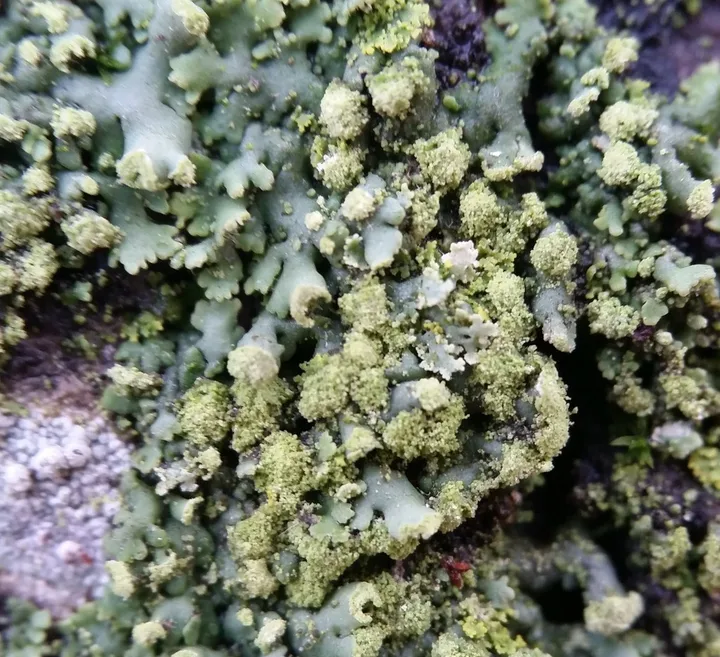
Foto yang diasosiasikan dengan Physciella chloantha pada iNaturalist. Identifikasi mengikuti sumber; bukan penentuan spesimen independen.
Kredit dan penggunaan
(c) Zihao Wang, some rights reserved (CC BY), uploaded by Zihao Wang
Ukuran dan format gambar disesuaikan tanpa pemotongan, retus, atau penambahan skala. Lisensi sumber dipertahankan.
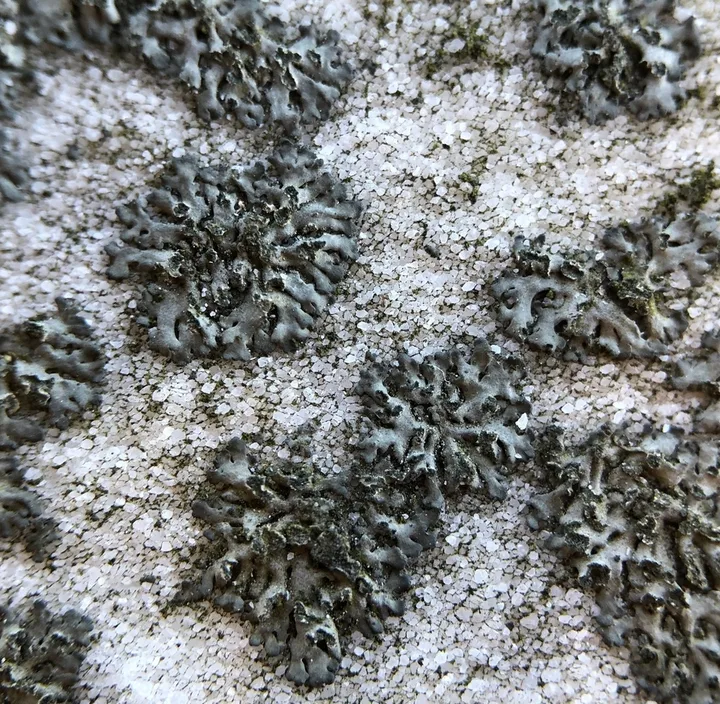
Foto yang diasosiasikan dengan Physciella chloantha pada iNaturalist. Identifikasi mengikuti sumber; bukan penentuan spesimen independen.
Kredit dan penggunaan
(c) Nova Patch, some rights reserved (CC BY-SA), uploaded by Nova Patch
Ukuran dan format gambar disesuaikan tanpa pemotongan, retus, atau penambahan skala. Lisensi sumber dipertahankan.
Sumber profil
- [1] Physciella chloantha — Wikipedia (en)
- [2] Catalogue of Life Base2026-09-11 — Physciella chloantha
- [3] Dokumentasi visual — Physciella chloantha
- [4] Dokumentasi visual — Physciella chloantha
- [5] Dokumentasi visual — Physciella chloantha
Rujukan halaman ini
Fungi. Physciella chloantha. Rilis data fungi-2026-10-12-expansion-2. https://fungi-atlas.mgadib.chatgpt.site/jamur/physciella-chloantha/.
Status: impor sumber; pemeriksaan editorial per profil belum selesai. Untuk klaim biologis, gunakan rujukan pada bagian terkait dan periksa konteks sumber aslinya.