01 / Morfologi

Ciri dan struktur

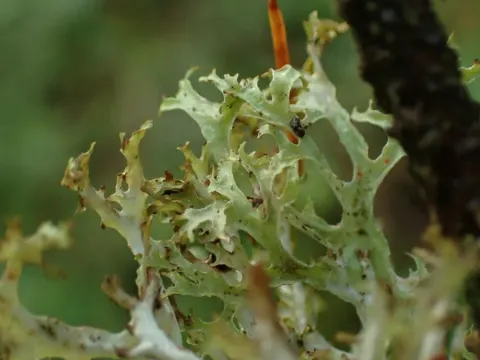
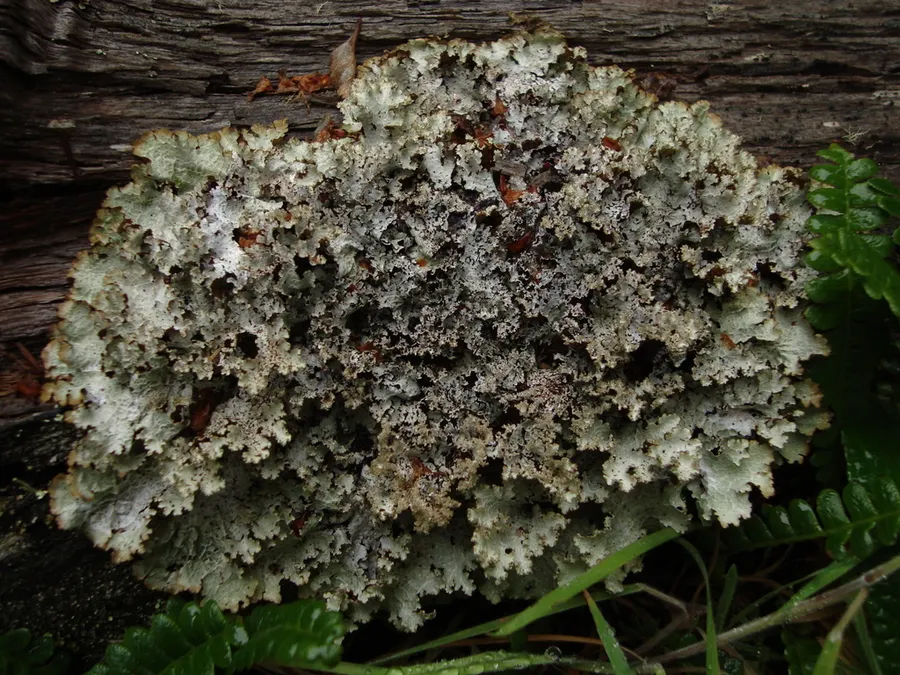
Platismatia glauca is a foliose lichen species that typically forms extensive patches measuring 1–6 cm in diameter, though specimens can occasionally reach up to 15 cm. The thallus (the main body of the lichen) is relatively thin, with extending to 1.5 cm in width. These lobes are characterised by their wavy, irregularly indented appearance with ascending margins that may be entire (smooth-edged) or sub-lobulate (slightly lobed). The margins often feature distinctive clusters of reproductive structures that can appear as simple to (coral-like), much-branched isidia (small vegetative propagules) or partially as granular soredia (powdery propagative structures). The upper surface of the lichen is typically pale to dull grey, frequently showing a brownish tinge—or becoming entirely brown in locations exposed to high light levels. This colouration remains unchanged when wet. The surface texture ranges from smooth to wrinkled or slightly ridged, and lacks pseudocyphellae (small pores in the upper ). The lower surface is predominantly black, though it may appear brown or white in shaded conditions, especially towards the margins. This underside features varying numbers of scattered rhizine (root-like structures that attach the lichen to its substrate), which may be unbranched or branched. Fruiting bodies (apothecia) are extremely rare in this species, measuring 5–9 mm in diameter when present, and typically occur along the margins. These apothecia have a reddish-brown with a thin that tends to become less distinct as the apothecium matures. The (sexual spores) measure 3.5–8.5 by 3–5 μm.

Sebagian uraian ditampilkan dalam bahasa sumber; terjemahannya belum tersedia atau belum lolos pemeriksaan.

Rujukan: [1]

Pengukuran mengikuti objek, spesimen atau kultur, dan metode yang disebutkan sumber. Baca uraian asli untuk konteks lengkap.

02 / Kehidupan

Habitat dan peran ekologis

Several secondary metabolites (lichen products) have been isolated from the species, including the nor-triterpene ketone, 30-nor-21α-hopan-22-one, the depsides atranorin and chloroatranorin, and the aromatic compounds methyl β-orcinolcarboxylate and chloroatranol. Other compounds in the lichen are salazinic acid, β-orcinol carboxylic acid, 3-hydroxyphysodalic acid, physodalic acid, and physodic acid.

Sebagian uraian ditampilkan dalam bahasa sumber; terjemahannya belum tersedia atau belum lolos pemeriksaan.

Rujukan: [1]

Habitat atau konteks temuan
Informasi belum tersedia pada sumber rilis ini.
Substrat
Informasi belum tersedia pada sumber rilis ini.
Peran atau konteks
Pembentuk liken
Temukan hubungan serupa
03 / Siklus hidup

Reproduksi

The margins often feature distinctive clusters of reproductive structures that can appear as simple to (coral-like), much-branched isidia (small vegetative propagules) or partially as granular soredia (powdery propagative structures). The upper surface of the lichen is typically pale to dull grey, frequently showing a brownish tinge—or becoming entirely brown in locations exposed to high light levels. This colouration remains unchanged when wet. The surface texture ranges from smooth to wrinkled or slightly ridged, and lacks pseudocyphellae (small pores in the upper ). Fruiting bodies (apothecia) are extremely rare in this species, measuring 5–9 mm in diameter when present, and typically occur along the margins.

Sebagian uraian ditampilkan dalam bahasa sumber; terjemahannya belum tersedia atau belum lolos pemeriksaan.

Rujukan: [1]

Sinonim menurut acuan taksonomi rilis: Cetraria commixta f. tenuisecta; Cetraria fallax; Cetraria glauca; Cetraria glauca coralloidea; Cetraria glauca f. coralloidea; Cetraria glauca f. fallax; Cetraria glauca f. fertilis; Cetraria glauca f. fusca; Cetraria glauca f. sterilis; Cetraria glauca f. ulophylla; Cetraria glauca subf. crispata; Cetraria glauca ulophylla; Cetraria glauca var. coralloidea; Cetraria glauca var. crispata; Cetraria glauca var. fallax; Cetraria glauca var. fertilis; Cetraria glauca var. sterilis; Cetraria glauca var. tenuisecta; Lichen fallax; Lichen glaucus; Lobaria fallax; Lobaria glauca; Parmelia glauca; Parmelia glauca coralloidea; Parmelia glauca f. ulophylla; Parmelia glauca var. fallax; Parmelia glauca var. fusca; Physcia glauca; Physcia glauca var. fallax; Platismatia glauca f. coralloidea; Platismatia glauca f. fallax; Platismatia glauca f. fusca; Platismatia glauca f. ulophylla; Platysma commixtum f. tenuisectum; Platysma fallax; Platysma fallax f. coralloideum; Platysma glaucum; Platysma glaucum f. coralloideum; Platysma glaucum f. fallax; Platysma glaucum f. fuscum; Platysma glaucum var. coralloideum; Platysma glaucum var. fallax
04 / Batas informasi

Catatan identitas dan cakupan

  • Nama diterima mengikuti Catalogue of Life Base2026-09-11; uraian mempertahankan konsep dan nama sumber aslinya.
  • Original geographic, specimen and life-cycle scope retained; source import awaits individual editorial review.
  • Impor dan terjemahan otomatis belum diperiksa editorial per profil. Struktur reproduktif yang disebutkan tidak membuktikan seluruh siklus hidup diketahui.
  • Pengukuran pada uraian mengikuti spesimen, kultur, dan metode sumber; angka tidak diperluas ke semua populasi.

Catatan distribusi dalam narasi mengikuti sumbernya. Dokumentasi spesimen atau foto mengikuti catatan sumber. Bukti wilayah Indonesia dan penilaian konservasi tidak disimpulkan dari gambar.

05 / Dokumentasi

Melihat dengan konteks

Dokumentasi Platismatia glauca menurut asosiasi foto pada record takson iNaturalist. Kredit: Jason Hollinger. Identitas mengikuti sumber; bukan penentuan spesimen independen.

Jenis
Fotografi
Kredit
(c) Jason Hollinger, some rights reserved (CC BY)
Lisensi
CC BY 4.0
Sumber media
Buka entri sumber

Gambar menunjukkan objek menurut identifikasi sumber, bukan verifikasi independen spesimen oleh Fungi. Tidak ada skala baru yang ditambahkan.

06 / Rujukan

Sumber profil

  1. [1] Platismatia glauca — Wikipedia (en)Bagian sumber: Frozen revision 1330477565
    Tanggal penghimpunan sumber: 2026-10-12
    Teks sumber: CC BY-SA4.0 · Wikipedia contributors
  2. [2] Catalogue of Life Base2026-09-11 — Platismatia glaucaBagian sumber: ColDP NameUsage.tsv ID 77NX5; accepted species; source 2073
    Tanggal penghimpunan sumber: 2026-10-12
  3. [3] Dokumentasi visual — Platismatia glaucaBagian sumber: Individual media record; identification follows the source, not independent determination
    Tanggal penghimpunan sumber: 2026-10-12
    Media sumber: CC BY 4.0 · (c) Jason Hollinger, some rights reserved (CC BY)

Adaptasi teks: CC BY-SA 4.0. Wikipedia contributors — Platismatia glauca — Wikipedia (en)

Uraian asli dan riwayat sumber

Riwayat atau halaman sumber

Ringkasan sumber

Platismatia glauca is a common and widespread species of corticolous (bark-dwelling), foliose lichen in the family Parmeliaceae. This distinctive lichen forms pale to dull grey patches measuring 1–15 centimetres across, with wavy, irregularly indented that often have reproductive structures (apothecia) along their upturned margins. The species is known for its adaptability to varying nitrogen levels in the environment and contains several unique secondary metabolites that have been subjects of scientific research.

Revisi sumber

Morfologi sumber

Platismatia glauca is a foliose lichen species that typically forms extensive patches measuring 1–6 cm in diameter, though specimens can occasionally reach up to 15 cm. The thallus (the main body of the lichen) is relatively thin, with extending to 1.5 cm in width. These lobes are characterised by their wavy, irregularly indented appearance with ascending margins that may be entire (smooth-edged) or sub-lobulate (slightly lobed). The margins often feature distinctive clusters of reproductive structures that can appear as simple to (coral-like), much-branched isidia (small vegetative propagules) or partially as granular soredia (powdery propagative structures). The upper surface of the lichen is typically pale to dull grey, frequently showing a brownish tinge—or becoming entirely brown in locations exposed to high light levels. This colouration remains unchanged when wet. The surface texture ranges from smooth to wrinkled or slightly ridged, and lacks pseudocyphellae (small pores in the upper ). The lower surface is predominantly black, though it may appear brown or white in shaded conditions, especially towards the margins. This underside features varying numbers of scattered rhizine (root-like structures that attach the lichen to its substrate), which may be unbranched or branched. Fruiting bodies (apothecia) are extremely rare in this species, measuring 5–9 mm in diameter when present, and typically occur along the margins. These apothecia have a reddish-brown with a thin that tends to become less distinct as the apothecium matures. The (sexual spores) measure 3.5–8.5 by 3–5 μm.

Revisi sumber

Ekologi sumber

Several secondary metabolites (lichen products) have been isolated from the species, including the nor-triterpene ketone, 30-nor-21α-hopan-22-one, the depsides atranorin and chloroatranorin, and the aromatic compounds methyl β-orcinolcarboxylate and chloroatranol. Other compounds in the lichen are salazinic acid, β-orcinol carboxylic acid, 3-hydroxyphysodalic acid, physodalic acid, and physodic acid.

Revisi sumber

Struktur reproduksi sumber

The margins often feature distinctive clusters of reproductive structures that can appear as simple to (coral-like), much-branched isidia (small vegetative propagules) or partially as granular soredia (powdery propagative structures). The upper surface of the lichen is typically pale to dull grey, frequently showing a brownish tinge—or becoming entirely brown in locations exposed to high light levels. This colouration remains unchanged when wet. The surface texture ranges from smooth to wrinkled or slightly ridged, and lacks pseudocyphellae (small pores in the upper ). Fruiting bodies (apothecia) are extremely rare in this species, measuring 5–9 mm in diameter when present, and typically occur along the margins.

Revisi sumber

Rujukan halaman ini

Fungi. Platismatia glauca. Rilis data fungi-2026-10-12-expansion-2. https://fungi-atlas.mgadib.chatgpt.site/jamur/platismatia-glauca/.

Status: impor sumber; pemeriksaan editorial per profil belum selesai. Untuk klaim biologis, gunakan rujukan pada bagian terkait dan periksa konteks sumber aslinya.