01 / Morfologi

Ciri dan struktur

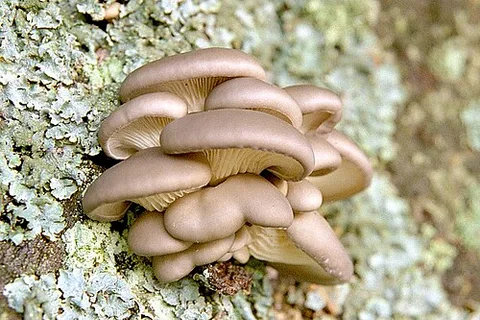
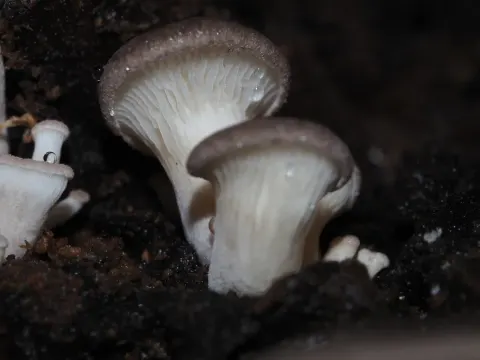
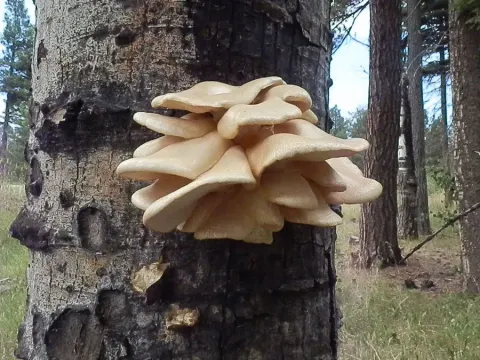
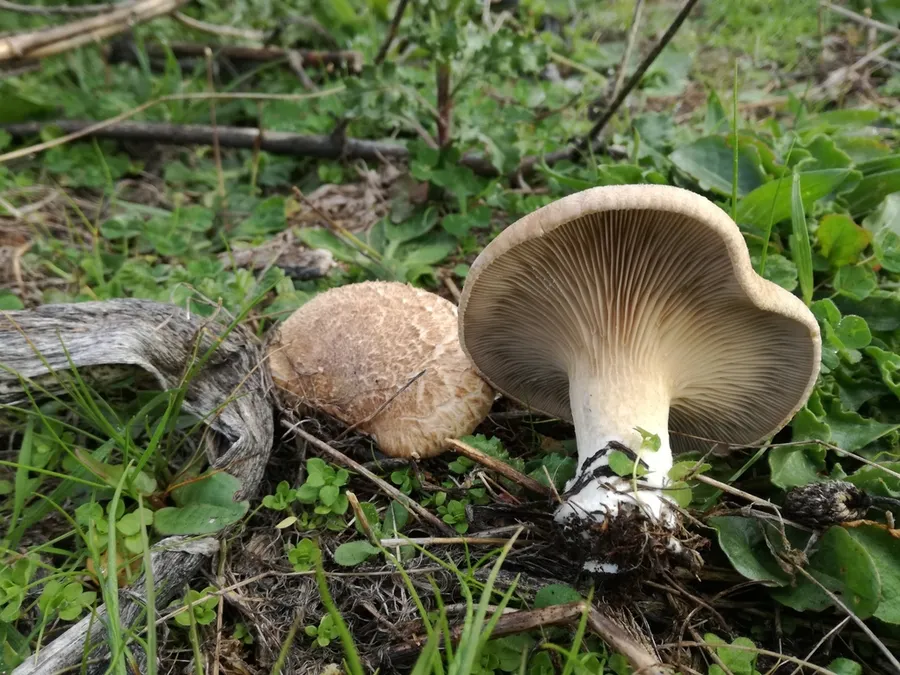
The tannish cap is 4-15 cm wide, smooth and slightly velvety. It is convex then flattens, with a thin margin that is initially inrolled then spreads out. The whitish gills are decurrent, dense and anastomosed. The whitish stem is 3-10 cm tall and 1–3 cm wide.

Sebagian uraian ditampilkan dalam bahasa sumber; terjemahannya belum tersedia atau belum lolos pemeriksaan.

Rujukan: [1]

Pengukuran mengikuti objek, spesimen atau kultur, dan metode yang disebutkan sumber. Baca uraian asli untuk konteks lengkap.

02 / Kehidupan

Habitat dan peran ekologis

Its natural range extends from the Atlantic Ocean through the Mediterranean Basin (including North Africa) and Central Europe into Western Asia and India. Unlike other species of Pleurotus, which are primarily wood-decay fungi, the P. eryngii complex are also weak parasites on the roots of herbaceous plants in the carrot family, although they may also be cultured on organic wastes. Pleurotus eryngii is a saprotrophic fungus. It grows in association with members of the carrot family This provides phylogenetic clues about its apparent diversion from saprophytism about 419 million years ago (Mya) following the origin of nematodes (about 550–600 Mya), possibly suggesting their coevolution. Pleurotus eryngii extract reduced the number of Panagrellus species larvae after 24 hours by 90%. P. eryngii has predatory activity against Panagrellus species larvae due to toxin production and negatively affects Meloidogyne javanica eggs and juveniles development.

Sebagian uraian ditampilkan dalam bahasa sumber; terjemahannya belum tersedia atau belum lolos pemeriksaan.

Rujukan: [1]

Habitat atau konteks temuan
Informasi belum tersedia pada sumber rilis ini.
Substrat
Informasi belum tersedia pada sumber rilis ini.
Peran atau konteks
Pengurai
Temukan hubungan serupa
03 / Siklus hidup

Reproduksi

Pleurotus populations growing on umbellifers seem to have recently diverged through a sympatric speciation process that is based on both intrinsic reproductive barriers and extrinsic ecogeographical factors.

Sebagian uraian ditampilkan dalam bahasa sumber; terjemahannya belum tersedia atau belum lolos pemeriksaan.

Rujukan: [1]

Sinonim menurut acuan taksonomi rilis: Agaricus eryngii; Agaricus ferulae; Pleurotus eryngii f. ferulae; Pleurotus eryngii var. elaeoselini; Pleurotus eryngii var. ferulae; Pleurotus eryngii var. fuscus; Pleurotus eryngii var. laserpitii; Pleurotus eryngii var. thapsiae; Pleurotus eryngii var. tingitanus; Pleurotus fuscus; Pleurotus fuscus var. ferulae
04 / Batas informasi

Catatan identitas dan cakupan

  • Nama diterima mengikuti Catalogue of Life Base2026-09-11; uraian mempertahankan konsep dan nama sumber aslinya.
  • Original geographic, specimen and life-cycle scope retained; source import awaits individual editorial review.
  • Impor dan terjemahan otomatis belum diperiksa editorial per profil. Struktur reproduktif yang disebutkan tidak membuktikan seluruh siklus hidup diketahui.
  • Pengukuran pada uraian mengikuti spesimen, kultur, dan metode sumber; angka tidak diperluas ke semua populasi.

Catatan distribusi dalam narasi mengikuti sumbernya. Dokumentasi spesimen atau foto mengikuti catatan sumber. Bukti wilayah Indonesia dan penilaian konservasi tidak disimpulkan dari gambar.

05 / Dokumentasi

Melihat dengan konteks

Dokumentasi Pleurotus eryngii menurut asosiasi foto pada record takson iNaturalist. Kredit: Davide Puddu. Identitas mengikuti sumber; bukan penentuan spesimen independen.

Jenis
Fotografi
Kredit
(c) Davide Puddu, some rights reserved (CC BY), uploaded by Davide Puddu
Lisensi
CC BY 4.0
Sumber media
Buka entri sumber

Gambar menunjukkan objek menurut identifikasi sumber, bukan verifikasi independen spesimen oleh Fungi. Tidak ada skala baru yang ditambahkan.

06 / Rujukan

Sumber profil

  1. [1] Pleurotus eryngii — Wikipedia (en)Bagian sumber: Frozen revision 1372973021
    Tanggal penghimpunan sumber: 2026-10-12
    Teks sumber: CC BY-SA4.0 · Wikipedia contributors
  2. [2] Catalogue of Life Base2026-09-11 — Pleurotus eryngiiBagian sumber: ColDP NameUsage.tsv ID 77RJL; accepted species; source 2073
    Tanggal penghimpunan sumber: 2026-10-12
  3. [3] Dokumentasi visual — Pleurotus eryngiiBagian sumber: Individual media record; identification follows the source, not independent determination
    Tanggal penghimpunan sumber: 2026-10-12
    Media sumber: CC BY 4.0 · (c) Davide Puddu, some rights reserved (CC BY), uploaded by Davide Puddu

Adaptasi teks: CC BY-SA 4.0. Wikipedia contributors — Pleurotus eryngii — Wikipedia (en)

Uraian asli dan riwayat sumber

Riwayat atau halaman sumber

Ringkasan sumber

Pleurotus eryngii (also known as king trumpet mushroom, French horn mushroom, eryngi, king oyster mushroom, king brown mushroom, boletus of the steppes, trumpet royale, aliʻi oyster) is an Old World species of fungus.

Revisi sumber

Morfologi sumber

The tannish cap is 4-15 cm wide, smooth and slightly velvety. It is convex then flattens, with a thin margin that is initially inrolled then spreads out. The whitish gills are decurrent, dense and anastomosed. The whitish stem is 3-10 cm tall and 1–3 cm wide.

Revisi sumber

Ekologi sumber

Its natural range extends from the Atlantic Ocean through the Mediterranean Basin (including North Africa) and Central Europe into Western Asia and India. Unlike other species of Pleurotus, which are primarily wood-decay fungi, the P. eryngii complex are also weak parasites on the roots of herbaceous plants in the carrot family, although they may also be cultured on organic wastes. Pleurotus eryngii is a saprotrophic fungus. It grows in association with members of the carrot family This provides phylogenetic clues about its apparent diversion from saprophytism about 419 million years ago (Mya) following the origin of nematodes (about 550–600 Mya), possibly suggesting their coevolution. Pleurotus eryngii extract reduced the number of Panagrellus species larvae after 24 hours by 90%. P. eryngii has predatory activity against Panagrellus species larvae due to toxin production and negatively affects Meloidogyne javanica eggs and juveniles development.

Revisi sumber

Struktur reproduksi sumber

Pleurotus populations growing on umbellifers seem to have recently diverged through a sympatric speciation process that is based on both intrinsic reproductive barriers and extrinsic ecogeographical factors.

Revisi sumber

Rujukan halaman ini

Fungi. Pleurotus eryngii. Rilis data fungi-2026-10-12-expansion-2. https://fungi-atlas.mgadib.chatgpt.site/jamur/pleurotus-eryngii/.

Status: impor sumber; pemeriksaan editorial per profil belum selesai. Untuk klaim biologis, gunakan rujukan pada bagian terkait dan periksa konteks sumber aslinya.