01 / Morfologi

Ciri dan struktur

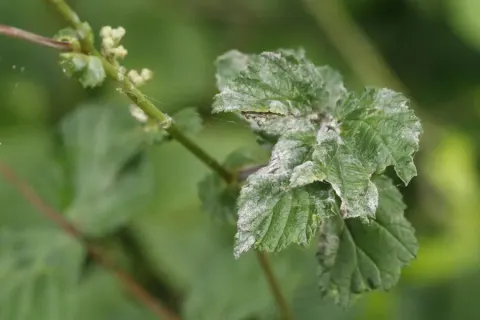
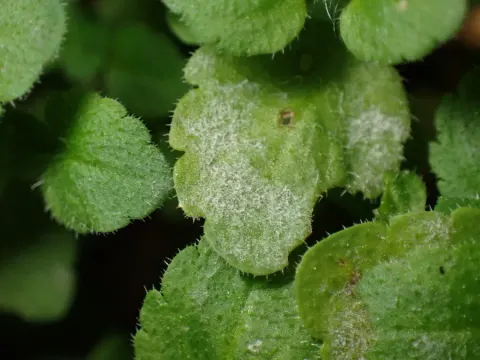
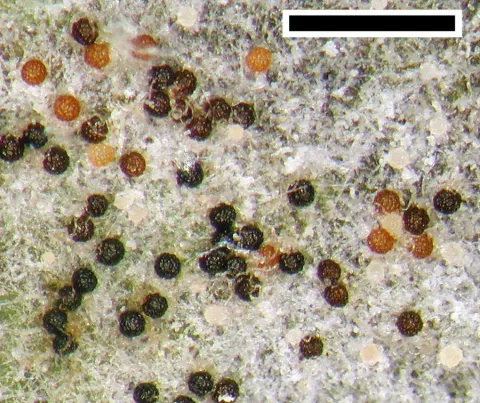
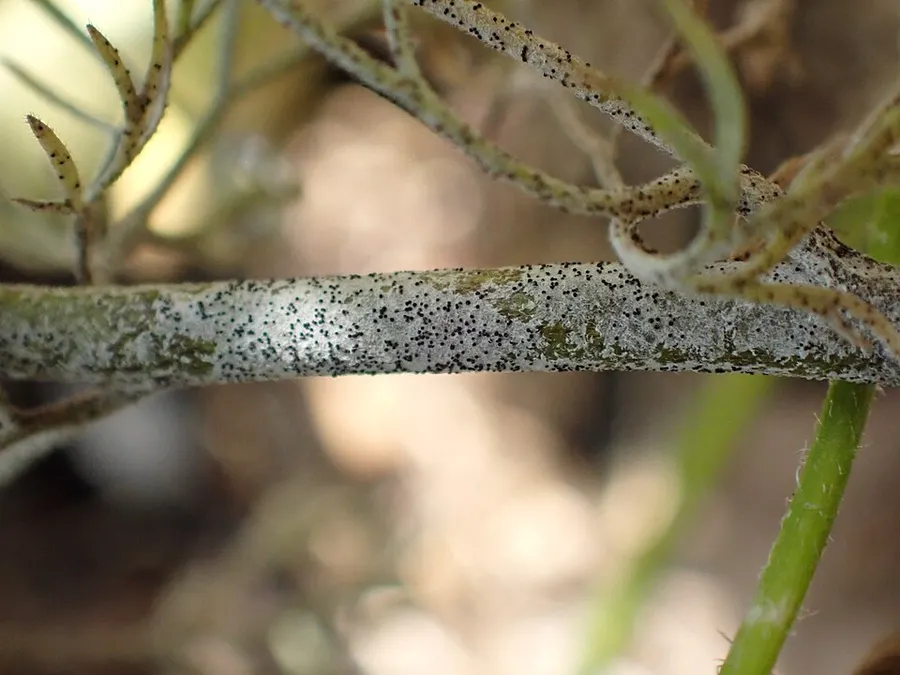
The fungus forms white, often thick, mycelium on the leaves and stems of its hosts. As with most Erysiphaceae, Podosphaera delphinii is strongly host-specific, infecting only plants in two tribes, Adonideae and Delphinieae. Podosphaera delphinii can be found in any habitats where its host species occur, including urban and suburban gardens and parks. Erysiphe nitida also occurs on plants in the Delphinieae. The mycelium is common on both stems and leaves. The hyphal appressoria are nipple-shaped but frequently rather indistinct. Straight conidiophores arise from the upper surface of superficial hyphae and produce catanescent conidia. Conidia are ellipsoid-ovoid to barrel-shaped. The chasmothecia (fruiting bodies) are often very gregarious. Appendages are found in the lower half and are few and simple, pigmented brown when mature. The peridium of the chasmothecia has rather large cells of irregular shape. Podosphaera epilobii has six to eight colourless spores per ascus. The asci are ellipsoid-ovoid and sessile or almost sessile.

Sebagian uraian ditampilkan dalam bahasa sumber; terjemahannya belum tersedia atau belum lolos pemeriksaan.

Rujukan: [1]

Pengukuran mengikuti objek, spesimen atau kultur, dan metode yang disebutkan sumber. Baca uraian asli untuk konteks lengkap.

02 / Kehidupan

Habitat dan peran ekologis

Podosphaera delphinii is a species of powdery mildew in the family Erysiphaceae. It is found in North America and Eurasia, where it infects plants in the genera Adonis, Delphinium and Trollius. The fungus forms white, often thick, mycelium on the leaves and stems of its hosts. As with most Erysiphaceae, Podosphaera delphinii is strongly host-specific, infecting only plants in two tribes, Adonideae and Delphinieae. Podosphaera delphinii can be found in any habitats where its host species occur, including urban and suburban gardens and parks. Erysiphe nitida also occurs on plants in the Delphinieae. The mycelium is common on both stems and leaves. The hyphal appressoria are nipple-shaped but frequently rather indistinct. Straight conidiophores arise from the upper surface of superficial hyphae and produce catanescent conidia. Conidia are ellipsoid-ovoid to barrel-shaped. The chasmothecia (fruiting bodies) are often very gregarious. Appendages are found in the lower half and are few and simple, pigmented brown when mature. The peridium of the chasmothecia has rather large cells of irregular shape. Podosphaera epilobii has six to eight colourless spores per ascus. The asci are ellipsoid-ovoid and sessile or almost sessile.

Sebagian uraian ditampilkan dalam bahasa sumber; terjemahannya belum tersedia atau belum lolos pemeriksaan.

Rujukan: [1]

Habitat atau konteks temuan
Informasi belum tersedia pada sumber rilis ini.
Substrat
Informasi belum tersedia pada sumber rilis ini.
Peran atau konteks
Belum dikategorikan pada rilis ini.
Temukan hubungan serupa
03 / Siklus hidup

Reproduksi

The mycelium is common on both stems and leaves. The hyphal appressoria are nipple-shaped but frequently rather indistinct. Straight conidiophores arise from the upper surface of superficial hyphae and produce catanescent conidia. Conidia are ellipsoid-ovoid to barrel-shaped. The chasmothecia (fruiting bodies) are often very gregarious. Appendages are found in the lower half and are few and simple, pigmented brown when mature. The peridium of the chasmothecia has rather large cells of irregular shape. Podosphaera epilobii has six to eight colourless spores per ascus. The asci are ellipsoid-ovoid and sessile or almost sessile.

Sebagian uraian ditampilkan dalam bahasa sumber; terjemahannya belum tersedia atau belum lolos pemeriksaan.

Rujukan: [1]

Sinonim menurut acuan taksonomi rilis: Sphaerotheca castagnei subsp. delphinii; Sphaerotheca delphinii; Sphaerotheca fuliginea f. delphinii
04 / Batas informasi

Catatan identitas dan cakupan

  • Nama diterima mengikuti Catalogue of Life Base2026-09-11; uraian mempertahankan konsep dan nama sumber aslinya.
  • Original geographic, specimen and life-cycle scope retained; source import awaits individual editorial review.
  • Impor dan terjemahan otomatis belum diperiksa editorial per profil. Struktur reproduktif yang disebutkan tidak membuktikan seluruh siklus hidup diketahui.
  • Pengukuran pada uraian mengikuti spesimen, kultur, dan metode sumber; angka tidak diperluas ke semua populasi.

Catatan distribusi dalam narasi mengikuti sumbernya. Dokumentasi spesimen atau foto mengikuti catatan sumber. Bukti wilayah Indonesia dan penilaian konservasi tidak disimpulkan dari gambar.

05 / Dokumentasi

Melihat dengan konteks

Dokumentasi Podosphaera delphinii dari Wikimedia Commons. Podosphaera delphinii on Delphinium ajacis in England. Identifikasi mengikuti record berkas sumber.

Jenis
Fotografi
Kredit
Alexoutside
Lisensi
CC BY 4.0
Sumber media
Buka entri sumber

Gambar menunjukkan objek menurut identifikasi sumber, bukan verifikasi independen spesimen oleh Fungi. Tidak ada skala baru yang ditambahkan.

06 / Rujukan

Sumber profil

  1. [1] Podosphaera delphinii — Wikipedia (en)Bagian sumber: Frozen revision 1373867561
    Tanggal penghimpunan sumber: 2026-10-12
    Teks sumber: CC BY-SA4.0 · Wikipedia contributors
  2. [2] Catalogue of Life Base2026-09-11 — Podosphaera delphiniiBagian sumber: ColDP NameUsage.tsv ID 4KRGM; accepted species; source 2073
    Tanggal penghimpunan sumber: 2026-10-12
  3. [3] Dokumentasi visual — Podosphaera delphiniiBagian sumber: Individual media record; identification follows the source, not independent determination
    Tanggal penghimpunan sumber: 2026-10-12
    Media sumber: CC BY 4.0 · Alexoutside

Adaptasi teks: CC BY-SA 4.0. Wikipedia contributors — Podosphaera delphinii — Wikipedia (en)

Uraian asli dan riwayat sumber

Riwayat atau halaman sumber

Ringkasan sumber

The fungus forms white, often thick, mycelium on the leaves and stems of its hosts. As with most Erysiphaceae, Podosphaera delphinii is strongly host-specific, infecting only plants in two tribes, Adonideae and Delphinieae. Podosphaera delphinii can be found in any habitats where its host species occur, including urban and suburban gardens and parks. Erysiphe nitida also occurs on plants in the Delphinieae. The mycelium is common on both stems and leaves. The hyphal appressoria are nipple-shaped but frequently rather indistinct.

Revisi sumber

Morfologi sumber

The fungus forms white, often thick, mycelium on the leaves and stems of its hosts. As with most Erysiphaceae, Podosphaera delphinii is strongly host-specific, infecting only plants in two tribes, Adonideae and Delphinieae. Podosphaera delphinii can be found in any habitats where its host species occur, including urban and suburban gardens and parks. Erysiphe nitida also occurs on plants in the Delphinieae. The mycelium is common on both stems and leaves. The hyphal appressoria are nipple-shaped but frequently rather indistinct. Straight conidiophores arise from the upper surface of superficial hyphae and produce catanescent conidia. Conidia are ellipsoid-ovoid to barrel-shaped. The chasmothecia (fruiting bodies) are often very gregarious. Appendages are found in the lower half and are few and simple, pigmented brown when mature. The peridium of the chasmothecia has rather large cells of irregular shape. Podosphaera epilobii has six to eight colourless spores per ascus. The asci are ellipsoid-ovoid and sessile or almost sessile.

Revisi sumber

Ekologi sumber

Podosphaera delphinii is a species of powdery mildew in the family Erysiphaceae. It is found in North America and Eurasia, where it infects plants in the genera Adonis, Delphinium and Trollius. The fungus forms white, often thick, mycelium on the leaves and stems of its hosts. As with most Erysiphaceae, Podosphaera delphinii is strongly host-specific, infecting only plants in two tribes, Adonideae and Delphinieae. Podosphaera delphinii can be found in any habitats where its host species occur, including urban and suburban gardens and parks. Erysiphe nitida also occurs on plants in the Delphinieae. The mycelium is common on both stems and leaves. The hyphal appressoria are nipple-shaped but frequently rather indistinct. Straight conidiophores arise from the upper surface of superficial hyphae and produce catanescent conidia. Conidia are ellipsoid-ovoid to barrel-shaped. The chasmothecia (fruiting bodies) are often very gregarious. Appendages are found in the lower half and are few and simple, pigmented brown when mature. The peridium of the chasmothecia has rather large cells of irregular shape. Podosphaera epilobii has six to eight colourless spores per ascus. The asci are ellipsoid-ovoid and sessile or almost sessile.

Revisi sumber

Struktur reproduksi sumber

The mycelium is common on both stems and leaves. The hyphal appressoria are nipple-shaped but frequently rather indistinct. Straight conidiophores arise from the upper surface of superficial hyphae and produce catanescent conidia. Conidia are ellipsoid-ovoid to barrel-shaped. The chasmothecia (fruiting bodies) are often very gregarious. Appendages are found in the lower half and are few and simple, pigmented brown when mature. The peridium of the chasmothecia has rather large cells of irregular shape. Podosphaera epilobii has six to eight colourless spores per ascus. The asci are ellipsoid-ovoid and sessile or almost sessile.

Revisi sumber

Rujukan halaman ini

Fungi. Podosphaera delphinii. Rilis data fungi-2026-10-12-expansion-2. https://fungi-atlas.mgadib.chatgpt.site/jamur/podosphaera-delphinii/.

Status: impor sumber; pemeriksaan editorial per profil belum selesai. Untuk klaim biologis, gunakan rujukan pada bagian terkait dan periksa konteks sumber aslinya.