Ciri dan struktur
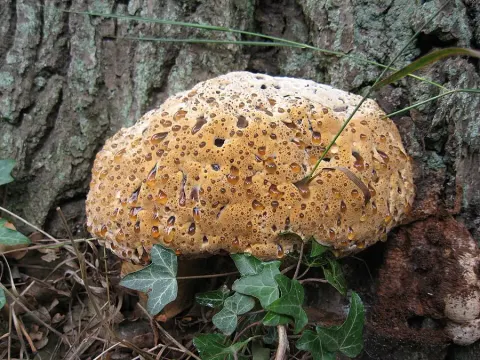
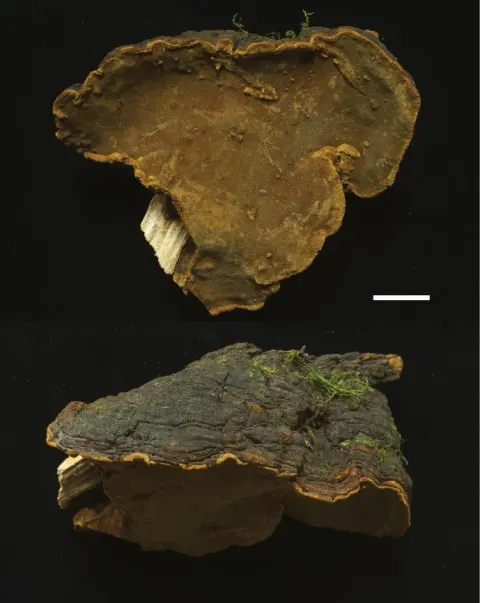
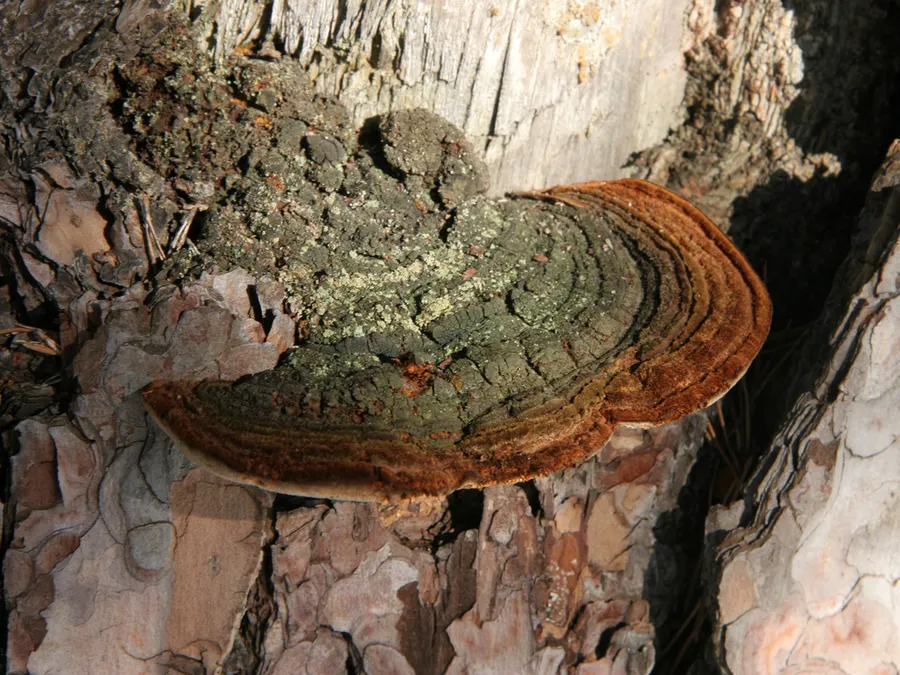
The basidiocarps (fruiting body), conks, are the most apparent signs on infected trees. The conks are perennial, usually gregarious, imbricate, and shelve-shaped, about 3 inches wide. White pockets usually develop where the conks develop, but the decay may extend 4 ft above and 5 ft below a conk. Decay tends to occur at the base of stem, but may also develop into large roots. The white pockets are mostly hollow and delignified and contain white residual cellulose.
Habitat dan peran ekologis
There are several conditions that favor disease development and spread. Heart rot fungi, including P. pini, enter trees as mycelium or basidiospores through branch stubs, tree stumps, damaged roots, dead branches, and wounds in general and go on to infect the heartwood of the tree. Fire and cutting operations cause the most common points of entry for the fungus. Moist environments also facilitate fungal growth. Spores blown by the wind land and germinate on wounds, so in managed forests, care should be taken to prevent any injury to trees during harvest or other activities. It infects a wide range of coniferous trees, including jack pine, lodgepole pine, Sitka and white spruce, Douglas-fir, balsam and true fir, western hemlock, and tamarack. It attacks both heartwood and sapwood and causes white pocket trunk rot. Red ring rot is one of the most common and destructive heart rot pathogens in the Western United States. In Engelmann spruce it is the most common type of fungal decay and causes the largest decay columns of all the fungal heart rots, rendering the tree useless for harvesting. It is a particularly important disease in lodgepole pine and subalpine fir as well. Studies have shown that 64% of all defects in these three species were caused by Porodaedalea pini.
- Habitat atau konteks temuan
- hutan
- Substrat
- Informasi belum tersedia pada sumber rilis ini.
- Peran atau konteks
- Belum dikategorikan pada rilis ini.
Reproduksi
The basidiocarps (fruiting body), conks, are the most apparent signs on infected trees. The conks are perennial, usually gregarious, imbricate, and shelve-shaped, about 3 inches wide. White pockets usually develop where the conks develop, but the decay may extend 4 ft above and 5 ft below a conk. Decay tends to occur at the base of stem, but may also develop into large roots. The white pockets are mostly hollow and delignified and contain white residual cellulose.
Catatan identitas dan cakupan
- Nama diterima mengikuti Catalogue of Life Base2026-09-11; uraian mempertahankan konsep dan nama sumber aslinya.
- Original geographic, specimen and life-cycle scope retained; source import awaits individual editorial review.
- Impor dan terjemahan otomatis belum diperiksa editorial per profil. Struktur reproduktif yang disebutkan tidak membuktikan seluruh siklus hidup diketahui.
- Pengukuran pada uraian mengikuti spesimen, kultur, dan metode sumber; angka tidak diperluas ke semua populasi.
Catatan distribusi dalam narasi mengikuti sumbernya. Dokumentasi spesimen atau foto mengikuti catatan sumber. Bukti wilayah Indonesia dan penilaian konservasi tidak disimpulkan dari gambar.
Melihat dengan konteks
Dokumentasi Porodaedalea pini menurut asosiasi foto pada record takson iNaturalist. Kredit: caspar s. Identitas mengikuti sumber; bukan penentuan spesimen independen.
- Jenis
- Fotografi
- Kredit
- (c) caspar s, some rights reserved (CC BY)
- Lisensi
- CC BY 4.0
- Sumber media
- Buka entri sumber
Sumber profil
- [1] Porodaedalea pini — Wikipedia (en)
- [2] Catalogue of Life Base2026-09-11 — Porodaedalea pini
- [3] Dokumentasi visual — Porodaedalea pini
Rujukan halaman ini
Fungi. Porodaedalea pini. Rilis data fungi-2026-10-12-expansion-2. https://fungi-atlas.mgadib.chatgpt.site/jamur/porodaedalea-pini/.
Status: impor sumber; pemeriksaan editorial per profil belum selesai. Untuk klaim biologis, gunakan rujukan pada bagian terkait dan periksa konteks sumber aslinya.