01 / Morfologi

Ciri dan struktur

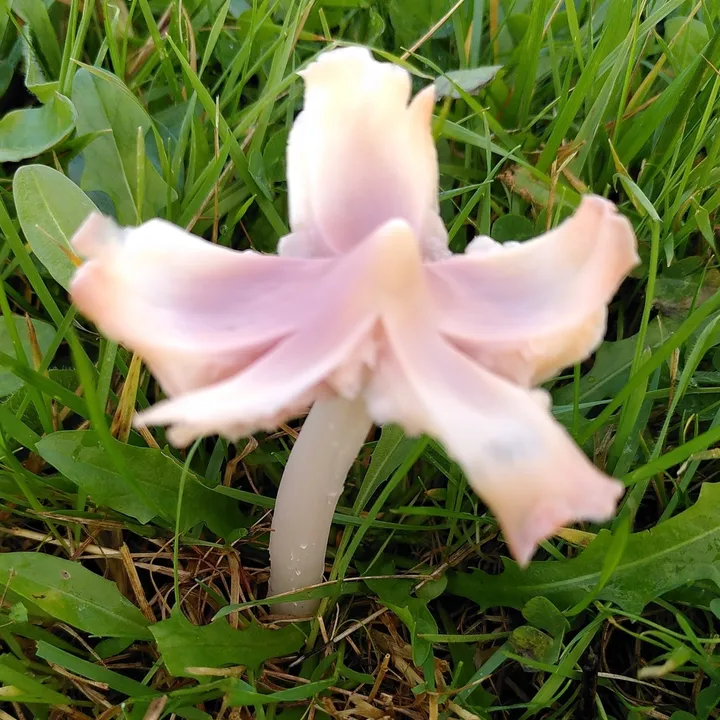
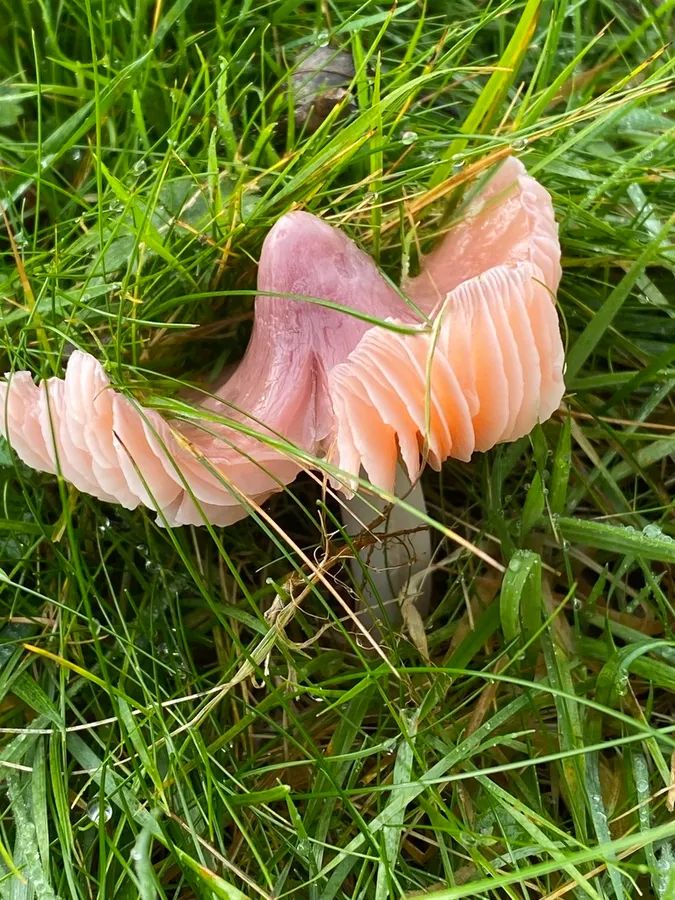
The basidiocarps are agaricoid, the cap narrowly conical at first, retaining an acute umbo when expanded, up to 7.5 cm across, often splitting when expanded, the margins turning upwards. The cap surface is smooth to fibrillose, slightly shiny or greasy, pale rose-pink to lilac-pink (rarely white). The lamellae (gills) are widely spaced, waxy, cap-coloured or whiter. The stipe (stem) is up to 16 cm long, smooth, white to pale cap-coloured, lacking a ring. The spore print is white, the spores (under a microscope) smooth, inamyloid, ellipsoid, c. 6.5 to 8.0 by 4.5 to 5.5 μm. The species can normally be distinguished in the field, thanks to its shape and colour. No other European waxcap is pink with a pointed cap.

Sebagian uraian ditampilkan dalam bahasa sumber; terjemahannya belum tersedia atau belum lolos pemeriksaan.

Rujukan: [1]

Pengukuran mengikuti objek, spesimen atau kultur, dan metode yang disebutkan sumber. Baca uraian asli untuk konteks lengkap.

02 / Kehidupan

Habitat dan peran ekologis

Pink Waxcap is tersebar luas tetapi umumnya langka di seluruh Eropa, dengan bentengnya di Inggris, di mana ia tidak jarang terjadi. Like other celah lilin terjadi di lahan rumput pendek (pasir dan rumput) yang lama, tidak ditingkatkan secara pertanian. Spesies ini telah dilaporkan dari Amerika Utara, tetapi spesimen yang telah disekwensi DNA tidak sama dengan Eropa P. calyptriformis. Recent research menunjukkan bahwa celah lilin tidak mikoriza atau saprotrof tetapi mungkin dikaitkan dengan lumut.

Rujukan: [1]

Habitat atau konteks temuan
padang rumput
Substrat
Informasi belum tersedia pada sumber rilis ini.
Peran atau konteks
Belum dikategorikan pada rilis ini.
Temukan hubungan serupa
03 / Siklus hidup

Reproduksi

The basidiocarps are agaricoid, the cap narrowly conical at first, retaining an acute umbo when expanded, up to 7.5 cm across, often splitting when expanded, the margins turning upwards. The cap surface is smooth to fibrillose, slightly shiny or greasy, pale rose-pink to lilac-pink (rarely white). The lamellae (gills) are widely spaced, waxy, cap-coloured or whiter. The stipe (stem) is up to 16 cm long, smooth, white to pale cap-coloured, lacking a ring. The spore print is white, the spores (under a microscope) smooth, inamyloid, ellipsoid, c. 6.5 to 8.0 by 4.5 to 5.5 μm.

Sebagian uraian ditampilkan dalam bahasa sumber; terjemahannya belum tersedia atau belum lolos pemeriksaan.

Rujukan: [1]

Sinonim menurut acuan taksonomi rilis: Agaricus calyptriformis; Humidicutis calyptriformis; Humidicutis calyptriformis f. nivea; Humidicutis calyptriformis var. domingensis; Hygrocybe calyptriformis; Hygrocybe calyptriformis f. nivea; Hygrocybe calyptriformis var. domingensis; Hygrophorus calyptriformis; Hygrophorus calyptriformis var. niveus; Porpoloma calyptriformis; Porpolomopsis calyptriformis f. nivea
04 / Batas informasi

Catatan identitas dan cakupan

  • Nama diterima mengikuti Catalogue of Life Base2026-09-11; uraian mempertahankan konsep dan nama sumber aslinya.
  • Original geographic, specimen and life-cycle scope retained; source import awaits individual editorial review.
  • Impor dan terjemahan otomatis belum diperiksa editorial per profil. Struktur reproduktif yang disebutkan tidak membuktikan seluruh siklus hidup diketahui.
  • Pengukuran pada uraian mengikuti spesimen, kultur, dan metode sumber; angka tidak diperluas ke semua populasi.

Catatan distribusi dalam narasi mengikuti sumbernya. Dokumentasi spesimen atau foto mengikuti catatan sumber. Bukti wilayah Indonesia dan penilaian konservasi tidak disimpulkan dari gambar.

05 / Dokumentasi

Melihat dengan konteks

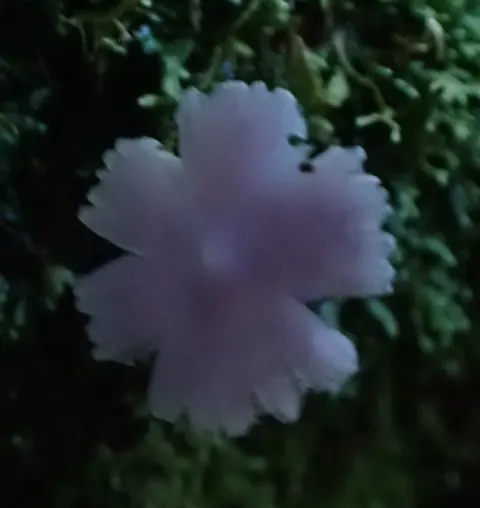
Dokumentasi Porpolomopsis calyptriformis menurut asosiasi foto pada record takson iNaturalist. Kredit: Terry Instone. Identitas mengikuti sumber; bukan penentuan spesimen independen.

Jenis
Fotografi
Kredit
(c) Terry Instone, some rights reserved (CC BY), uploaded by Terry Instone
Lisensi
CC BY 4.0
Sumber media
Buka entri sumber

Gambar menunjukkan objek menurut identifikasi sumber, bukan verifikasi independen spesimen oleh Fungi. Tidak ada skala baru yang ditambahkan.

Dokumentasi tambahan

06 / Rujukan

Sumber profil

  1. [1] Porpolomopsis calyptriformis — Wikipedia (en)Bagian sumber: Frozen revision 1364422900
    Tanggal penghimpunan sumber: 2026-10-12
    Teks sumber: CC BY-SA4.0 · Wikipedia contributors
  2. [2] Catalogue of Life Base2026-09-11 — Porpolomopsis calyptriformisBagian sumber: ColDP NameUsage.tsv ID 4LZH4; accepted species; source 2073
    Tanggal penghimpunan sumber: 2026-10-12
  3. [3] Dokumentasi visual — Porpolomopsis calyptriformisBagian sumber: Identitas mengikuti sumber dokumentasi; bukan penentuan spesimen independen.
    Tanggal penghimpunan sumber: 2026-10-17
    Media sumber: CC BY 4.0 · (c) Terry Instone, some rights reserved (CC BY), uploaded by Terry Instone
  4. [4] Dokumentasi visual — Porpolomopsis calyptriformisBagian sumber: Identitas mengikuti sumber dokumentasi; bukan penentuan spesimen independen.
    Tanggal penghimpunan sumber: 2026-10-17
    Teks sumber: CC BY 4.0 · (c) Daniel Seth Jackson, some rights reserved (CC BY), uploaded by Daniel Seth Jackson

Adaptasi teks: CC BY-SA 4.0. Wikipedia contributors — Porpolomopsis calyptriformis — Wikipedia (en)

Uraian asli dan riwayat sumber

Riwayat atau halaman sumber

Ringkasan sumber

The basidiocarps are agaricoid, the cap narrowly conical at first, retaining an acute umbo when expanded, up to 7.5 cm across, often splitting when expanded, the margins turning upwards. The cap surface is smooth to fibrillose, slightly shiny or greasy, pale rose-pink to lilac-pink (rarely white). The lamellae (gills) are widely spaced, waxy, cap-coloured or whiter. The stipe (stem) is up to 16 cm long, smooth, white to pale cap-coloured, lacking a ring. The spore print is white, the spores (under a microscope) smooth, inamyloid, ellipsoid, c. 6.5 to 8.0 by 4.5 to 5.5 μm.

Revisi sumber

Morfologi sumber

The basidiocarps are agaricoid, the cap narrowly conical at first, retaining an acute umbo when expanded, up to 7.5 cm across, often splitting when expanded, the margins turning upwards. The cap surface is smooth to fibrillose, slightly shiny or greasy, pale rose-pink to lilac-pink (rarely white). The lamellae (gills) are widely spaced, waxy, cap-coloured or whiter. The stipe (stem) is up to 16 cm long, smooth, white to pale cap-coloured, lacking a ring. The spore print is white, the spores (under a microscope) smooth, inamyloid, ellipsoid, c. 6.5 to 8.0 by 4.5 to 5.5 μm. The species can normally be distinguished in the field, thanks to its shape and colour. No other European waxcap is pink with a pointed cap.

Revisi sumber

Ekologi sumber

The Pink Waxcap is widespread but generally rare throughout Europe, with its stronghold in the United Kingdom, where it is not uncommon. Like other waxcaps it occurs in old, agriculturally unimproved short-sward grassland (pastures and lawns). The species has been reported from North America, but specimens that have been DNA-sequenced are not the same as the European P. calyptriformis. Recent research suggests waxcaps are neither mycorrhizal nor saprotrophic but may be associated with mosses.

Revisi sumber

Struktur reproduksi sumber

The basidiocarps are agaricoid, the cap narrowly conical at first, retaining an acute umbo when expanded, up to 7.5 cm across, often splitting when expanded, the margins turning upwards. The cap surface is smooth to fibrillose, slightly shiny or greasy, pale rose-pink to lilac-pink (rarely white). The lamellae (gills) are widely spaced, waxy, cap-coloured or whiter. The stipe (stem) is up to 16 cm long, smooth, white to pale cap-coloured, lacking a ring. The spore print is white, the spores (under a microscope) smooth, inamyloid, ellipsoid, c. 6.5 to 8.0 by 4.5 to 5.5 μm.

Revisi sumber

Rujukan halaman ini

Fungi. Porpolomopsis calyptriformis. Rilis data fungi-2026-10-12-expansion-2. https://fungi-atlas.mgadib.chatgpt.site/jamur/porpolomopsis-calyptriformis/.

Status: impor sumber; pemeriksaan editorial per profil belum selesai. Untuk klaim biologis, gunakan rujukan pada bagian terkait dan periksa konteks sumber aslinya.